
South · FL
Steel Buildings in Florida
Florida projects turn on two things a brochure will not decide for you: what the local jurisdiction requires, and how the building handles heat, humidity and coastal exposure. Compare types, footprints and planning steps before requesting quotes.
Overview
Coastal and Inland Florida Are Different Projects
The most useful distinction in Florida is not north versus south but coastal versus inland. Coastal sites raise exposure, corrosion and jurisdiction-specific review; inland sites are more often driven by acreage use, equipment size and drainage on flat, low ground.
Florida has an unusually active review environment for structures, and requirements are set at the county or municipal level for the specific address. That means the documentation your supplier provides matters as much as the steel. Ask early whether engineered, site-specific drawings for your jurisdiction are inside the quote, because a package without them is not comparable with one that includes them.
The second Florida constant is the interior environment. Persistent humidity makes condensation control a design decision rather than an afterthought — one that affects insulation, ventilation and what you can safely store in the building.
Exposure
Wind, Coastal Exposure and Honest Language
Florida buildings are engineered to design criteria set for the specific site by the local authority. We do not publish wind speeds, exposure categories or code references for any Florida location, and we avoid terms like hurricane-proof, which no building can honestly claim.
What you can act on is the process. Ask the building department what design criteria apply at your address and what approvals they expect for the structure and its components. Give those to every supplier, and ask each to confirm in writing that the frame, cladding and openings are engineered and documented to them. Doors and windows in particular are often approved as assemblies, and it is worth confirming they are part of the same package.
Coastal proximity also affects materials. Salt-laden air influences coating selection and fastener choice, so raise corrosion protection explicitly. It is easy for one quote to include a better coating specification than another without either mentioning it.
Building types
Metal Building Types Common in Florida
Vehicle, boat and RV storage, agricultural buildings inland, and commercial or marine-trade buildings near the coast account for most Florida projects.
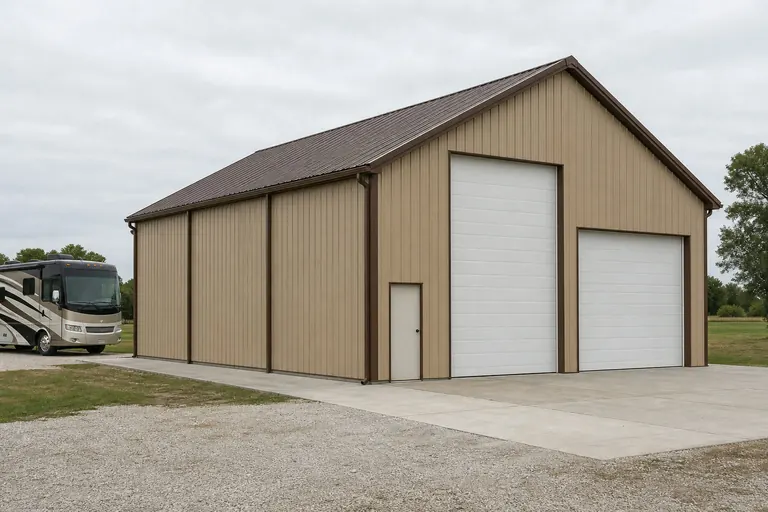
RV Storage
Enclosed height-driven storage for motorhomes and fifth wheels, a frequent request across the peninsula.
Start a quote
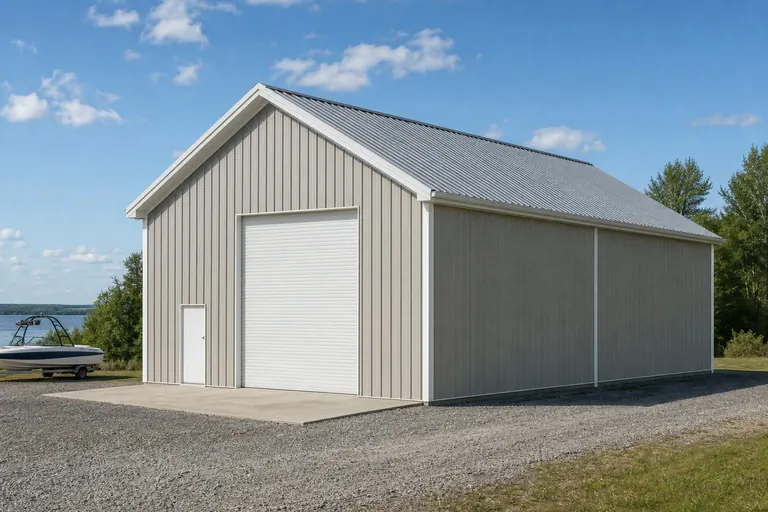
Boat Storage
Covered or enclosed storage sized to the vessel on its trailer, including tower and antenna height.
Start a quote
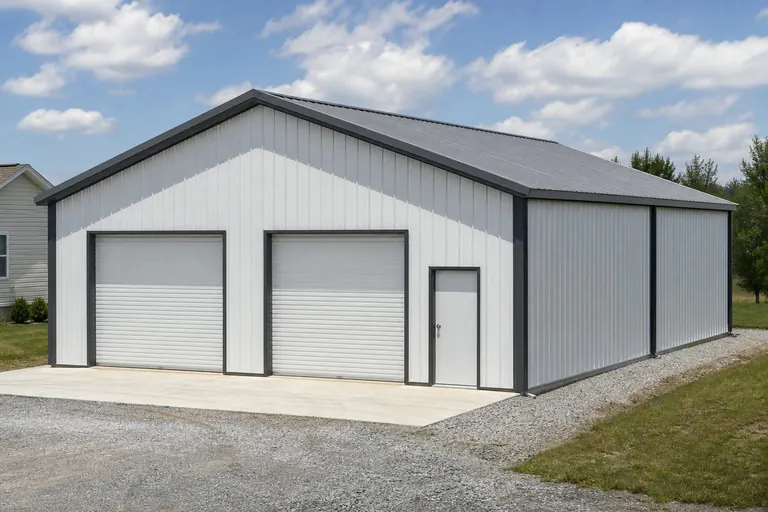
Metal Garage
Enclosed parking and equipment storage on Florida home sites and acreage, sized around door width, setbacks and driveway approach.
Start a quote
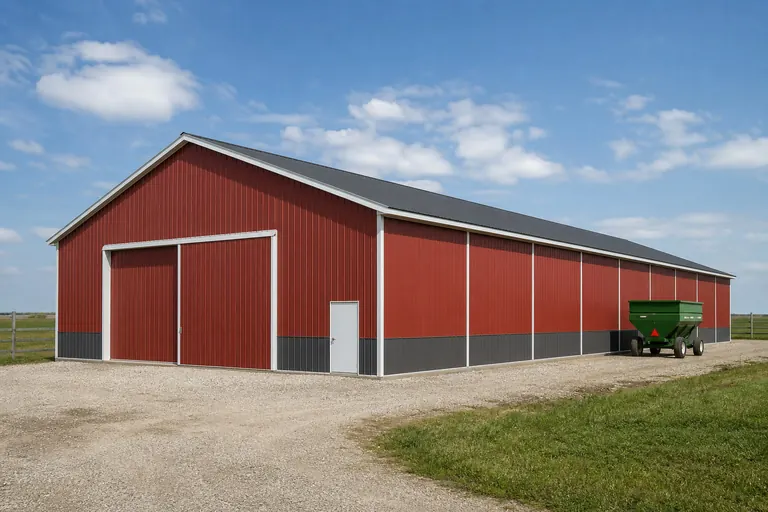
Agricultural Building
Equipment, hay and input cover for cattle, citrus, sod and nursery operations inland.
Start a quote
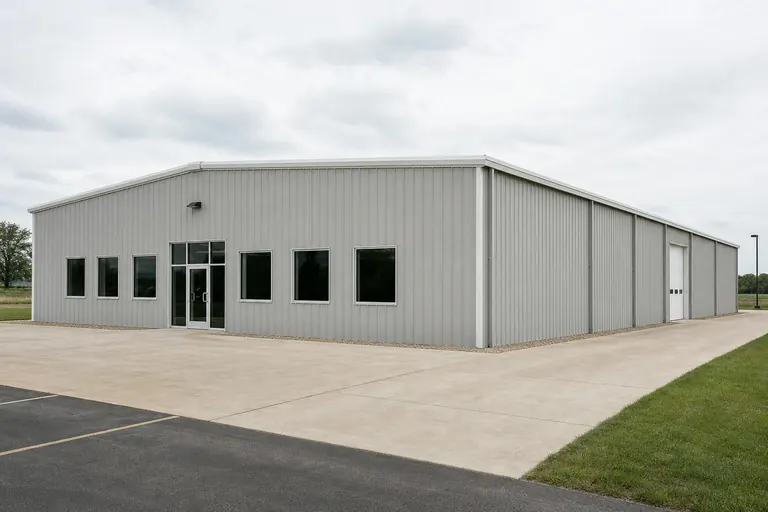
Commercial Building
Service bays, marine trades and light industrial shells near ports and along the interstate corridors.
Start a quote
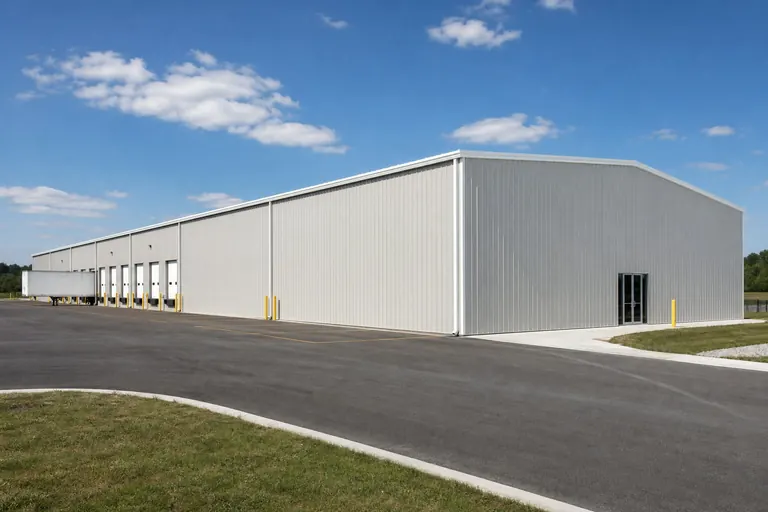
Warehouse
Distribution and inventory floor area, common around Jacksonville, Tampa and the southeast corridor.
Start a quote
Example Configuration — for planning purposes only.
Interior
Humidity, Condensation and What You Store Inside
In Florida, decide early what the interior has to protect. A building holding a boat, tools or stored inventory needs a deliberate insulation and ventilation strategy; an open equipment cover does not.
Condensation forms on the underside of a roof panel when warm moist air meets a cooler surface, and in Florida the conditions for that are present for much of the year. The usual answers are an insulation or vapour-control layer under the roof, adequate ventilation, and — where the interior is finished — a plan for how the space is conditioned. All three are quoted items, so specify them rather than leaving suppliers to guess.
This also affects material choices inside the building. Storage racking, bench surfaces and anything electrical benefit from a drier envelope, and retrofitting insulation into a completed building is significantly more work than including it from the outset.
Footprints
Building Sizes to Consider in Florida
These are reference configurations for planning, not a ranking of what Florida buyers choose. Boats and RVs set the minimum door and eave dimensions before floor area matters, so fix height first.
24′ × 36′
864 sq ft
Two vehicles with storage along one wall.
30′ × 50′
1,500 sq ft
Vehicle storage plus a working area or trailer bay.
40′ × 60′
2,400 sq ft
Clear-span shop, combined storage or an agricultural starting point.
40′ × 80′
3,200 sq ft
RV or boat storage with room to walk fully around the vessel.
60′ × 100′
6,000 sq ft
Larger agricultural, marine trade or light industrial floor area.
Example Configuration — for planning purposes only.
Floor area is width × length. Drawings are proportional illustrations; openings shown are examples only.
Boats and RVs
Sizing Boat and RV Storage Properly
Measure the vehicle, not the category. For a boat, include the trailer, the tongue, and any tower, antenna or radar arch; for an RV, include roof-mounted air conditioners and vents. Door height and length come from those numbers.
Then add working space. You want to close the door with the vessel inside and still walk around it, and you want turning room outside the opening to line up on the approach. Owners who size to the vehicle exactly almost always regret it within a season.
If the building will also hold tools, batteries or upholstery, treat it as a conditioned or semi-conditioned space and specify the interior accordingly. That is the difference between storage that preserves equipment and storage that merely keeps rain off it.
Match your goal
Starting Points for Common Florida Projects
Start from what the building has to hold or do, then let the deciding factor set the specification.
| Project goal | Starting building type | Deciding factor |
|---|---|---|
| Store a boat on its trailer | Boat storage building | Height including tower, plus length with the tongue |
| Store an RV or fifth wheel | RV storage building | Door height and turning space outside |
| Park vehicles and keep tools | Metal garage | Door width, plus an insulation decision |
| Cover farm equipment inland | Agricultural building | End-opening width and clear height |
| Run a marine or service trade | Commercial steel building | Bay count, access and jurisdiction requirements |
| Hold inventory or freight | Warehouse | Dock versus drive-in access and aisle width |
Store a boat on its trailer
- Starting building type
- Boat storage building
- Deciding factor
- Height including tower, plus length with the tongue
Store an RV or fifth wheel
- Starting building type
- RV storage building
- Deciding factor
- Door height and turning space outside
Park vehicles and keep tools
- Starting building type
- Metal garage
- Deciding factor
- Door width, plus an insulation decision
Cover farm equipment inland
- Starting building type
- Agricultural building
- Deciding factor
- End-opening width and clear height
Run a marine or service trade
- Starting building type
- Commercial steel building
- Deciding factor
- Bay count, access and jurisdiction requirements
Hold inventory or freight
- Starting building type
- Warehouse
- Deciding factor
- Dock versus drive-in access and aisle width
Regional planning
Planning Across Florida
Site conditions and review expectations differ across the state, and the coastal-inland distinction usually matters more than latitude.
Panhandle (Pensacola, Panama City, Tallahassee)
A mix of coastal exposure and inland timber and agricultural land, with longer freight distances from the peninsula.
North Florida (Jacksonville, Gainesville, Ocala)
Equine, cattle and distribution activity, plus substantial rural acreage where equipment size drives the specification.
Central Florida (Orlando, Lakeland, Tampa Bay)
Citrus, nursery and logistics alongside fast suburban growth, so jurisdictions and site constraints vary widely across short distances.
Southwest Florida (Fort Myers, Naples, Sarasota)
Strong coastal influence, high demand for RV and boat storage, and active local review processes.
Southeast Florida (Miami–Fort Lauderdale, Palm Beach)
Dense sites, marine trades and jurisdictions with their own approval expectations. Confirm requirements at the address rather than assuming a regional norm.
Inland flatwoods and the interior
Drainage and high water tables are recurring site issues; pad preparation often deserves as much attention as the building.
Cost drivers
What Affects Steel Building Cost in Florida?
Site design criteria, engineering and documentation, span and height, corrosion protection, openings, foundation and erection scope drive Florida pricing more than any statewide factor.
We publish no Florida average and no per-square-foot number. The engineering and documentation scope varies enough between jurisdictions that a blended figure would be actively misleading during planning.
- Engineering and approvals
- Site-specific engineered drawings and component documentation are a real cost, and a common quote difference.
- Design criteria at the site
- Exposure conditions at the address change the frame, not just the paperwork.
- Corrosion protection
- Coating and fastener specification varies, especially near the coast.
- Openings
- Large doors are framed individually and may need their own documentation.
- Insulation and ventilation
- A humidity-managed interior is a different product from a bare shell.
- Foundation and drainage
- Flat, low sites often need pad and drainage work priced separately.
- Erection scope
- Kit-only versus turnkey remains the biggest source of quote variance.
Before you order
A Florida Pre-Order Checklist
Seven steps that keep a Florida project comparable, permitted and appropriately specified.
- Identify the authorityCounty or municipal building department for the exact address, plus any coastal review that applies.
- Get the design criteriaAsk what applies at the site and pass it to every supplier in writing.
- Confirm documentationEngineered drawings and component approvals — who provides them and whether they are in the quote.
- Decide the interiorInsulation and ventilation strategy for humidity, settled before quoting.
- Specify corrosion protectionCoating and fastener expectations, particularly near the coast.
- Assess the padDrainage, fill and water table on flat, low-lying ground.
- Set erection scopeKit-only, kit plus erection or turnkey, agreed before quotes are collected.
Around the state
Projects Near Major Florida Markets
Review expectations, site density and typical building use differ across these markets.
- Miami–Fort Lauderdale
- Tampa Bay
- Orlando
- Jacksonville
- Fort Myers
- Sarasota
- Ocala
- Pensacola
- Tallahassee
- Lakeland
Planning a building?
Planning a Building in Florida?
Use the planning guides to narrow the footprint and building system that fits your project, then request quotes with your Florida details already attached.
Requesting information does not require a purchase.
Questions
Florida Steel Building FAQs
Answers for Florida buyers, without publishing regulatory values or absolute performance claims.
No building is hurricane-proof, and we avoid that language. What matters is that the structure and its components are engineered and documented to the design criteria the local authority sets for your address. Ask the building department what applies, then require each supplier to confirm the frame, cladding and openings are engineered and documented to those criteria.
In most cases, yes. Requirements are set by the county or municipality with jurisdiction over the address, and Florida jurisdictions commonly review structures closely. Confirm with the building department before ordering, and ask specifically what drawings and product documentation they expect.
We do not publish a Florida figure. Engineering, documentation, corrosion protection and pad work vary enough between sites that an average would hide the things you need to compare. Price follows the design criteria at your address, span and height, openings, interior specification, foundation and erection scope.
Salt-laden air is a genuine corrosion factor, which is why coating and fastener specification matters more on coastal sites. Steel buildings are used throughout coastal Florida, but the protection package should be an explicit part of the quote rather than assumed. Ask each supplier to state what they are supplying.
Condensation is managed through specification: an insulation or vapour-control layer under the roof, adequate ventilation, and a plan for how any finished area is conditioned. Decide what the building has to protect, then include the interior package in the quote — it is far harder and more expensive to add later.
Measure the vessel on its trailer, including the tongue and any tower, antenna or arch, then add clearance so the door closes with the boat inside and you can walk around it. Door height is usually the binding constraint. Turning space outside the opening matters as much as the interior dimensions.
Yes — inland agricultural operations across North and Central Florida use them for equipment, hay and input storage. Size the openings around your largest machine, decide how much of the building needs to be enclosed, and address drainage at the pad, which is often the more difficult problem on flat ground.
The site ZIP code, intended use, the design criteria from your building department, building type, width, length and eave height, the opening schedule, your corrosion and insulation expectations, and whether you need engineering and erection included.
Start your project
Request Steel Building Quotes in Florida
Florida is already selected. Add the site ZIP code and building type — plus dimensions, openings and any design criteria from your building department — and we will pass the whole scope through with your request.
Florida
Metro guides
City & Metro Building Guides in Florida
Deeper planning guides for Florida metros with their own measured demand and their own siting questions.
- Planning a build around Tampa
Tampa Bay: general steel building planning, plus the siting questions this area raises before quoting.
- Gainesville metro building guide
Gainesville: garage and metal barn intent projects, plus the siting questions this area raises before quoting.
- What buyers ask near Pensacola
Pensacola: general steel building planning, plus the siting questions this area raises before quoting.
- Siting and sizing around Ocala
Ocala / Marion County: general steel building planning, plus the siting questions this area raises before quoting.
- Jacksonville area project notes
Jacksonville: general steel building planning, plus the siting questions this area raises before quoting.
- Building considerations near Tallahassee
Tallahassee: general steel building planning, plus the siting questions this area raises before quoting.
- Orlando regional planning guide
Orlando / Central Florida: general steel building planning, plus the siting questions this area raises before quoting.
Building type guides
Building Types Planned in Florida
What actually changes for each building type when the project is planned in Florida.
- Aircraft Hangar in Florida
A hangar's clear-span door is its largest single surface, and in Florida that surface sits in the state NOAA's Hurricane Research Division records as having the most historical...
- Barndominium in Florida
A Florida barndominium sits on ground the U.S.
- Carport in Florida
An open-sided carport puts more of the wind-load question on the posts and their footings than an enclosed building does, because there are no walls sharing the load.
- Commercial building in Florida
A commercial steel building in Florida is checked against one statewide standard: the Florida Building Commission administers the Florida Building Code across every county.
- Detached garage in Florida
A detached garage is a fully enclosed structure, so the first planning question in Florida is not wind alone — it is what the ground under the slab is doing.
- Garden shed in Florida
A Florida garden shed answers to a growing calendar that barely pauses, but the bigger planning question is what the state's wind and water exposure means for siting and anchoring.
- Horse barn in Florida
A Florida horse barn is shaped less by any single number and more by where on the map it sits.
- Metal garage in Florida
A metal garage in Florida is an enclosed accessory building sitting in the one U.S.
- Mini-storage building in Florida
A mini-storage building in Florida is a commercial, multi-tenant self-storage development, and the site due-diligence for one looks different here than in most states because Fl...
- Pole barn in Florida
Post-frame construction in Florida answers to two persistent conditions before it answers to any farm-size assumption: ground that USGS elevation mapping describes as low-lying...
- RV carport in Florida
Florida is recorded by NOAA's Hurricane Research Division as the U.S.
- RV Garage in Florida
An RV garage lives or dies on one dimension most garages never worry about: the height of a single overhead door built to swallow a Class A motorhome.
- Self-storage building in Florida
A self-storage facility in Florida is a commercial, multi-tenant development, and the state's specific geography makes site selection the first real design decision.
- Shed in Florida
A backyard or property-line shed in Florida is planned around wind and water exposure well before it is planned around a seasonal use calendar.
- Shouse in Florida
A shouse joins a workshop or equipment bay to living quarters under one roof, and in Florida that pairing means the structure's most demanding day is a shared one: NOAA's Hurric...
- Steel home in Florida
A steel home does not behave differently because it is built in Florida.
- Storage building in Florida
A personal storage building in Florida is a small, single-owner structure — a shed-scale project, not an agricultural building — and the two facts that actually change it from o...