South · SC
Steel Buildings in South Carolina
South Carolina squeezes an automotive supply chain, an inland port, a resort coastline and a tobacco belt into one modest-sized state, and each corner has settled into its own steel building habits. Rather than blend those together, this guide keeps the Upstate factory floor, the Midlands distribution shed, the Lowcountry boat house and the Pee Dee equipment barn in separate lanes.
Overview
Four Economies Compete for South Carolina's Building Budget
Moving from Spartanburg to Myrtle Beach crosses four distinct economies: an automotive- and tire-supplier-driven Upstate with its own rail and inland port traffic, a Midlands built on state government employment and warehousing, a coastal tourism corridor where salt air changes the specification conversation, and a Pee Dee still anchored in tobacco and row-crop agriculture.
The Upstate's manufacturing base, anchored around Greenville and Spartanburg, supports industrial shells and contractor yards that share almost nothing in common with a boat storage building forty miles from Charleston. The Midlands mixes Columbia's government workforce with a growing distribution footprint along I-20 and I-77, and the Pee Dee remains one of the state's more agricultural, less developed stretches.
A pre-engineered rigid frame handles clear-span needs across all four regions, and post-frame construction remains a straightforward option for basic agricultural cover. The building system rarely changes with geography; the coating, review timeline and site logistics do.
Upstate manufacturing
Supplier and Contractor Buildings Along I-85
The Upstate's automotive and tire-manufacturing supply chain drives a steady flow of industrial building and contractor-yard projects along the I-85 and I-26 corridors, where clear span and utility routing decide the specification.
These buildings tend to be planned around the equipment they'll house and the power they'll need, rather than a fixed square footage handed down in advance. Settling utility runs and crane clearance while the frame is still being engineered avoids a costly mid-project change.
Greenville and Spartanburg's growth has also pulled in more flex-space and suburban commercial development, where local site plan review and parking allowances shape the buildable footprint about as much as the building program itself.
Inland Port Greer, connected by rail to the Port of Charleston, has drawn container-handling and third-party logistics activity into the same corridor, adding trailer staging and dock-height considerations to projects that a decade ago would have been simple production shells.
Midlands logistics
Distribution and Government-Adjacent Buildings Around Columbia
Columbia's position at the crossing of I-20, I-26 and I-77 has built a Midlands economy around distribution and fleet support that sits apart from both the Upstate factory floor and the coastal tourism trade.
Warehousing and cross-dock projects near Columbia are usually sized around trailer courts, dock door count and clear height rather than a single production line, and the flatter Midlands terrain generally simplifies the pad work compared to the Upstate foothills.
State government and university employment around Columbia also supports a steady base of office-adjacent and municipal fleet buildings, where the exterior finish and site landscaping requirements can matter as much as the structural span.
Building types
Steel Building Types Common in South Carolina
Manufacturing and distribution shells, boat and RV storage, and farm buildings cover most South Carolina project goals, depending on which region the project sits in.
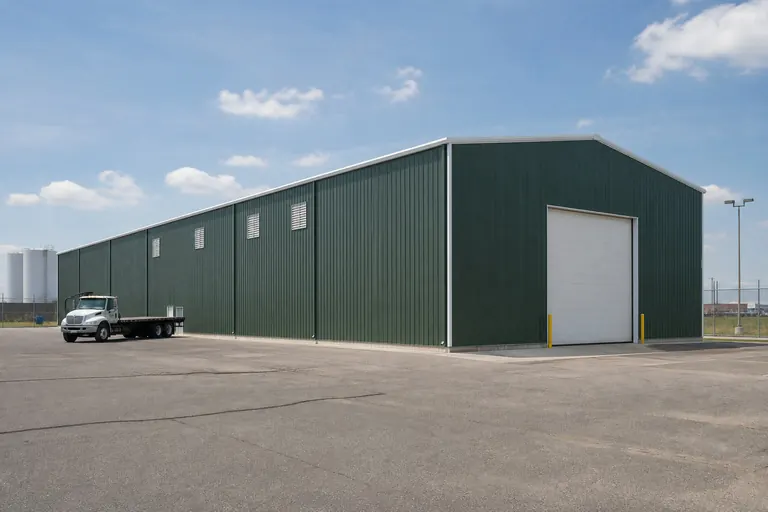
Industrial Building
Manufacturing and assembly space along the Upstate's I-85 corridor, near the region's automotive and tire suppliers.
Start a quote
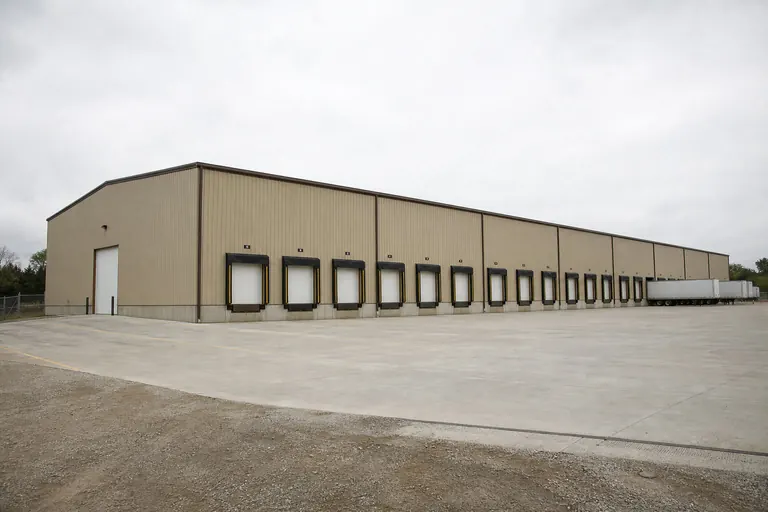
Distribution Center
Dock-height storage and cross-dock space near Columbia and the Inland Port Greer rail corridor.
Start a quote
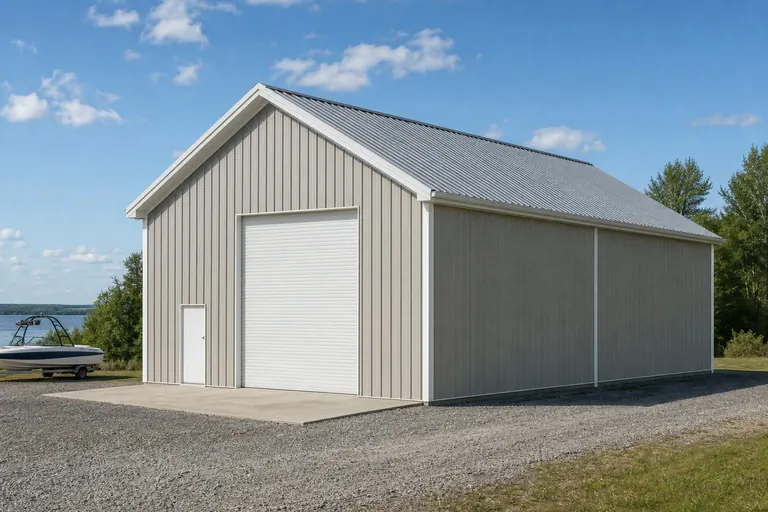
Boat Storage
Covered or enclosed storage for the Grand Strand and Lowcountry, sized to the vessel and trailer.
Start a quote
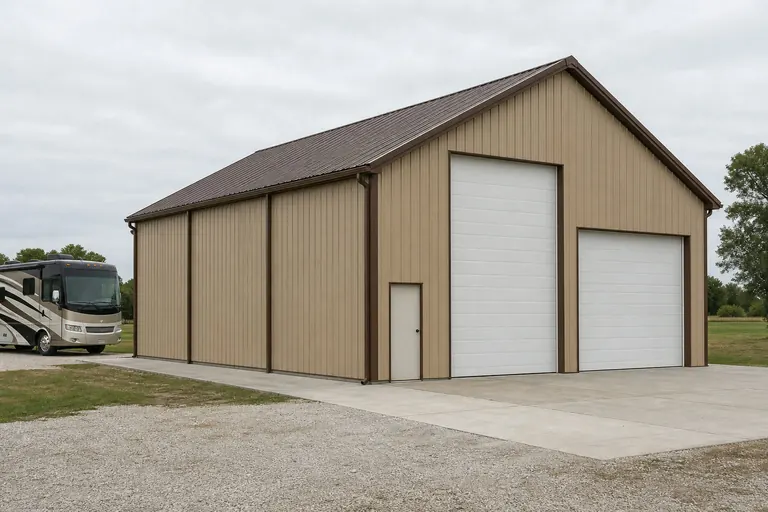
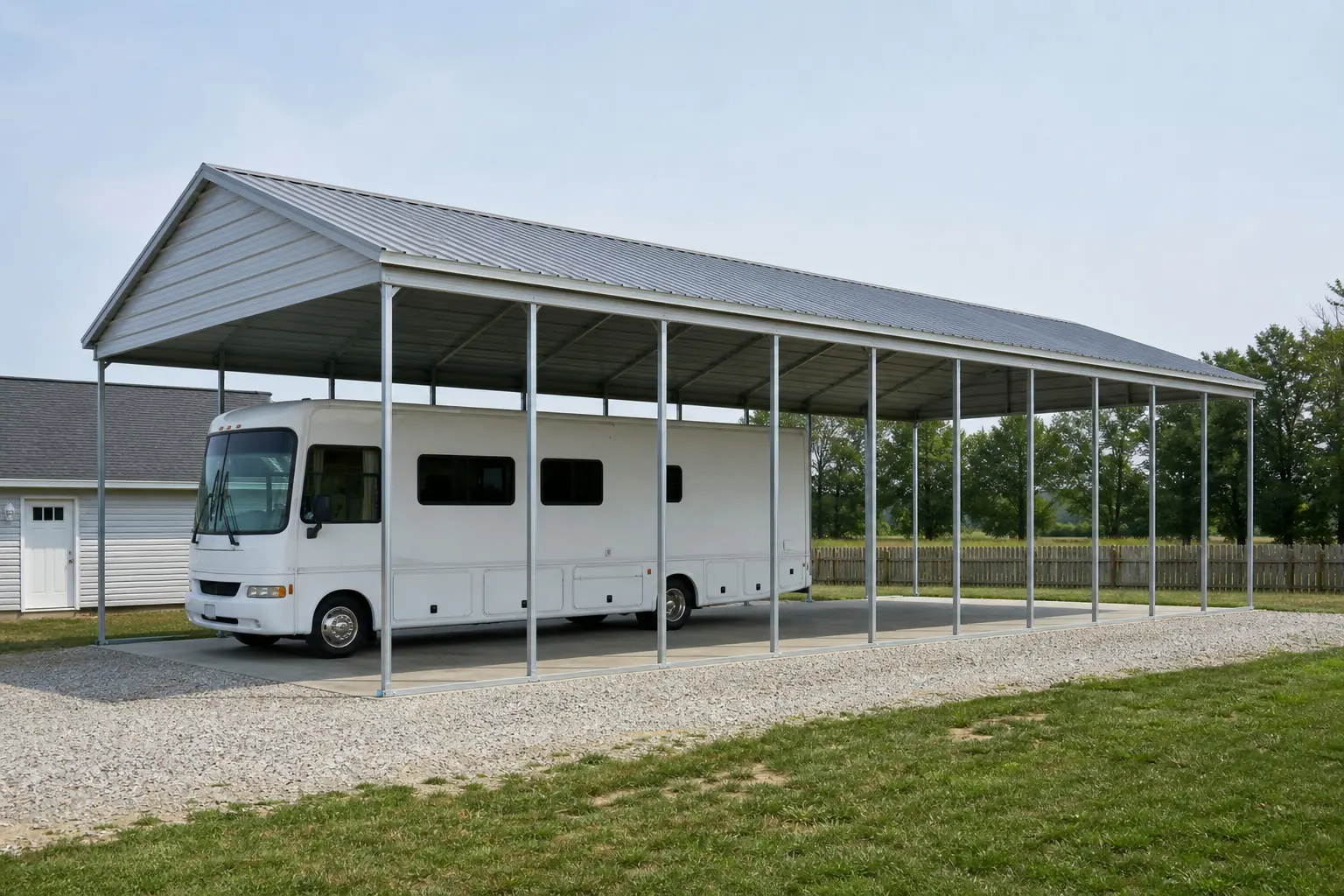
RV Garage
Enclosed height-driven storage for motorhomes, common near coastal recreation areas.
Start a quote
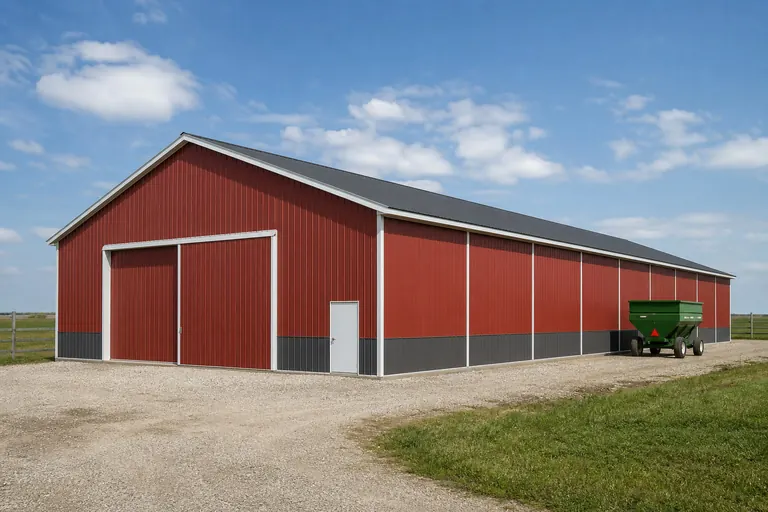
Agricultural Building
Equipment and commodity cover for Pee Dee tobacco, row crop and timber operations.
Start a quote
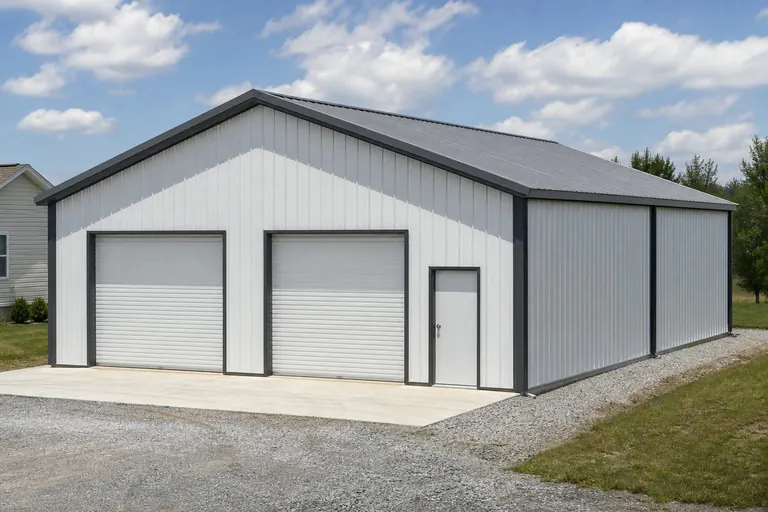
Metal Garage
Enclosed vehicle storage on residential and rural lots statewide.
Start a quote
Example Configuration — for planning purposes only.
Coastal exposure
What Changes Along the Grand Strand and Lowcountry
Salt-laden air and an active tourism development pace along the Grand Strand and Lowcountry push corrosion protection, coating selection and local review timelines to the front of the conversation, well ahead of floor area.
Coastal counties often run their own review process, separate from what an inland county requires, so it's worth confirming expectations for the exact address instead of assuming a nearby project's timeline applies to yours.
Ask each supplier directly what coating and fastener specification is included for coastal exposure. Two quotes can describe visually similar buildings while differing meaningfully in how well they'll hold up over time.
Marsh-adjacent and barrier-island parcels in the Lowcountry also tend to carry setback and elevation considerations that inland Midlands or Upstate sites simply don't face, which can shrink the buildable envelope before the building design is even discussed.
Farm buildings
Tobacco, Timber and Row Crop Buildings in the Pee Dee
Pee Dee farm buildings tend to be built around tobacco curing and handling, row-crop equipment, or timber operations, and each of those pulls the door width and clear height in a different direction.
An open equipment barn keeps things simple, while a shop meant for maintenance work adds a slab and insulation to the plan. Settling which the building needs to be before requesting quotes avoids a mid-project change to the framing.
Rural road access for delivering long steel members is worth checking on Pee Dee sites off secondary roads, since it affects scheduling more there than it typically does closer to Columbia.
Timber operations around the Pee Dee and Santee River basins also lean on open-sided storage for equipment and cut product between hauls, where ventilation and a clear drive-through layout matter more than a finished interior.
Across the state
Planning Across South Carolina's Regions
South Carolina's four broad regions differ enough in land use and site conditions that identical building programs can call for different footprints or specifications depending on where they sit.
Upstate (Greenville, Spartanburg, Anderson)
Automotive and tire manufacturing concentrate here, with industrial and commercial buildings a routine project type along the I-85 corridor and near Inland Port Greer.
Midlands (Columbia and surrounding counties)
A mix of state government, distribution and farmland, with growing warehouse and fleet development around the I-20/I-26/I-77 interchange.
Pee Dee
Predominantly rural and agricultural, with tobacco, row crop and timber operations driving equipment and commodity storage needs.
Grand Strand and Lowcountry
Coastal exposure, active tourism development and boat or RV storage demand define this region. Local review processes near Charleston and Myrtle Beach are worth confirming early.
Footprints
Building Sizes to Consider in South Carolina
Size an Upstate industrial project around utility and clearance needs first; size a coastal storage project around vessel dimensions; size a Midlands distribution shed around dock count.
50′ × 100′
5,000 sq ft
Contractor yard or light manufacturing floor supporting Upstate automotive suppliers.
60′ × 150′
9,000 sq ft
Cross-dock or distribution floor near Columbia's interstate interchange.
30′ × 50′
1,500 sq ft
Boat or RV storage with room to walk around the vessel.
24′ × 30′
720 sq ft
Two-vehicle garage with a narrow bench strip.
40′ × 60′
2,400 sq ft
Farm shop or combined storage building in the Pee Dee.
60′ × 120′
7,200 sq ft
Larger industrial floor area near I-85 or Inland Port Greer.
Example Configuration — for planning purposes only.
Multiply width by length for floor area; regional review or coastal setback rules can still shift the final dimensions.
Match your goal
Which Building Type Fits Your South Carolina Project?
Anchor the choice in the building's job, then use the deciding factor to lock in the specification.
| Project goal | Starting building type | Deciding factor |
|---|---|---|
| Support an Upstate manufacturing supplier | Industrial building | Clear span, utility routing and crane clearance |
| Warehouse or cross-dock near Columbia | Distribution center | Dock door count and trailer court space |
| Store a boat near the coast | Boat storage building | Vessel height including tower, plus trailer length |
| Store a vehicle and a workbench — Metal garage — Door clearance and whether the interior is finished | ||
| Cure or store tobacco and timber equipment | Agricultural building | End-opening width and clear height |
| Operate a service or retail business | Commercial building | Front elevation and parking layout |
Support an Upstate manufacturing supplier
- Starting building type
- Industrial building
- Deciding factor
- Clear span, utility routing and crane clearance
Warehouse or cross-dock near Columbia
- Starting building type
- Distribution center
- Deciding factor
- Dock door count and trailer court space
Store a boat near the coast
- Starting building type
- Boat storage building
- Deciding factor
- Vessel height including tower, plus trailer length
Store a vehicle and a workbench — Metal garage — Door clearance and whether the interior is finished
Cure or store tobacco and timber equipment
- Starting building type
- Agricultural building
- Deciding factor
- End-opening width and clear height
Operate a service or retail business
- Starting building type
- Commercial building
- Deciding factor
- Front elevation and parking layout
Before you order
A South Carolina Pre-Order Checklist
Steps that keep a South Carolina project comparable and appropriately specified.
- Confirm the reviewing authorityCounty or municipal building department for the exact address, plus any coastal review that applies.
- Ask about coastal coatingGrand Strand and Lowcountry buyers should confirm fastener and cladding protection explicitly.
- Settle utility routing earlyUpstate industrial buildings need power and clearance needs fixed before the frame is engineered.
- Plan dock and trailer spaceMidlands distribution projects should map the trailer court before the building footprint is set.
- Check rural road widthPee Dee delivery scheduling depends on it more than Midlands scheduling does.
- Plan the interior for humidityInsulation and ventilation strategy matters statewide, not just near the coast.
- Build in extra review time on the coastCoastal jurisdictions can take longer than inland counties to clear a permit.
Around the state
Projects Near Major South Carolina Markets
What a project needs to account for on site changes noticeably across these markets.
- Columbia
- Greenville
- Charleston
- Myrtle Beach
- Spartanburg
- Hilton Head
- Florence
- Rock Hill
- Anderson
- Sumter
Planning a building?
Planning a Building in South Carolina?
Use the planning guides to narrow the footprint and building system that fits your project, then request quotes with your South Carolina details already attached.
Requesting information does not require a purchase.
Questions
South Carolina Steel Building FAQs
Answers for South Carolina buyers, without publishing regulatory values or pricing claims.
Yes, when specified with coating and fastener protection appropriate for salt exposure. Ask each supplier directly what corrosion protection is included, since it varies between quotes even for similar-looking buildings.
In most jurisdictions, yes, and coastal counties often run their own review process. Confirm with the county or municipal building department for your specific address before ordering.
Footprint, span, coastal exposure requirements, engineering and erection scope drive the price far more than a single statewide figure could. An Upstate industrial building with heavy utility needs prices very differently than a simple Pee Dee equipment barn.
Measure the vessel including the trailer, tongue and any tower or antenna height, then add room to walk around it with the door closed. Height decides the building before floor area does.
It's a routine project across inland South Carolina, particularly in the Midlands and Pee Dee. Zoning for combined living and shop space varies by county, so confirm before ordering.
The Upstate's automotive and tire manufacturing base drives demand for industrial and commercial shells along I-85, while coastal counties focus more on boat, RV storage and tourism-related buildings with added exposure considerations.
Trailer court space, dock door count and clear height tend to drive the layout more than raw square footage. Columbia's interstate access also makes site circulation for trucks a routine early planning topic.
Not always. An open equipment or curing barn can run on a compacted base, while a maintenance shop typically adds a slab. Decide the building's working purpose before requesting quotes so the floor plan matches it.
Start your project
Ready to plan your South Carolina steel building?
Whether your site sits in the Upstate's manufacturing corridor, near Columbia's distribution interchange, on Pee Dee farmland, or along the Grand Strand, confirm local review requirements and exposure needs before comparing supplier quotes.
South Carolina
Metro guides
City & Metro Building Guides in South Carolina
Deeper planning guides for South Carolina metros with their own measured demand and their own siting questions.
- Planning a build around Greenville
Greenville-Spartanburg metro: general steel building planning, plus the siting questions this area raises before quoting.
Building type guides
Building Types Planned in South Carolina
What actually changes for each building type when the project is planned in South Carolina.
- Barndominium in South Carolina
South Carolina's climate and geography turn a barndominium from a simple steel shell into a specialized residential project.
- Carport in South Carolina
In South Carolina, a carport's most important job is fighting the sun.
- Metal garage in South Carolina
A metal garage in South Carolina is a specialized shield against the state's relentless environmental cycle.
- Pole barn in South Carolina
In South Carolina, pole barn construction is defined by the land it serves.
- RV carport in South Carolina
For an RV owner in South Carolina, the primary enemy is the sky.
- Shed in South Carolina
A shed in South Carolina has to survive more than just basic storage needs.
- Steel home in South Carolina
A steel home in South Carolina represents a shift toward permanent, climate-resilient housing.
- Storage building in South Carolina
A storage building in South Carolina is a defensive structure.
- Workshop in South Carolina
A workshop in South Carolina is where passion meets environmental resilience.