Storage building · FL
Storage Buildings in Florida
A personal storage building in Florida is a small, single-owner structure — a shed-scale project, not an agricultural building — and the two facts that actually change it from one Florida address to the next are administrative and physical, not statistical. Administratively, the Florida Building Code, run statewide by the Florida Building Commission, defines a High-Velocity Hurricane Zone limited to Broward and Miami-Dade counties, and this page does not guess at what that means numerically for your specific structure; that is a job for your local building department. Physically, USGS mapping calls large stretches of Florida low-lying, and the state sits entirely over the Floridan aquifer, so where your slab sits relative to the surrounding grade is worth settling before you order anything. Neither fact is about hurricanes as a vague statewide mood — both are specific, citable, and worth naming to whoever is helping you site the building.
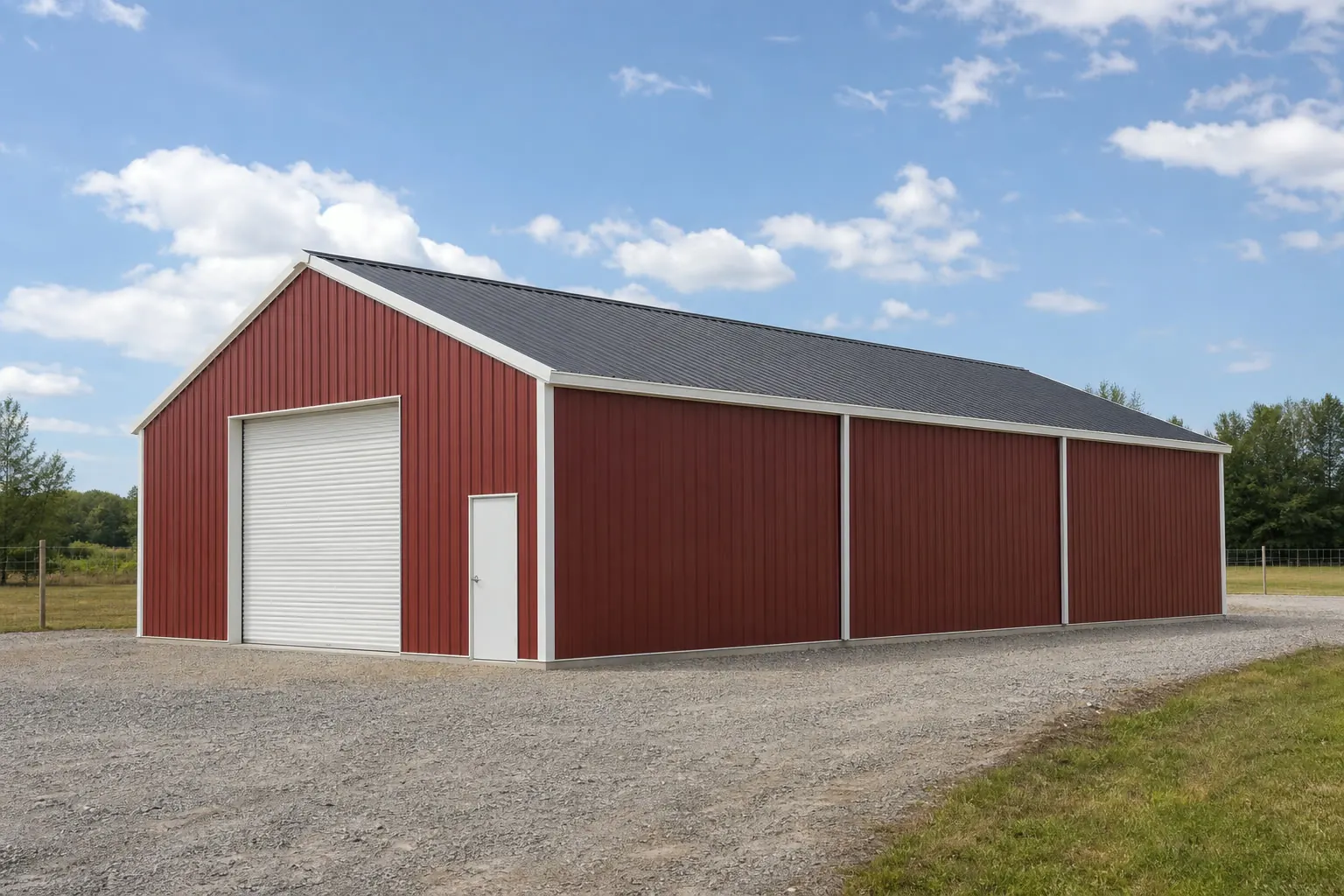
A small building, but not a small question of where it sits
A backyard storage building is a modest project, and Florida does not make it complicated for most owners. But two facts are worth knowing before you finalize a spot on the lot: whether your parcel falls inside the Florida Building Code's High-Velocity Hurricane Zone, which is legally limited to Broward and Miami-Dade counties, and whether your specific ground sits on the low-lying terrain USGS has mapped across large parts of the state. Neither fact changes the character of the building. Both are worth a five-minute conversation with your local building department before you order one.
The intersection
Two counties, one code: knowing which side you're on
The Florida Building Code's HVHZ provisions apply only inside Broward and Miami-Dade counties; everywhere else in Florida, the same statewide code applies without that overlay.
It would be convenient to say that any storage building in South Florida faces the same review, but the Florida Building Code defines its High-Velocity Hurricane Zone specifically as Broward and Miami-Dade counties, administered statewide by the Florida Building Commission. A backyard storage building just outside that boundary, even in a nearby coastal county, is reviewed under the standard statewide code rather than the HVHZ provisions. That distinction is worth confirming for your exact address rather than assuming from general geography, because the products, anchoring and specification a supplier proposes can differ between the two review paths.
This page does not name a wind speed, a specific anchoring requirement or a numeric permit threshold, because those figures depend on your exact jurisdiction, the structure's exact footprint, and the adopted code edition currently in effect — details only your local building department and, where required, a licensed engineer can confirm. What we can say plainly is that a small accessory structure inside HVHZ is not automatically exempt from the same scrutiny as a larger building; size alone does not remove you from the review path, so it is worth asking rather than assuming a backyard shed is too small to matter.
Because the Florida Building Commission administers one code statewide, most of your project is governed the same way no matter where in Florida you build. The HVHZ boundary is the one clearly documented exception, and it is worth a direct question to your building department rather than a guess based on how close you feel to the coast.
Site conditions
Low ground and a shared aquifer make the pad the first decision
USGS mapping calls large portions of Florida low-lying, and the entire state sits over the Floridan aquifer system, so pad elevation is worth checking even for a small structure.
A storage building is small enough that owners sometimes skip the site-planning step entirely and simply pick a flat-looking spot. In Florida, that is a riskier shortcut than it looks, because USGS elevation mapping describes large stretches of the state — spanning a total land area of 53,603 square miles — as low-lying, and the Floridan aquifer system underlies the entire state. Neither of those facts tells you your parcel's specific drainage behavior; only a visual check after heavy rain, or a conversation with whoever is grading your pad, does that. But they are a solid reason to walk your specific spot after a storm before committing to it.
For contents-focused storage, the practical concern is less structural and more about what happens to whatever you keep inside during Florida's wetter months. A slightly raised, well-drained pad costs little extra at the outset and meaningfully lowers the odds of water intrusion around the base of the walls, particularly on a lot that already drains poorly toward one corner.
FEMA's National Risk Index tracks 18 separate natural hazard categories for U.S. communities, including every Florida county, covering everything from coastal flooding to strong wind to drought. We have not verified specific numeric risk scores for individual Florida counties directly from FEMA, so this page does not cite one; the useful takeaway is simply that hurricane exposure is one of several documented hazard categories relevant to where you site a small structure, not the only one worth a moment's thought.
Quick reference
Florida figures this page relies on
Every figure below carries a named publisher and period; none is a wind load, a permit threshold, or a price.
| Measure | Figure | Source |
|---|---|---|
| HVHZ counties | Broward and Miami-Dade only | Florida Building Commission / Florida Building Code |
| Statewide code administrator | Florida Building Commission | Florida Building Commission |
| Total land area | 53,603 sq mi | U.S. Census Bureau, 2008 measurement |
| FEMA hazard categories tracked | 18 defined hazard types | FEMA National Risk Index |
| County-level risk scores | Not independently verified — not cited here | Evidence registry |
HVHZ counties
- Figure
- Broward and Miami-Dade only
- Source
- Florida Building Commission / Florida Building Code
Statewide code administrator
- Figure
- Florida Building Commission
- Source
- Florida Building Commission
Total land area
- Figure
- 53,603 sq mi
- Source
- U.S. Census Bureau, 2008 measurement
FEMA hazard categories tracked
- Figure
- 18 defined hazard types
- Source
- FEMA National Risk Index
County-level risk scores
- Figure
- Not independently verified — not cited here
- Source
- Evidence registry
Get Florida storage building quotes
Tell us your county and what you plan to store, and we route it with the Florida HVHZ and terrain context already attached.
Configuration
What a Florida personal storage building is usually asked to do
Most Florida personal storage briefs cluster around a handful of recurring uses, and the use shapes ventilation and pad choice more than the county line does.
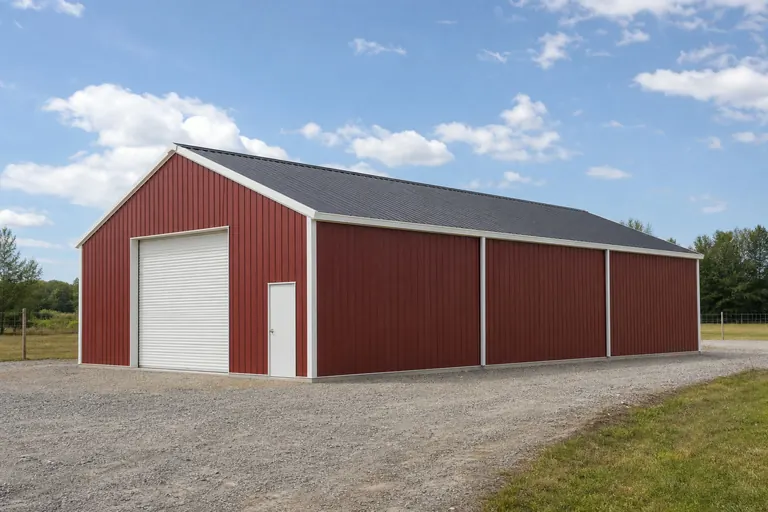 Yard and pool equipment storageThe simplest use case, where a raised pad matters more than ventilation on lower-lying lots.Tools and light workshopAdds a workbench or shelving, where corrosion protection for metal tools benefits from good drainage year-round.Household overflow storageFurniture, documents and electronics are the most moisture-sensitive contents, which is where pad and grading choices matter most.
Example Configuration — for planning purposes only.
Footprint
Common Florida personal storage building sizes
Personal storage buildings in Florida are typically sized to what a single household needs to keep, which keeps most projects modest regardless of county.
10′ × 12′
120 sq ft
A common small footprint for yard and pool equipment.
12′ × 20′
240 sq ft
Room for larger tools, a small workbench, or overflow household storage.
16′ × 24′
384 sq ft
Suited to combined storage and light workshop use on a residential lot.
Example Configuration — for planning purposes only.
Footprint pages carry layout detail for each size; this page explains only why the HVHZ boundary and Florida's ground conditions matter for siting these dimensions.
Preparation
Before you request a Florida storage building quote
A handful of details resolved up front keep a small Florida storage project simple.
- Confirm whether your parcel is inside Broward or Miami-Dade CountyThat determines whether HVHZ provisions apply; ask your local building department directly rather than assuming from general location.
- Ask about your permit threshold locallySmall accessory structures below a certain size are exempt from permitting in many jurisdictions, but the threshold is set locally, not statewide.
- Check how your specific lot drains after rainStatewide low-lying terrain is context; a direct look at your parcel after a storm tells you what your pad actually needs.
- Decide on pad height before orderingA raised, well-drained pad is a cheap decision at this stage and a difficult one to add later.
- List what you intend to storeMoisture-sensitive items like documents, electronics and furniture make drainage and ventilation choices more important than for tools or yard equipment.
Questions
Florida storage building questions
Honest answers at the state level, with permitting, loads and pricing routed to whoever actually owns those answers.
Only if your parcel is in Broward or Miami-Dade County, per the Florida Building Code. Confirm your exact address and requirements with your local building department; this page does not state the specific structural provisions.
It depends on your local jurisdiction. Many cities and counties exempt small accessory structures below a size threshold, but that threshold is set locally, not by the state, so ask your building department directly.
Not necessarily, but USGS mapping does describe large portions of the state as low-lying, and Florida sits entirely over the Floridan aquifer. Checking how your specific lot drains after rain is worth doing before you pick a pad location.
There is no official typical size. Most personal storage buildings run from about 10x12 up to 16x24 depending on what a household needs to store.
We do not publish state-level prices, since cost depends on size, specification and site work such as pad preparation. Our cost pages explain what drives the number, and a builder quote covers your specific project.
No. This page covers a small, single-owner accessory structure. A horse barn is a working agricultural structure with different siting, drainage and use considerations, covered on its own Florida page.
Sources for the Florida facts on this page
This page states no code requirement, wind speed, snow load, permit rule, price or supplier claim. The state-specific facts it does use are listed with their publisher below.
The Florida Building Code defines a High-Velocity Hurricane Zone (HVHZ) consisting of Broward and Miami-Dade counties.
Florida Building Commission (via UpCodes republication) · 2023 FBC, 8th edition · Tier 3
https://up.codes/d/high-velocity-hurricane-zone-hvhzThe Florida Building Commission administers the Florida Building Code statewide.
Florida Building Commission · 8th Edition (2023), effective Dec 31, 2023 · Tier 2
https://www.floridabuilding.org/USGS mapping highlights that large portions of Florida are low-lying, derived from USGS digital elevation models.
U.S. Geological Survey · n/a (map publication) · Tier 2
https://pubs.usgs.gov/sim/3047/Florida's total land area was 53,603 square miles per the 2008 Census Bureau state area measurements.
U.S. Census Bureau, Statistical Abstract of the United States: 2011 · 2008 · Tier 1
https://www2.census.gov/library/publications/2010/compendia/statab/130ed/tables/11s0355.pdfFEMA's National Risk Index scores U.S. communities, including Florida counties, across 18 defined natural hazard types.
FEMA · current dataset · Tier 1
https://www.fema.gov/about/openfema/data-sets/national-risk-index-data