
Comparisons
Steel Building Comparisons
Side-by-side comparisons on defined criteria.
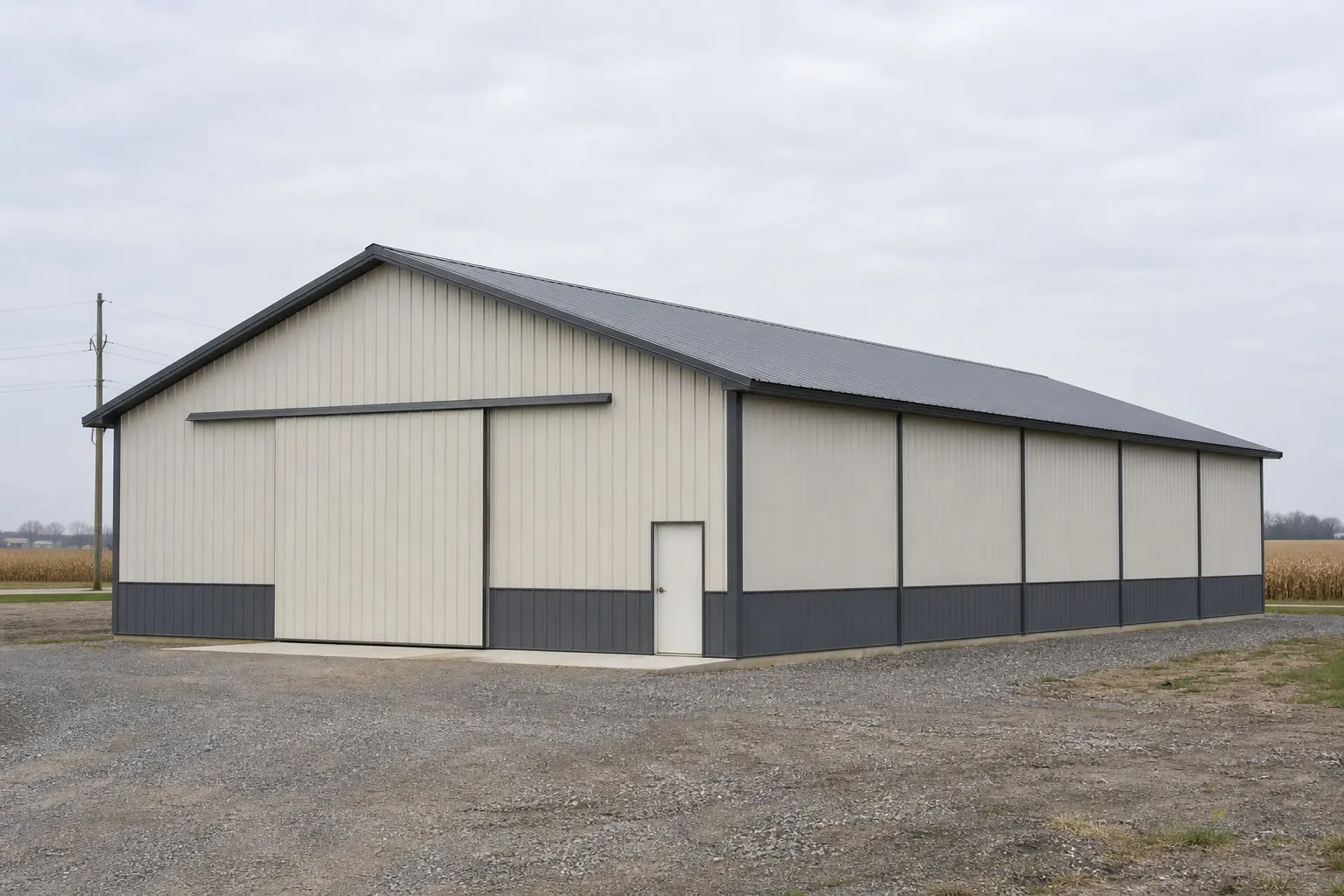
Side by side
Compare the decisions that actually change the building
Six decisions account for most of the difference between two steel building quotes. Each one is laid out with the trade-off visible instead of a recommendation.
- Structural system and span
- Roof and envelope choices
- Now-versus-later decisions
- Written as trade-offs, not verdicts
Example configuration — for planning purposes only.
Key decisions
Where buyers most often have to choose
Work through these before requesting quotes so every supplier prices the same building.
Steel vs. wood framing
Which structural system suits the span and the use?
Pre-engineered steelvsStick-built woodSpan requirement, maintenance expectations and local trade availability usually decide this one.
Read the full comparisonClear span vs. interior columns
Do you need an uninterrupted floor?
Clear span framevsModular frame with columnsColumns reduce frame weight but restrict how equipment and vehicles move through the building.
Standing seam vs. exposed fastener roof
How is the roof fastened and sealed?
Standing seamvsExposed fastenerConcealed clips allow thermal movement; exposed fasteners are simpler and are re-gasketed over time.
Rigid frame vs. post-frame
Steel frame on a slab, or posts in the ground?
Rigid steel framevsPost-frame constructionPost-frame can suit agricultural spans on unimproved sites; rigid frames suit long clear spans and hard use.
Insulated vs. uninsulated shell
Will the building be conditioned or occupied?
Insulated assemblyvsBare shellEven unheated buildings often need condensation control, which is a different problem from thermal comfort.
Build now vs. expand later
Is the extra length worth it today?
Full length nowvsExpandable endwallAn expandable endwall costs more upfront and much less than retrofitting an endwall not designed for it.
Have suppliers price the same building
FAQ
Common questions about comparisons
Because company records are researched to different depths and verification varies by attribute. Ranking manufacturers on uneven, partly unverified information would be opinion presented as research. Individual company reviews are published separately, each written from that company's own material.
Only with a documented inclusion basis, a collection date and a named source, and even then as a range tied to stated inputs rather than as a headline number.
Evidence
Sources and basis
Sources and methodology
Metal Building Systems Manual
Metal Building Manufacturers Association · Industry technical manual · Tier 2 — recognized industry organization or engineering publication
Supports: System terminology used to describe the pre-engineered side of each comparison.
- Criteria selection: Criteria are chosen as characteristics that follow from the structural systems, not from product marketing.
Orientation
Comparisons without a scoreboard
Most published building comparisons are advocacy with a table attached. They score materials out of ten, quote a price difference with no inclusion basis, and reach a conclusion that was decided before the criteria were chosen. We do the opposite: it names the criteria that genuinely differ between two systems, states what each system does about that criterion, and leaves the weighting to the reader, because the weighting is a project decision.
Cost is deliberately excluded from the tables. Span, height, finish level, snow and wind criteria and the local labour market dominate the total, and a single comparative figure that hides those inputs is not information.
Directory
Published comparisons
The list below is short on purpose. A comparison is only added once the two subjects can be separated on criteria the platform can state without inventing figures, which rules out most of the head-to-head content the industry publishes.
Comparison pages
| Comparison | What it decides |
|---|---|
| Steel building versus wood building | Which structural system reaches the required span, and the durability and modification trade-offs that follow |
Additional comparisons are added only where the two subjects differ on criteria the platform can state without inventing figures.
Guidance
How to read any building comparison
The habit worth building is reading the criteria before the conclusion. If the criteria list is one-sided, the conclusion was written first, and no amount of table formatting fixes that.
- Check whether the criteria were chosen before or after the conclusion: a comparison that only lists criteria one side wins is an advertisement.
- Look for the inclusion basis behind any cost claim. Without span, height, finish level and location, a per-square-foot figure is not comparable to anything.
- Separate system characteristics from product characteristics. Coatings, warranties and finishes vary by supplier; span behaviour and combustibility follow from the system.
- Ask which criterion actually decides your project. In most builds one or two criteria dominate and the rest are noise.
Limits
What we will not compare
Suppliers are not ranked against each other, because verification status varies by company and by attribute and a ranking built on uneven records is opinion. Prices are not compared, because a differential without an inclusion basis is meaningless. Warranties are not compared in the abstract, because the terms differ per document and the useful comparison is between the two documents in front of you.
What remains is the comparison that actually decides projects: which structural system answers the span, environment and modification path you need, and what each system asks of the site and the budget in return.
Planning a building?
Tell us the type, size and location and we will help you request supplier quotes for your project.