West · AZ
Steel Buildings in Arizona
Arizona splits into two very different building climates within one state line: the sustained, months-long heat of the Sonoran Desert around Phoenix, Tucson and Yuma, and the cooler, pine-forested plateau near Flagstaff where winter snow is a real design input. This guide walks through the building categories, footprints and siting decisions that change depending on which side of that line your project sits.
Building types
Steel Building Types Common in Arizona
Arizona projects range from RV and equipment shade structures in the low desert to ranch and livestock buildings in the high country. Pick the category that matches your climate zone and use.
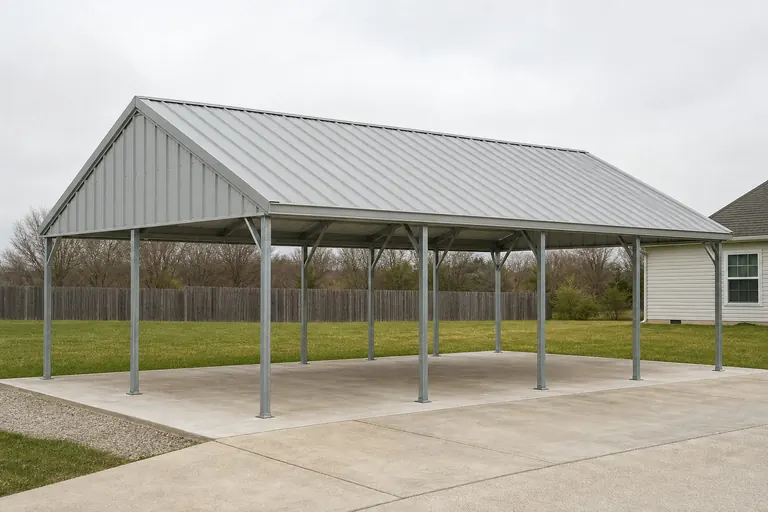
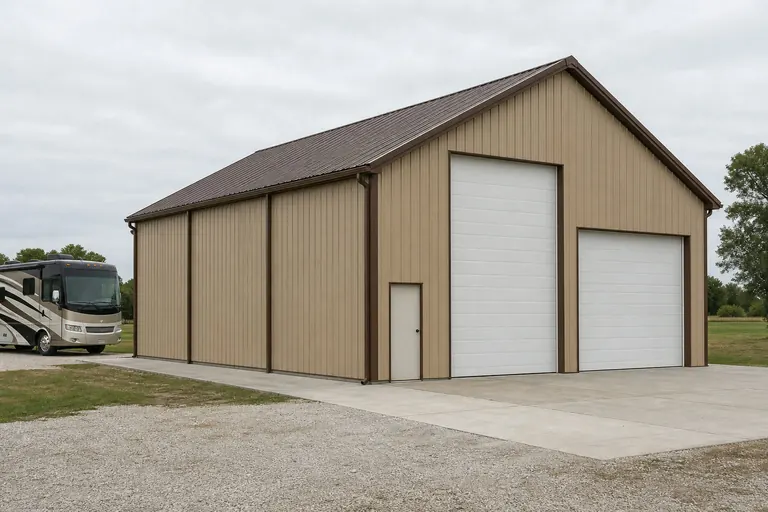 RV GarageEnclosed height-driven storage that keeps recreation vehicles shielded from sun and monsoon storms.CarportShade-only cover for vehicles and equipment exposed to sustained desert sun, with one or more sides left open.
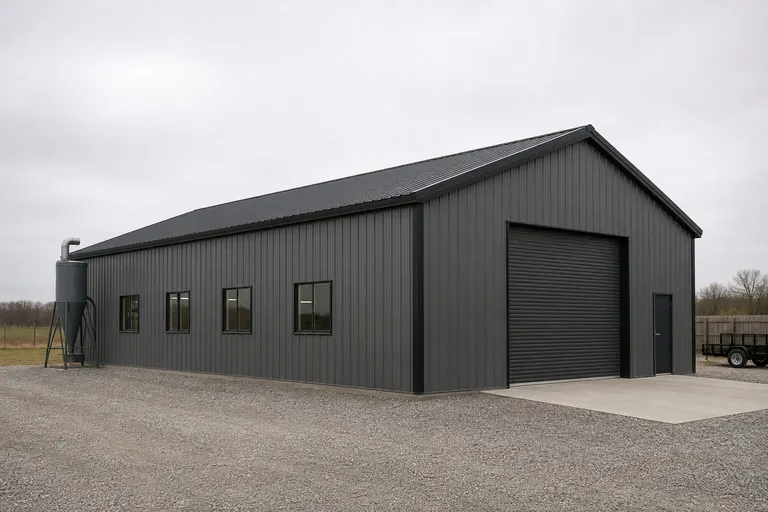 WorkshopInsulated working floor with a ventilation plan suited to extended heat.
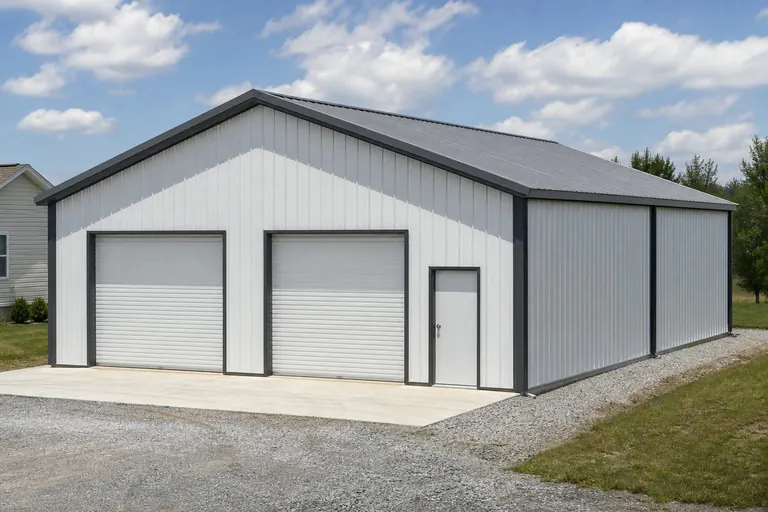 Metal GarageEnclosed vehicle and gear storage for Phoenix and Tucson metro lots.
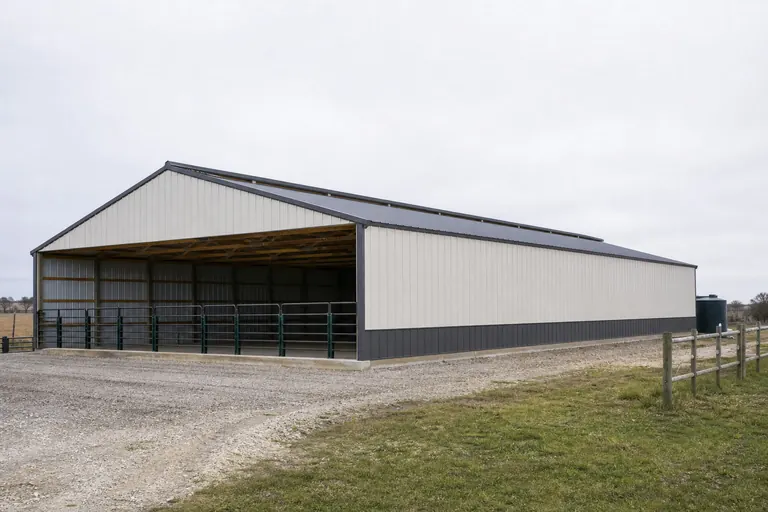 Livestock BarnHandling and shelter structure suited to high-country and southeastern grassland ranching.
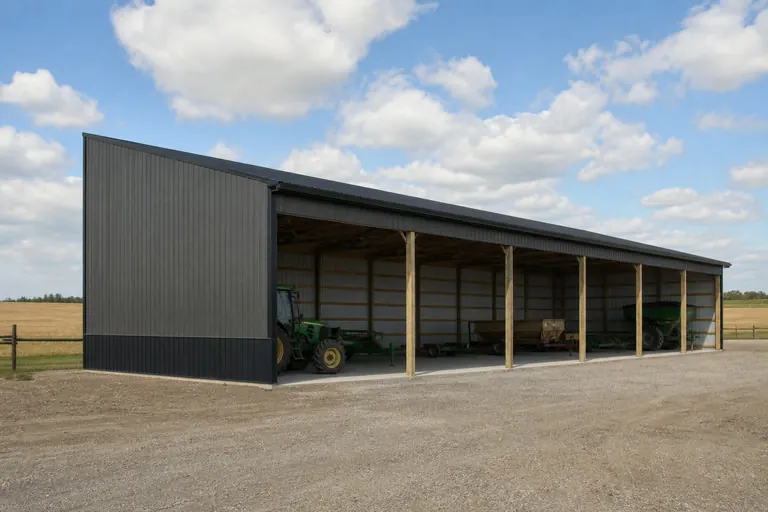 Equipment ShedCover for irrigation and farm equipment in the Yuma growing area.
Example Configuration — for planning purposes only.
Overview
Two Climates, One State Line
Arizona's steel building projects are shaped by which climate zone they sit in as much as by anything else. A Phoenix-area building faces sustained summer heat and monsoon storms; a Flagstaff-area building faces a genuinely different, cooler, higher-elevation climate with real snow exposure.
The low desert — Phoenix, Tucson, Yuma — is where most of the state's population and construction activity sits, and heat management is a routine part of specifying any occupied building there. The high country around Flagstaff and the Mogollon Rim is a smaller market, but treating it with a desert-climate assumption would miss real differences in roof design and site conditions.
Between the two extremes, southeastern Arizona's grasslands support ranching operations that call for shelter and handling structures distinct from either the Phoenix suburbs or the northern forest country. Retirees and seasonal residents add a fourth pattern of their own: winter-only occupancy in places like Yuma and Quartzsite drives demand for enclosed storage that sits empty and shut up for months at a time, which changes how ventilation and pest sealing get discussed at the quote stage.
Property size also splits along the same lines. Metro lots in Phoenix and Tucson are frequently constrained by setback lines and homeowner association review, while high-country and desert-county parcels tend to be larger and more forgiving of footprint, which shifts the conversation from squeezing a building onto a lot toward deciding how much building the intended use actually needs.
Sonoran Desert heat
Designing Around Sustained Phoenix and Tucson Heat
Extended summer heat in the Phoenix and Tucson metros makes ventilation, insulation and reflective roof finishes standard planning topics for any building meant to be occupied or to protect heat-sensitive contents. An unconditioned steel shell will track outdoor temperature closely through a long summer.
Ridge and gable ventilation, insulation packages and light-colored or reflective roof coatings all reduce interior heat gain and are worth discussing with your supplier at the quote stage, not after the shell is ordered. For a working shop, decide the cooling approach — evaporative, refrigerated or ventilation-only — before finalizing the insulation package, since each pairs with a different envelope specification.
Evaporative cooling works differently in Arizona than it does in a humid state: the dry desert air is exactly what makes it effective for a shop or garage, but it also means condensate drainage and slightly higher interior humidity near the cooling unit are worth planning for at the design stage rather than discovering after installation.
Monsoon season adds brief but intense wind and rain to the summer heat pattern. Site drainage and door sealing are worth discussing with your supplier so that a structure designed for heat also handles the seasonal storm pattern without water intrusion at openings. Dust storms that often precede a monsoon cell can also drive fine sand under poorly sealed doors, which is a separate concern from rain intrusion and worth raising with your supplier directly.
Regional planning
Phoenix, Tucson, Yuma and the High Country
Arizona's building environments differ sharply by elevation and climate zone, and the planning conversation should follow that split rather than a single statewide assumption.
Phoenix metro (Valley of the Sun)
The state's largest construction market, with sustained summer heat as the dominant planning factor and municipal review common across the metro's many cities.
Tucson and southern Arizona
A similar desert heat pattern to Phoenix with a somewhat different growth and zoning landscape, plus ranching activity on the surrounding grasslands.
Northern Arizona high country
Flagstaff and the Mogollon Rim area see real winter snow and a cooler summer, calling for a genuinely different roof and site approach than the low desert.
Yuma and the southwest desert
Irrigated agriculture along the Colorado River, with equipment cover and storage buildings sized around growing-season logistics and a large seasonal population.
Mohave County and the northwest
A mix of desert heat and rural acreage around Kingman and Lake Havasu City, with more open sites and fewer review layers than the Phoenix metro.
Footprints
Useful Starting Sizes for Arizona Projects
These footprints are reference configurations for planning, not a ranking of what Arizona buyers choose. RV and shade structures in the desert call for very different scales than ranch buildings in the high country.
14′ × 40′560 sq ft
Single RV bay with clearance for roof-mounted equipment.
30′ × 50′1,500 sq ft
Multi-bay RV or equipment storage with room for trailers alongside.
24′ × 30′720 sq ft
Two-vehicle garage or shop on a Phoenix or Tucson metro lot.
40′ × 60′2,400 sq ft
Combined shop and storage building or a high-country ranch shop.
40′ × 80′3,200 sq ft
Livestock or equipment cover in the southeastern grasslands or high country.
Example Configuration — for planning purposes only.
Floor area is width × length. Drawings are proportional illustrations; openings shown are examples only.
RV and equipment shade
RV Garages and Shade Structures for the Desert
Protecting an RV or heavy equipment from Arizona's sun is a common reason buyers in the Phoenix and Tucson areas request a steel structure, and the choice between a fully enclosed garage and a shade-only structure depends mainly on whether security and full weather protection matter or reduced sun exposure alone is enough.
An RV garage adds walls and a door, which protects against dust, monsoon rain and theft in addition to sun exposure, at the cost of a larger overall package. A shade-only structure is a lighter, lower-cost way to cut direct sun exposure and reduce interior vehicle temperature without full enclosure, which suits an owner who parks the RV between short trips rather than storing it for months.
Door height and roofline clearance are the details that most often get missed: measure the RV's tallest point, including air conditioning units and antennas, and add real clearance rather than a minimal margin. Snowbird communities in Yuma and the southwest desert also drive a specific pattern — buildings that sit closed and unoccupied through the summer, where sealed doors and basic ventilation matter more than active cooling.
Match your goal
Which Building Type Fits Your Arizona Project?
Match the building's job to a starting type, then let the site and climate zone refine the specification.
| Project goal | Starting building type | Deciding factor |
|---|---|---|
| Keep an RV shaded and secure | RV garage | Door height clearance for the tallest point of the vehicle |
| Cut sun exposure without full walls | Shade structure | Which sides need to stay open for access |
| Work in a shop through summer | Insulated workshop | Cooling approach and insulation package |
| Store vehicles on a metro lot | Metal garage | Door width and heat management |
| Handle cattle in grassland or high country | Livestock barn | Alley layout and shelter from weather |
| Cover irrigation or farm equipment | Equipment shed | Clear height for the equipment stored |
Keep an RV shaded and secure
- Starting building type
- RV garage
- Deciding factor
- Door height clearance for the tallest point of the vehicle
Cut sun exposure without full walls
- Starting building type
- Shade structure
- Deciding factor
- Which sides need to stay open for access
Work in a shop through summer
- Starting building type
- Insulated workshop
- Deciding factor
- Cooling approach and insulation package
Store vehicles on a metro lot
- Starting building type
- Metal garage
- Deciding factor
- Door width and heat management
Handle cattle in grassland or high country
- Starting building type
- Livestock barn
- Deciding factor
- Alley layout and shelter from weather
Cover irrigation or farm equipment
- Starting building type
- Equipment shed
- Deciding factor
- Clear height for the equipment stored
Building systems
Choosing a Steel Building System in Arizona
The right system depends on your climate zone, span needs and how the building will be occupied.
| Building system | Projects to consider it for | Key planning question |
|---|---|---|
| Pre-engineered steel | Shops, RV garages and ranch buildings needing a clear span | Does the site allow the clear span your use requires? |
| Cold-formed steel | Garages and smaller shop buildings on metro lots | Are spans modest enough for a lighter framing system? |
| Tubular frame | Shade structures and open-air cover | Is reduced sun exposure sufficient, or does the use require full enclosure? |
Pre-engineered steel
- Projects to consider it for
- Shops, RV garages and ranch buildings needing a clear span
- Key planning question
- Does the site allow the clear span your use requires?
Cold-formed steel
- Projects to consider it for
- Garages and smaller shop buildings on metro lots
- Key planning question
- Are spans modest enough for a lighter framing system?
Tubular frame
- Projects to consider it for
- Shade structures and open-air cover
- Key planning question
- Is reduced sun exposure sufficient, or does the use require full enclosure?
Cost drivers
What Affects Steel Building Cost in Arizona?
Span width, roof height, insulation and cooling approach, foundation, freight and erection scope drive Arizona pricing. A fully enclosed, cooled shop costs meaningfully more than an open shade structure of similar footprint.
- Span width and roof height
- A wider clear opening or taller roofline adds steel and connection points across the frame.
- Insulation and cooling
- Relevant for any occupied space managing sustained desert heat.
- Enclosure level
- Fully enclosed garages cost more than open shade structures of similar footprint.
- Foundation
- Site soils and design loads are engineering outputs, not catalogue prices.
- Freight
- High-country and rural desert sites can add to delivered cost relative to Phoenix or Tucson metro sites.
Before you order
An Arizona Pre-Order Checklist
These steps address the heat, monsoon and climate-zone factors specific to Arizona.
- Confirm the jurisdictionPhoenix and Tucson metro cities each apply their own review process; high-country and rural counties differ again.
- Plan for heatDecide ventilation, insulation and cooling approach before quoting if the space will be occupied regularly.
- Plan for monsoon seasonDiscuss drainage and door sealing for the summer storm pattern, including dust intrusion at openings.
- Measure the RV or equipmentConfirm the tallest point, including roof-mounted equipment, before setting door height.
- Check high-country conditionsFlagstaff-area projects should plan for snow and a cooler climate distinct from the low desert.
- Set erection scopeArizona buyers should pin down kit-only, kit-plus-erection or full turnkey pricing before comparing bids, since desert crews price travel to remote sites differently.
Around the state
Projects Near Major Arizona Markets
Review layers and site conditions differ between the two big metros, Yuma's growing corridor and the high country.
- Phoenix
- Mesa
- Chandler
- Scottsdale
- Tucson
- Yuma
- Flagstaff
- Kingman
Planning a building?
Planning a Building in Arizona?
Use the planning guides to narrow the footprint and building system that fits your project, then request quotes with your Arizona details already attached.
Requesting information does not require a purchase.
Questions
Arizona Steel Building FAQs
Straight answers for Arizona buyers, without inventing thermal values or prices.
Sustained heat in the Phoenix and Tucson metros makes ventilation, insulation and cooling approach routine planning topics for occupied buildings, and reflective roof finishes are commonly discussed to reduce heat gain.
We do not publish a statewide figure. Price follows span width, roof height, insulation and cooling needs, enclosure level, foundation and freight, and a fully enclosed cooled shop costs more than an open shade structure of similar footprint.
Permit requirements vary by municipality and county, so confirm with the local building department for the specific address rather than assuming a statewide rule.
A shade-only structure reduces direct sun exposure at a lower cost, while an RV garage adds walls and a door for full weather protection and security. The right choice depends on whether reduced sun exposure alone is enough for your needs.
Yes — the high country around Flagstaff sees real winter snow and a cooler climate overall, which is a genuinely different planning picture than the sustained heat of the low desert around Phoenix and Tucson.
Arizona's summer monsoon brings brief, intense wind, dust and rain, so site drainage and door sealing are worth discussing with your supplier alongside the heat-management specification.
Start your project
Start Your Arizona Steel Building Request
Tell us whether your project sits in the low desert or the high country, and what it needs to shade, store or shelter, and we will route your request accordingly.
Arizona
Metro guides
City & Metro Building Guides in Arizona
Deeper planning guides for Arizona metros with their own measured demand and their own siting questions.
- Planning a build around Tucson
Tucson metro: covered and shade structures projects, plus the siting questions this area raises before quoting.
- Phoenix metro building guide
Phoenix metro (Valley of the Sun): carports and garages projects, plus the siting questions this area raises before quoting.
Building type guides
Building Types Planned in Arizona
What actually changes for each building type when the project is planned in Arizona.
- Aircraft Hangar in Arizona
An Arizona hangar owner is not really planning around 'desert weather' in the abstract — they are planning around a calendar window the National Weather Service defines exactly:...
- Barndominium in Arizona
Before a barndominium in Arizona gets to layout, it has to clear a land question: whether the parcel is actually private, buildable ground.
- Carport in Arizona
A carport in Arizona spends most of the year doing a simple job — keeping a windshield out of direct sun — and a few weeks a year doing a harder one, because the National Weathe...
- Commercial building in Arizona
A commercial steel building in Arizona is planned against a land base where the open-market private option is smaller than it looks on a map: the Congressional Research Service...
- Detached garage in Arizona
A detached garage is a fully enclosed structure with its own slab, walls and roof, which means the first two questions in Arizona are who reviews the plan and what the ground un...
- Horse barn in Arizona
Two Arizona-specific facts shape a horse barn project more than climate alone does.
- Metal garage in Arizona
Arizona has no single state agency that writes and enforces a general building code the way some states do; the state's own uniform statewide code adoption covers the Fire Code...
- Pole barn in Arizona
An Arizona pole barn's siting question usually gets answered before its size question.
- RV carport in Arizona
An RV carport covers more open roof area at a taller clearance than a standard vehicle carport, and in Arizona that larger surface sits directly inside a defined risk window: th...
- RV Garage in Arizona
An RV garage is built around one number most other outbuildings never think about: the clear height of a single overhead door sized for a motorhome.
- Shed in Arizona
A shed is usually the smallest accessory building on a property, which means the question that matters most in Arizona is not the structure itself but whether your specific juri...
- Steel home in Arizona
A residential steel build in Arizona starts with a jurisdiction question rather than a climate question.