
Detached garage · AZ
Detached Garages in Arizona
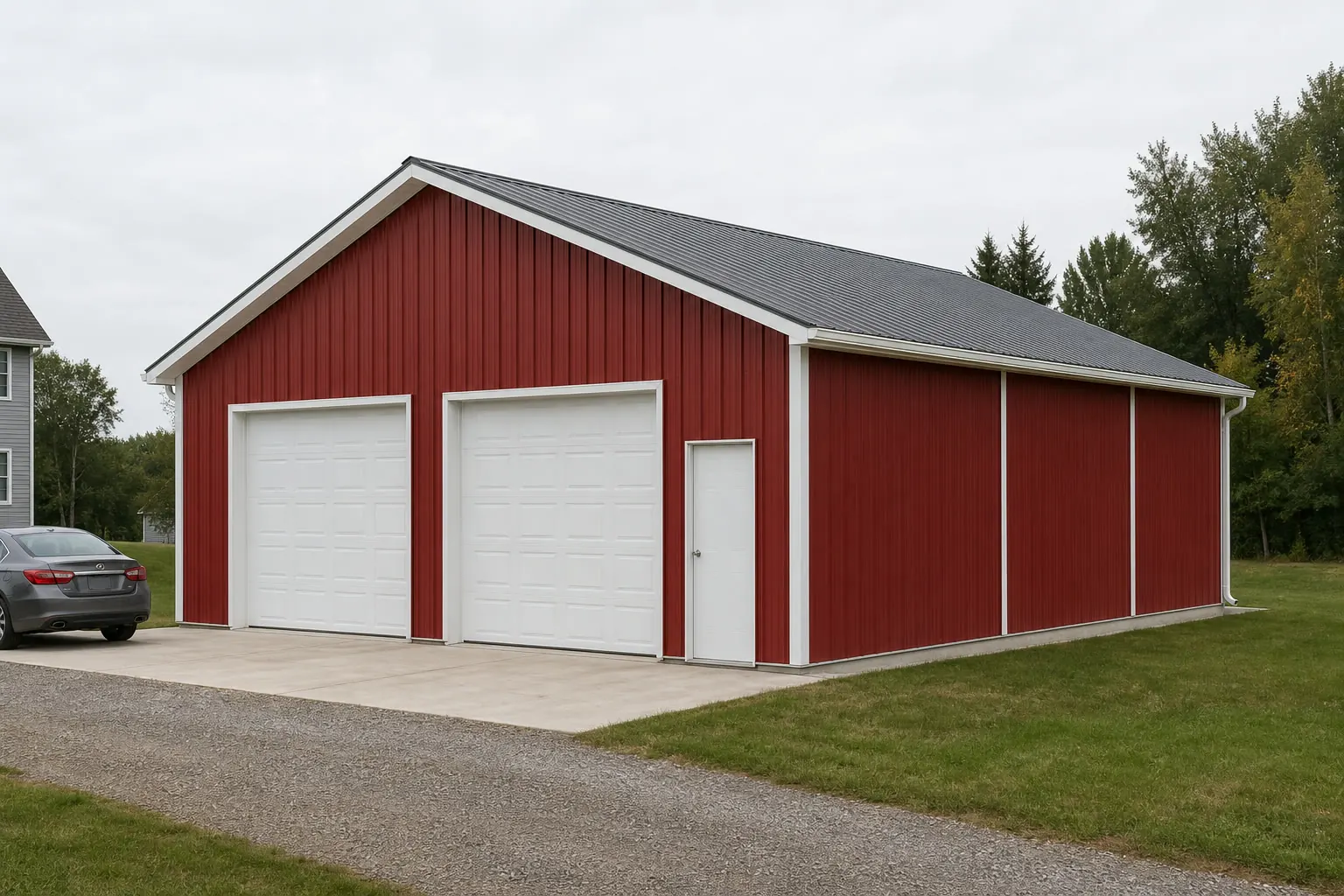
A detached garage is a fully enclosed structure with its own slab, walls and roof, which means the first two questions in Arizona are who reviews the plan and what the ground under it is actually like. On the review side, Arizona has no single statewide building-code agency for construction; the state's uniform statewide code adoption applies only to the fire code, and Arizona Revised Statutes §11-861 and §34-461 confirm counties and municipalities adopt their own construction codes. On the ground side, a historical USGS geological survey divides Arizona into three physiographic regions, with the Colorado Plateau alone occupying roughly 45,000 square miles of the northeast portion of the state — physically distinct from the desert lowlands many buyers picture. NOAA's 2022 State Climate Summary also documents about 2.5°F of warming since the early 1900s and names drought a serious statewide threat, which is worth factoring into how an enclosed garage is ventilated. This page addresses those specifics rather than a generic garage checklist.
The intersection
Arizona answers 'who reviews this?' locally, every time
There is no state building department to call about a detached garage in Arizona; the answer is always your specific city or county.
Arizona's uniform statewide code adoption applies only to the fire code, according to UpCodes' summary of Arizona building codes citing the Arizona State Fire Marshal's statewide fire code adoption. Construction codes for everything else, including a detached garage, are adopted and enforced locally. Arizona Revised Statutes §11-861 addresses how counties adopt codes, and §34-461 addresses local code applicability, both confirming that code adoption is a county or municipal legislative act rather than a single statewide standard.
In practice this means two identical detached-garage plans, one in a Phoenix-area municipality and one in a rural county, can carry different plan-review requirements, different inspection sequencing, or different documentation expectations, even though nothing about the building itself changed. The only reliable move is to identify and call the specific jurisdiction before finalizing a spec sheet, not to assume a neighboring county's rule applies.
Site context
Arizona terrain is not one terrain
A historical USGS survey splits the state into three physiographic regions, and a detached garage's slab and grading work follows whichever one the parcel sits in.
USGS geological survey work (Geologic Folio 111) divides Arizona into three physiographic regions, naming the Colorado Plateau as occupying roughly 45,000 square miles of the state's northeast portion. A detached garage slab poured on plateau ground at elevation, with its own freeze-thaw cycle and rock composition, is a different grading and foundation conversation than the same slab poured in a low desert basin elsewhere in the state. Neither region gets a specific design value here — that is a site engineer's and local department's call — but assuming one Arizona terrain profile for the whole state is the mistake this evidence rules out.
NOAA's 2022 Arizona State Climate Summary separately documents about 2.5°F of warming since the early 1900s and names drought a serious statewide threat. That does not change a garage's structural design, but it is a reasonable prompt to talk to your builder about passive or active ventilation for a sealed structure that will sit in sustained heat for most of the year, regardless of which of the three terrain regions it is built in.
- Identify which of the three physiographic regions your parcel sits in
- Plateau, mountain and desert-basin ground call for different grading and foundation approaches.
- Ask your local department for the current adopted code edition
- There is no single statewide figure to reference; it is set city by city or county by county.
- Discuss ventilation for sustained heat with your builder
- NOAA documents a long-term Arizona warming trend and drought as a serious hazard.
Configuration
What an Arizona detached garage is commonly asked to do
Configuration follows parcel scale and terrain region as much as vehicle count in Arizona.
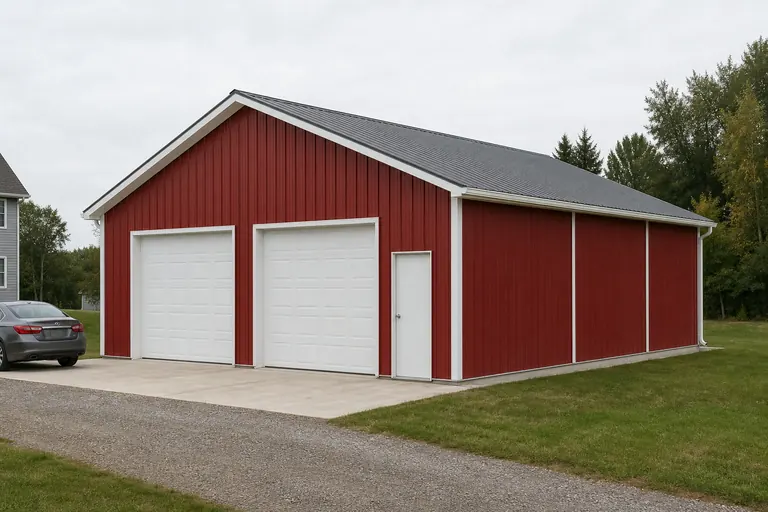 Single or two-vehicle residential garageThe most requested enclosed footprint, sited close to the house on a standard residential lot regardless of region.Workshop-garage combinationAn enclosed bay split between vehicle storage and workspace, useful where heat management for tools and materials matters.Rural outbuilding on agricultural landOn Arizona's larger farm parcels — averaging 1,528 acres in the 2022 Census — a detached garage is often one of several structures, which changes access and setback planning.
Example Configuration — for planning purposes only.
Get Arizona detached garage quotes
Tell us your city or county, terrain, and vehicle or workshop needs. We route it with the Arizona and detached-garage context already attached.
Footprint
Common Arizona detached garage footprints
Size selection follows vehicle count and workspace needs; the jurisdiction and terrain questions above apply at every size.
24′ × 24′
576 sq ft
A standard two-vehicle footprint on a typical residential lot.
24′ × 36′
864 sq ft
Two vehicles plus a workshop bay or added storage.
30′ × 40′
1,200 sq ft
A larger footprint suited to a rural or agricultural parcel.
Example Configuration — for planning purposes only.
Footprint pages carry door and layout detail for each size; this page covers only the Arizona permitting and terrain context.
Preparation
Before you request an Arizona detached garage quote
Steps that keep a local-jurisdiction, multi-terrain state from turning into a mid-project surprise.
- Call your specific city or county building department firstArizona has no single statewide code agency for construction outside the fire code, so this call replaces any assumption.
- Get a site-specific grading and foundation readThe Colorado Plateau, a mountain region and desert-basin terrain call for different pad preparation across the state.
- Ask about heat-driven ventilation for a sealed structureNOAA documents sustained long-term warming and drought as a serious statewide condition.
- Plan access if the garage sits on a larger agricultural parcelArizona's average farm size of 1,528 acres often means siting relative to other structures matters more than lot-line setback alone.
Questions
Arizona detached garage questions
State-level answers only, with anything jurisdiction-specific pointed to the office that actually decides it.
No. Arizona's uniform statewide code adoption covers only the fire code. Construction codes are adopted locally under Arizona Revised Statutes §11-861 and §34-461, so your specific city or county sets the review path.
It can. USGS survey work divides the state into three physiographic regions, including the Colorado Plateau at roughly 45,000 square miles in the northeast. Grading and foundation needs differ by region; a site engineer or your local department can confirm specifics for your parcel.
Requirements are set by your specific city or county, since Arizona has no single statewide building-code agency for construction. Contact your local building department to confirm what applies to your parcel.
There is no official typical size. 24x24 for two vehicles and 24x36 with an added workshop bay are common starting points; larger rural parcels often support bigger footprints.
NOAA's State Climate Summary documents about 2.5°F of warming since the early 1900s and names drought a serious statewide threat. That is a reasonable prompt to plan ventilation for a sealed structure, though there is no single statewide design temperature to cite.
We do not publish state-level prices. Cost depends on size, materials, site work and your local permit requirements; our cost pages explain the drivers and a builder quote covers your specific project.
Sources for the Arizona facts on this page
This page states no code requirement, wind speed, snow load, permit rule, price or supplier claim. The state-specific facts it does use are listed with their publisher below.
Arizona building codes are governed at the local jurisdiction level rather than by a single statewide building code agency; the state's uniform statewide adoption applies only to the Fire Code.
UpCodes (citing Arizona State Fire Marshal statewide fire code adoption) · current, accessed 2024/2025 · Tier 3
https://up.codes/codes/arizonaArizona Revised Statutes govern how counties and municipalities adopt construction codes by reference, confirming code adoption is a local government function.
Arizona State Legislature · current statute text · Tier 2
https://www.azleg.gov/ars/11/00861.htmEarly USGS geological survey work divides Arizona into three physiographic regions, with the Colorado Plateau occupying the northeast portion of the state (about 45,000 sq. mi. within Arizona).
U.S. Geological Survey · historical USGS publication · Tier 2
https://pubs.usgs.gov/gf/111/text.pdfNOAA's State Climate Summary reports Arizona temperatures have risen about 2.5°F since the early 20th century and identifies drought as a serious threat in the water-scarce state.
NOAA National Centers for Environmental Information (NCEI) · 2022 summary · Tier 1
https://statesummaries.ncics.org/downloads/Arizona-StateClimateSummary2022.pdfAverage Arizona farm size in the 2022 Census was 1,528 acres, up about 12% from 2017.
USDA NASS · 2022 · Tier 1
https://www.nass.usda.gov/Publications/AgCensus/2022/Online_Resources/County_Profiles/Arizona/cp99004.pdf