West · HI
Steel Buildings in Hawaii
Every steel building project in Hawaii starts with the same two questions: which island is it going to, and how will the container get there? Compare shipping realities, corrosion planning and building types before requesting quotes.
Overview
Island and Coast Decide More Than Building Type Does
A Hawaii steel building project is shaped first by which island it's going to and second by whether the site sits on a windward or leeward coast. Those two facts influence shipping, siting and corrosion planning well before floor plan or building type come into the conversation.
Unlike a mainland state where materials can be trucked directly to a site, every Hawaii project involves at least one ocean crossing by container or barge, and each island has its own port capacity and onward trucking distance. Confirm early which port your materials will land at and how far the site is from there.
Salt-air exposure is also a statewide constant rather than a coastal exception, since no parcel in the islands is far from open ocean. That single fact should shape coating and fastener conversations on every project, not just those directly on the shoreline.
Small commercial and tourism-support businesses add a third layer to the picture: a repair shop, tour-equipment storage building or small warehouse near a resort corridor competes for the same limited industrial-zoned land as agricultural buildings, which can make site availability as much a factor as design.
Getting materials there
Container and Barge Shipping Between the Islands
Building materials generally arrive in Hawaii by ocean container, then move onward by interisland barge if the final site isn't on Oahu, where the primary commercial port sits.
This two-step journey means lead time has to account for both the trans-Pacific leg and, where relevant, a second interisland shipment with its own schedule. A kit packaged efficiently for container loading can meaningfully simplify that second leg, so it's worth asking a supplier how they've handled shipments to your specific island before.
Container dimensions also constrain component size in ways a mainland delivery never has to consider. Confirm with a supplier how a given building's frame and panel package breaks down for container loading, since that answer affects how many containers a project needs and what that adds to the schedule.
Interisland barge operators generally run scheduled routes rather than on-demand service, so a component arriving in Honolulu just after a sailing to Kauai or Hawaii Island can sit until the next scheduled departure. Building that possibility into your timeline avoids treating a barge connection as a same-week guarantee.
Island by island
Oahu, Maui, Hawaii Island, Kauai and the Smaller Islands
Each major Hawaiian island has its own port access, land use mix and typical building context, even though all share the same ocean-crossing logistics.
Oahu (Honolulu)
The state's primary commercial port and the most urbanized island, with dense sites, shorter onward trucking distances and a mix of small commercial and light industrial demand.
Maui (Kahului)
A working port receiving both container and interisland barge traffic, with agricultural land upcountry and a mix of ranch, small farm and commercial building needs.
Hawaii Island / the Big Island (Hilo, Kailua-Kona)
The largest land area with two distinct sides — wetter Hilo and drier Kona — supporting coffee, macadamia and cattle operations that often need equipment and processing-support buildings.
Kauai (Lihue)
A smaller port with correspondingly tighter shipping windows, agricultural land inland, and pronounced windward-leeward contrast across a compact island.
Molokai and Lanai
The smallest and least-served islands for freight, where barge scheduling and limited port infrastructure deserve early, direct conversation with a supplier.
Salt-air exposure
Planning for Corrosion From Day One
Salt-laden air affects buildings across the entire state, not only on the immediate coastline, because trade winds carry marine moisture well inland on most islands.
Coating specification, fastener material and even hardware choice are worth raising directly with a supplier rather than assuming a standard mainland specification will hold up the same way in a Hawaii environment. This is a planning consideration to discuss explicitly, not a claim this guide can quantify for a given parcel.
Routine maintenance also matters more here than in a drier, inland mainland climate. A building that's periodically rinsed and inspected for coating wear will generally hold up better over time than one left to accumulate salt residue, particularly on windward-facing elevations.
Site orientation
Windward and Leeward Sides of the Same Island
On nearly every Hawaiian island, the windward coast facing the trade winds is noticeably wetter and greener than the leeward side just a short distance away, and that contrast is worth factoring into siting and drainage decisions.
A windward site tends to see more persistent rainfall and humidity, which raises the same drainage, ventilation and interior-moisture questions a marine climate anywhere would raise. A leeward site is typically drier and sunnier, which shifts the conversation toward ventilation for heat rather than moisture control.
Because these conditions can change within just a few miles on the same island, it's worth describing your specific site to a supplier rather than assuming an island-wide default applies.
Seasonal planning
Scheduling Around the Pacific Storm Season
The Central Pacific hurricane and tropical storm season runs roughly June through November, and that window is worth factoring into a construction schedule as a planning consideration, separate from any specific design value this guide does not publish.
Contractors and site crews on every island tend to treat the months outside that window as the more predictable stretch for exterior work, though weather can vary by island and by year. Ask a local contractor how they typically sequence a project around this season rather than assuming a mainland calendar applies.
Interisland shipping capacity can also tighten during active storm periods, since barge and container schedules are adjusted for safety. Building a buffer into your order timeline during these months is a reasonable precaution rather than a guarantee of any specific delay.
Building types
Steel Building Types Common in Hawaii
Agricultural and small commercial buildings account for much of Hawaii's steel building demand, alongside enclosed shop space for trades supporting the tourism and construction economy.
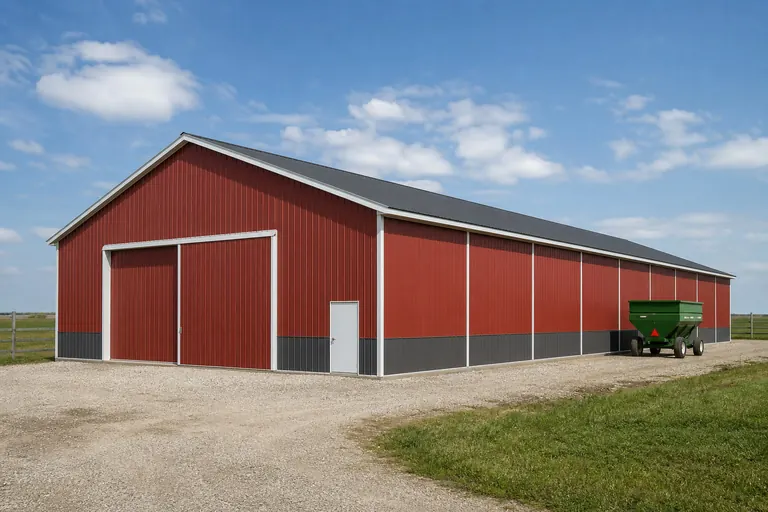
Agricultural Building
Equipment, processing and input storage for coffee, macadamia, cattle and diversified farm operations.
Start a quote
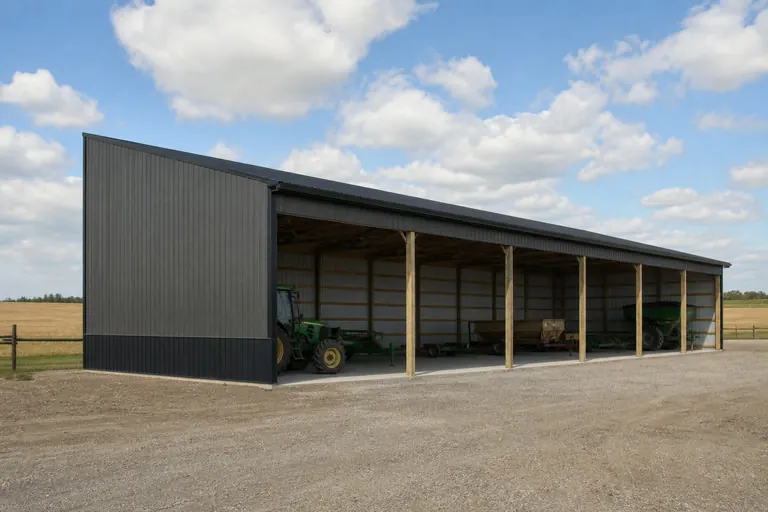
Equipment Shed
Open or partially enclosed cover for tractors and farm equipment on upcountry or ranch parcels.
Start a quote
Hobby/Small Shop
Compact enclosed working space for trades and small commercial operations on tighter island lots.
Start a quote
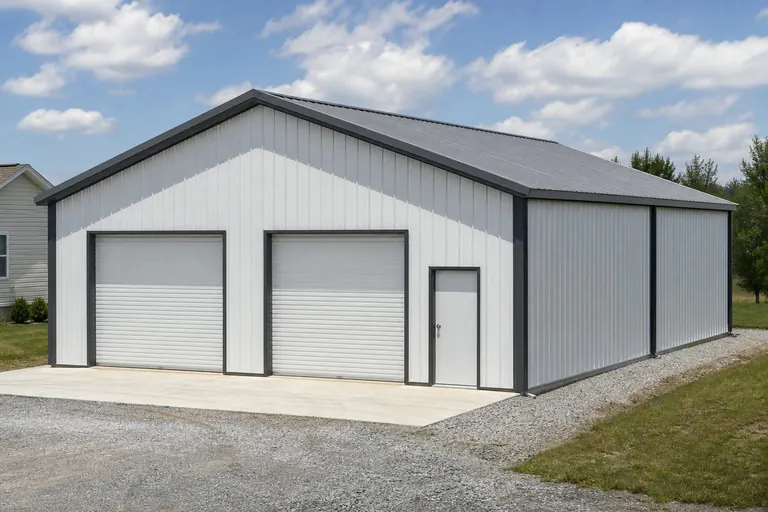
Metal Garage
Enclosed vehicle storage on residential and rural parcels across the islands.
Start a quote
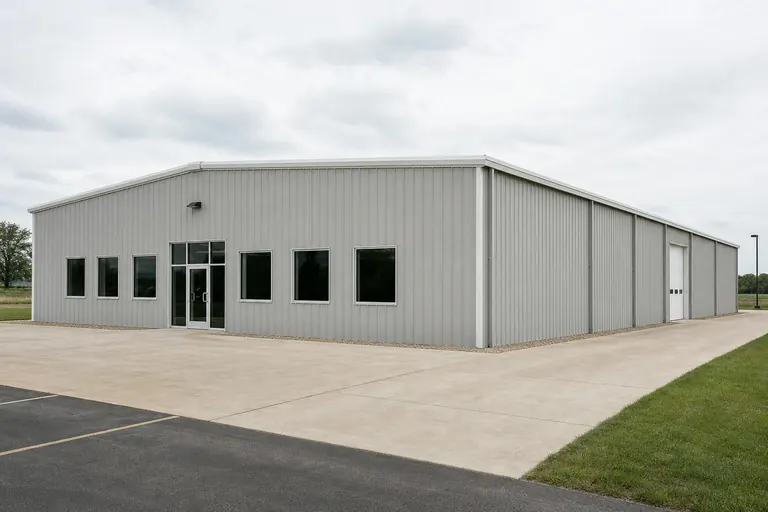
Commercial Building
Service and light industrial shells supporting Honolulu, Kahului and Kailua-Kona trade activity.
Start a quote
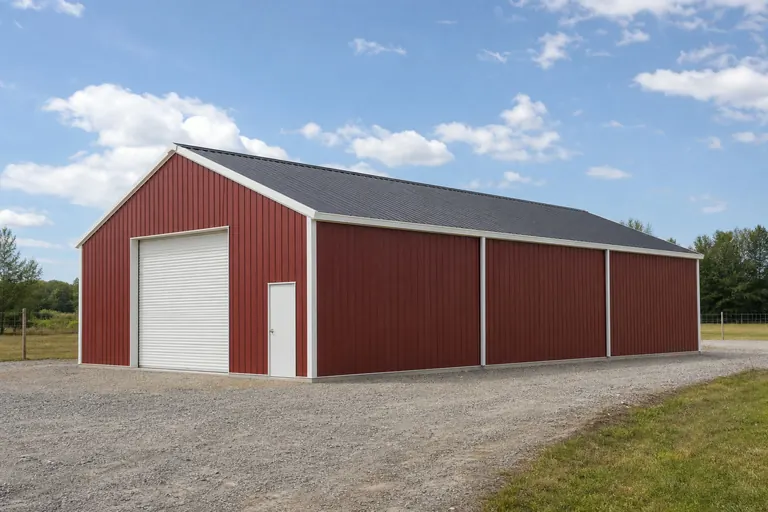
Storage Building
General enclosed storage for tools, inventory or seasonal equipment where humidity control matters.
Start a quote
Example Configuration — for planning purposes only.
Footprints
Useful Starting Sizes for Hawaii Projects
These are reference configurations for planning, not a ranking of what Hawaii buyers choose. Container-friendly component sizing is worth weighing alongside floor area on every island project.
20′ × 30′
600 sq ft
Small equipment or tool storage on a compact agricultural parcel.
24′ × 36′
864 sq ft
Enclosed shop or garage on a tighter island residential or commercial lot.
30′ × 50′
1,500 sq ft
General farm equipment or processing support building.
40′ × 60′
2,400 sq ft
Clear-span shop or larger agricultural building for upcountry Maui or Big Island operations.
40′ × 80′
3,200 sq ft
Larger equipment or light commercial floor area where site space allows.
Example Configuration — for planning purposes only.
Floor area is width × length. Drawings are proportional illustrations; openings shown are examples only.
Match your goal
Starting Points for Common Hawaii Projects
Let intended use, island and site orientation, not a fixed template, set the starting specification.
| Project goal | Starting building type | Deciding factor |
|---|---|---|
| Store coffee or macadamia processing equipment | Agricultural building | End-opening width and interior moisture control |
| Cover ranch or farm equipment upcountry | Equipment shed | Open versus partially enclosed bays |
| Run a small trade or repair business | Hobby/small shop or commercial building | Lot size and site circulation |
| Store tools or inventory near the coast | Storage building | Coating specification and ventilation |
| Park vehicles on a residential parcel | Metal garage | Door width and setback allowances |
Store coffee or macadamia processing equipment
- Starting building type
- Agricultural building
- Deciding factor
- End-opening width and interior moisture control
Cover ranch or farm equipment upcountry
- Starting building type
- Equipment shed
- Deciding factor
- Open versus partially enclosed bays
Run a small trade or repair business
- Starting building type
- Hobby/small shop or commercial building
- Deciding factor
- Lot size and site circulation
Store tools or inventory near the coast
- Starting building type
- Storage building
- Deciding factor
- Coating specification and ventilation
Park vehicles on a residential parcel
- Starting building type
- Metal garage
- Deciding factor
- Door width and setback allowances
Before you order
A Hawaii Pre-Order Checklist
Work through these before requesting quotes, since inter-island shipping adds steps a mainland project doesn't have.
- Confirm the destination island and portOahu direct versus an interisland barge leg to Maui, Hawaii Island, Kauai or the smaller islands.
- Ask about container packagingHow the frame and panel package breaks down for ocean and barge shipping.
- Identify the local authorityCounty building department for the exact address.
- Specify corrosion protectionCoating and fastener expectations for salt-air exposure, discussed explicitly with the supplier.
- Note windward or leeward sitingDrainage and ventilation priorities shift with local rainfall and sun exposure.
- Set erection scopeBecause an island crew may need its own barge slot, confirm whether erection labor ships with the kit or is arranged separately before comparing quotes.
Agricultural context
Small Farms and Diversified Operations Across the Islands
Hawaii's agricultural sector leans toward smaller, diversified operations — coffee, macadamia, tropical fruit, cattle and specialty crops — rather than the large single-crop acreage common on the mainland, and building needs generally scale accordingly.
A single farm building often needs to serve several functions across a season: equipment storage, drying or processing space, and general input storage. Planning a mix of enclosed and open bay space from the outset tends to serve these operations better than a single-purpose structure.
Because many farm parcels sit at higher elevation with their own microclimate, it's worth discussing site-specific rainfall and wind exposure with a supplier rather than relying on a general island description.
Around the islands
Projects Near Major Hawaii Communities
Port access, site density and typical building use vary across these communities.
- Honolulu
- Kahului
- Hilo
- Kailua-Kona
- Lihue
- Kaneohe
- Wailuku
- Pearl City
- Kihei
- Waimea
Planning a building?
Planning a Building in Hawaii?
Use the planning guides to narrow the footprint and building system that fits your project, then request quotes with your Hawaii details already attached.
Requesting information does not require a purchase.
Questions
Hawaii Steel Building FAQs
Answers to common Hawaii planning questions, without inventing regulatory detail or shipping guarantees.
Materials typically arrive by ocean container to a primary port, most often on Oahu, and then move by interisland barge if the final site is on another island. Ask a supplier how they've handled shipments to your specific island.
Yes, and the effect isn't limited to the immediate shoreline, since trade winds carry marine moisture well inland on most islands. Coating and fastener specification are worth discussing directly with a supplier for any Hawaii site.
Windward coasts tend to see more persistent rainfall and humidity, which raises drainage and ventilation questions, while leeward sides are typically drier and sunnier, shifting the focus toward heat ventilation. Describe your specific site rather than relying on an island-wide assumption.
It depends on the operation, but many diversified Hawaii farms start with a building that mixes enclosed processing or storage space with an open equipment bay, since a single structure often needs to serve several functions across a season.
This varies by route, port capacity and barge scheduling, and no honest single figure applies across all islands. Build in buffer time for both the trans-Pacific leg and any interisland transfer when planning your project timeline.
A compact commercial or small shop building sized to site circulation and setback limits is a reasonable starting point; confirm site coverage and access requirements with the county building department for your address.
In most cases, yes, and requirements are set by the county building department with jurisdiction over the address. Confirm the submittal expectations before ordering, since they can differ by county.
It can. The Central Pacific storm season runs roughly June through November, and both site work and interisland shipping schedules can be affected during that window. Ask a local contractor how they plan around it for your island and site.
It can be, since industrial-zoned parcels are limited and shared demand from agricultural, tourism-support and small commercial uses. Confirm zoning and site availability with the county early rather than after selecting a building type.
Start your project
Start Planning Your Hawaii Steel Building
Whichever island your project is on, get building types and shipping questions in front of suppliers who can speak to your specific port and site conditions. Request quotes today and compare responses side by side.
Hawaii
Building type guides
Building Types Planned in Hawaii
What actually changes for each building type when the project is planned in Hawaii.
- Barndominium in Hawaii
A barndominium's core promise — full residential living plus a working shop or storage bay under one steel roof — depends on having land to put it on, and Hawaii's farmland base...
- Carport in Hawaii
An open-sided carport has no wall system to help it shed lateral load, and in Hawaii that structural fact meets ground that is, without exception, volcanic in origin.
- Shed in Hawaii
A shed in Hawaii is not sited on the sedimentary or glacial soils a mainland guide assumes: U.S.
- Steel Home in Hawaii
A steel-frame home is a long-horizon build, and in Hawaii it is built onto ground with a specific documented origin: USGS's geologic mapping describes the islands as the exposed...