Tucson metro · AZ
Steel Buildings in Tucson, Arizona
Tucson search demand splits cleanly between fully enclosed buildings and open covered shade — carports, metal carports and shade structures together outweigh any single enclosed building type in local search volume. This guide treats that split as the starting decision, then walks through enclosed garages, metal shops and the site realities of building on Sonoran Desert ground before you request quotes.
Overview
Steel and Metal Buildings Across the Tucson Metro
Tucson's search demand for metal and steel buildings is broad rather than concentrated in one type — "metal buildings tucson" and "steel buildings tucson" are tied in measured search volume at 170/mo each. That tie in search interest says nothing about which enclosure level buyers ultimately pick, so this guide treats the open-vs-partly-enclosed-vs-fully-enclosed decision as the starting planning question rather than assuming an answer.
That flat profile matches how the metro is laid out. Tucson proper sits in a wide desert basin surrounded by mountain ranges, and the buildable land radiating out from the urban core ranges from tight infill lots to multi-acre desert-fringe parcels in Marana, Vail, Sahuarita and the Catalina Foothills. A steel building that makes sense on a quarter-acre subdivision lot near downtown is rarely the same specification as one going up on two acres of desert-fringe land off the I-10 corridor, even though both buyers might search the exact same generic term.
Because the volume doesn't point at a single dominant building type, the more useful starting question for a Tucson project is enclosure level: does the structure need walls and a door, or is shade and weather deflection enough? That decision, covered next, is itself backed by a measurable local search pattern that doesn't show up this clearly in any other pilot metro.
Building types
Steel Building Types to Consider in Tucson
Ordered by measured Tucson search demand, covered shade structures lead, followed by enclosed metal garages and metal shops — a different order than a generic national list would produce.
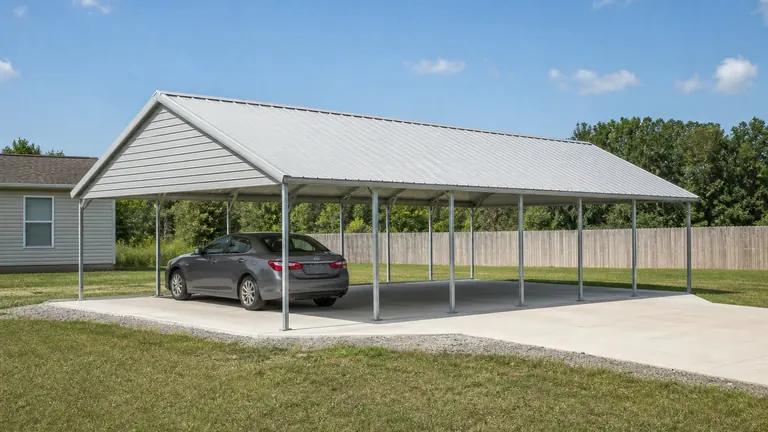
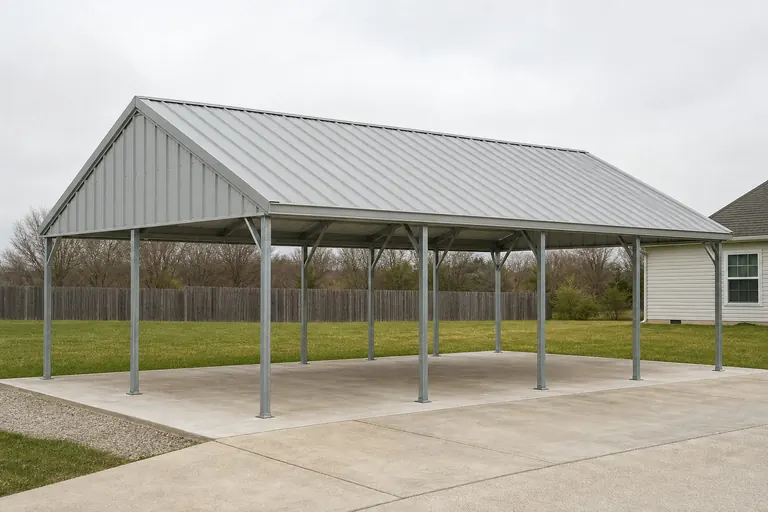 CarportOpen-sided cover for a vehicle, trailer or equipment. The lowest-cost way to cut direct desert sun exposure without building walls.Shade StructureA broader term covering open-air cover for patios, equipment yards and parking areas where full enclosure isn't the goal.
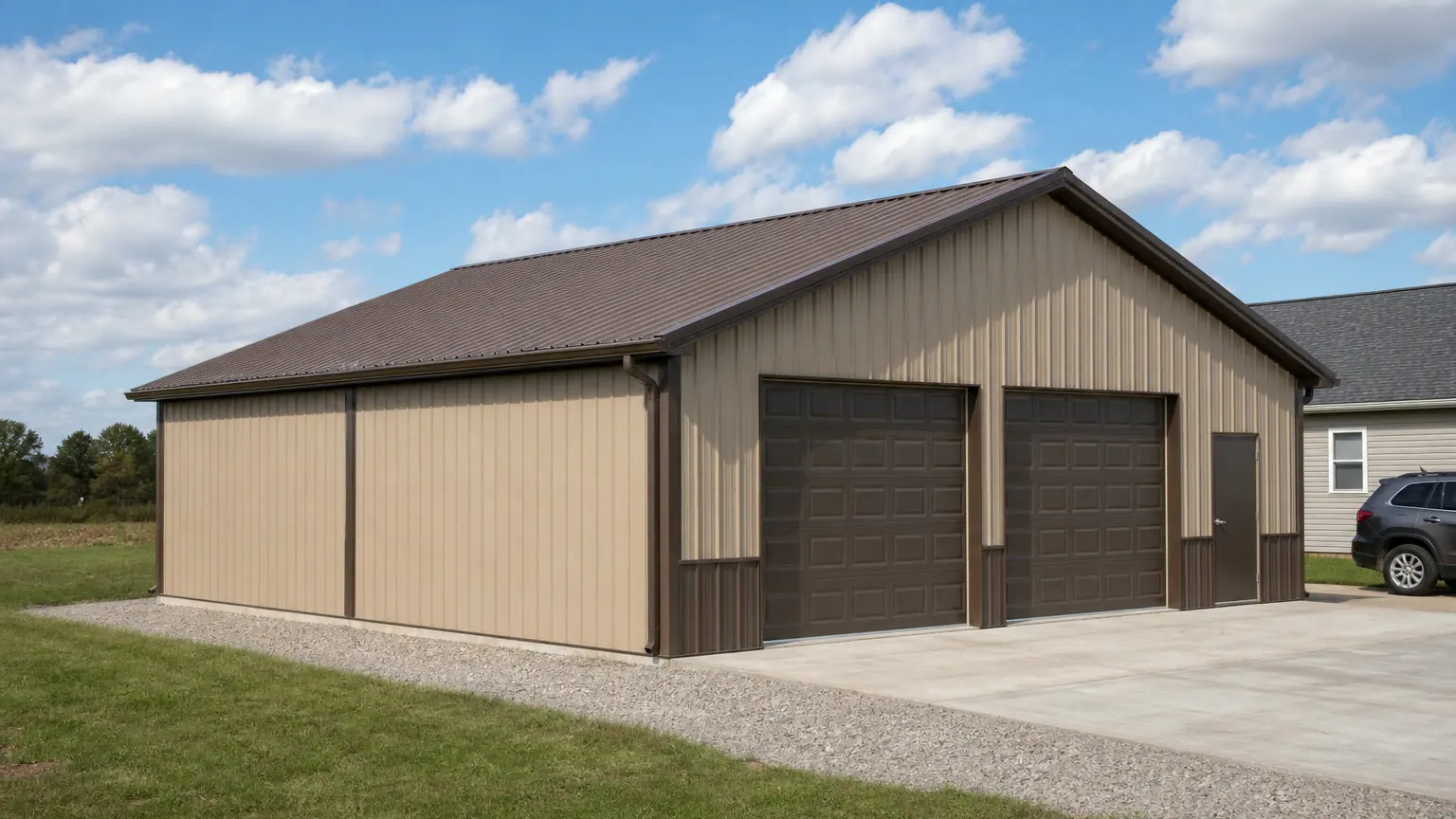
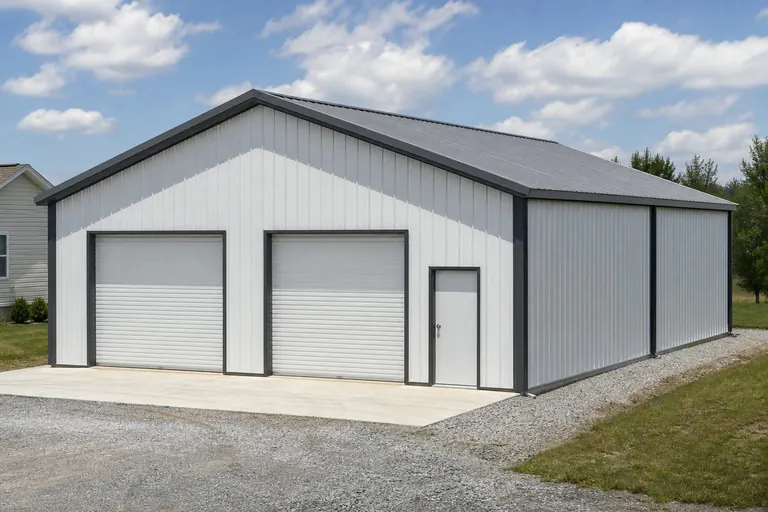 Metal GarageFully enclosed vehicle storage with walls and a door, suited to metro lots where security and dust protection matter more than open airflow.
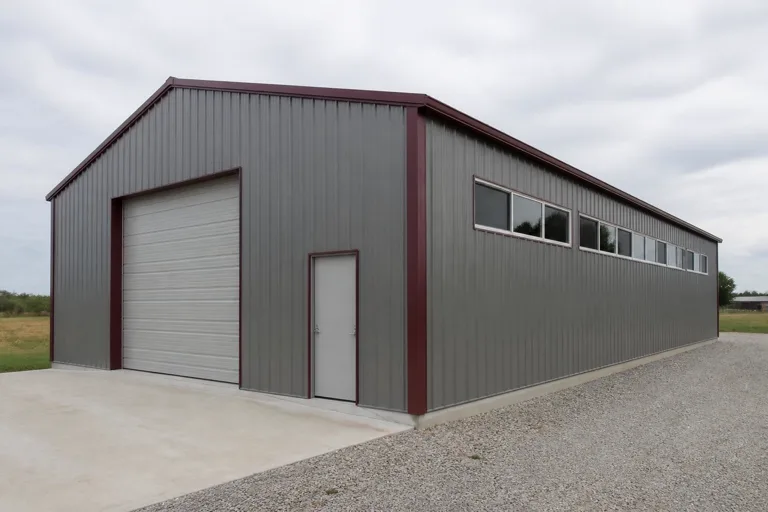 Workshop / Metal ShopAn enclosed working floor with bench space and power, where insulation and ventilation decisions matter through the long Tucson summer.
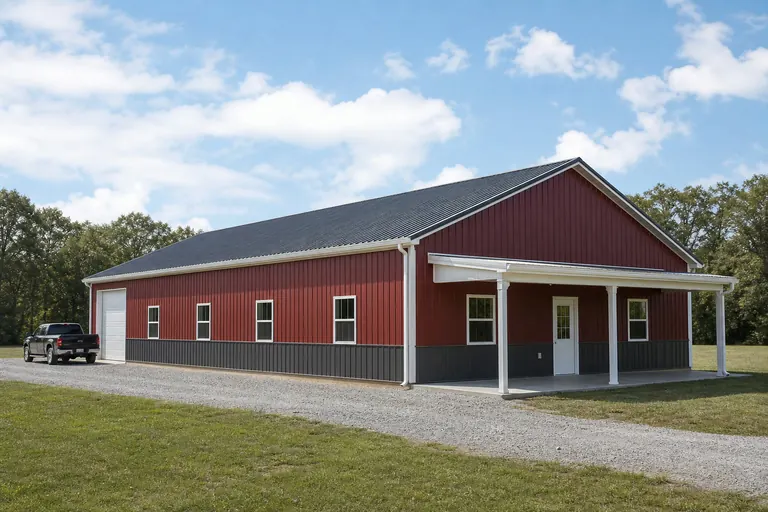 BarndominiumCombined shop and living space under one roof, a fit for larger desert-fringe parcels around Vail, Marana and Sahuarita.
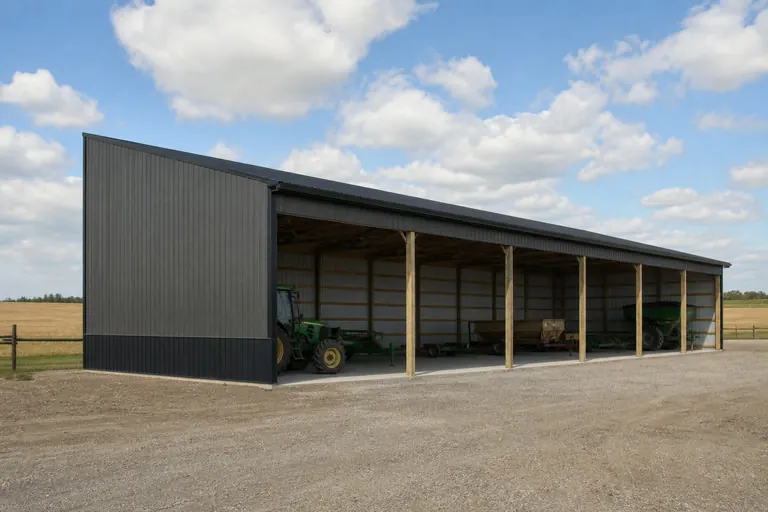 Equipment ShedCover for trailers, ATVs and landscaping or ranching equipment on acreage properties at the metro's edges.
Example Configuration — for planning purposes only.
Covered and shade structures
Carports and Shade Structures: Open-Sided vs. Enclosed
Combined Tucson search demand for carports, metal carports and shade structures outweighs demand for any single enclosed building type, which makes the open-vs-enclosed decision the first real fork in the road for a local project rather than an afterthought.
An open-sided carport or shade structure does one job well: it blocks direct sun and reduces surface heat on a vehicle, boat, RV or equipment without the cost of walls, a slab enclosure or a door. For a vehicle that's driven daily, cutting the roof and hood temperature by keeping it out of direct sun is often the entire goal, and a fully open structure with just a roof and posts satisfies that at the lowest complexity.
A fully enclosed metal garage adds security, dust exclusion and protection from wind-driven monsoon rain, at the cost of walls, a door and typically a slab. Some Tucson buyers land in between: a structure with one or two sides enclosed and the rest left open, which cuts wind-driven dust intrusion while keeping most of the airflow that makes an open structure comfortable to work under in summer.
The deciding questions are usually the same three: does the vehicle or equipment need to be secured, does it need to be sealed from blowing dust and monsoon rain, and is the structure going to double as a covered outdoor living or work space rather than pure storage. Answer those before comparing quotes, because a carport and a garage of the same footprint price very differently.
Enclosed buildings
Metal Garages and Metal Shops in Tucson
Tucson's enclosed-building demand splits evenly between metal garages and metal shops, and the two are specified differently: a garage is usually sized to a vehicle and a door schedule, while a shop is sized to a working floor and a power layout.
Overhead door width and the number of vehicles are the two dimensions that typically size a metal garage on a Tucson metro lot, with the rest of the building kept simple. On tighter subdivision lots, setback lines and any homeowner association review process are worth confirming before the footprint is fixed, since infill lots leave less margin for adjustment than acreage sites at the metro's edge.
A metal shop adds a working floor, bench space along at least one wall, and usually a dedicated circuit for tools. In a climate with strong year-round sun, ventilation and an insulation package are worth deciding at the quote stage rather than after the shell arrives — an uninsulated metal shell will track outdoor temperature closely through the summer months, which matters for anyone spending working hours inside it.
A number of Tucson projects end up combining the two: an enclosed garage bay for the vehicle plus an attached or adjoining shop bay for the workbench, under one frame. Deciding on that split before quoting changes the framing and door schedule, not just the interior finish.
Sun and heat
Building for Tucson's Sun Exposure and Heat Gain
Tucson's high sun-hour count and intense solar exposure make roof finish, ventilation and insulation routine planning topics for any enclosed building, and the choice matters more for a shop or garage that's occupied regularly than for pure storage.
A reflective or light-colored roof finish reduces how much solar heat the panel itself absorbs before it reaches the interior, and it works as a companion to an insulation package rather than a substitute for one. Ridge and gable ventilation gives hot interior air somewhere to go, and for a workshop with regular occupancy, deciding on a cooling approach — evaporative, refrigerated, or ventilation-only — before finalizing the insulation package keeps the envelope and the cooling system matched to each other.
Because Tucson also sees a wide swing between hot afternoons and cool desert nights, condensation at dawn is a real, if minor, consideration for an insulated interior — worth a short conversation with your supplier rather than a surprise after the building's in use.
Shade Structure or Enclosed Garage? Get Both Priced
Send us your Tucson address and how you'll use the structure — daily sun cover, dust and security, or both — and we'll return quotes across open, partly enclosed and fully enclosed configurations so you can compare scope side by side.
Monsoon season
Monsoon Drainage, Site Grading and Dust
Tucson's summer monsoon delivers short, intense storms rather than steady rain, so site grading and drainage around a new building are worth planning before the slab goes in, not after the first storm finds a low spot.
Many desert-fringe lots have natural washes or shallow drainage channels crossing them, and siting a building to avoid interrupting that flow is a practical, common-sense step rather than an engineering calculation this guide can perform for you — confirm any local grading or drainage requirement with your jurisdiction for the actual address. A properly graded pad that sheds water away from the structure reduces the odds of standing water at the foundation after a monsoon cell passes through.
Dust storms often arrive ahead of a monsoon storm cell, and fine desert dust finds gaps around doors and openings that rain alone wouldn't reach. Door seals and threshold details are a small line item worth asking about specifically if the building will store anything sensitive to dust intrusion, from vehicles to shop equipment.
Site investigation
Caliche and Rocky Ground: Why a Site Investigation Comes First
A meaningful share of Tucson-area ground includes caliche — a hardened, cemented soil layer — or shallow bedrock close to the surface, which is a reason to schedule a site or soils investigation early rather than a detail any general guide can specify for your lot.
Caliche and rocky ground can affect excavation difficulty and foundation approach, but the right response depends entirely on what a site investigation finds at your specific address — this guide does not assign soil values, bearing capacities or foundation types, and no honest resource should without site-specific data. What's worth doing before you order a building is asking your excavator or a local soils professional whether caliche or shallow rock is likely on your parcel, since that shapes scheduling and budget conversations with your foundation contractor well before the steel package itself is finalized.
Basin-and-range topography also means that lots close to the surrounding mountain ranges — the Santa Catalinas to the north, the Rincons to the east, the Tucson Mountains to the west — can see more variable, rockier ground than the flatter valley floor near the urban core. None of that changes the steel building package itself, but it's a real reason foundation quotes for two similarly sized Tucson buildings can differ.
Footprints
Useful Starting Sizes for Tucson Projects
These are reference configurations for planning your footprint and enclosure needs, not a measure of local search volume or how common any size is on the ground. Start from the one closest to your use and adjust for vehicle count, equipment size or working floor needs.
20′ × 20′400 sq ft
Single-vehicle carport or open equipment cover.
20′ × 30′600 sq ft
Two-vehicle carport or shade structure with room to walk around each vehicle.
24′ × 30′720 sq ft
Enclosed two-vehicle metal garage on a metro lot.
30′ × 40′1,200 sq ft
Combined garage bay and shop bay under one roof.
40′ × 60′2,400 sq ft
Clear-span metal shop or a barndominium starting point on a desert-fringe lot.
Example Configuration — for planning purposes only.
Floor area is width × length. Drawings are proportional illustrations; doors and openings shown are examples only and are not included by default.
Match your goal
Which Building Type Fits Your Tucson Project?
Start from what the structure needs to keep out — sun alone, or sun plus dust, wind-driven rain and theft — and let that decide between open and enclosed cover.
| Project goal | Starting building type | Deciding factor |
|---|---|---|
| Cut sun exposure on a daily-driver vehicle | Carport | Which sides, if any, need to stay open for access |
| Cover equipment or a patio without walls | Shade structure | How much of the perimeter can stay open |
| Secure a vehicle from dust and theft | Metal garage | Overhead door width and slab requirement |
| Run a working shop through summer | Metal shop | Ventilation and insulation package |
| Combine living and shop space on acreage | Barndominium | Clear span plus separation between the two uses |
| Cover trailers or ranching equipment | Equipment shed | Clear height for the tallest item stored |
Cut sun exposure on a daily-driver vehicle
- Starting building type
- Carport
- Deciding factor
- Which sides, if any, need to stay open for access
Cover equipment or a patio without walls
- Starting building type
- Shade structure
- Deciding factor
- How much of the perimeter can stay open
Secure a vehicle from dust and theft
- Starting building type
- Metal garage
- Deciding factor
- Overhead door width and slab requirement
Run a working shop through summer
- Starting building type
- Metal shop
- Deciding factor
- Ventilation and insulation package
Combine living and shop space on acreage
- Starting building type
- Barndominium
- Deciding factor
- Clear span plus separation between the two uses
Cover trailers or ranching equipment
- Starting building type
- Equipment shed
- Deciding factor
- Clear height for the tallest item stored
Around the metro
Building Sites Across the Tucson Basin
Tucson's basin-and-range setting means lot size, access and ground conditions change noticeably as you move from the urban core toward the metro's desert-fringe edges.
- 01
Central Tucson and midtown
Established, tighter lots where setback lines and any neighborhood review process are worth confirming before a footprint is fixed.
- 02
Marana and Oro Valley
Growing suburban development along the northwest side of the metro, with newer subdivisions and desert-fringe parcels along the I-10 and Oracle Road corridors.
- 03
Sahuarita and Green Valley
Growth south of the city along the I-10 corridor, with larger residential lots and nearby agricultural land use.
- 04
Vail and the southeast side
Larger acreage parcels at the metro's eastern edge, closer to the Rincon Mountains, where rockier ground is more common than on the valley floor.
- 05
Catalina Foothills
Sloped sites at the base of the Santa Catalina Mountains, where terrain and drainage deserve early attention before siting any structure.
Questions
Tucson Steel Building Questions
Common questions when weighing open cover against a fully enclosed building on a Tucson lot, plus the desert site conditions worth planning around.
That depends on whether you need security and protection from wind-driven monsoon rain and dust, or whether cutting direct sun exposure is the main goal. A carport is the simpler, open-sided answer when cutting sun exposure is the only goal; a garage adds the walls, door and enclosure scope needed for the rest.
Shade structures can be built fully open or with one or two sides enclosed to cut wind-driven dust while keeping most of the airflow. Decide this before quoting, since it changes the framing and cladding scope.
Strong, near year-round sun makes roof finish, ventilation and an insulation package standard planning topics for any occupied shop. An uninsulated shell will track outdoor temperature closely through the summer.
Site grading that sheds water away from the foundation and door seals that resist wind-driven dust are the two practical items worth discussing with your supplier before the building goes up.
It can affect excavation and foundation approach, which is exactly why a site or soils investigation should happen before the foundation is designed. No general guide can tell you what your specific lot will require.
It depends on whether the address is inside the City of Tucson, in Oro Valley or Marana, or in unincorporated Pima County. Open shade structures and fully enclosed buildings are also not always handled the same way, since enclosure, size and use all factor into review. Confirm requirements with the local authority having jurisdiction before you order.
A 24-by-30 footprint is a common starting point for two vehicles with a narrow workbench strip, but overhead door width and driveway approach usually matter more than raw floor area.
Yes — combining an enclosed garage bay with an adjoining shop bay under one frame is a straightforward configuration option, and deciding on that split before quoting keeps the door schedule and framing consistent with the final use.
Start your project
Start Your Tucson Steel Building Quote
Whether you're comparing an open carport against a fully enclosed metal garage, or sizing a shop for Tucson's long summer, send your project details for quotes built around your address, footprint and enclosure level.
Arizona