
Shed · SC
Sheds in South Carolina
A shed in South Carolina has to survive more than just basic storage needs. Across the state's 30,064.1 square miles, from the humid Lowcountry to the cooler Upstate, a metal shed must act as a reliable barrier against high humidity and intense UV exposure. Whether you are adding storage to one of South Carolina's 22,633 farms or a suburban backyard in Columbia, the honest approach to a steel shed involves prioritizing ventilation and proper siting to combat the persistent moisture of a humid subtropical (Köppen Cfa) environment.
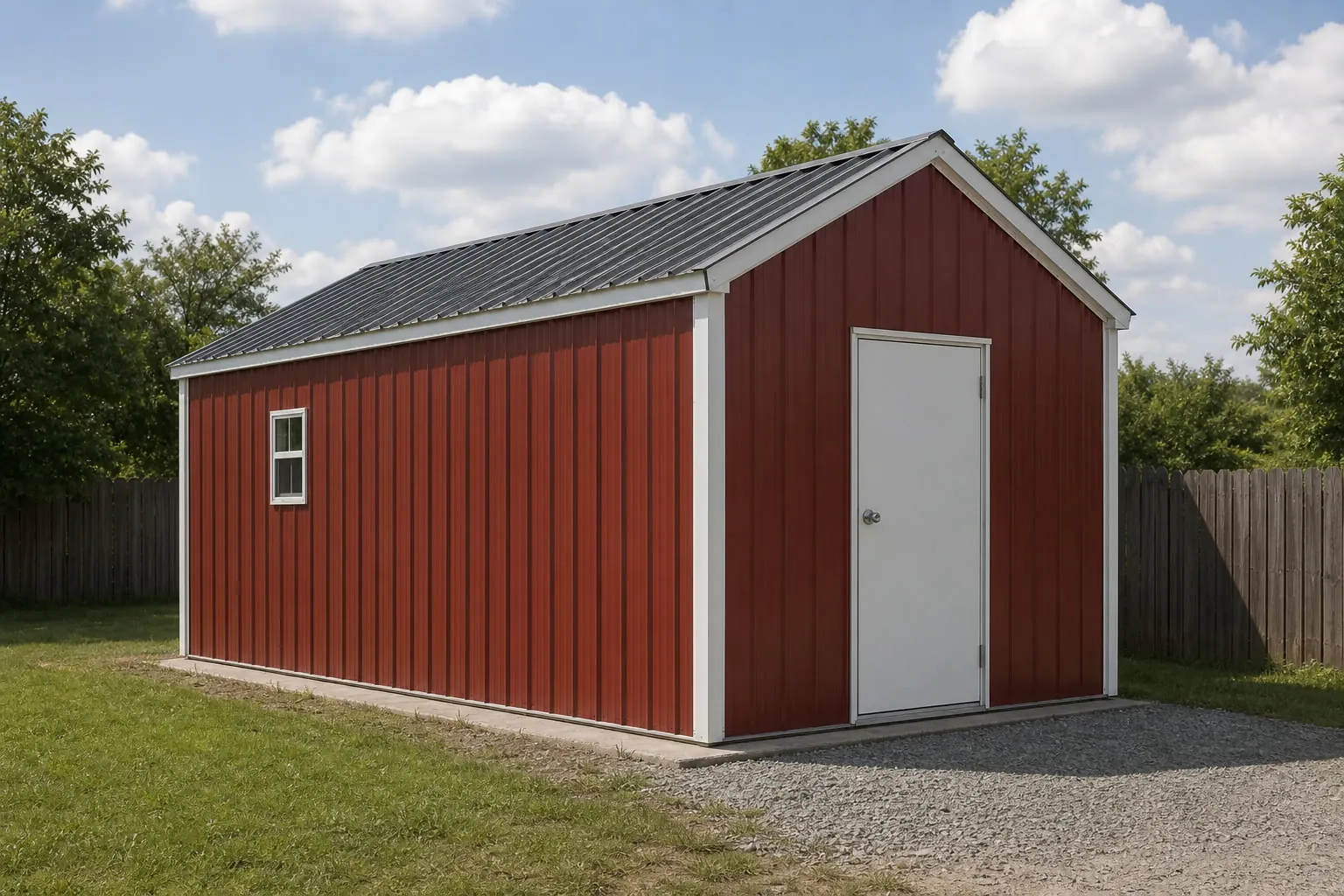
South Carolina Storage
Building for the Palmetto humidity
In a state where summers are famously hot and humid, a metal shed's value is defined by how well it keeps moisture away from your belongings.
South Carolina is defined by its humid subtropical climate. For a metal shed, this means the exterior panels will face intense UV radiation and frequent rain, while the interior faces the risk of condensation. If you are storing lawn equipment, tools, or seasonal decor, a shed that doesn't breathe is a liability. Steel sheds in South Carolina should be equipped with gable vents or ridge venting to ensure that the internal temperature doesn't skyrocket and trap moisture against the metal skin.
The state's geographic diversity also plays a role in how you cite your shed. In the sandy soils of the Coastal Plain, drainage is generally good, but the risk of coastal flooding—as noted in FEMA NRI data—means you should avoid low-lying areas of your property. In the Piedmont and Upstate, where clay soils can hold water longer, a well-drained gravel base is the standard to keep the metal floor or frame from sitting in a damp environment.
While South Carolina temperatures have risen more than 1°F since the early 1900s, the primary stressor remains the humidity. Unlike wooden sheds that can rot or attract termites (a major pest in SC), a steel shed provides a durable, pest-proof alternative, provided you select a finish that can withstand the coastal air and midday sun. Owners moving from a wood-frame shed to steel often notice the difference most in spring, when a wood structure would typically show swelling or mildew along its base after months of humidity, while a properly vented steel shed shows none.
Use Cases
Common South Carolina shed applications
How SC residents use small-scale steel storage.
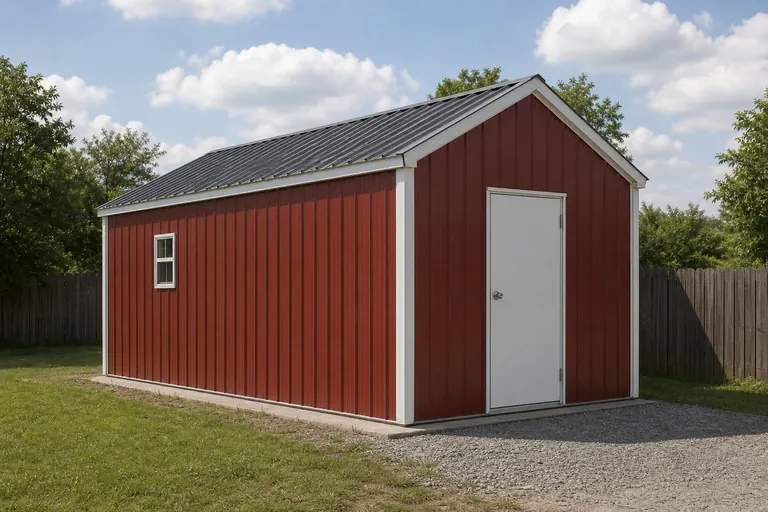 Backyard UtilityA 10x12 or 12x20 metal shed for lawn mowers and garden tools, featuring wide doors for easy access.Coastal Gear StorageSized for beach gear or small boat equipment, using corrosion-resistant panels for the Lowcountry air.Upstate Tool CribA rugged storage solution for mountainous properties, often sited on a reinforced gravel pad.
Example Configuration — for planning purposes only.
Planning
Shed rules in South Carolina
Permitting for sheds in South Carolina is almost entirely a local matter.
In many South Carolina counties, small sheds (often under 200 square feet) do not require a formal building permit if they are used only for storage and have no utilities. However, this is not a universal rule. Towns like Mount Pleasant or cities like Greenville may have much stricter rules regarding where a shed can sit on your lot (setbacks) and even what color it can be.
If you are located in a coastal county, you may also need to show that the shed is properly anchored. Even a small metal shed can become a hazard in high winds. Using auger-style ground anchors or bolting the shed to a concrete pad are two dependable ways to ensure your storage stays put during a South Carolina storm.
- Check local setbacks
- Most SC municipalities require sheds to be a certain distance from property lines.
- Anchor for wind
- Essential for coastal areas and open Midlands parcels to prevent wind displacement.
- HOA Approval
- In many SC developments, the HOA has more restrictive rules than the county building department.
Find a South Carolina shed builder
Get quotes on durable metal sheds that can handle the Palmetto State's heat and humidity.
Regional Planning
Shed priorities across South Carolina
A shed's biggest maintenance risk changes depending on which part of the state it sits in.
Lowcountry & Coastal Plain
Salt air and hurricane exposure mean corrosion-resistant coatings and heavier anchor kits are worth the upgrade over a standard package.
The Midlands
High humidity and intense summer heat make ventilation the priority; gable vents or a ridge vent keep condensation off stored tools.
The Upstate
Freeze-thaw ground movement and occasional ice loading matter more here than salt exposure, so periodic level checks protect door alignment over time.
Seasonal Care
Readying a shed for storm season and Upstate winters
A small shed is exempt from many of the wind engineering requirements a larger structure faces, which makes owner-level seasonal prep more important, not less.
- Pre-June anchor check (coastal)Along the Grand Strand and Lowcountry, where FEMA NRI flags hurricane and coastal flooding risk across the county set, auger anchors and tie-down straps on a lightweight shed should be tightened or replaced before the season starts.
- Elevate contents (coastal and Midlands)Because inland flooding is scored as a risk statewide, storing items directly on the shed floor rather than on shelving raises them above the water line that can enter during a heavy tropical rain event.
- Upstate frost-heave watchIn the cooler Upstate, a shed set on an unreinforced gravel pad can shift slightly as the ground freezes and thaws through winter; a periodic level check keeps doors from binding.
- Off-season ventilationEven when a shed sits mostly closed over winter, cracking a vent or leaving a louver open prevents the humid subtropical air from condensing on tool surfaces once spring heat returns, a step that matters more in the Midlands and Lowcountry than in the drier winter air of the Upstate.
Questions
South Carolina Shed FAQ
Practical answers for SC shed buyers.
Without ventilation, yes. However, modern steel sheds with light-colored roofs reflect a significant amount of heat. Adding vents and siting the shed in a partially shaded area can keep interior temperatures manageable.
If you use high-quality galvanized steel with a baked-on enamel or Galvalume finish, it is highly resistant to rust. For properties very close to the ocean, rinsing the exterior occasionally to remove salt buildup is a good maintenance practice.
Not necessarily. Many sheds are built on a leveled gravel bed or a pressure-treated wood timber foundation. However, a concrete slab is the most durable option and provides the best protection against ground moisture and pests.
Auger-style ground anchors or bolting to a concrete pad are both effective options, and coastal sites generally benefit from a heavier-duty anchor kit than inland sites given the added hurricane wind exposure. Confirm the right kit with your shed vendor for your specific location.
Yes. Upstate sheds face freeze-thaw ground movement and occasional ice load rather than salt-air corrosion, so a periodic level check matters more than corrosion-resistant hardware in that region.
Sources for the South Carolina facts on this page
This page states no code requirement, wind speed, snow load, permit rule, price or supplier claim. The state-specific facts it does use are listed with their publisher below.
The South Carolina State Climatology Office (SC DNR) states most of the state falls within the humid subtropical (Köppen Cfa) classification, producing hot, humid summers with mild winters, while portions of the Upstate mountains have a different, cooler climate regime.
South Carolina Department of Natural Resources (SC DNR), State Climatology Office · SC DNR reference publication · Tier 2
https://www.dnr.sc.gov/climate/sco/Publications/SCClimateOverview.pdfNOAA NCEI publishes a narrative 'Climate of South Carolina' describing the state's climatic transition from coastal plain to Piedmont to mountainous Upstate terrain.
NOAA National Centers for Environmental Information (NCEI) · Historical narrative (NCEI climate normals series) · Tier 1
https://www.ncei.noaa.gov/data/climate-normals-deprecated/access/clim60/states/Clim_SC_01.pdfSouth Carolina had 22,633 farms in 2022, down 9% since 2017.
USDA National Agricultural Statistics Service (NASS) · 2022 · Tier 1
https://www.nass.usda.gov/Publications/AgCensus/2022/Online_Resources/County_Profiles/South_Carolina/cp99045.pdfThe Census Bureau's current data profile lists South Carolina with a land area of 30,064.1 square miles and a water area of 1,959.4 square miles, ranking it the 39th largest state by area.
U.S. Census Bureau · Current Census Bureau geography data · Tier 1
https://data.census.gov/profile/South_Carolina?g=0400000US45FEMA's National Risk Index is the federal tool providing county-level natural hazard risk scoring (including hurricane, coastal flooding, tornado, and inland flooding categories) for all 46 South Carolina counties; a state-specific hazard narrative from FEMA itself was not directly retrieved in this session.
Federal Emergency Management Agency (FEMA) · Current NRI release · Tier 1
https://www.fema.gov/flood-maps/products-tools/national-risk-index