West · WA
Steel Buildings in Washington
A steel building on the west side of the Cascades and one east of them are solving different problems — persistent moisture and tight lots versus heat, irrigation infrastructure and open acreage. Compare building types and planning steps for your part of Washington before requesting quotes.
Overview
One State, Two Very Different Building Climates
The Cascades divide Washington into a wet, marine-influenced west side and a dry, open east side, and that split matters more to a steel building specification than any single statewide factor. Confirm which side of that divide your site sits on before assuming a generic plan applies.
West of the Cascades, moisture management, tight residential and rural lots, and local jurisdiction review tend to shape a project. East of the Cascades, heat, irrigation infrastructure and open agricultural acreage matter more.
Whichever side of the state you're on, ask early whether project-specific engineered drawings for your jurisdiction are included in a quote, since that answer changes what you can compare between suppliers.
Site work timing also splits along the same divide. Westside foundation and slab work generally slows during the wettest months from late fall through early spring, when saturated ground and standing water complicate excavation, while eastside crews are more likely to be limited by winter freeze than by rain and can often work a longer outdoor season overall.
Regional planning
Westside, Basin and Beyond
Site conditions and typical building use shift sharply across Washington's subregions, even within a single day's drive.
Puget Sound lowlands (Seattle, Tacoma, Everett, Bellingham)
Dense suburban and urban development with marine trades, boatbuilding and aerospace-adjacent shop work; lots are often tighter and moisture management is a constant design topic.
Olympic Peninsula and outer coast
Heavy rainfall and marine exposure define most building decisions here, from coatings to roof drainage design.
Columbia Basin (Tri-Cities, Moses Lake, Wenatchee)
Irrigated cropland, food processing and open acreage support larger equipment and storage buildings with long, hot summers.
Yakima Valley
Tree fruit, hops and wine grape operations drive demand for packing, cold-adjacent storage and equipment buildings sized to harvest logistics.
Palouse and northeast Washington (Spokane, Colville)
Grain country and forestry-adjacent rural land with a more continental climate and genuine winter snow at elevation.
Building types
Steel Building Types Common Across Washington
Workshops and marine-trade buildings dominate west of the Cascades; agricultural and equipment storage buildings dominate east of them.
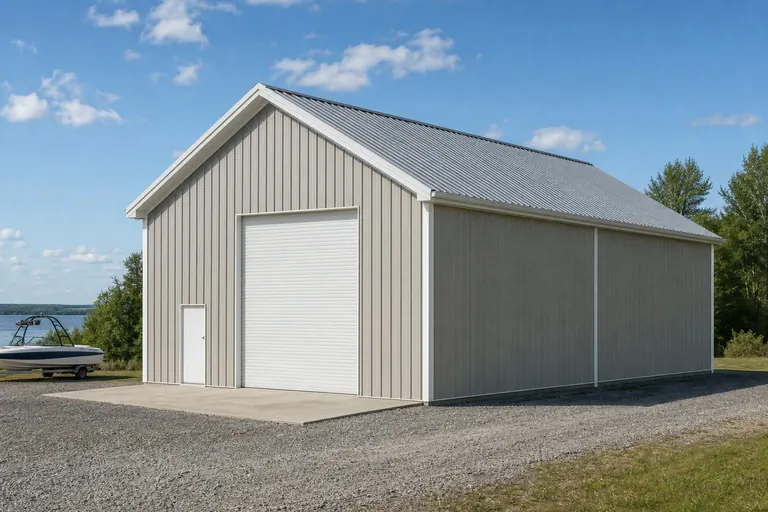
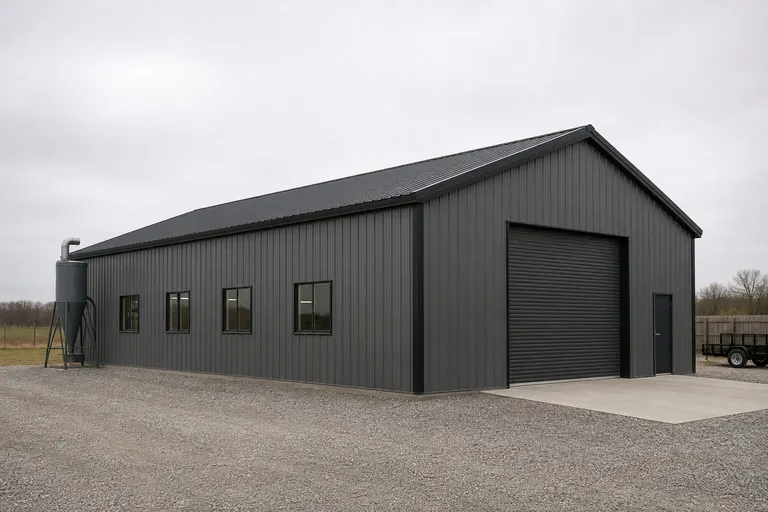 WorkshopEnclosed working floor for marine trades, cabinetry or general fabrication, common around Puget Sound.Boat StorageCovered or enclosed storage sized to the vessel and trailer, a frequent request near the Sound and coast.
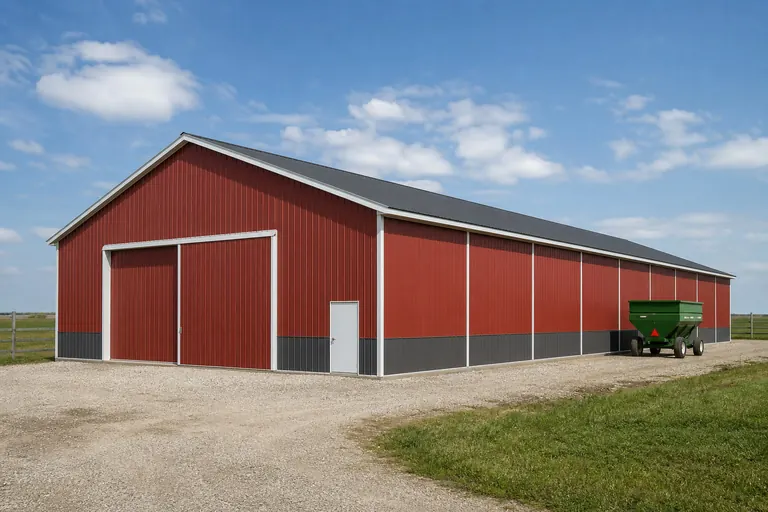 Agricultural BuildingEquipment, input and packing support for Yakima Valley and Columbia Basin operations.
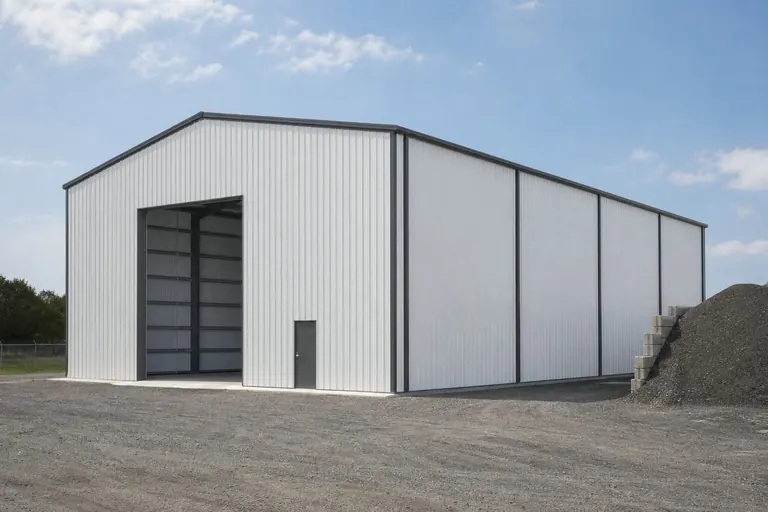 Equipment StorageCovered machinery storage sized around harvest and irrigation equipment.
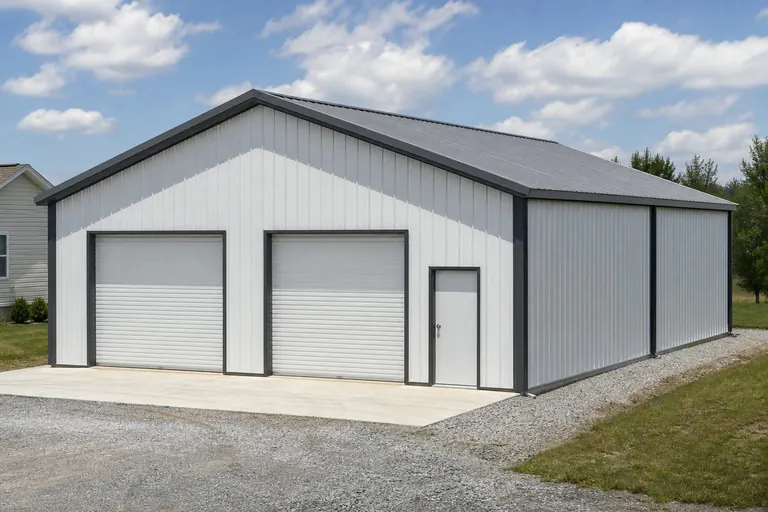 Metal GarageEnclosed vehicle storage on residential and rural lots throughout the state.
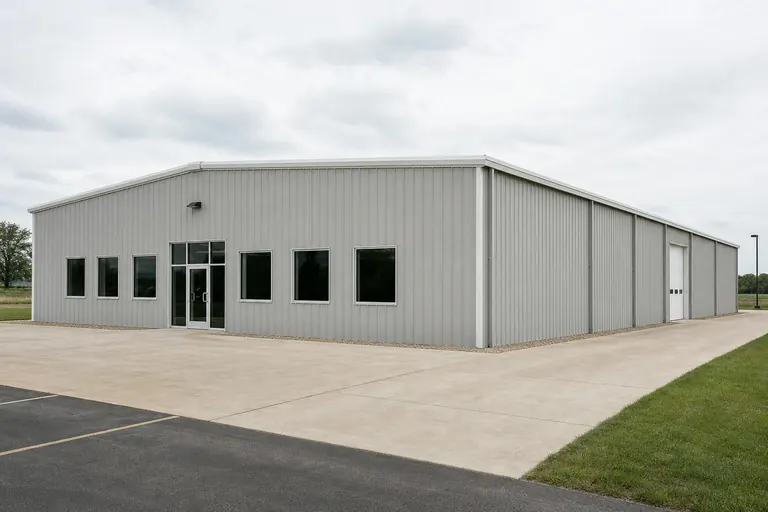 Commercial BuildingService and light industrial shells supporting Spokane, Tri-Cities and Puget Sound trade activity.
Example Configuration — for planning purposes only.
Westside moisture
Designing for Rain and Marine Exposure
West of the Cascades, roof drainage, gutter capacity and condensation control are recurring specification topics because sustained rainfall is the norm rather than an occasional event.
Marine exposure near Puget Sound and the outer coast also affects coating and fastener selection, so it's worth raising corrosion protection directly with a supplier rather than assuming a standard coating covers it. Roof pitch and gutter sizing deserve the same direct conversation, since undersized drainage on a low-slope roof is a common source of callback issues in wetter westside jurisdictions.
For enclosed shop or storage buildings, ventilation and an interior vapor strategy matter as much on the west side as insulation does, since trapped moisture under a roof panel is a common source of long-term problems.
Freight and shipping
Puget Sound Ports and Columbia River Freight
Steel building components arriving in Washington generally move through Seattle or Tacoma container terminals, then onto I-5 or I-90 trucking, while grain, hay and bulk agricultural freight in the Columbia Basin often depends on Columbia and Snake River barge terminals feeding rail and truck routes.
For a westside project, the practical question is usually last-mile access: can a delivery truck reach the site directly, or does a tighter urban or suburban lot require a smaller vehicle and a staged unload? Confirm this with your supplier before delivery day rather than discovering a conflict on-site.
East of the Cascades, distance rather than lot size is the bigger variable. A Tri-Cities or Wenatchee site may sit well off the interstate corridor, and mountain pass conditions on I-90 or Highway 2 in shoulder-season weather can add real uncertainty to a winter delivery schedule.
Eastside agriculture
Equipment and Packing Buildings for the Columbia Basin
Yakima Valley and Columbia Basin buildings are usually sized around harvest logistics — bin trucks, forklifts and seasonal labor — more than around a fixed floor area target.
Many orchard and vineyard operations need a structure that shifts use across the season: equipment storage in winter, sorting or staging space at harvest. Framing that flexibility into the building with a mix of enclosed and open bays from the start avoids retrofitting later.
Because Columbia Basin summers run hot and dry, ventilation and shading decisions matter for anything stored inside, from packed fruit to maintained equipment.
Timing also matters on the build side. Growers commonly aim to have a new equipment or packing building enclosed before the spring irrigation season starts and harvest crews arrive, which means construction scheduling has to work backward from the crop calendar rather than a generic project timeline.
Footprints
Useful Starting Sizes for Washington Projects
These are reference configurations to plan against, not a ranking of what Washington buyers order. Westside lot constraints and eastside equipment size are the two forces that most often reshape a footprint.
24′ × 36′864 sq ft
Compact shop or garage on a tighter westside lot.
30′ × 50′1,500 sq ft
Workshop or marine trade bay with room for a boat or vehicle.
40′ × 60′2,400 sq ft
Clear-span shop or general-purpose orchard equipment building.
50′ × 100′5,000 sq ft
Packing support or larger equipment storage in the Columbia Basin.
60′ × 120′7,200 sq ft
Larger agricultural or light industrial floor area on open eastside acreage.
Example Configuration — for planning purposes only.
Floor area is width × length. Drawings are proportional illustrations; openings shown are examples only.
Match your goal
Starting Points for Common Washington Projects
Let the intended use, not a fixed template, set the starting building type and deciding factor.
| Project goal | Starting building type | Deciding factor |
|---|---|---|
| Cover a boat near Puget Sound | Boat storage building | Vessel height including tower, plus trailer length |
| Run a marine trade or fabrication shop | Workshop building | Bay width and power layout |
| Store orchard or vineyard equipment | Agricultural building | End-opening width and seasonal flexibility |
| Support irrigation and harvest logistics | Equipment storage building | Truck and forklift access |
| Operate a service business | Commercial building | Site circulation and jurisdiction review |
Cover a boat near Puget Sound
- Starting building type
- Boat storage building
- Deciding factor
- Vessel height including tower, plus trailer length
Run a marine trade or fabrication shop
- Starting building type
- Workshop building
- Deciding factor
- Bay width and power layout
Store orchard or vineyard equipment
- Starting building type
- Agricultural building
- Deciding factor
- End-opening width and seasonal flexibility
Support irrigation and harvest logistics
- Starting building type
- Equipment storage building
- Deciding factor
- Truck and forklift access
Operate a service business
- Starting building type
- Commercial building
- Deciding factor
- Site circulation and jurisdiction review
Kits and prefab
Pre-Engineered Packages Across the State
A Washington steel building is typically supplied as a pre-engineered package fabricated to your dimensions, whichever side of the Cascades you're building on. Confirm whether jurisdiction-specific engineering is included in the quote before comparing prices.
Erection scope is worth separating explicitly on both sides of the state: tight westside sites may need smaller equipment and staged deliveries, while remote eastside sites may need extra lead time for crew travel. Kit-only, kit plus erection and turnkey are different products worth comparing directly.
Before you order
A Washington State Pre-Order Checklist
Work through these before requesting quotes, since westside and eastside sites raise different issues.
Step 1
Identify the authority
Washington’s city and county building departments do not share one checklist, so confirm the reviewing office for the exact parcel before assuming a westside process applies eastside.
Step 2
Confirm the site's climate side
West of the Cascades or east of them changes what specification questions matter most.
Step 3
Ask about moisture management
Drainage, coatings and ventilation for westside marine exposure.
Step 4
Plan for eastside heat
Ventilation and shading for Columbia Basin and Yakima Valley summers.
Step 5
Check site limits
Setbacks and lot coverage, particularly on tighter westside parcels.
Step 6
Set erection scope
Kit-only, kit plus erection or turnkey, agreed before quoting.
Cost drivers
What Drives Steel Building Cost in Washington State?
Clear span, eave height, openings, coatings for marine exposure, foundation work and erection scope drive most of the difference between Washington quotes.
No statewide average or per-square-foot figure appears here, since westside and eastside projects rarely share a comparable scope.
- Coatings and fasteners
- Marine exposure near Puget Sound and the coast can change the specification.
- Clear span and eave height
- Frame weight scales with width and height more than total floor area.
- Foundation
- Soil and drainage conditions differ sharply between wet westside ground and dry eastside sites.
- Openings
- Each door and window is framed and priced individually.
- Erection scope
- Kit-only versus turnkey remains a major source of quote variance.
Around the state
Projects Near Major Washington Markets
Review expectations, site density, freight access and typical building use vary across these markets, from container-port cities to inland farm towns.
- Seattle
- Tacoma
- Spokane
- Vancouver
- Bellingham
- Yakima
- Tri-Cities
- Everett
- Wenatchee
- Olympia
Planning a building?
Planning a Building in Washington?
Use the planning guides to narrow the footprint and building system that fits your project, then request quotes with your Washington details already attached.
Requesting information does not require a purchase.
Questions
Washington State Steel Building FAQs
Answers to common Washington State planning questions, without inventing regulatory detail.
In most cases, yes, and requirements are set by the city or county with jurisdiction over the address. Confirm the submittal package and review timeline before ordering.
Persistent rainfall makes roof drainage, gutter capacity and condensation control standard specification topics rather than optional upgrades. Coating and fastener choice near Puget Sound or the coast also deserve direct attention.
An agricultural building with a mix of enclosed and open bays usually fits best, since many orchard operations need equipment storage in winter and staging space at harvest from the same structure.
Cost depends on span, height, openings, coatings and foundation work, and no honest statewide figure applies across such different westside and eastside conditions. Fix the specification, then request comparable quotes.
Yes, provided the door height accounts for the vessel plus trailer and any tower or antenna, and the coating specification addresses marine exposure. Confirm those details with your supplier before ordering.
Start from the equipment and bench layout you need, then add circulation space around it. Many westside shop projects begin around a 24-by-36 to 30-by-50 footprint, but the right size depends on your specific trade.
It can, particularly at elevation in the Cascades or in northeast Washington, but it is far less of a factor in the Puget Sound lowlands or the Columbia Basin. Site-specific engineering, not a statewide figure, determines what applies.
Component freight into the Puget Sound region generally moves through container terminals in Seattle or Tacoma before trucking to the site, and congestion at those terminals can shift a delivery window. Ask a supplier how they sequence freight if your site is on the west side.
West of the Cascades, drier months from late spring through early fall generally make excavation and foundation work easier, while eastside sites are less rain-limited but can face winter freeze instead. Neither side has a fixed season this guide can promise, since local conditions vary by year.
Start your project
Start Your Washington State Steel Building Plan
Compare building types and planning steps suited to your side of the Cascades, then request a quote scoped to your exact use and location across Washington State.
Washington
Metro guides
City & Metro Building Guides in Washington
Deeper planning guides for Washington metros with their own measured demand and their own siting questions.
- Planning a build around Spokane
Spokane metro: pole barn / post-frame projects, plus the siting questions this area raises before quoting.
Building type guides
Building Types Planned in Washington
What actually changes for each building type when the project is planned in Washington.
- Aircraft Hangar in Washington
A private aircraft hangar is almost never a small-lot project, which puts it squarely into Washington's rural land patterns.
- Barndominium in Washington
A barndominium in Washington is a residential building sited in a state defined by the Cascade Range — home to Mount Rainier, a dormant stratovolcano rising 14,408 feet, the tal...
- Carport in Washington
A carport's only job is keeping weather off a vehicle, so the state it sits in matters more than for almost any other structure.
- Garden Shed in Washington
A garden shed is small, but where it sits in Washington still changes what it needs to do.
- Metal Garage in Washington
A metal garage in Washington is rarely a one-size decision, because the state a buyer is standing in has two working climates.
- Pole barn in Washington
A pole barn in Washington is planned against a state that does not have one climate or one farm profile.
- Steel Home in Washington
A steel-frame home is a bigger, longer-horizon commitment than an outbuilding, which makes Washington's specific conditions worth understanding before a lot is chosen.