
West · AK
Steel Buildings in Alaska
In Alaska, the first question a steel building project answers isn't what to build — it's how the materials get there and when the ground will let a crew work. Compare regional logistics, seasonal windows and building types before requesting quotes.
Overview
Logistics Decide the Project Before Design Does
In most of the country, a building's use sets its design. In Alaska, how a site connects to the rest of the state — by road, barge or air — often sets the schedule and packaging decisions before use is even discussed.
Anchorage, Fairbanks, Juneau and the communities strung along the state's limited highway network can generally plan around trucked freight and a fairly conventional delivery sequence. Communities off that road system depend on seasonal barge service or air cargo, and both come with capacity limits, scheduling windows and handling considerations that a road-system project never has to think about.
Before comparing building types, it's worth establishing which category your site falls into, since that answer changes how a kit should be packaged, how many separate shipments are realistic, and how far in advance materials need to be ordered.
Daylight is a second, less obvious factor. Long summer daylight hours in most of the state let crews extend a workday well beyond what a Lower 48 project could manage in the same season, which can partly offset the shorter overall construction window.
Regional planning
Southcentral, Interior, Southeast and Bulk Alaska
Alaska is best understood as several distinct construction environments rather than one state-wide condition, and each shapes a steel building project differently.
- 01
Southcentral (Anchorage, Mat-Su Valley, Kenai Peninsula)
The state's most connected region, with road and rail access, a longer effective construction season, and the widest mix of agricultural, commercial and residential-adjacent projects.
- 02
Interior (Fairbanks, Delta Junction, Tanana Valley)
Continental climate with a short, intense construction window between spring thaw and fall freeze-up, plus discontinuous permafrost that makes site and foundation evaluation especially important.
- 03
Southeast panhandle (Juneau, Sitka, Ketchikan)
Coastal, mountainous and largely disconnected from the road system; most freight arrives by the Alaska Marine Highway or barge, and heavy rainfall shapes drainage and coating decisions.
- 04
Bulk and rural Alaska (bush communities)
Villages and remote sites reachable only by small aircraft or seasonal barge, where shipment size, weight and packaging drive nearly every decision about how a kit is supplied.
Getting materials there
Road System, Barge and Air: Three Different Supply Chains
A steel building kit destined for Anchorage or Fairbanks can usually move like freight anywhere else in the country once it reaches the state. A kit destined for a village off the road system depends on a barge season or an aircraft's cargo hold, and both have real limits.
Barge service to coastal and river communities generally runs on a seasonal schedule tied to open water, and missing a sailing can push a delivery back by weeks rather than days. Air freight solves the timing problem but constrains piece size and weight, which can mean a kit needs to be broken into smaller, lighter components than it would on the road system.
Ask a supplier directly how they package a kit for barge or air shipment, and whether they've supplied to your specific community or a comparable one before. That answer says more about a realistic delivery window than any general estimate.
Road-system freight
Port of Anchorage and the Alaska Railroad Corridor
For road-connected communities, freight most often enters through the Port of Anchorage and then moves by highway or by the Alaska Railroad's Anchorage-to-Fairbanks corridor, which is a different supply chain than the barge and air routes serving off-road communities.
A Southcentral or Interior delivery on this corridor can generally be scheduled with the same kind of lead time as a Lower 48 trucking job, once material clears the port. Where that changes is at the margins of the road system — a Denali-area or Copper River Basin site may still be a long single-day haul from Anchorage even though it's technically road-connected.
Rail can be a useful option for oversized or heavy components moving between Anchorage and Fairbanks, but it adds a transfer point that needs its own scheduling conversation with a supplier rather than being assumed as a default.
Construction windows
Working With a Short, Region-Specific Build Season
Every region of Alaska has a real construction season shaped by thaw, daylight and access, and it is rarely the calendar-year window a Lower 48 project assumes.
In the Interior, the practical window runs from spring breakup through fall freeze-up, and site work that depends on stable, unfrozen ground is usually concentrated there. Southcentral's longer season and better road access give more flexibility, while Southeast's wet climate makes drainage and site drying as much a scheduling factor as temperature.
For barge- or air-served communities, the construction season is further narrowed by the shipping season itself: materials often need to arrive before ground work can even start, which means ordering timelines have to work backward from the barge or charter schedule, not forward from a target completion date.
Site conditions
Freeze-Thaw Cycles and Foundation Planning
Freeze-thaw movement and, in parts of the Interior and northern Alaska, discontinuous permafrost, make site and foundation evaluation a genuinely regional exercise rather than a formality.
Ground that is frozen for site work in winter can become unstable during spring thaw, and a foundation plan that ignores that seasonal shift risks settling or heaving later. This is a planning consideration to raise with a local site evaluator, not a value this guide can responsibly quote, since conditions vary by parcel even within the same community.
Building on a gravel pad is common practice in many parts of the state precisely because it manages drainage and frost interaction better than bare native soil, and it's worth discussing pad preparation as its own line item in any project timeline.
Building types
Steel Building Types Common Across Alaska
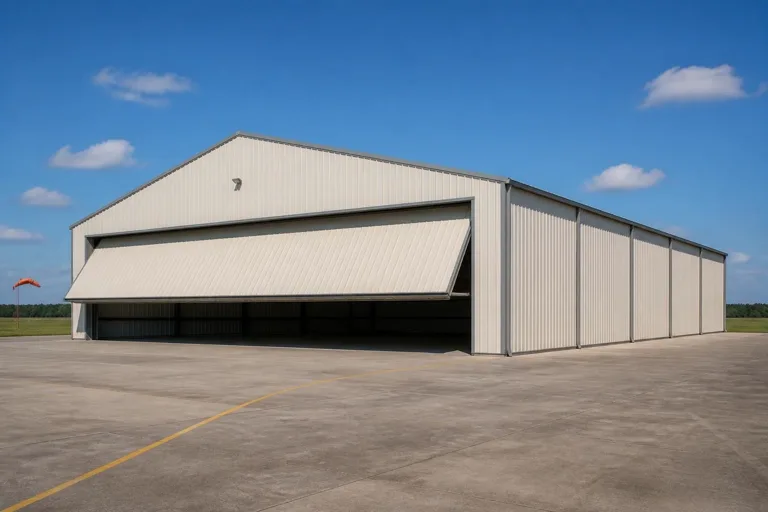
Equipment storage, aviation-support and small agricultural buildings account for much of Alaska's demand, shaped heavily by whether a site sits on the road system.
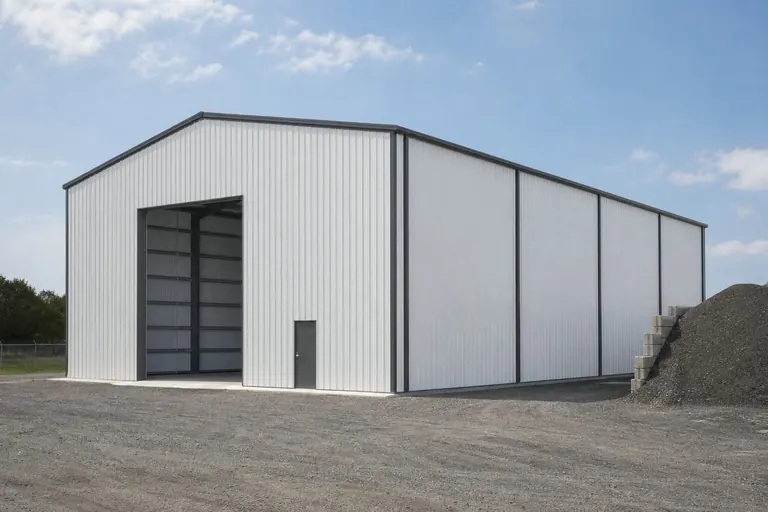
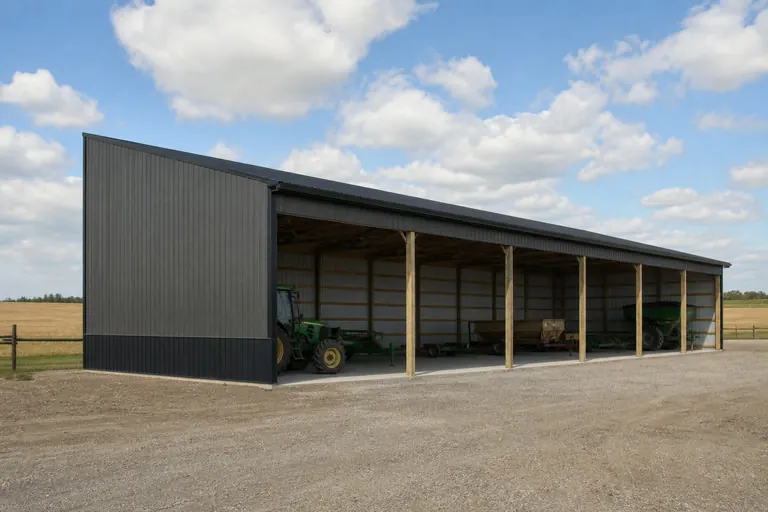
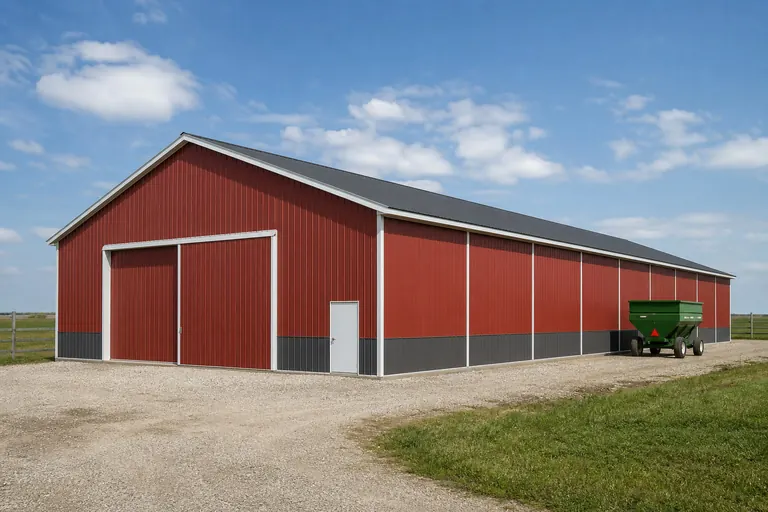
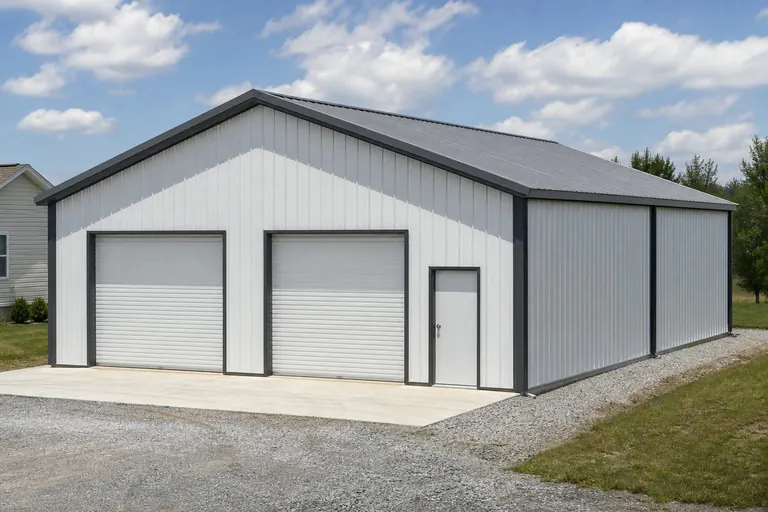
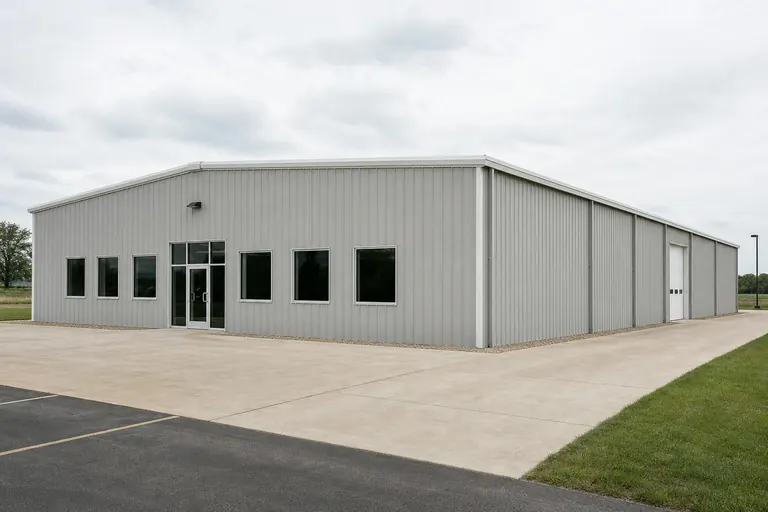
Example Configuration — for planning purposes only.
Footprints
Useful Starting Sizes for Alaska Projects
These are reference configurations for planning, not a ranking of what Alaska buyers order. Shipment method often has as much influence on final footprint as intended use.
24′ × 36′864 sq ft
Compact equipment shed or garage for a road-system property.
30′ × 50′1,500 sq ft
General equipment storage or a small hangar-adjacent support building.
40′ × 60′2,400 sq ft
Clear-span shop or agricultural equipment building for Mat-Su or Tanana Valley operations.
50′ × 100′5,000 sq ft
Larger equipment or municipal storage on road-system acreage.
30′ × 40′1,200 sq ft
A footprint sized for pieces that must ship by barge or aircraft to a remote community.
Example Configuration — for planning purposes only.
Floor area is width × length. Drawings are proportional illustrations; openings shown are examples only.
Match your goal
Starting Points for Common Alaska Projects
Let intended use and delivery method, not a fixed template, set the starting building type.
| Project goal | Starting building type | Deciding factor |
|---|---|---|
| Cover equipment on a road-system property | Equipment storage building | Machinery height and end-opening width |
| Support a village or community airstrip | Aircraft hangar | Aircraft wingspan and door clearance |
| Store seasonal machinery affordably | Equipment shed | Open versus partially enclosed bays |
| Support a Mat-Su or Interior farm operation | Agricultural building | Seasonal storage needs and access width |
| Ship building materials to a remote site | Any of the above, packaged for transport | Barge or aircraft piece-size limits |
Cover equipment on a road-system property
- Starting building type
- Equipment storage building
- Deciding factor
- Machinery height and end-opening width
Support a village or community airstrip
- Starting building type
- Aircraft hangar
- Deciding factor
- Aircraft wingspan and door clearance
Store seasonal machinery affordably
- Starting building type
- Equipment shed
- Deciding factor
- Open versus partially enclosed bays
Support a Mat-Su or Interior farm operation
- Starting building type
- Agricultural building
- Deciding factor
- Seasonal storage needs and access width
Ship building materials to a remote site
- Starting building type
- Any of the above, packaged for transport
- Deciding factor
- Barge or aircraft piece-size limits
Kits and packaging
How a Kit Is Packaged Changes With Where It's Going
A steel building kit for a road-system site can generally ship the way it would anywhere else. A kit headed for a barge- or air-served community needs to be planned around piece size, crate weight and the number of separate shipments a project can realistically absorb.
Ask directly whether a supplier has experience packaging for Alaska's marine highway or bush air carriers, since that experience often shows up in smaller, more manageable component sizes rather than a single oversized shipment that a small aircraft or barge slot cannot accommodate.
Erection scope deserves the same scrutiny. A crew traveling to a remote site adds real time and cost beyond the kit itself, so kit-only, kit-plus-erection and turnkey packages should be compared as genuinely different products, not variations on the same number.
Before you order
An Alaska Pre-Order Checklist
Work through these before requesting quotes, since road-system and remote-site projects raise different issues.
Step 1
Confirm the delivery route
Road, barge or air, and the seasonal schedule that route runs on.
Step 2
Work backward from the shipping season
Barge and charter schedules, not a target finish date, should set the order deadline for remote sites.
Step 3
Evaluate the site's ground conditions
Frost, drainage and any permafrost concern specific to the parcel.
Step 4
Identify the local authority
Borough, municipal or unorganized-area rules for the exact site.
Step 5
Ask about kit packaging
Piece size and weight limits if the shipment moves by barge or aircraft.
Step 6
Set erection scope
Kit-only, kit plus erection or turnkey, agreed before quoting, with crew travel factored in.
Around the state
Projects Near Major Alaska Communities
Access, freight options and typical building use vary across these communities.
- Anchorage
- Fairbanks
- Juneau
- Wasilla
- Kenai
- Soldotna
- Ketchikan
- Sitka
- Palmer
- Delta Junction
Planning a building?
Planning a Building in Alaska?
Use the planning guides to narrow the footprint and building system that fits your project, then request quotes with your Alaska details already attached.
Requesting information does not require a purchase.
Questions
Alaska Steel Building FAQs
Answers to common Alaska planning questions, without inventing regulatory detail or freight guarantees.
Materials generally move by seasonal barge or by air cargo when a community isn't on the road system. Both have real scheduling and piece-size limits, so ask a supplier how they package kits for the specific route serving your site.
It varies by region: Southcentral has the longest window given its road access, the Interior's season runs roughly from spring breakup to fall freeze-up, and remote communities are further constrained by their shipping season. There is no single statewide answer.
Yes. Seasonal freeze-thaw movement and, in some Interior and northern areas, discontinuous permafrost can affect foundation stability, which is why site-specific evaluation matters more in Alaska than in most states.
Start from the equipment you need to cover and the access width required, then confirm whether the site is road-connected or shipping-constrained, since that can influence how large a single shipped component can practically be.
Barge service to coastal and river communities typically runs on a fixed seasonal schedule, and missing a sailing can delay a project by weeks. Order timelines for these sites should work backward from the barge schedule rather than forward from a desired completion date.
An aircraft hangar sized to the wingspan and door clearance of the aircraft in use is the usual starting point, often supplemented by an equipment storage building for ground-support machinery.
Conditions vary by region and elevation, but this guide does not publish specific snow load values, since those are site-specific engineering figures set by a qualified evaluator, not a statewide fact.
Rail service between Anchorage and Fairbanks can be useful for heavy or oversized components, but it adds a transfer point with its own schedule. Confirm with a supplier whether rail is part of their standard routing or something to arrange separately.
It can help. Extended summer daylight across most of the state allows longer working days during the construction season, which can partly offset how short that season is compared with a Lower 48 project.
Start your project
Start Planning Your Alaska Steel Building
Whether your site sits on the road system or depends on a barge or air schedule, get building types and footprints in front of suppliers who can speak to your specific route and season. Request quotes today and compare responses side by side.
Alaska
Building type guides
Building Types Planned in Alaska
What actually changes for each building type when the project is planned in Alaska.
- Aircraft hangar in Alaska
In much of Alaska, a hangar isn't a hobby structure sitting next to a paved runway — it's tied to a working airstrip that may be a community's main connection to the outside world.
- Barndominium in Alaska
A barndominium in Alaska is decided at the ground, not at the floor plan.
- Carport in Alaska
An open-sided carport has less structure to absorb a bad winter than an enclosed building, so in Alaska two things get decided before a size or color: roof geometry and what the...
- Pole barn in Alaska
A pole barn depends on its posts reaching stable ground, which makes Alaska's permafrost mapping the first planning question rather than a footnote.