Garden Shed · WA
Garden Sheds in Washington
A garden shed is small, but where it sits in Washington still changes what it needs to do. USDA's 2022 Census of Agriculture counted 32,076 Washington farms averaging 432 acres, down from 35,793 farms in 2017 — a land base where a shed is often serving acreage well beyond a suburban backyard. NOAA's Sea-Tac normal of 39.34 inches of annual precipitation describes the west side's sustained damp conditions, while the Washington Geological Survey's arid Columbia Basin covers the entire southeastern portion of the state with the opposite problem: heat and dust. A shed built for one Washington property is not automatically right for another.
The intersection
What a Washington property changes about a garden shed
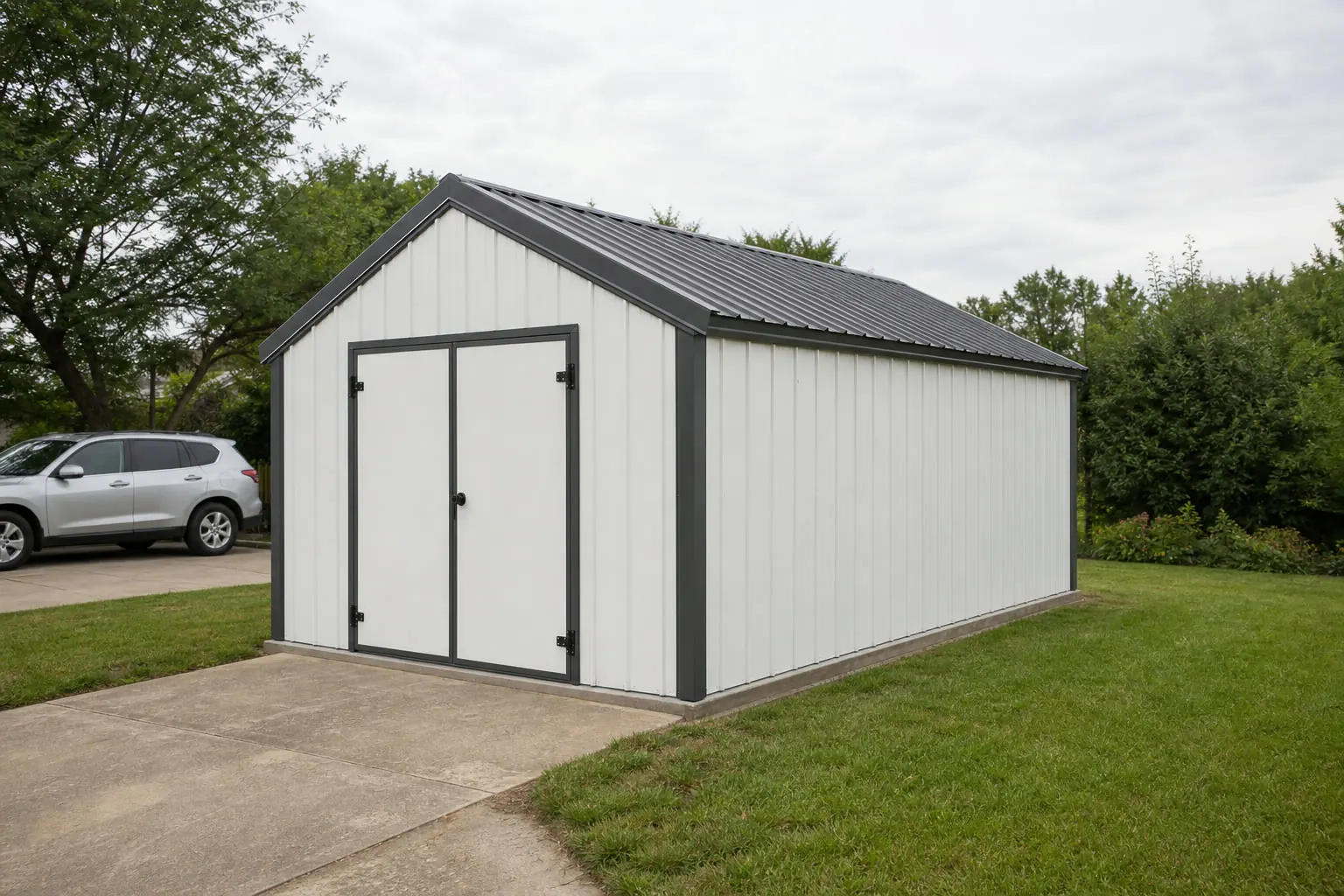
Washington's farm-scale land base and split climate both change what a garden shed is actually being asked to do here.
USDA's 2022 Census of Agriculture counted 32,076 farms in Washington, averaging 432 acres across 13,855,414 total acres in farms — down from 35,793 farms in 2017. That land base means a garden shed here is often serving a larger property than a typical suburban backyard: storing hand tools, irrigation fittings, seed, and small equipment for acreage that a purely urban shed page would never address. Even buyers on smaller residential lots are shopping in a state where sheds routinely double as light equipment storage.
Climate then splits the moisture-versus-heat question the same way it does for larger structures. NOAA's Sea-Tac normal lists 39.34 inches of annual precipitation, representative of the west side the National Weather Service's Seattle office documents separately from the state's drier interior. A west-side shed holding seed, tools, or untreated wood is exposed to sustained damp conditions for a large part of the year, which makes ventilation and a raised or sealed floor genuinely useful. East of the Cascades, the Washington Geological Survey's Columbia Basin — the arid lowland covering the state's entire southeastern portion — presents the opposite problem: heat buildup and dust rather than rot.
Sizing
Sizing a shed for acreage versus a residential lot
A shed serving working farmland has a different job list than one serving a residential garden, and Washington has plenty of both.
On larger acreage, a shed is more likely to store powered equipment, irrigation supplies, and bulk garden inputs, which argues for wider doors and a harder floor than a small tool shed needs. On a standard residential lot, a compact shed for hand tools, a mower, and seasonal items is usually enough, and the moisture-versus-dust question from the state's climate divide matters more than sheer size.
Either way, the property's side of the Cascades is worth stating up front, because it changes venting and floor recommendations more than square footage does.
A shed's small footprint also changes which maintenance issue shows up first. On acreage, a shed sited near existing agricultural buildings tends to collect dust and chaff from nearby equipment regardless of climate; on a residential lot, the climate divide is the dominant factor, since a small backyard structure has no other equipment traffic to contend with.
- Acreage sheds
- Wider door openings and a hard floor suit equipment and bulk supply storage on working land.
- Residential sheds
- Compact footprints with good ventilation suit tool and seasonal storage.
- Climate-first spec
- West-side moisture control and east-side heat/dust control matter more than size for what's stored inside.
Configuration
How Washington garden shed briefs differ by property
A shed on working acreage and a shed in a Puget Sound backyard start from different premises, even before climate is factored in.
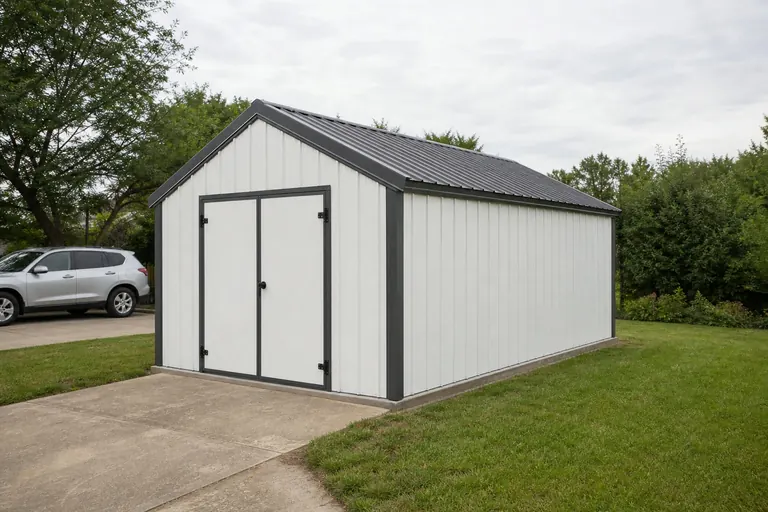 Working-acreage shedSized for irrigation fittings, hand tools, and bulk seed on a farm averaging 432 acres statewide per USDA's 2022 count, often sited near existing agricultural buildings rather than near the house.West-side residential shedCompact tool and mower storage where ventilation and a raised floor manage sustained damp exposure implied by Sea-Tac's precipitation normal.Columbia Basin residential shedThe same compact footprint, but oriented and vented for heat and dust rather than moisture.
Example Configuration — for planning purposes only.
Get Washington garden shed quotes
Tell us your property type and which side of the Cascades you're on. We route it with the Washington and garden-shed context already attached.
Specification
Floor and panel choices track the same climate divide
The single most consequential shed decision in Washington is the floor, and it splits cleanly along the same west/east line that shapes every other structure on this page.
On the west side, a shed floor sitting directly on damp ground for months at a time is a leading cause of rot and rust in stored contents. A raised timber or steel floor, with airflow underneath, is a modest cost that pays off directly against Sea-Tac's 39.34-inch annual precipitation normal. Roof venting matters for the same reason: a sealed shed on the west side traps humidity generated by the ground and by anything damp brought inside.
On the Columbia Basin side, the floor question is less urgent, but heat becomes the driver: a shed used to store seed, chemicals, or anything heat-sensitive benefits from roof venting and, where practical, a lighter exterior finish to reduce interior temperature swings across the state's drier, sun-heavy interior. Neither recommendation is a code requirement; both are responses to how differently the two halves of the state actually treat a small unheated structure.
On a working-acreage property, door width is worth reconsidering alongside the floor: a shed doubling as light-equipment storage on a farm averaging 432 acres statewide typically needs a wider single opening rather than the narrower double doors that suit a residential tool shed, since equipment gets rolled in and out far more often than hand tools are.
Preparation
Before you request a Washington garden shed quote
These points shorten the path to a comparable quote.
- Describe the property typeAcreage and residential-lot sheds serve different storage jobs even at similar sizes.
- State which side of the state your site is onMoisture control and heat/dust control call for different venting and floor choices.
- Check with your local building departmentSetback and permit-size thresholds are jurisdiction-specific; we do not state them here.
Questions
Washington garden shed questions
Honest state-level answers, with jurisdiction-specific items routed appropriately.
The basic structure is similar, but priorities differ: west-side sites, represented by Sea-Tac's 39.34-inch annual precipitation normal, benefit from ventilation and drainage, while Columbia Basin sites deal more with heat and dust.
Permit requirements depend on your county or city jurisdiction and the shed's size and placement relative to setbacks. Your local building department is the only reliable source for that answer.
Washington has 32,076 farms averaging 432 acres per USDA's 2022 count, so a meaningful share of sheds statewide serve working acreage, though plenty are also on standard residential lots — the right size and door width depend on your own property, not a statewide average.
A raised or sealed floor is a reasonable response to sustained west-side moisture exposure, particularly if stored contents include untreated wood, seed, or tools prone to rust.
We do not publish state-level prices; costs depend on size, materials, and site work. Our cost pages cover what drives the number.
Sources for the Washington facts on this page
This page states no code requirement, wind speed, snow load, permit rule, price or supplier claim. The state-specific facts it does use are listed with their publisher below.
Washington had 32,076 farms in 2022, down from 35,793 farms in 2017.
USDA National Agricultural Statistics Service (NASS) · 2022 (with 2017 comparison) · Tier 1
https://www.nass.usda.gov/Publications/AgCensus/2022/Full_Report/Volume_1,_Chapter_1_State_Level/Washington/wav1.txtWashington had 13,855,414 acres of land in farms in 2022, an average farm size of 432 acres.
USDA NASS · 2022 · Tier 1
https://www.nass.usda.gov/Publications/AgCensus/2022/Full_Report/Volume_1,_Chapter_1_State_Level/Washington/wav1.txtSeattle-Tacoma International Airport's 1991-2020 annual climate normal precipitation is 39.34 inches with an annual normal snowfall of 6.3 inches.
NOAA National Centers for Environmental Information (NCEI) · 1991-2020 · Tier 1
https://www.ncei.noaa.gov/access/services/data/v1?dataset=normals-annualseasonal-1991-2020&dataTypes=ANN-PRCP-NORMAL,ANN-SNOW-NORMAL&stations=USW00024233&format=jsonThe Washington Geological Survey (part of the state Department of Natural Resources) names and maps distinct geologic/physiographic provinces across the state, including the Cascade Range and the Columbia Basin, the latter a wide, arid lowland occupying the entire southeastern portion of Washington.
Washington State Department of Natural Resources, Washington Geological Survey · Reference material, current · Tier 2
https://dnr.wa.gov/washington-geological-survey/explore-popular-geology/geologic-provinces-washington/columbia-basin