
Storage building · OK
Storage Buildings in Oklahoma
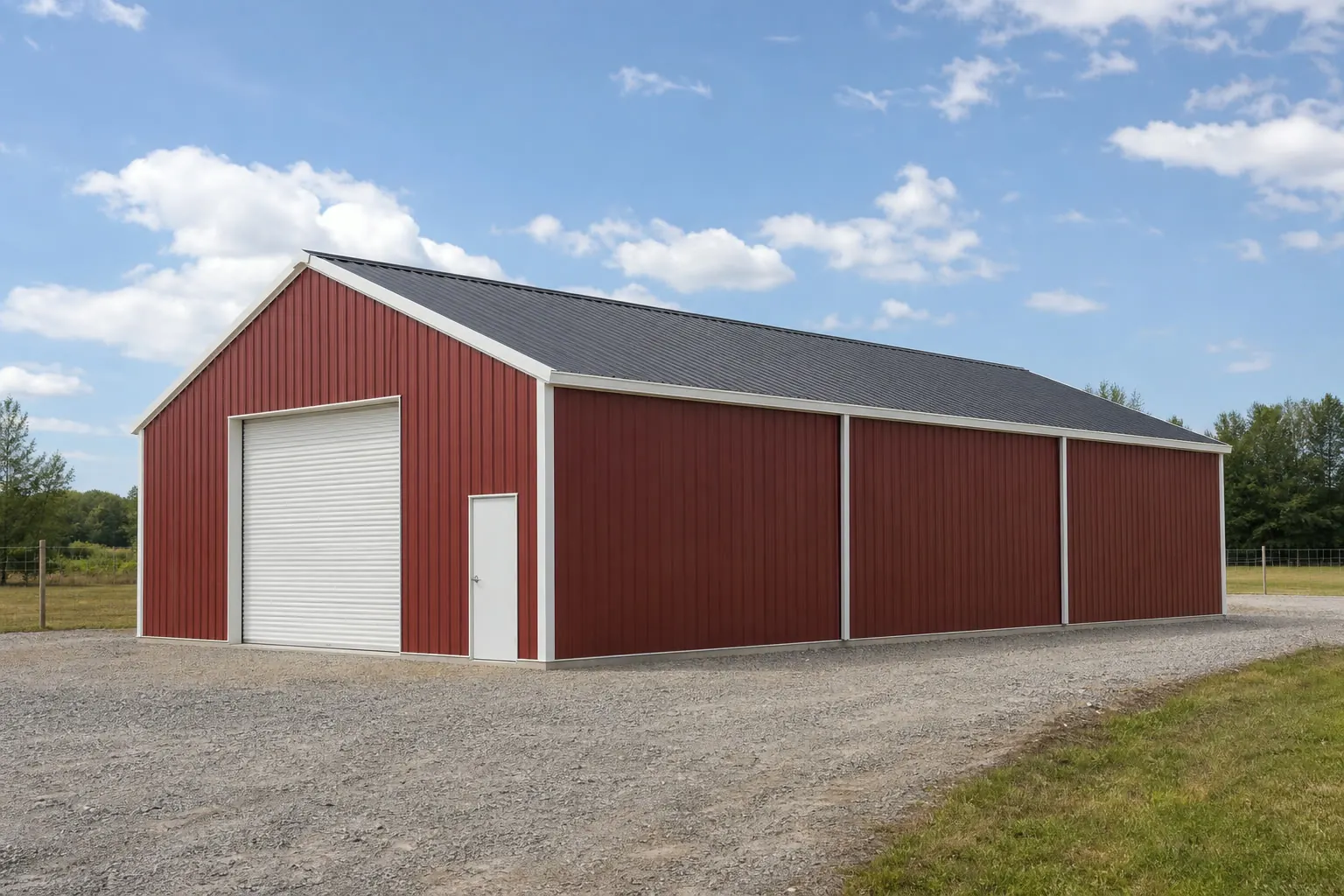
A personal storage building in Oklahoma is typically a small, single-owner structure on a residential lot or a modest acreage parcel — not a working farm building and not a commercial mini-storage facility. What changes it from a driveway in Enid to a hillside near the Ouachita Mountains is terrain: NOAA's narrative Climate of Oklahoma and USGS's own physiographic mapping both describe a state that runs from the flat, drier southern Great Plains in the west to the forested Ozark Plateau and Ouachita Mountains in the east. On the administrative side, the Oklahoma Uniform Building Code Commission sets the framework for how cities and counties adopt code, but whether your storage building needs a permit at all is still a question for that local jurisdiction, not a single statewide rule.
The intersection
Oklahoma's west-east terrain split changes a storage building's siting
A small storage building's pad and drainage planning depend more on which side of Oklahoma it sits on than on any single statewide rule.
NOAA's narrative Climate of Oklahoma places the state in the southern Great Plains but is explicit that this is not a uniform description: it calls out the Ouachita Mountains, the Arkansas River Valley and the Ozark Plateau in the northeast as distinct topographic features. USGS Bulletin 730-D backs that up from the geology side, classifying western Oklahoma within the Great Plains physiographic province while noting that the state's eastern portion transitions toward the Central Lowland province. For a small storage building, that split is the practical reason a flat, well-drained pad on the western plains is a different siting exercise than a pad cut into hillier, wooded ground near the Ouachita Mountains or the Ozark Plateau.
The Oklahoma Geological Survey's own reference material on the state's mountains and streams reinforces the same point: Oklahoma's eastern landscape is genuinely defined by resistant, folded and faulted rock masses forming real mountain ranges, not just gentle relief. A storage building sited on or near that terrain benefits from more attention to grading and water runoff than one sited on the flatter plains further west, simply because the ground itself behaves differently.
On the regulatory side, the Oklahoma Uniform Building Code Commission (OUBCC) was established under the Oklahoma Uniform Building Code Commission Act to issue rules addressing how cities, counties and other political subdivisions adopt building code. That statute describes a code-adoption process; it does not itself state a permit requirement or a size threshold for a small accessory structure. Whether your storage building needs a permit, and what size threshold triggers one, is a decision made by your specific local jurisdiction — the only reliable way to find out is to ask before you build.
Site context
How Oklahoma terrain changes storage building siting
The same small structure faces different pad and drainage questions depending on where in the state it sits.
| Region | Terrain description | Storage building implication |
|---|---|---|
| Western plains | Great Plains physiographic province; flatter, drier ground per USGS | Standard pad prep; drainage is usually a simpler grading question |
| Central / Arkansas River Valley | Transitional terrain noted in NOAA's climate narrative | Confirm local drainage patterns before siting near the valley floor |
| Eastern Ozark Plateau | Elevated plateau terrain in the northeast per NOAA and OGS | Grading and runoff planning matter more on sloped ground |
| Southeastern Ouachita Mountains | Folded, faulted mountain terrain with peaks up to roughly 2,000 feet above their base | A level building pad may require more site work than on open plains |
Western plains
- Terrain description
- Great Plains physiographic province; flatter, drier ground per USGS
- Storage building implication
- Standard pad prep; drainage is usually a simpler grading question
Central / Arkansas River Valley
- Terrain description
- Transitional terrain noted in NOAA's climate narrative
- Storage building implication
- Confirm local drainage patterns before siting near the valley floor
Eastern Ozark Plateau
- Terrain description
- Elevated plateau terrain in the northeast per NOAA and OGS
- Storage building implication
- Grading and runoff planning matter more on sloped ground
Southeastern Ouachita Mountains
- Terrain description
- Folded, faulted mountain terrain with peaks up to roughly 2,000 feet above their base
- Storage building implication
- A level building pad may require more site work than on open plains
Site context
What Oklahoma's physiographic split means for a small building
USGS and the Oklahoma Geological Survey both describe a state split roughly along a west-east line, which is worth weighing before you finalize a storage building site plan.
Great Plains province (west)
Flatter ground per USGS Bulletin 730-D; grading for a small pad is usually straightforward.
Central Lowland transition
USGS notes the eastern portion of the state transitions away from the Great Plains province; local drainage is worth checking rather than assuming plains conditions continue.
Ozark Plateau (northeast)
NOAA's climate narrative and OGS both flag this as elevated, distinct terrain from the plains.
Ouachita Mountains (southeast)
OGS describes resistant folded and faulted rock forming real mountain relief, worth a site visit before committing to a pad location.
Get Oklahoma storage building quotes
Tell us your region and what you plan to store, and we route it with the Oklahoma terrain and permitting context already attached.
Configuration
What an Oklahoma personal storage building is usually asked to do
A handful of recurring uses shape ventilation and shelving choices more than terrain does, though terrain still governs the pad underneath.
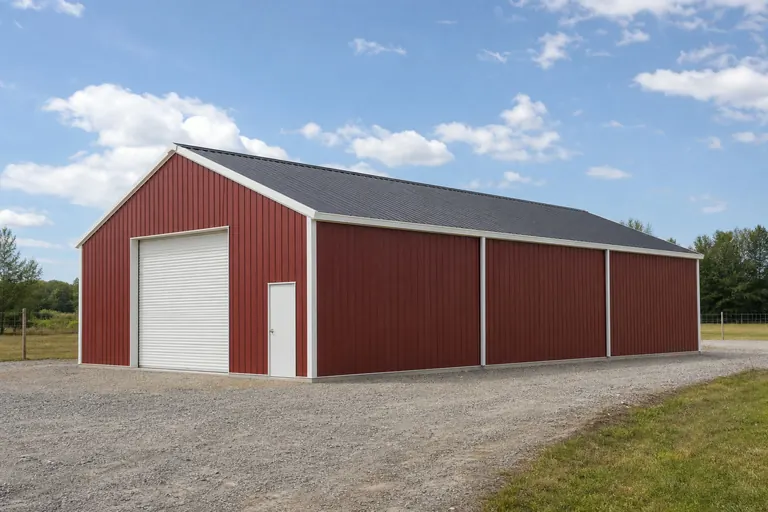 Seasonal and yard equipmentThe simplest use case, workable on flat or gently sloped ground alike with basic ventilation.Tools and light workshopAdds a workbench or shelving, where a well-drained pad matters more on hillier eastern sites.Household overflow storageFurniture, documents and electronics benefit from a level, well-drained pad wherever the structure sits.
Example Configuration — for planning purposes only.
Preparation
Before you request an Oklahoma storage building quote
A short list of details resolved locally keeps a small storage project simple.
- Ask your local building department if a permit is requiredRequirements are set by the city or county applying the code adopted under the OUBCC framework, not by a single statewide rule.
- Confirm setback distance from your property lineLocal zoning, not a statewide rule, governs how close the structure can sit to a boundary or your home.
- Have your site graded with your regional terrain in mindA pad on the western plains and a pad near the Ozark Plateau or Ouachita Mountains face different drainage realities.
- Decide on a floor or pad type before orderingA raised or better-drained pad matters more on sloped eastern terrain than on the flatter plains.
- List what you intend to storeMoisture-sensitive items like documents or electronics deserve extra ventilation attention regardless of region.
Footprint
Common Oklahoma personal storage building sizes
Personal storage buildings in Oklahoma are typically sized to what a single household needs to keep, which keeps most projects modest regardless of terrain.
10′ × 12′
120 sq ft
A common small footprint for seasonal items and yard equipment.
12′ × 20′
240 sq ft
Room for larger tools, a small workbench, or overflow household storage.
16′ × 24′
384 sq ft
Suited to combined storage and light workshop use on a residential or small-acreage lot.
Example Configuration — for planning purposes only.
Footprint pages carry layout detail for each size; this page explains only why Oklahoma's terrain split matters for siting these dimensions.
Questions
Oklahoma storage building questions
Honest answers at the state level, with permitting and pricing questions routed to whoever actually owns them.
It depends on your city or county. The Oklahoma Uniform Building Code Commission sets the framework for how local jurisdictions adopt code, but the permit decision for a small accessory structure is made locally, so ask your building department.
Yes. USGS mapping and NOAA's climate narrative both describe a state that runs from flatter Great Plains terrain in the west to the Ozark Plateau and Ouachita Mountains in the east, and grading and drainage planning differ accordingly.
Setback rules are set by your local zoning authority, not by the state. Confirm with your city or county before finalizing placement.
There is no official typical size. Most personal storage buildings run from about 10x12 up to 16x24 depending on what a household needs to store.
We do not publish state-level prices, since cost depends on size, specification and site work. Our cost pages explain what drives the number; a builder quote covers your specific project.
No. A storage building here means a small single-owner structure on a residential or small-acreage lot. A pole barn is typically sized for working farm acreage, which is a different project with different siting considerations.
Sources for the Oklahoma facts on this page
This page states no code requirement, wind speed, snow load, permit rule, price or supplier claim. The state-specific facts it does use are listed with their publisher below.
NOAA NCEI publishes a narrative 'Climate of Oklahoma' noting the state's southern Great Plains location and topographic features including the Ouachita Mountains, the Arkansas River Valley, and the Ozark Plateau in the northeast.
NOAA National Centers for Environmental Information (NCEI) · Historical narrative (NCEI climate normals series) · Tier 1
https://www.ncei.noaa.gov/data/climate-normals-deprecated/access/clim60/states/Clim_OK_01.pdfUSGS historical survey work (Fenneman, USGS Bulletin 730-D) classifies western Oklahoma within the Great Plains physiographic province, part of the larger interior plains distinguished from the Central Lowland province to the east.
U.S. Geological Survey (USGS Bulletin 730-D, Nevin M. Fenneman) · Originally published 1923; USGS reference · Tier 1
https://pubs.usgs.gov/bul/0730d/report.pdfOklahoma's total land area was measured at 68,594.2 square miles as of the 2010 Census.
U.S. Census Bureau · 2010 Census · Tier 1
https://www.census.gov/geographies/reference-files/2010/geo/state-local-geo-guides-2010/oklahoma.htmlThe Oklahoma Uniform Building Code Commission (OUBCC) is the state body established by the Oklahoma Uniform Building Code Commission Act (59 O.S. §§ 1000.20-1000.30) that governs code matters and issues rules addressing code adoption by local jurisdictions and other political subdivisions.
State of Oklahoma (oklahoma.gov/oubcc) · Current statute/administrative rules · Tier 2
https://oklahoma.gov/oubcc/faqs.htmlOklahoma had 32,897,563 acres of land in farms in 2022, an average farm size of 467 acres.
USDA NASS · 2022 · Tier 1
https://www.nass.usda.gov/Publications/AgCensus/2022/Full_Report/Volume_1,_Chapter_1_State_Level/Oklahoma/st40_1_001_001.pdf