
Storage building · GA
Storage Buildings in Georgia
A personal storage building in Georgia is usually a small, single-owner structure on a residential or small-acreage lot, and the practical planning question is which of the state's five physiographic provinces the lot falls into. The New Georgia Encyclopedia describes Georgia as spanning the Appalachian Plateau, Valley and Ridge, Blue Ridge, Piedmont and Coastal Plain, and Atlanta's 1991-2020 climate normal of roughly 50.4 inches of annual precipitation is a fair proxy for how humid the state's interior can be — conditions that call for different ventilation and moisture planning than a drier region would. Georgia also still counted 39,264 farms in 2022, even after a 7% decline since 2017, across an average farm size of 253 acres, so a meaningful share of storage-building demand here comes from small-acreage rural lots rather than purely suburban backyards.
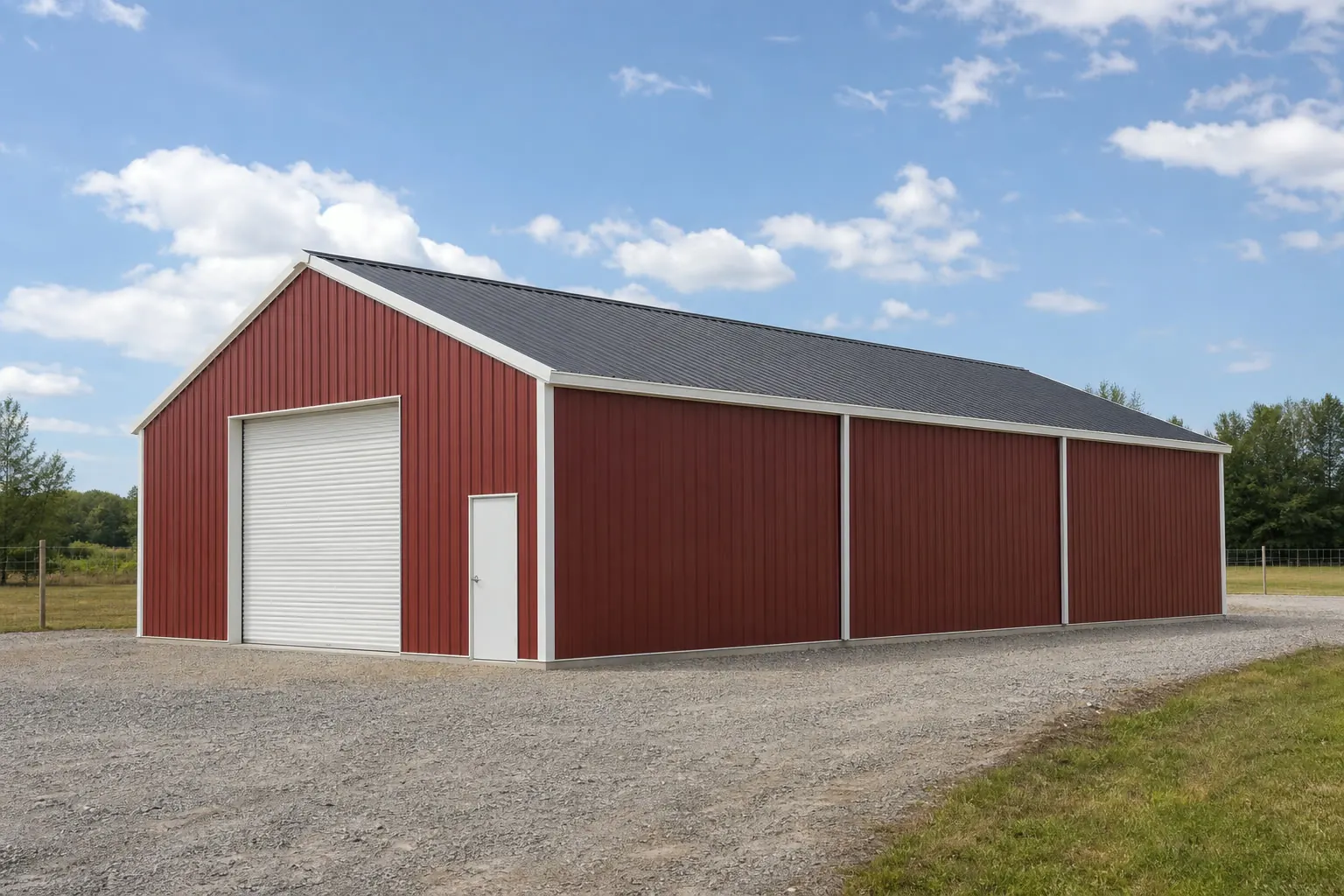
The intersection
In Georgia, province and rural land base shape a personal storage building
A small storage building's main planning variables in Georgia are the physiographic province it sits in and whether the lot is rural or suburban.
The New Georgia Encyclopedia, citing University of Georgia geography scholarship, maps the state across five distinct physiographic provinces: the Appalachian Plateau, the Valley and Ridge, the Blue Ridge, the Piedmont and the Coastal Plain. For a small storage building, that matters because whatever you plan to keep inside it — tools, seasonal equipment, documents, furniture — is exposed to the humidity and drainage pattern of your specific area, not a single 'Georgia climate.' A Coastal Plain lot is managing wetter, flatter ground than a Blue Ridge foothill lot, even though both sit inside the same state.
Atlanta's Hartsfield-Jackson station recorded a 1991-2020 climate normal of roughly 50.4 inches of annual precipitation with about 2.2 inches of snow. That is a station-level figure, not a statewide guarantee, but it is a fair proxy for how humid Georgia's interior tends to be, and it is a reasonable basis for prioritizing ventilation and a moisture barrier on a small storage building, especially if you intend to store anything moisture-sensitive.
Rural land context matters too. Georgia counted 39,264 farms in 2022, down 7% from 2017, but the average farm size rose 8% to 253 acres over the same period, according to USDA's 2022 Census of Agriculture. Fewer, larger farms suggest that where rural storage-building demand persists, it is increasingly on parcels with room for a dedicated small structure rather than shared space in an existing barn, which is a reasonable, if modest, factor in why storage-building interest in Georgia spans both suburban and rural buyers.
Site context
How Georgia's provinces change storage building siting
Georgia's physiographic provinces frame what a small storage building's pad and ventilation should account for.
Appalachian Plateau / Blue Ridge
Sloped, sometimes rocky northern terrain, where a level pad matters more than moisture control.
Valley and Ridge
Alternating terrain in the northwest, where site grading is worth planning before the slab is set.
Piedmont
Rolling clay-soil uplands across the state's middle, where drainage away from the door matters.
Coastal Plain
Flat, humid ground in south Georgia, where ventilation and a moisture barrier matter most for stored goods.
Site context
Regional moisture conditions for a Georgia storage building
The same small structure faces different humidity and drainage needs depending on where in Georgia it sits.
| Province | Typical condition | Storage building implication |
|---|---|---|
| Coastal Plain | Flat, humid, occasionally poorly-draining ground | Prioritize ventilation and a moisture barrier for stored goods |
| Piedmont | Rolling terrain, clay soils | Standard ventilation; plan drainage away from the pad |
| Blue Ridge / Appalachian Plateau | Sloped, sometimes rocky ground | Level-pad preparation is the bigger factor |
| Valley and Ridge | Alternating ridge and valley terrain | Confirm grading needs locally before ordering |
Coastal Plain
- Typical condition
- Flat, humid, occasionally poorly-draining ground
- Storage building implication
- Prioritize ventilation and a moisture barrier for stored goods
Piedmont
- Typical condition
- Rolling terrain, clay soils
- Storage building implication
- Standard ventilation; plan drainage away from the pad
Blue Ridge / Appalachian Plateau
- Typical condition
- Sloped, sometimes rocky ground
- Storage building implication
- Level-pad preparation is the bigger factor
Valley and Ridge
- Typical condition
- Alternating ridge and valley terrain
- Storage building implication
- Confirm grading needs locally before ordering
Get Georgia storage building quotes
Tell us your province and what you plan to store, and we route it with the Georgia moisture and siting context already attached.
Configuration
What a Georgia personal storage building is usually asked to do
Most personal storage briefs in Georgia fall into a few recurring uses, and the use shapes ventilation more than the province does.
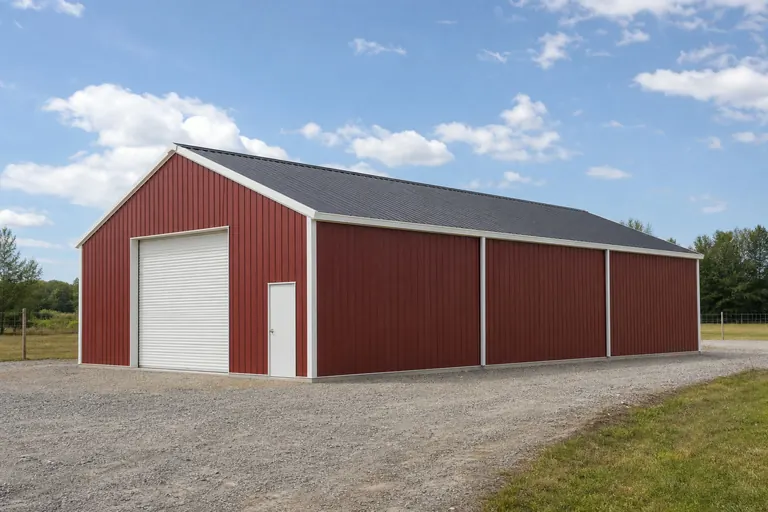 Seasonal and yard equipmentThe simplest use case, where basic ventilation is usually enough regardless of province.Tools and light workshopAdds a workbench or shelving, which benefits from a raised pad in humid Coastal Plain areas to protect tools from corrosion.Household overflow storageFurniture, documents and electronics are more moisture-sensitive, which is where provincial humidity differences matter most.
Example Configuration — for planning purposes only.
Preparation
Before you request a Georgia storage building quote
A handful of details resolved up front keep a small storage project simple.
- Ask your local building department if a permit is requiredMany jurisdictions exempt small accessory structures below a size threshold, but that threshold is set locally in Georgia.
- Identify your physiographic provinceCoastal Plain humidity and Blue Ridge slope grading call for different site prep before you order.
- Plan ventilation for your regionCoastal Plain humidity calls for different ventilation than drier Piedmont or Blue Ridge conditions.
- Decide on a floor or pad type before orderingA raised pad matters more in humid or poorly-drained areas than in well-drained upland areas.
- List what you intend to storeDocuments, electronics and furniture are more moisture-sensitive than tools or outdoor equipment, and that should inform ventilation choices.
- Check whether an HOA or subdivision covenant appliesBeyond the county's own permit rules, many Georgia subdivisions carry separate architectural or setback covenants for accessory structures, which a local building department will not enforce or advise on.
Footprint
Common Georgia personal storage building sizes
Personal storage buildings in Georgia are typically sized to what a single household needs to keep, which keeps most projects modest.
10′ × 12′
120 sq ft
A common small footprint for seasonal items and yard equipment.
12′ × 20′
240 sq ft
Room for larger tools, a small workbench, or overflow household storage.
16′ × 24′
384 sq ft
Suited to combined storage and light workshop use on a residential or small-acreage lot.
Example Configuration — for planning purposes only.
Footprint pages carry layout detail for each size; this page explains only why Georgia's provinces matter for these dimensions.
Questions
Georgia storage building questions
Honest answers at the state level, with permitting and pricing questions routed to whoever actually owns them.
It depends on your local jurisdiction. Many cities and counties exempt small accessory structures below a size threshold, but Georgia has no single statewide rule setting that threshold, so ask your local building department.
Georgia's interior climate is fairly humid — Atlanta's normal is about 50.4 inches of annual precipitation — and provincial conditions vary further from the mountains to the Coastal Plain, which is a reasonable factor in ventilation planning.
Setback rules are set by your local zoning authority, not by the state. Confirm with your city or county before finalizing placement.
There is no official typical size. Most personal storage buildings run from about 10x12 up to 16x24 depending on what a household needs to store.
We do not publish state-level prices, since cost depends on size, specification and site work. Our cost pages explain what drives the number; a builder quote covers your specific project.
Sources for the Georgia facts on this page
This page states no code requirement, wind speed, snow load, permit rule, price or supplier claim. The state-specific facts it does use are listed with their publisher below.
The New Georgia Encyclopedia (citing University of Georgia geography scholarship) describes Georgia as encompassing parts of five distinct physiographic provinces: the Appalachian Plateau, the Valley and Ridge, the Blue Ridge, the Piedmont, and the Coastal Plain.
New Georgia Encyclopedia (University of Georgia Press / Georgia Humanities) · Reference overview · Tier 2
https://www.georgiaencyclopedia.org/articles/geography-environment/geographic-regions-of-georgia-overview/Atlanta's (Hartsfield-Jackson) 1991-2020 annual climate normal precipitation is about 50.4 inches with roughly 2.2 inches of annual snowfall.
NOAA National Centers for Environmental Information (NCEI) · 1991-2020 · Tier 1
https://www.ncei.noaa.gov/access/services/data/v1?dataset=normals-monthly-1991-2020&dataTypes=MLY-PRCP-NORMAL,MLY-SNOW-NORMAL&format=csv&stations=USW00013874Georgia had 39,264 farms in 2022, down 7% from 2017, covering 9,939,313 acres of land in farms with an average farm size of 253 acres (up 8% since 2017).
USDA National Agricultural Statistics Service (NASS) · 2022 · Tier 1
https://www.nass.usda.gov/Publications/AgCensus/2022/Online_Resources/County_Profiles/Georgia/cp99013.pdfUSDA NASS's 2022 Census of Agriculture state-level data tables for Georgia report farm counts, land in farms, and market value of products sold by economic class in Table 73 (Summary by Combined Government Payments and Market Value of Agricultural Products Sold).
USDA NASS · 2022 · Tier 1
https://www.nass.usda.gov/Publications/AgCensus/2022/Full_Report/Volume_1,_Chapter_1_State_Level/Georgia/st13_1_073_073.pdfGeorgia's total land area was measured at 57,513.5 square miles as of the 2010 Census, the 21st largest of any U.S. state.
U.S. Census Bureau · 2010 Census · Tier 1
https://www.census.gov/geographies/reference-files/2010/geo/state-local-geo-guides-2010/georgia.html