
Carport · TX
Carports in Texas
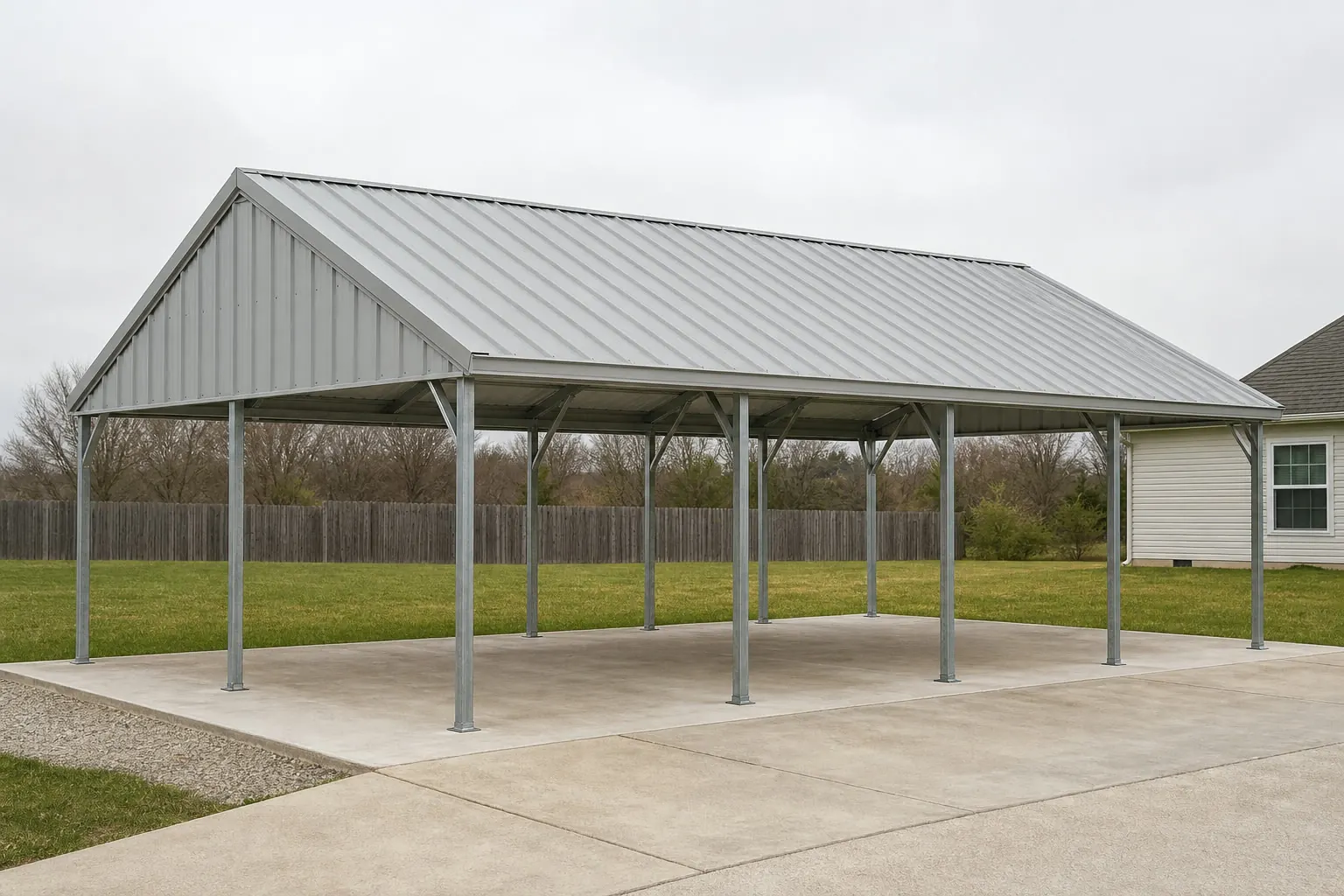
A carport is the most wind-exposed structure most Texas buyers will ever put up, because it has no walls to help carry lateral load — the anchoring and the frame do all the work. Texas has recorded 64 direct hurricane hits since 1851, second only to Florida, and FEMA's National Risk Index tracks strong wind, hail and hurricane among the 18 hazard types it scores for Texas communities. There is no single statewide building code authority enforcing a mandatory code for most construction, so how your local jurisdiction wants a carport anchored and permitted is a parcel-specific question, and on the coast it is layered with a separate insurance inspection track through TDI and TWIA.
The intersection
An open structure meets a wind-exposed state
A carport's defining vulnerability — no walls to share lateral load — meets a state with a long, documented history of hurricane and severe-wind exposure.
NOAA's Hurricane Research Division records 64 direct hurricane hits on Texas between 1851 and 2018, second only to Florida among U.S. states. FEMA's National Risk Index, separately, scores U.S. communities including Texas counties across 18 defined hazard types, among them hurricane, strong wind and hail. Neither figure tells you what your carport needs structurally — that is an engineering and local-code question this page does not answer — but together they explain why anchoring, footing depth and post spacing are the conversation a Texas carport buyer should have early, rather than an afterthought once the frame is ordered.
The administrative picture compounds that. Texas has no single statewide building code authority enforcing a mandatory code for most construction; adoption and enforcement happen primarily at the city or county level. That means the anchoring detail your neighboring county expects is not a guarantee of what yours expects. The only reliable way to know what your specific carport needs is to ask your local building department before you finalize a footprint or an attachment method.
Coastal parcels add a further layer. Inside the state's designated windstorm catastrophe area — 14 coastal counties plus part of Harris County east of Highway 146 — the Texas Department of Insurance runs a windstorm inspection program, and TWIA requires a Windstorm Certificate of Compliance before issuing wind and hail coverage. A carport sheltering an insured vehicle in that zone can become part of that documentation conversation, which is worth raising with your insurer before you build, not after a claim.
Scale is part of why one statewide carport recommendation would not serve every site well. At 261,226 square miles, Texas is large enough that a Gulf Coast parcel and a Panhandle parcel can be exposed to genuinely different wind patterns while both sitting inside the same state, which is precisely why this page routes anchoring specifics to the local building department rather than stating a single figure that would be wrong for a meaningful share of readers.
Site context
How carport siting differs across Texas terrain
The region a carport sits in changes the practical siting conversation more than the building's design does.
Gulf Coastal Plains
Low-lying, often humid ground close to the coast, where windstorm-zone insurance questions and drainage around the slab or footings are the recurring planning items.
Interior Plains / Blackland Prairies
Rolling farmland with expansive clay soils in places, which is worth flagging to whoever pours the footings so post anchoring accounts for soil movement.
Great Plains (High Plains)
Flat, elevated and consistently wind-exposed ground across the Panhandle and West Texas, where erection scheduling around wind is a practical, not cosmetic, concern.
Basin and Range (Trans-Pecos)
More topographic relief in far-west Texas, where grading and delivery access to a remote site often matter more to the project than the carport's footprint.
Siting
Wind exposure differs by Texas region
General planning context only — not an engineering value or a code requirement.
| Region | Dominant exposure to plan around | Who confirms specifics |
|---|---|---|
| Gulf Coast counties | Hurricane and windstorm-zone insurance requirements | Local building department; TDI/TWIA for insurance |
| Interior prairies and plains | Severe thunderstorm wind and hail | Local building department |
| Panhandle and High Plains | Sustained high wind and occasional severe convective storms | Local building department |
| Trans-Pecos | Lower storm frequency, but confirm locally rather than assume | Local building department |
Gulf Coast counties
- Dominant exposure to plan around
- Hurricane and windstorm-zone insurance requirements
- Who confirms specifics
- Local building department; TDI/TWIA for insurance
Interior prairies and plains
- Dominant exposure to plan around
- Severe thunderstorm wind and hail
- Who confirms specifics
- Local building department
Panhandle and High Plains
- Dominant exposure to plan around
- Sustained high wind and occasional severe convective storms
- Who confirms specifics
- Local building department
Trans-Pecos
- Dominant exposure to plan around
- Lower storm frequency, but confirm locally rather than assume
- Who confirms specifics
- Local building department
Get Texas carport quotes
Tell us your region, exposure and vehicle count. We route it with the Texas and carport context already attached.
Configuration
What a Texas carport is usually asked to shelter
Configuration choices should follow what the structure protects and how exposed the site is, not just budget.
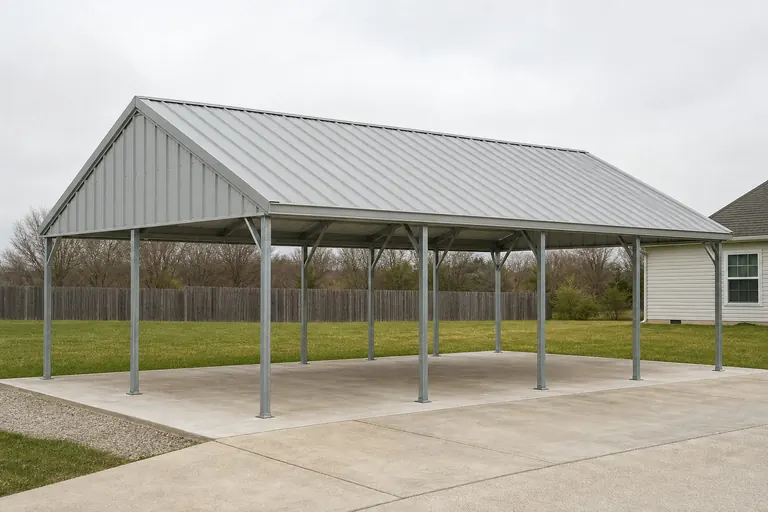 Single passenger vehicleThe smallest and least wind-sensitive footprint, but still benefits from confirming anchoring with the local department on an exposed rural site.
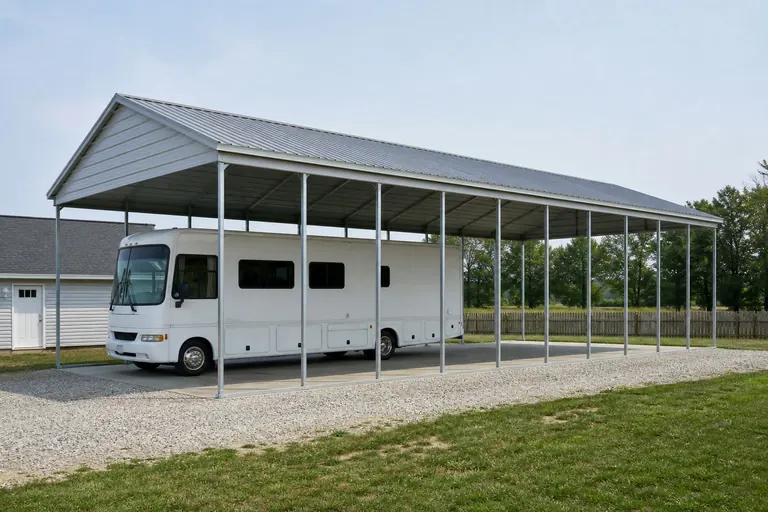 RV or boat storageTaller clearance increases wind exposure at the roof plane; this is covered in more depth on the dedicated RV carport guide.
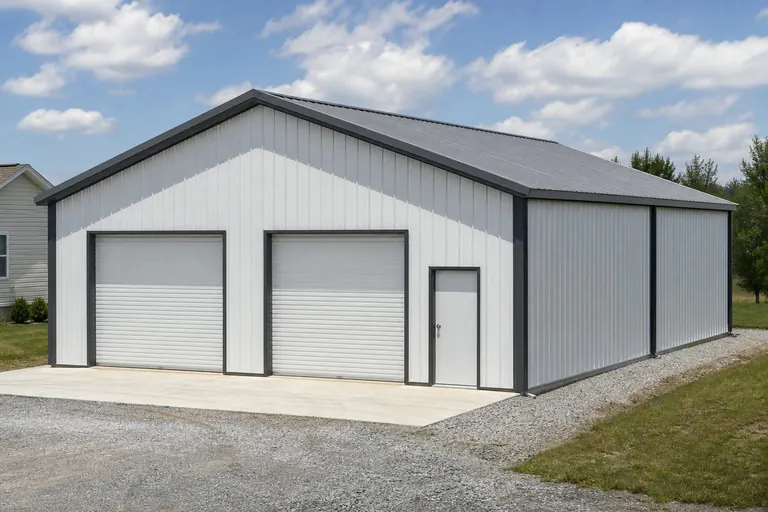 Multi-bay vehicle and equipmentWider spans concentrate more roof area on fewer posts, which is exactly the detail a local reviewer will want to see addressed.
Example Configuration — for planning purposes only.
Footprint
Common Texas carport footprints
Size selection here is about vehicle count and clearance, with wind exposure handled as an anchoring and siting decision rather than a size decision.
20′ × 20′
400 sq ft
A single-vehicle footprint sized for one car or truck.
20′ × 30′
600 sq ft
Room for one vehicle plus storage or a workbench along one side.
24′ × 40′
960 sq ft
A two-bay footprint suited to a truck and a second vehicle.
Example Configuration — for planning purposes only.
Footprint pages carry post spacing and bay layout for each size; this page explains only the Texas siting context.
Preparation
Before you request a Texas carport quote
Four steps that keep a wind-exposed structure from becoming a re-engineering job mid-project.
Step 1
Ask your local building department about anchoring expectations
Anchoring detail is set locally in Texas, not by a statewide rule, so confirm before ordering, and ask specifically what documentation the department wants to see at inspection.
Step 2
Check windstorm catastrophe area status
If your parcel is in the designated coastal zone, involve your insurer early alongside your permit application, since the certificate process runs on its own timeline.
Step 3
Describe your site's typical exposure
An open Panhandle lot and a tree-sheltered interior lot are not the same wind environment even at the same address radius, and it is worth telling your builder which one describes your site.
Step 4
Confirm vehicle height and count before fixing dimensions
Clearance and bay count drive the footprint more than aesthetic preference, and getting this wrong is a common reason a carport gets re-ordered.
Questions
Texas carport questions
Honest state-level answers, with anchoring and permit specifics routed to the authority that actually sets them.
Anchoring expectations are set by your local building department, since Texas has no single statewide building code authority enforcing a mandatory code for most construction. Given the state's documented hurricane and severe-wind history, ask about anchoring specifics before finalizing your order.
Permit requirements vary by city and county. Contact your local building department to confirm what applies to your parcel and structure size.
If your parcel is inside the designated windstorm catastrophe area, TWIA requires a Windstorm Certificate of Compliance before issuing wind and hail coverage, tied to a TDI inspection process. Confirm your zone status and requirements with TDI or your insurer.
We do not publish state-level prices. Cost depends on size, materials and site conditions; our cost pages explain the drivers and a builder quote covers your specific project.
There is no official typical size. 20x20 for a single vehicle and 24x40 for a two-bay layout are common starting points, but your vehicle count and clearance needs should set the final dimensions.
Sources for the Texas facts on this page
This page states no code requirement, wind speed, snow load, permit rule, price or supplier claim. The state-specific facts it does use are listed with their publisher below.
NOAA's Hurricane Research Division data show Texas has recorded 64 direct hurricane hits (all categories) for 1851-2018, second only to Florida.
NOAA Atlantic Oceanographic and Meteorological Laboratory (AOML), Hurricane Research Division · 1851-2018 · Tier 1
https://www.aoml.noaa.gov/hrd/tcfaq/E19.htmlFEMA's National Risk Index scores U.S. communities, including Texas counties, across 18 defined natural hazard types.
FEMA · current dataset · Tier 1
https://www.fema.gov/about/openfema/data-sets/national-risk-index-dataTexas does not have a single statewide building code authority enforcing a mandatory building code for most construction; code adoption and enforcement occur primarily at the local/municipal level.
KHOU 11 (Verify) / Texas State Law Library · current · Tier 3
https://www.khou.com/article/news/verify/verify-statewide-enforced-residential-building-code-texas/285-cc7c6343-cdf1-4751-b855-713601cf6b8bThe Texas Department of Insurance (TDI) administers a Windstorm Inspection Program for coastal construction, established under a 1987 state law, to allow structures to qualify for windstorm coverage.
Texas Department of Insurance (TDI) · since 1988 · Tier 2
https://www.tdi.texas.gov/wind/generalquestio.htmlThe Texas Windstorm Insurance Association (TWIA) requires coastal properties to hold a Windstorm Certificate of Compliance under Texas Insurance Code Chapter 2210 before TWIA wind/hail coverage is issued; TDI states the designated catastrophe area covers 14 coastal counties and part of Harris County east of Highway 146.
Texas Windstorm Insurance Association (TWIA) / Texas Department of Insurance (TDI) · current · Tier 2
https://www.tdi.texas.gov/tips/need-windstorm-inspection.htmlTexas's total land area was 261,226 square miles per the 2008 Census Bureau state area measurements, the largest of the contiguous 48 states.
U.S. Census Bureau, Statistical Abstract of the United States: 2011 · 2008 · Tier 1
https://www2.census.gov/library/publications/2010/compendia/statab/130ed/tables/11s0355.pdf