Shed · NC
Sheds in North Carolina
A backyard or farm shed in North Carolina sits on ground that changes character across the state. NOAA describes the state's climate as moving from the Atlantic coastal plain, through the rolling Piedmont, to the Appalachian mountains, and each stretch hands a small steel shed a different siting problem — sandy drainage near the coast, expansive clay in the middle of the state, and slope in the west. Layer in a hurricane season NOAA calls highly variable year to year, and a shed buyer's best move is checking their own province and county rather than following one statewide rule of thumb.
Where It Sits
A shed pad isn't the same job everywhere in North Carolina
Even a small steel shed needs a base built for its specific patch of ground.
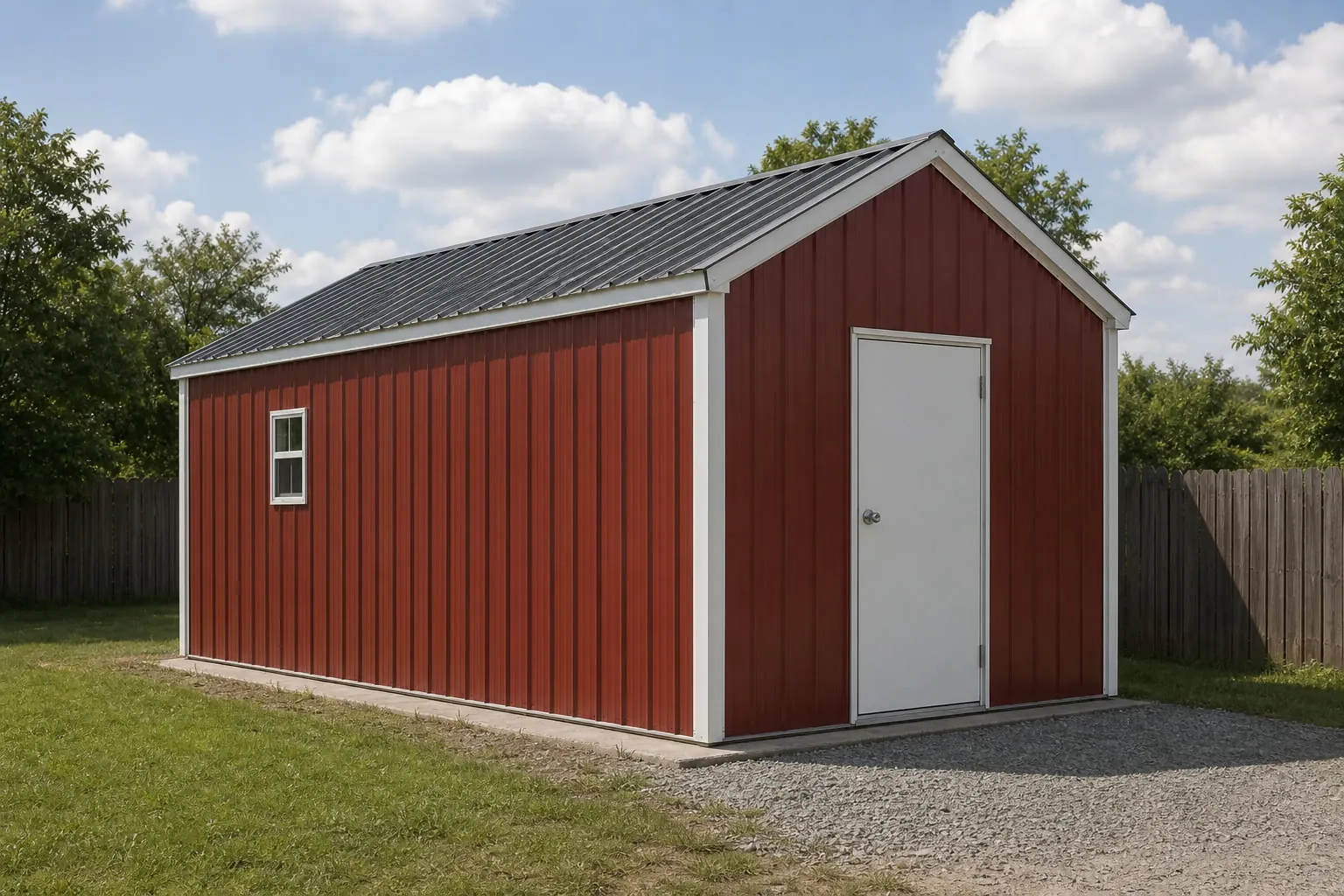
NOAA's own description of North Carolina's climate traces the state from the Atlantic coastal plain, through the Piedmont, to the Appalachian mountains in the west. For a shed owner, that geographic sweep matters more than it might seem. On the coastal plain, sandy soil drains fast but sits near a shallow water table, so a shed base benefits from a slightly raised gravel pad to keep the floor dry after heavy rain.
In the Piedmont, the ground is often reddish clay that swells when wet and shrinks when dry. A shed set directly on unprepared clay can shift slightly over a season, which is enough to bind a sliding door or crack a concrete pad. A compacted gravel base, or a proper concrete slab with control joints, absorbs that movement better than bare clay ever will.
Further west, in the Blue Ridge foothills and mountains, the main constraint is simply finding flat, stable ground. A shed here is often set on the one graded spot available on a sloped lot, which makes drainage away from that pad — not just under it — the detail most easily missed, since a small side-swale is easy to add during initial grading but far more disruptive afterward.
Use Cases
Common North Carolina shed roles
How the state's mix of suburban, coastal and farm properties put a small steel shed to work.
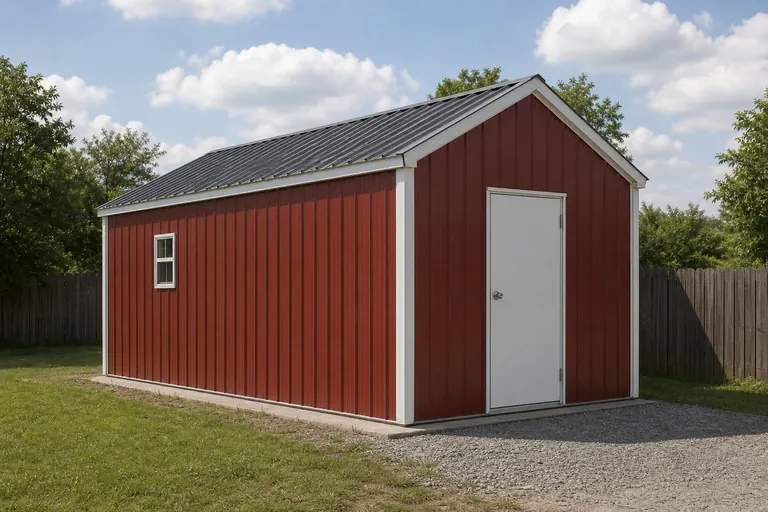 Backyard Utility ShedA 10x12 or 12x20 shed for lawn equipment on suburban Piedmont lots.Coastal Gear ShedStorage for beach or boating gear near the coastal plain, with attention to raised, well-drained siting.Farm Tool CribSeparate chemical or tool storage kept apart from a larger equipment barn on working farms.
Example Configuration — for planning purposes only.
Storm Season
Getting a shed ready for a variable hurricane season
NOAA's finding that North Carolina's hurricane exposure swings year to year means shed owners shouldn't assume a recent quiet stretch will continue.
- Confirm your county's FEMA National Risk Index ratingCounty-level hazard data, not a single statewide assumption, should guide how much anchoring upgrade is worth the cost.
- Tighten or replace anchor kits before peak seasonA lightweight shed depends heavily on ground anchors or a bolted concrete pad to resist wind uplift during an active storm year.
- Elevate stored items off the floorA shed base set on sandy coastal-plain or Piedmont ground can still see water intrusion during a heavy rain event, especially during an active hurricane season; shelving keeps contents above that line.
- Check gravel-pad grading each springPiedmont clay shift or mountain-slope runoff can alter drainage around a shed pad over a season; a quick regrade keeps water moving away from the structure.
Find a North Carolina shed that fits your site
Tell us your county and terrain, and we'll connect you with vendors who can spec the right base and anchoring for your location.
On the Farm
Where a shed fits on North Carolina agricultural land
On a working farm, a shed is rarely the only storage structure, and its job is often narrower than it looks.
USDA counted 42,817 farms in North Carolina in 2022, a total down 8% from 2017. On many of these operations, a shed serves as dedicated storage for hand tools, chemicals, or seasonal supplies kept separate from a larger barn or equipment building — partly for organization, and partly to keep flammable or sensitive materials away from bulk equipment storage.
Because groundwater matters across large parts of the state — NC State Extension notes over half of North Carolinians depend on groundwater in the Piedmont and Blue Ridge provinces — farm owners siting a shed near a well or septic field in those regions should confirm setback distances with their county before placement, since a shed foundation dug too close to a wellhead can create a compliance problem later.
- Separate chemical storage from bulk equipment
- A dedicated shed reduces cross-contamination risk and keeps a larger barn's floor plan cleaner.
- Confirm well and septic setbacks
- Especially relevant in Piedmont and Blue Ridge counties with high groundwater reliance.
- Size doors for the actual tools stored
- A shed built for hand tools needs far less door width than one meant for a riding mower.
Footprint
Shed sizes that fit North Carolina lots and lots' terrain
Size choice in North Carolina tracks the province as much as the intended use, since a bigger footprint means more grading on clay or sloped ground.
8′ × 10′
80 sq ft
A compact tool shed that keeps site prep minimal on a tight Piedmont clay lot.
10′ × 12′
120 sq ft
A common backyard size for suburban and coastal-plain properties with room for lawn equipment.
12′ × 20′
240 sq ft
Enough room for a mower plus a workbench, though mountain buyers should confirm the pad is graded flat first.
12′ × 24′
288 sq ft
A larger farm-adjacent size for tool and chemical storage kept apart from a bigger equipment barn.
Example Configuration — for planning purposes only.
Confirm any local zoning setback or size threshold with your municipality before finalizing a footprint, since North Carolina permitting is set locally rather than statewide.
Questions
North Carolina Shed Questions
Common questions from North Carolina shed buyers comparing sites and specs.
Yes, in practice. Coastal plain sand drains fast but sits near a shallow water table, Piedmont clay shifts with moisture, and mountain sites are mostly about finding stable, well-drained flat ground. Confirm the right base with a local installer for your site.
No. NOAA describes landfalling hurricane frequency as highly variable year to year, and exposure differs by county. Check FEMA's National Risk Index for your specific county before deciding on anchoring upgrades.
It depends on size and local rules, which are set by your municipality or county. Many smaller sheds used purely for storage face lighter requirements, but confirm the exact threshold with your local building department.
Setback rules vary locally, and groundwater reliance is notably high in the Piedmont and Blue Ridge provinces. Check your county's specific setback requirements before finalizing shed placement near a well or septic system.
A shed is often used for smaller, more sensitive storage — tools, chemicals, or seasonal supplies — kept separate from bulk equipment housed in a larger barn or pole building.
Sources for the North Carolina facts on this page
This page states no code requirement, wind speed, snow load, permit rule, price or supplier claim. The state-specific facts it does use are listed with their publisher below.
NOAA NCEI publishes a narrative 'Climate of North Carolina' describing the state's climate progression from the Atlantic coastal plain through the Piedmont to the Appalachian mountains in the west.
NOAA National Centers for Environmental Information (NCEI) · Historical narrative (NCEI climate normals series) · Tier 1
https://www.ncei.noaa.gov/data/climate-normals-deprecated/access/clim60/states/Clim_NC_01.pdfNC State Extension publishes reference material describing groundwater conditions across the state's Piedmont and Blue Ridge provinces, noting over half of North Carolina's population depends on groundwater for drinking water.
NC State University Extension · NC State Extension reference publication · Tier 2
https://content.ces.ncsu.edu/ground-water-in-the-piedmont-and-blue-ridge-provinces-of-north-carolinaNorth Carolina had 42,817 farms in 2022, down 8% since 2017.
USDA National Agricultural Statistics Service (NASS) · 2022 · Tier 1
https://www.nass.usda.gov/Publications/AgCensus/2022/Online_Resources/County_Profiles/North_Carolina/cp99037.pdfNOAA's State Climate Summaries note that the number of landfalling hurricanes in North Carolina is highly variable year to year, and hurricane-associated storm intensity and rainfall rates are projected to increase.
NOAA National Centers for Environmental Information (NCEI) · 2022 summary · Tier 1
https://statesummaries.ncics.org/downloads/NorthCarolina-StateClimateSummary2022.pdfFEMA's National Risk Index is the authoritative source for county- and state-level natural hazard exposure ratings across 18 hazard types, viewable via FEMA's own interactive report tool.
Federal Emergency Management Agency (FEMA) · Current NRI release · Tier 1
https://www.fema.gov/flood-maps/products-tools/national-risk-index