
Pole Barn · NY
Pole Barns in New York
Planning a pole barn in New York starts with the state's two defining conditions: a farm base that is shrinking in count but still averaging 212 acres per operation, and a climate that, outside New York City, runs genuinely snowy across most of the calendar. The 2022 Census of Agriculture counted 30,650 New York farms, down 8% since 2017, and much of that acreage still needs equipment, hay and machinery storage even as the number of full-time operations declines. At the same time, the Albany NWS station's 1991-2020 normals show roughly 61 inches of annual snowfall, a reminder that post spacing, roof pitch and truss planning across upstate New York are built around real accumulation rather than an occasional dusting. This page never assigns a specific snow load or post spec — those come from your local building department and a licensed designer — but it does explain how New York's land and climate context should shape the questions you bring to that conversation.
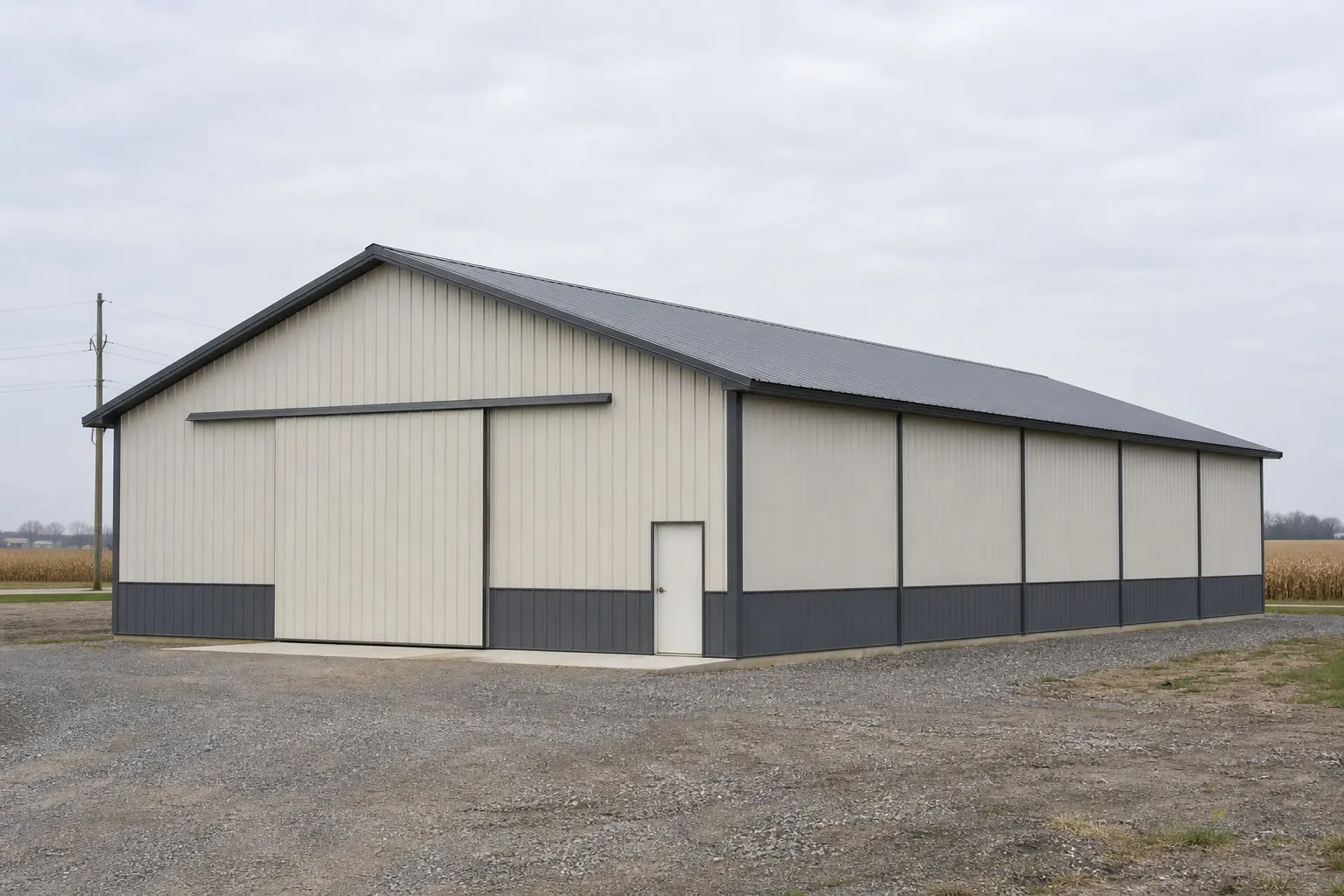
Storage for a Contracting but Still-Large Farm Base
New York's pole barn market sits on the same two pillars as the state's broader agricultural planning picture: fewer total farms but a large average acreage per operation, and a climate that, outside the city, requires genuine winter-load thinking. A pole barn built for equipment, hay or general storage in New York should be sited and roofed with both realities in mind.
Land Use
Why 212-Acre Average Farms Still Need Pole Barns
New York's 30,650 farms average 212 acres each, and that scale of working land keeps equipment storage demand high even as farm count declines.
The 2022 Census of Agriculture recorded 30,650 farms in New York, down 8% from 2017, spread across 6,502,286 acres of farmland. That means the state's remaining operations are, on average, sizable — 212 acres — and sizable acreage typically means tractors, implements, hay and seasonal equipment that need dry, accessible storage. Pole barns remain the default answer for that need because post-frame construction allows wide clear spans without interior columns, which matters when you are storing wide implements or maneuvering a loaded truck.
Even on farms that have downsized or shifted to part-time operation, the acreage rarely shrinks as fast as the labor force. A pole barn sized for the equipment fleet that remains — rather than the fleet the operation once supported — is a common right-sizing decision New York buyers make when farm income contracts but the land itself stays in the family.
Siting also matters more on larger acreage. A pole barn placed for easy access from the primary access road, with enough apron space for a full-size trailer to turn, is a planning decision worth making before foundation work begins, especially on the state's characteristic 200-plus-acre parcels.
Climate Planning
Roofing and Post Spacing for a Snowy State
The Albany station's ~61-inch snowfall normal is a directional signal that New York pole barns are typically designed around real winter accumulation.
NOAA's 1991-2020 normals for the Albany station show roughly 61 inches of annual snowfall alongside about 40.9 inches of precipitation. That is a single-station figure, not a statewide design value, but it illustrates why a pole barn built anywhere from the Southern Tier through the North Country should assume more sustained snow load than a comparable structure in a milder climate. In practice that shows up as steeper roof pitches to shed accumulation, closer post spacing on longer clear spans, and truss packages specified to the load your local building department assigns for your exact site.
None of those specific numbers belong on this page — a design snow load in Buffalo's lake-effect corridor can differ substantially from one in the Hudson Valley or on Long Island, even though both are technically 'New York.' What a buyer can plan in advance is the conversation: bring your parcel's address to your local building department early and ask for the specific ground snow load and any drift considerations tied to nearby structures or tree lines before finalizing your pole barn's roof design.
Door and access placement deserve the same attention. Orienting large equipment doors away from prevailing wind and drift patterns reduces snow removal effort each winter, a small siting decision that pays off repeatedly over the life of the building.
Key Indicators
Data Shaping New York Pole Barn Planning
These sourced figures frame the land-use and climate context for a New York pole barn project.
| Metric | Value | Source |
|---|---|---|
| Total Farms (2022) | 30,650, down 8% since 2017 | USDA NASS |
| Total Farmland | 6,502,286 acres | USDA NASS |
| Average Farm Size | 212 acres | USDA NASS |
| Albany Annual Snowfall Normal | ~61 inches (1991-2020) | NOAA / NWS Albany |
| County-Level Hazard Data | Available for all 62 NY counties | FEMA National Risk Index |
Total Farms (2022)
- Value
- 30,650, down 8% since 2017
- Source
- USDA NASS
Total Farmland
- Value
- 6,502,286 acres
- Source
- USDA NASS
Average Farm Size
- Value
- 212 acres
- Source
- USDA NASS
Albany Annual Snowfall Normal
- Value
- ~61 inches (1991-2020)
- Source
- NOAA / NWS Albany
County-Level Hazard Data
- Value
- Available for all 62 NY counties
- Source
- FEMA National Risk Index
Start Your New York Pole Barn Project
Connect with builders who understand New York's working-acreage sites and upstate snow-load planning.
Use Cases
Common New York Pole Barn Configurations
These patterns reflect the state's working-acreage and winter-climate context.
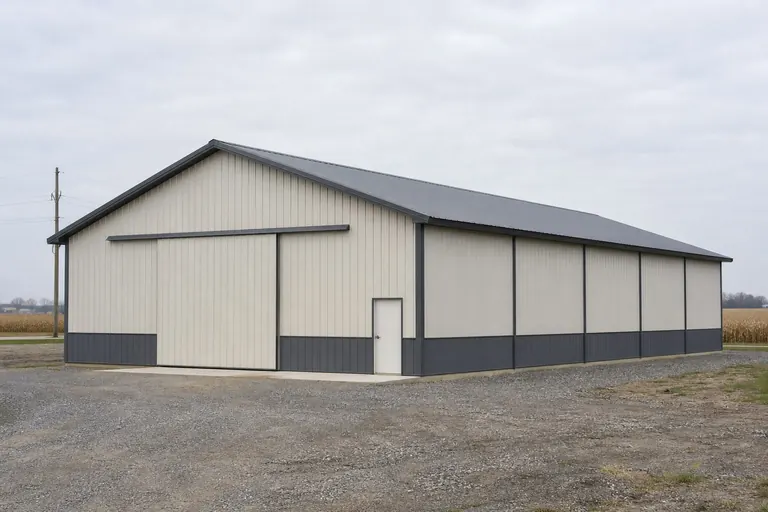 The Equipment and Hay BarnSized for tractors, implements and seasonal hay storage on a working 200-plus-acre parcel, with a wide clear span and an oversized equipment door.The Downsized-Operation Storage BarnA right-sized structure for a farm that has reduced its active fleet but retains full acreage, prioritizing dry storage over commercial-scale clear span.The Winter-Access BarnDesigned with a steeper roof pitch and doors oriented away from prevailing drift patterns to minimize snow removal in upstate winters.
Example Configuration — for planning purposes only.
Footprints
Sizing Your New York Pole Barn
These footprints match common equipment-storage needs on New York's typical farm acreage.
30′ × 40′
1,200 sq ft
A common entry-level footprint for a single tractor plus implements.
40′ × 60′
2,400 sq ft
Fits a larger equipment fleet or combined hay-and-machine storage.
60′ × 100′
6,000 sq ft
Suited to full working farms retaining a large-scale equipment lineup.
Example Configuration — for planning purposes only.
Exact clear-span and post spacing depend on your local snow load determination.
Preparation
New York Pole Barn Planning Checklist
Steps reflecting the state's farm-acreage and winter-load realities.
- Confirm Agricultural Exemption StatusCheck with your local assessor whether an agricultural-use exemption applies to your pole barn or whether a full residential-adjacent permit is required.
- Ask Your Building Department Which Structural Loads ApplyConfirm with your local building department which structural loads and drift considerations apply to your exact parcel before finalizing roof and post design.
- Pull County Hazard DataUse FEMA's National Risk Index report viewer for your county instead of relying on a generalized statewide hazard claim.
- Plan Access and Turning RadiusSite the barn with enough apron space for full-size equipment or trailers to turn, especially on larger acreage parcels.
Common Questions
New York Pole Barn FAQ
Honest answers to the questions buyers ask when planning a pole barn in New York.
Many upstate buyers choose steeper pitches to shed accumulation, reflecting the region's real snowfall, but the exact structural requirement is set by your local building department based on your site's design snow load.
Some purely agricultural-use structures may qualify for exemptions from certain building code provisions, but this varies by municipality — confirm your building's intended use and exemption eligibility with your local assessor and building department.
Fewer total farms doesn't necessarily mean less storage need — the state's 212-acre average farm size means many remaining and downsized operations still require substantial equipment and hay storage.
No. Snow exposure varies significantly, from lake-effect zones near Buffalo to the Adirondacks to milder downstate areas, so your local department's site-specific figure is the only one that applies to your build.
FEMA's National Risk Index report viewer publishes county-level reports for all 62 New York counties, giving a location-specific hazard profile rather than a generalized statewide statement.
Sources for the New York facts on this page
This page states no code requirement, wind speed, snow load, permit rule, price or supplier claim. The state-specific facts it does use are listed with their publisher below.
New York had 30,650 farms in 2022, down 8% since 2017.
USDA National Agricultural Statistics Service (NASS) · 2022 · Tier 1
https://www.nass.usda.gov/Publications/AgCensus/2022/Online_Resources/County_Profiles/New_York/cp99036.pdfNew York had 6,502,286 acres of land in farms in 2022, an average farm size of 212 acres.
USDA NASS · 2022 · Tier 1
https://www.nass.usda.gov/Publications/AgCensus/2022/Online_Resources/County_Profiles/New_York/cp99036.pdfAlbany, NY's 1991-2020 annual normal precipitation is about 40.9 inches with roughly 61 inches of annual snowfall at the Albany station.
National Weather Service (NOAA), Albany NY office · 1991-2020 · Tier 1
https://www.weather.gov/media/aly/Climate/ALB_Normals_1991-2020.pdfFEMA's National Risk Index is the authoritative source for county- and state-level natural hazard exposure ratings across 18 hazard types, viewable via FEMA's own interactive report tool.
Federal Emergency Management Agency (FEMA) · Current NRI release · Tier 1
https://www.fema.gov/flood-maps/products-tools/national-risk-index