
Metal garage · ME
Metal Garages in Maine
A metal garage in Maine earns its keep on the days a driveway is buried. NOAA's 1991-2020 normals for the Portland Jetport station, echoed in NWS Gray's own seasonal climate summary, show January and February averaging roughly 15 to 19 inches of snowfall each, on top of about 51 inches of annual precipitation spread fairly evenly across the year. Enclosed, walk-in vehicle storage that clears a car of snow and ice before the workday starts is a functional response to that pattern rather than a cosmetic upgrade. Underneath the slab, the Maine Geological Survey's description of statewide glacial and post-glacial deposits — till, marine clay, sand and gravel — means the base needs a site-specific read, and the Census Bureau's count of 6,034 authorized Maine housing units in 2024 is a useful gauge of how active the state's builder market currently is.
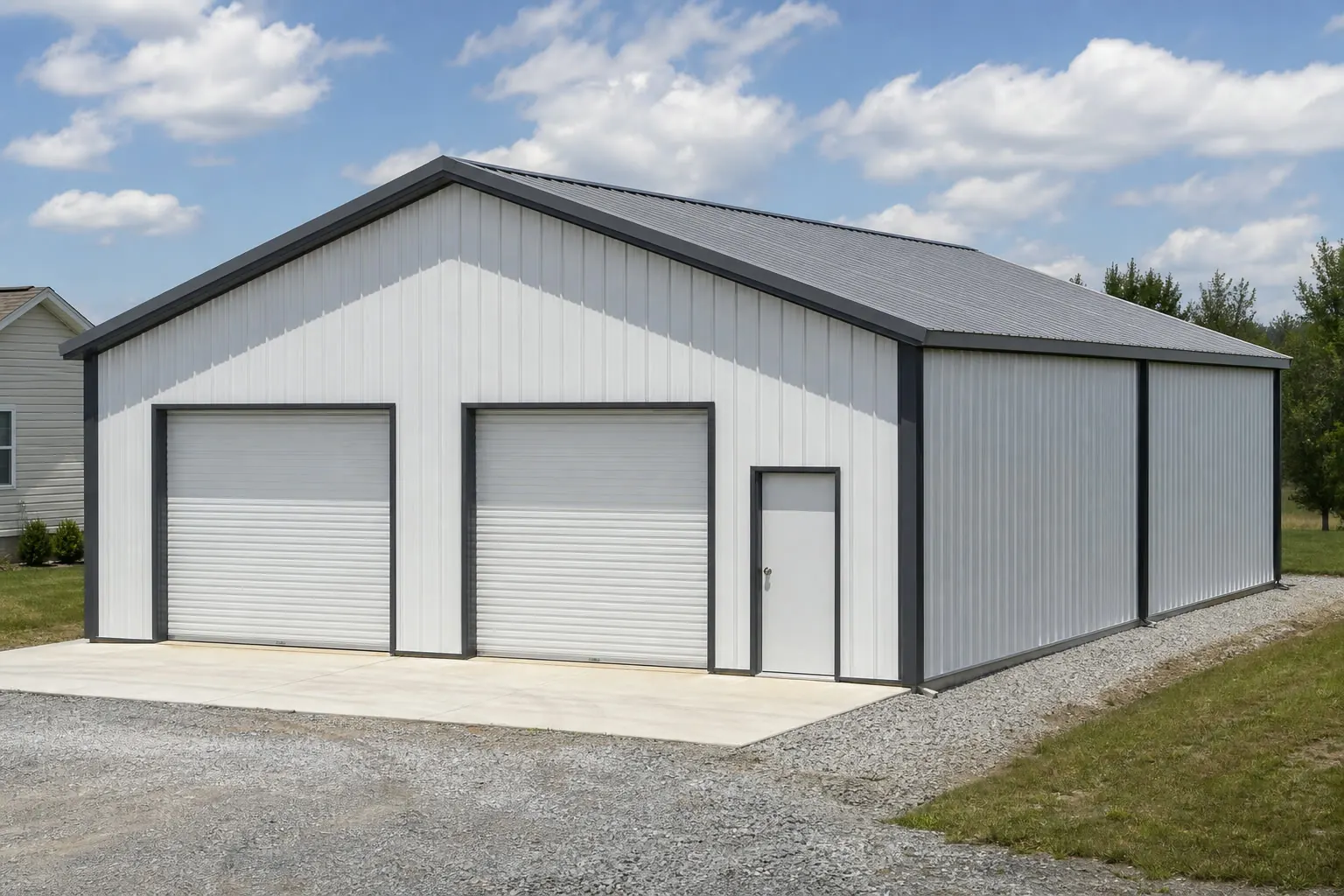
A Winter Worth Building Around
A Maine metal garage answers to a specific winter pattern. NOAA's Portland Jetport normals, confirmed by NWS Gray's own seasonal climate summary, put January and February snowfall at roughly 15 to 19 inches each on average, layered on top of about 51 inches of annual precipitation distributed fairly evenly through the year. That combination makes enclosed, walk-in vehicle storage a functional tool rather than a luxury, while the ground the slab sits on — per the Maine Geological Survey's statewide glacial and post-glacial deposits — deserves its own site-specific check before the pad is poured.
Function
Why enclosed storage earns its keep in a Maine winter
Heavy, consistent winter snowfall in Maine turns a fully enclosed garage from a nice-to-have into a genuine time-and-effort saver.
The Portland Jetport's NOAA normals and NWS Gray's seasonal climate summary both point to the same pattern: January and February typically bring 15 to 19 inches of snowfall each, on top of a fairly even 51-inch annual precipitation total. A fully enclosed metal garage means a vehicle can be scraped, defrosted and loaded without standing in that weather, and it also protects against the freeze-thaw cycling a car parked outdoors goes through repeatedly across a Maine winter. That's a functional argument specific to a state with this snowfall pattern, not a generalized claim about garages everywhere.
The same roughly 51 inches of annual precipitation, spread fairly evenly across the year rather than concentrated in one season, argues for a concrete apron and door threshold designed to shed water year-round. A garage door sill that handles spring rain poorly will likely handle winter snowmelt poorly too, so that detail is worth getting right regardless of which season it is finished in.
Foundation
Slab Prep on Maine's Glacially Variable Ground
The soil under a Maine garage slab can differ meaningfully between nearby sites, which changes how much base prep is worth doing.
- Get a site-specific soil read before pouringThe Maine Geological Survey documents statewide till, marine clay, and sand-and-gravel deposits; knowing which one is under your specific pad changes how much gravel base and how much compaction the slab needs.
- Treat marine clay areas differentlySites on post-glacial marine clay can settle unevenly under a slab; a deeper compacted base or engineered fill is a reasonable response where clay is confirmed rather than assumed.
- Slope the apron away from the door in every directionWith precipitation spread fairly evenly across the year, a garage apron needs to shed water in spring and fall as reliably as it sheds snowmelt in winter.
- Confirm frost depth and slab thickness locallyFrost depth requirements are set at the municipal or county level in Maine; confirm the current requirement with your local code office rather than reusing a figure from another project.
- Ask your builder about current lead timesWith 6,034 total authorized housing units recorded statewide in 2024, scheduling and materials lead time can vary by season and region; ask directly rather than assuming year-round availability.
Get Maine metal garage quotes
Tell suppliers your county, your vehicle storage needs, and what you know about the site's soil. We route it with the Maine and metal garage context already attached.
Construction market
Scheduling against Maine's current building pace
The Census Bureau's 2024 authorization count gives a concrete sense of how much residential building activity is happening statewide right now.
The Census Bureau recorded 6,034 total authorized privately-owned housing units in Maine in 2024, of which 4,650 were single-unit structures. That figure describes residential permitting broadly, not metal garages specifically, but it is a reasonable proxy for how busy the state's builder and permitting pipeline currently is. A thinner pipeline in a given county can mean booking further ahead or confirming directly whether your chosen contractor handles both the steel shell and the concrete work, since a busier season can mean those are scheduled as separate trades.
Footprint
Sizing a Garage to Maine's Vehicle and Storage Needs
A Maine garage footprint is usually set by how many vehicles need to clear snow indoors plus how much of the equipment tied to a working parcel needs cover.
24′ × 24′
576 sq ft
A single-bay footprint sized to get one vehicle fully out of a Maine winter, with a narrow margin for a workbench along one wall.
24′ × 30′
720 sq ft
Enough depth for a full-size truck plus a shallow storage bay, a common fit on a residential lot near a Portland-area home.
30′ × 40′
1,200 sq ft
Room for two vehicles and equipment storage, a scale that suits Maine's larger average farm parcels where the garage also shelters mowers or an ATV over winter.
Example Configuration — for planning purposes only.
Confirm any setback or accessory-structure size threshold with your local code office before finalizing the footprint.
Site risk
Checking county-level hazard exposure before you site the garage
FEMA's National Risk Index tracks hazard exposure county by county across Maine, which is a more useful starting point than a single statewide assumption.
FEMA's National Risk Index covers Maine's 16 counties across 18 hazard categories, including winter weather and strong wind, giving each county its own exposure profile rather than one statewide rating. A garage sited near the coast in a county with meaningful wind or coastal-flooding exposure may warrant different anchoring or door-bracing conversations with a builder than a garage sited inland; the FEMA NRI tool is the place to check your specific county before assuming either way.
No official statewide narrative ranking Maine's leading hazards by name was available to cite directly here, so this page states that gap rather than guessing at a ranking. Treat the county-level FEMA data, not a generalized statewide hazard claim, as the reference point when discussing site exposure with your garage builder.
Questions
Maine metal garage questions
Honest state-level answers, with jurisdiction-specific questions routed to the authority that owns them.
For most winter driving situations, yes. NOAA's Portland normals show January and February averaging 15 to 19 inches of snowfall each, so a fully enclosed garage lets you clear and load a vehicle without standing in that weather, and it reduces freeze-thaw exposure on the vehicle itself.
It can. The Maine Geological Survey describes the state's surface as a mix of glacial till, marine clay, and sand and gravel deposits. Confirming which type is under your specific site is worth doing before deciding on base depth and compaction for the slab.
We do not state a number here. Those design values are set by the adopted code edition at the municipal or county level in Maine, so confirm the current requirement with your local building department before the garage is engineered.
The Census Bureau recorded 6,034 total authorized housing units statewide in 2024, with 4,650 single-unit structures. That's a useful general gauge, though local availability and lead times still vary by county and contractor.
It's worth planning for. Portland's NOAA normal shows roughly 51 inches of annual precipitation spread fairly evenly through the year, on top of heavy winter snowmelt, so a well-sloped apron and door threshold should handle water in every season, not just winter.
Sources for the Maine facts on this page
This page states no code requirement, wind speed, snow load, permit rule, price or supplier claim. The state-specific facts it does use are listed with their publisher below.
The Portland, ME NOAA 1991-2020 normals show winter monthly snowfall means around 15-19 inches in January and February, indicative of a snow-heavy northern New England winter.
NOAA National Centers for Environmental Information (NCEI) · 1991-2020 · Tier 1
https://www.ncei.noaa.gov/access/services/data/v1?dataset=normals-monthly-1991-2020&format=pdf&stations=USW00014764Portland, ME's NOAA 1991-2020 climate normals show annual precipitation totals of about 51 inches, distributed fairly evenly through the year with over 3 inches of rain most months.
NOAA National Centers for Environmental Information (NCEI) · 1991-2020 · Tier 1
https://www.ncei.noaa.gov/access/services/data/v1?dataset=normals-monthly-1991-2020&format=pdf&stations=USW00014764The Maine Geological Survey describes most of the state's surface as mantled by glacial and post-glacial sediments (till, marine clay, sand and gravel) deposited during and after the last ice age, which ended roughly 10,000-16,000 years ago.
Maine Geological Survey (Dept. of Agriculture, Conservation & Forestry) · MGS reference material · Tier 2
https://www.maine.gov/DACF/mgs/explore/surficial/facts/surficial.htmBuilders in Maine were authorized to construct 6,034 new privately-owned housing units in 2024, of which 4,650 were single-unit structures.
U.S. Census Bureau · 2024 (final annual estimates) · Tier 1
https://www.census.gov/construction/bps/stateannual.html