
Metal Garage · LA
Metal Garages in Louisiana
A metal garage in Louisiana is doing more than sheltering a vehicle: it is sitting inside a subtropical, Gulf-influenced climate NOAA describes as hurricane-struck roughly once every three years, and often on a Louisiana farm parcel that has consolidated into fewer, larger holdings, or on a residential lot inside the state's steady stream of new building permits. Those two realities — enclosed storage for equipment or vehicles, and a recurring storm cycle — are what a Louisiana metal garage buyer actually needs to plan around.
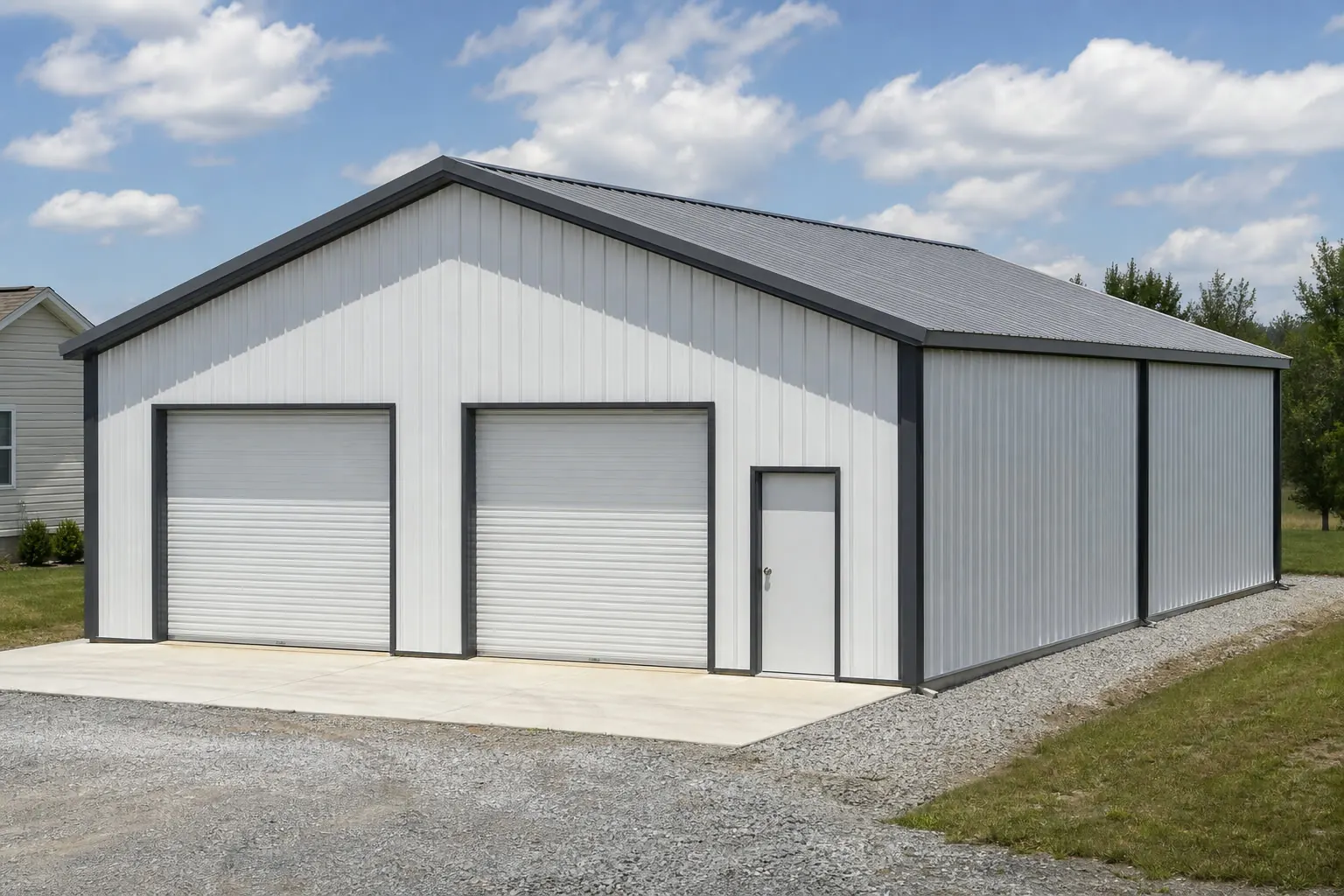
The intersection
What a Louisiana site actually changes about a metal garage
Enclosed storage in Louisiana has to handle humidity year-round and recurring storm exposure, which is a different design conversation than in a drier or less storm-prone state.
A metal garage is fully enclosed, which is precisely why Louisiana's subtropical, Gulf-influenced climate — described in NOAA NCEI's narrative 'Climate of Louisiana' — matters more here than it would for an open structure. Moisture management, ventilation and how the garage seals against wind-driven rain are worth raising with your builder before you finalize a spec, because a sealed metal box in a humid climate behaves differently than the same box in an arid one.
Layered on top of humidity is recurrence: NOAA NCEI's state climate summary states hurricanes strike Louisiana on average once every three years. For a metal garage protecting vehicles, tools or farm equipment, that recurrence is the reason anchoring and door specification deserve attention at the design stage, not as an afterthought once a storm forecast appears.
None of this becomes a wind rating, a slab thickness or an anchoring spec on this page — those numbers belong to your builder's engineering and your local building department. What changes here is the order of operations: understand the humidity and storm context up front, then let your builder and the authority having jurisdiction translate it into a spec for your specific parcel.
Two buyer profiles
Two different reasons Louisiana buyers want a metal garage
USDA's most recent Census of Agriculture and Census Bureau housing-permit data point to two distinct Louisiana metal garage buyers: consolidating farm operations and residential lot owners.
USDA NASS counted 25,006 farms in Louisiana in 2022, a 9% decrease since 2017, while the average farm grew to 319 acres, up 9% over the same period. Fewer, larger operations tend to consolidate equipment onto a single parcel and want enclosed, lockable storage for tractors, tools and inputs rather than an open bay — that shift toward larger operations is part of why a metal garage, not just a pole barn or carport, shows up in Louisiana farm planning.
At the same time, Louisiana authorized 14,247 new housing units in 2023 and 14,310 in 2024, a steady, slightly rising residential base. A meaningful share of Louisiana metal garage enquiries are residential additions to an existing house — a second garage bay, a workshop, or vehicle storage — rather than farm structures, and that buyer has a different footprint and finish expectation than the farm buyer above.
- Farm/equipment buyer
- Wants enclosed, lockable bays sized for tractors or trailers on a consolidated parcel.
- Residential buyer
- Wants a garage that matches or complements an existing house on a standard lot.
- Both buyers
- Share the same humidity and storm-recurrence planning questions above.
Building envelope
Ventilation choices matter more for an enclosed Louisiana garage
Because a metal garage is sealed against weather far more completely than an open carport, moisture that gets trapped inside during Louisiana's humid months has fewer ways to escape unless ventilation is planned in from the start.
NOAA NCEI's subtropical, Gulf-influenced climate description for Louisiana matters differently for a metal garage than it does for a carport: a fully enclosed structure traps interior humidity around parked vehicles, stored tools or farm inputs unless ridge vents, gable vents or a powered exhaust fan move that air out. This is a design decision worth raising with your builder at the quoting stage, since retrofitting ventilation after the structure is finished typically costs more than specifying it up front.
The same logic applies to the floor. A concrete slab in a humid climate can wick ground moisture upward, which is a bigger concern inside a sealed garage than under an open carport where airflow carries humidity away. A vapor barrier under the slab, or a sealed floor coating, are both options worth discussing given Louisiana's climate rather than assuming a standard slab specification will behave the same way it would in a drier state.
None of this becomes a required ventilation rate or a slab specification on this page — those are decisions for your builder and, where a permit is required, your local building department. What changes here is that Louisiana buyers should treat moisture management as a design input for an enclosed metal garage, not an afterthought solved with a dehumidifier later.
Get Louisiana metal garage quotes
Tell us your parish and whether you need vehicle or equipment storage. We route it with the Louisiana and metal-garage context already attached.
Configuration
What Louisiana metal garages are usually asked to do
Enclosed vehicle storage, farm-equipment protection and residential workshop space are the three recurring Louisiana use cases.
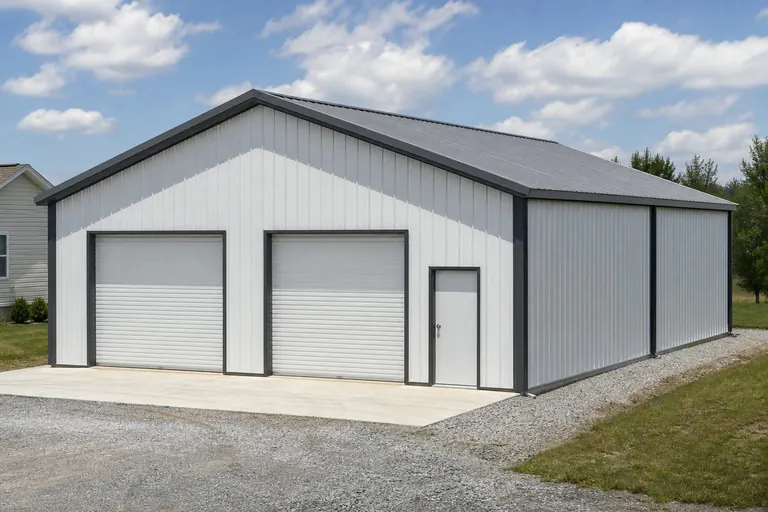 Enclosed vehicle storageFull weather and humidity protection for one to three vehicles, favored over a carport where security and moisture control matter.Farm-equipment bayLockable storage for tractors, implements and tools on a consolidated Louisiana farm parcel.Residential workshopA garage-plus-workshop combination added to an existing house, common given steady residential permit activity.
Example Configuration — for planning purposes only.
Footprint
Sizes that suit Louisiana vehicle and equipment storage
Louisiana enquiries typically range from a single-vehicle garage to a multi-bay farm or residential workshop footprint.
24′ × 30′
720 sq ft
A single- to two-vehicle garage, the common residential enquiry.
30′ × 40′
1,200 sq ft
Two-to-three vehicles or one vehicle plus a workshop bay.
40′ × 60′
2,400 sq ft
Multi-bay equipment storage suited to a consolidated farm operation.
Example Configuration — for planning purposes only.
Footprint pages carry the layout detail for each of these; this page only explains why the Louisiana brief lands in this range.
Preparation
Before you request a Louisiana metal garage quote
A few things resolved in advance keep the quote comparable and the structure suited to your parcel.
Step 1
Contact your local building department
Confirm what your parish and parcel require before finalizing slab, anchoring or door placement.
Step 2
Check FEMA's National Risk Index
Review hurricane and flood hazard data for your specific parcel before fixing floor elevation.
Step 3
Decide vehicle vs. equipment use
Door height, bay width and floor spec differ between a passenger-vehicle garage and a farm-equipment bay.
Step 4
Plan for humidity control
Ventilation or a vapor barrier is worth discussing given Louisiana's subtropical climate, whatever the garage stores.
Step 5
Ask about slab moisture protection
A vapor barrier or sealed coating under the slab is worth pricing now rather than retrofitting later.
Questions
Louisiana metal garage questions
Questions we can answer honestly at state level, with the ones we cannot routed to whoever actually owns them.
NOAA's data shows Louisiana experiences a hurricane roughly once every three years, a real recurrence worth planning around. The specific wind rating or anchoring your garage needs is set by your local building department and your builder's engineer, not stated here.
Permit requirements depend on your parish and parcel. Your local building department is the only reliable source for that answer.
It depends on your use: a fully enclosed metal garage suits lockable, humidity-controlled storage, while a pole barn suits larger open bays. Discuss your specific equipment list with your builder.
There is no official typical size, but consolidated Louisiana farm operations (averaging 319 acres per USDA NASS) more often ask about multi-bay footprints than single-vehicle sizes.
We do not publish state-level prices; a credible number depends on your specification and site work. Our cost pages cover what drives the number.
Sources for the Louisiana facts on this page
This page states no code requirement, wind speed, snow load, permit rule, price or supplier claim. The state-specific facts it does use are listed with their publisher below.
NOAA NCEI's State Climate Summary for Louisiana states hurricanes strike Louisiana on average once every three years, and that Louisiana's temperatures have risen about 0.5°F since the beginning of the 20th century — less than a third of the warming for the contiguous United States as a whole.
NOAA National Centers for Environmental Information (NCEI) · State Climate Summaries series, 2022 · Tier 1
https://statesummaries.ncics.org/downloads/Louisiana-StateClimateSummary2022.pdfNOAA NCEI publishes a narrative 'Climate of Louisiana' describing the state's principal climatic features and providing climatological summaries for stations across its geographic regions.
NOAA National Centers for Environmental Information (NCEI) · Historical narrative (NCEI climate normals series) · Tier 1
https://www.ncei.noaa.gov/data/climate-normals-deprecated/access/clim60/states/Clim_LA_01.pdfLouisiana had 25,006 farms in 2022, a decrease of 9% since 2017.
USDA National Agricultural Statistics Service (NASS) · 2022 · Tier 1
https://www.nass.usda.gov/Publications/AgCensus/2022/Online_Resources/County_Profiles/Louisiana/cp99022.pdfLouisiana had 7,986,381 acres of land in farms in 2022, an average farm size of 319 acres (up 9% since 2017).
USDA NASS · 2022 · Tier 1
https://www.nass.usda.gov/Publications/AgCensus/2022/Online_Resources/County_Profiles/Louisiana/cp99022.pdfLouisiana had a total of 14,247 new privately-owned housing units authorized by building permits in 2023, rising slightly to 14,310 units in 2024.
U.S. Census Bureau · 2023-2024 · Tier 1
https://www2.census.gov/econ/bps/State/st2024a.txtFEMA's National Risk Index dataset assesses 18 natural hazards, including hurricane, coastal flooding, and inland flooding, which are especially relevant to Louisiana's Gulf Coast exposure, at the county and Census tract level via its interactive online tool.
Federal Emergency Management Agency (FEMA) · Current NRI release · Tier 1
https://www.fema.gov/flood-maps/products-tools/national-risk-index