
Hobby shop · NJ
Hobby Shops in New Jersey
A hobby shop only pays off if it gets used through a New Jersey winter, and it can only get built if it fits the lot. New Jersey's 2023 housing permits show 53.2% of the state's authorized units built as five-plus-unit multifamily, one of the highest shares among states, which means the single-family lots where a hobby shop actually goes are comparatively scarce and often tight. Add a small state land area of 7,354.2 square miles and a real north-south difference in winter severity — Newark's 1991-2020 normal runs about 31.5 inches of annual snowfall against roughly 23.1 inches at the Philadelphia airport station serving southern New Jersey — and the brief becomes siting on a constrained lot plus an envelope built for real winter use, not a generic backyard structure.
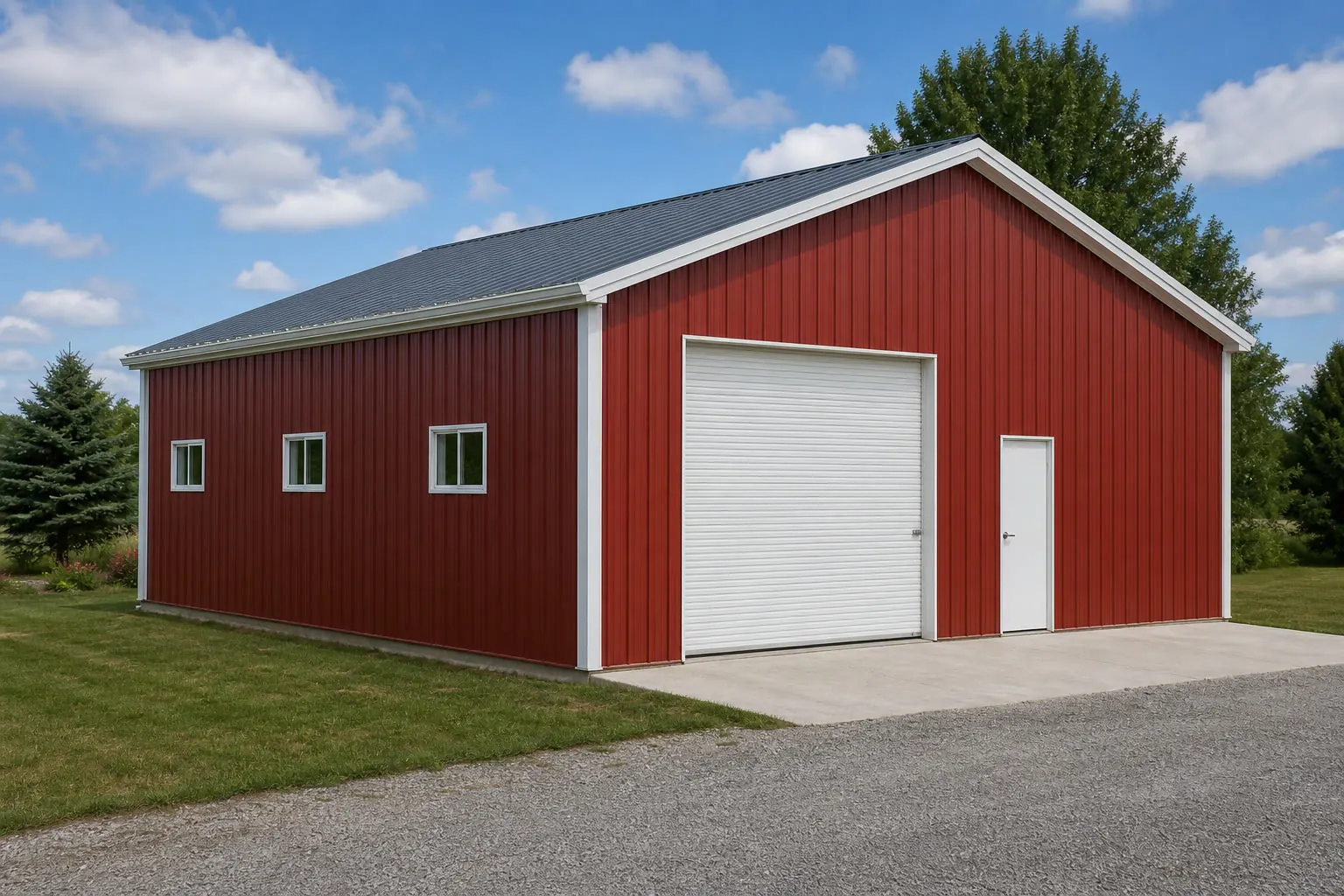
Build for a New Jersey January, on a New Jersey Lot
A hobby shop looks great in a September brochure photo. The New Jersey test is whether the lot has room for it and whether you'll still want to be in it in January. Both questions are shaped by the same state-level facts: a construction market that's building fewer new single-family lots than it used to, and a winter that hits noticeably harder in the north of the state than the south. Get the siting and the envelope right before the slab goes in, because retrofitting either one afterward on a tight New Jersey property is expensive.
Siting
Why New Jersey hobby shop siting starts with the lot, not the design
New Jersey's construction pattern is pushing new housing toward density, which makes the lots where a hobby shop can go comparatively scarce and tight.
Census Bureau figures show that 53.2% of the 32,840 housing units New Jersey authorized in 2023 were in buildings of five or more units — one of the highest multifamily shares of any state. That doesn't mean single-family lots have disappeared, but it does mean they're a shrinking share of what gets built, and the ones that exist, especially in the state's denser counties, tend to have less side and back yard to work with than a comparable lot in a more rural state.
New Jersey's total land area of 7,354.2 square miles reinforces the point: this is a small, densely developed state, so a detached hobby shop is more likely to sit close to a property line and a neighbouring house than it would in a larger, more rural state. That proximity is exactly what brings noise, hours-of-use and visual-impact questions into a municipal approval conversation that a rural buyer might never face.
Local building departments statewide still authorized 34,932 new housing units in 2024, so there is an active pipeline of properties being built or improved — but most hobby shop projects here are additions to already-established homes, meaning existing electrical service, driveway access and grading constrain where and how large the shop can realistically be.
Envelope and approval
What to settle before ordering a New Jersey hobby shop
These decisions, made before the slab, determine whether the shop gets used year-round and whether the municipality approves it without delay.
- Confirm accessory-structure limits with your municipalitySize, height and coverage limits for a detached accessory building in New Jersey are set locally; ask before configuring a layout.
- Match the envelope to your region's winterNorth Jersey's higher snowfall normal and generally colder winters warrant a more robust insulation and heating plan than south Jersey typically needs.
- Plan the electrical run before finalizing placementTrenching from an existing house panel on an established New Jersey lot is often a bigger cost driver than the building itself.
- Ask about noise, hours and neighbour proximityOn a tight New Jersey lot, a compressor or dust collector running on weekends can become a real approval and neighbour-relations issue.
- Get design snow load and frost depth in writingYour local building department, not a statewide normal, determines the actual design requirement for your property.
Get hobby shop quotes for your New Jersey property
Tell suppliers your municipality, your intended footprint, and that the building needs to be usable through the winter. That brief is what separates comparable New Jersey quotes.
Climate
A real north-south winter difference within one small state
Newark and the Philadelphia/Mt. Holly service area diverge enough on snowfall and precipitation that a single statewide insulation spec doesn't fit both ends of New Jersey.
NOAA's 1991-2020 normals show Newark Liberty International Airport averaging roughly 46.60 inches of annual precipitation and about 31.5 inches of annual snowfall, while the Philadelphia airport station serving the National Weather Service's Mt. Holly forecast office over southern New Jersey shows about 44.11 inches of precipitation and roughly 23.1 inches of snowfall. Over a few hours' drive, that's a real difference in how hard a hobby shop's envelope has to work through a winter.
For an occupied space, the practical response is the same everywhere in principle — insulation, air sealing and a slab vapour barrier working together — but the intensity of that spec, and how seriously to weigh a mechanical heat source's capacity, reasonably shifts toward the higher end in the north of the state.
- North Jersey
- Plan a more robust insulation and heating spec given the higher snowfall and generally colder winter normal.
- South Jersey
- A still-real but comparatively milder winter normal, with drainage and rain exposure remaining a year-round concern.
Footprint
Hobby shop footprints that fit a New Jersey lot
Municipal coverage limits, not budget, usually cap the footprint first on a tight New Jersey lot.
20′ × 24′
480 sq ft
A single-person shop with bench and storage space, sized to fit within common accessory-structure limits.
24′ × 30′
720 sq ft
Adds a second work zone while remaining insulable at reasonable cost on an established lot.
30′ × 40′
1,200 sq ft
For larger projects, appropriate only where the parcel and municipal coverage rules genuinely allow it.
Example Configuration — for planning purposes only.
Confirm accessory-structure size, height and coverage limits with your municipality before selecting a footprint.
Questions
New Jersey hobby shop questions
New Jersey-specific answers for backyard workshop buyers.
Permit requirements and accessory-structure rules are set by your municipality's construction office. There's no single statewide threshold to publish; ask locally, and clarify how your town classifies an occupied workshop versus simple storage.
It depends on your specific lot and municipal coverage rules. New Jersey's construction pattern skews toward multifamily housing (53.2% of 2023 permits), which tends to keep the remaining single-family lots comparatively tight, so confirm your usable yard space before sizing the shop.
The regional winter difference is real — Newark's normal snowfall is about 31.5 inches versus roughly 23.1 inches at the Philadelphia-area station serving southern New Jersey — so a north Jersey shop reasonably gets a more robust insulation and heating spec, though your builder and site conditions should confirm the specifics.
Often at least a dedicated sub-panel. Heat plus power tools is a real load, and trenching from an existing house panel on an established New Jersey property is frequently a bigger cost item than expected.
We don't publish state-level prices, since cost depends on size, insulation package and site work. Our cost pages explain what drives the number; a quote covers your specific project.
Sources for the New Jersey facts on this page
This page states no code requirement, wind speed, snow load, permit rule, price or supplier claim. The state-specific facts it does use are listed with their publisher below.
The Census Bureau's 2023 annual building permits report notes that multifamily units (5+ units) made up 53.2% of New Jersey's 32,840 total authorized housing units that year, one of the highest multifamily shares among states.
U.S. Census Bureau · 2023 · Tier 1
https://www.census.gov/construction/bps/pdf/2023annualhighlights.pdfNew Jersey's total land area was measured at 7,354.2 square miles as of the 2010 Census.
U.S. Census Bureau · 2010 Census · Tier 1
https://www.census.gov/geographies/reference-files/2010/geo/state-local-geo-guides-2010/new-jersey.htmlNewark Liberty International Airport's 1991-2020 annual normal precipitation is 46.60 inches with 31.5 inches of annual snowfall.
NOAA National Centers for Environmental Information (NCEI) · 1991-2020 · Tier 1
https://www.ncei.noaa.gov/access/services/data/v1?dataset=normals-annualseasonal-1991-2020&dataTypes=ANN-PRCP-NORMAL,ANN-SNOW-NORMAL&stations=USW00014734&format=jsonPhiladelphia/Mt. Holly NWS forecast office area's 1991-2020 annual normal precipitation is 44.11 inches with 23.1 inches of annual snowfall, using the co-located Philadelphia airport station as the primary long-term reference.
NOAA National Centers for Environmental Information (NCEI) · 1991-2020 · Tier 1
https://www.ncei.noaa.gov/access/services/data/v1?dataset=normals-annualseasonal-1991-2020&dataTypes=ANN-PRCP-NORMAL,ANN-SNOW-NORMAL&stations=USW00013739&format=jsonLocal building permit offices in New Jersey authorized 34,932 new privately-owned housing units in 2024.
U.S. Census Bureau · 2024 (full calendar year) · Tier 1
https://www.census.gov/construction/bps/stateannual.html