
Steel home · IA
Steel Homes in Iowa
A steel home in Iowa offers a durable, high-efficiency alternative to traditional wood-frame housing, but success requires a deep understanding of the state's environmental and regulatory landscape. With Iowa seeing an increase in authorized housing units—reaching 12,544 in 2024—the market for steel-frame residences is maturing. From navigating county-level building permits to engineering a foundation that can handle the 200-foot relief of the Loess Hills, an Iowa steel home must be designed to withstand record extremes from -30°F to 110°F while providing a comfortable and sustainable primary residence.
Procedural
The path to a residential permit in Iowa
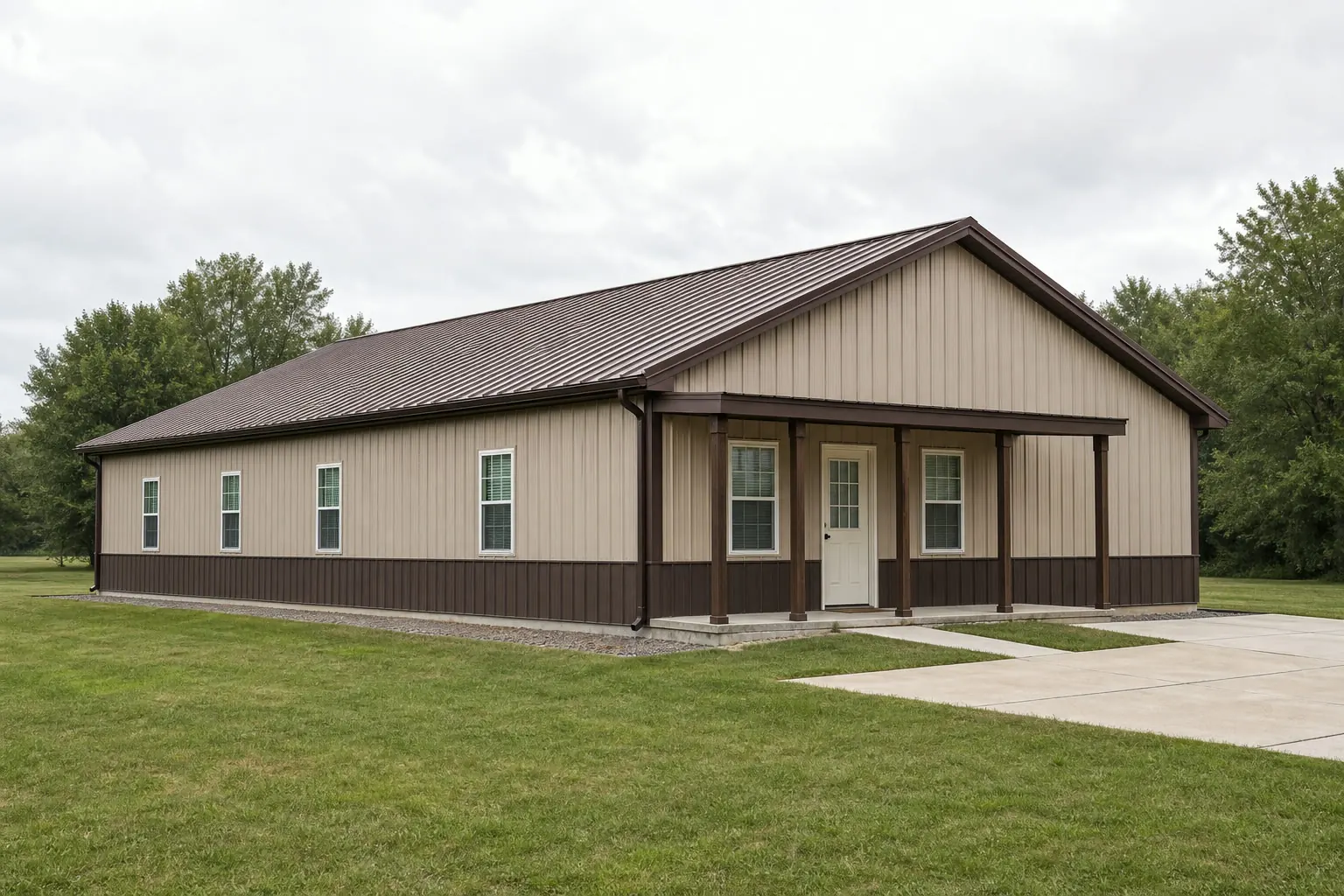
In Iowa, a steel home is subject to the same rigorous residential building codes as any traditional house.
One of the biggest misconceptions about steel homes in Iowa is that they are 'easier' to permit than wood-frame houses. In reality, because they are primary housing units, they must meet all statewide energy, fire, and safety standards. Iowa's permitting process is decentralized, meaning your local county or city will be the one reviewing your plans. As the Iowa State Data Center and Census Bureau note, the state authorized 12,544 housing units in 2024, and each one had to clear these local hurdles. You'll need an engineered set of plans that specifically addresses the steel frame's structural loads and fire ratings.
A critical item for Iowa steel homes is the energy audit. Iowa has adopted modern energy codes that require high R-values for walls and ceilings. Because steel is an excellent conductor of heat, you must account for 'thermal bridging'—where heat escapes through the steel studs or frame. This typically requires a layer of continuous exterior insulation or high-performance spray foam inside the cavities. Your local building inspector will be looking for proof that your home meets these energy efficiency minimums before they issue a certificate of occupancy.
In rural Iowa, you also have to manage the utility interface. FEMA's case study on Iowa drought highlights the importance of water reliability. If you are building outside city limits, ensuring your well can provide a sustained yield or that you have access to a rural water district is a mandatory part of the permit process. Furthermore, your septic system design will need to be approved by the county health department, which often requires a professional soil test (perc test) to ensure the land can handle the wastewater load.
Engineering
Building for Iowa's extreme landscape
Iowa’s geography dictates the structural and foundational design of a modern steel home.
Western Iowa’s Loess Hills present one of the most challenging environments for a permanent home. With bluffs that rise 200 feet above the Missouri River floodplain, the silt soil is prone to erosion and settling. A steel home in this region requires a foundation designed by an engineer familiar with Iowa's specific geologies. This might include deep-driven piles or a specialized mat foundation to ensure that the home stays level even as the surrounding silty soil shifts over time. It's a significant upfront cost, but essential for the long-term viability of a residence in the Loess Hills corridor.
The climate performance of an Iowa steel home is defined by its ability to handle -30°F record lows and 110°F summer highs. This massive temperature range causes significant expansion and contraction in a steel frame. A quality Iowa builder will use specialized fasteners and joints that allow for this movement without compromising the home's air seal. Furthermore, because Iowa is a high-humidity state, managing moisture within the walls is critical. A properly designed vapor barrier system is essential to prevent internal condensation from damaging your interior finishes.
Finally, wind exposure in Iowa cannot be ignored. Steel homes are inherently strong candidates for wind resistance compared with wood-frame houses, but the cladding and roof system remain the most vulnerable points. Specifying a standing-seam metal roof with a documented wind-uplift rating, confirmed against the design wind speed your local building department requires for your parcel, is a smart choice for an Iowa project. After the 2020 derecho, many Iowa homeowners have also requested storm shelters or 'safe rooms' integrated into the steel frame, providing a permanent place of refuge during the state's severe spring storm cycles.
Geography
Siting your steel home in Iowa
Iowa's 55,857.1 square miles offers a variety of site conditions.
Loess Hills (West)
Breathtaking views from 200-foot bluffs, but requires sophisticated site grading and foundation engineering to handle the silt-soil erosion risk.
Des Moines Lobe (Central)
Generally flat ground that makes construction easier, but often requires extensive drainage planning to manage surface water and heavy clay soil.
Southern Drift Plain
Rolling hills and valleys that require careful consideration of road access and utility runs, particularly for rural sites far from main power lines.
Start Your Iowa Steel Home
Ready for a more durable home? Connect with builders who specialize in Iowa residential steel construction.
Before You Order
An energy and hazard checklist for an Iowa steel home
Iowa's adopted energy code and its hazard profile both push a steel-frame home toward decisions that a milder, calmer-climate state would not require.
Step 1
Address thermal bridging at the design stage
Steel conducts heat efficiently, so plan continuous exterior insulation or high-performance cavity fill before framing begins, not as a later retrofit.
Step 2
Confirm your energy-code compliance path with the inspector
Ask which compliance path (prescriptive or performance) your county inspector expects before you finalize your insulation package, since this affects wall assembly choices.
Step 3
Verify well yield or rural water access early
FEMA's Iowa case study highlights drought's importance to the state's water-dependent economy; confirm a sustained water source before committing to a rural building site.
Step 4
Confirm your roof's wind-uplift rating with the local building department
Given Iowa's derecho history, ask your building department and structural engineer what design wind speed and uplift rating apply to your specific parcel before finalizing a roof system.
Financing
Financing and appraising a steel home in Iowa
Because steel-frame residences are still uncommon in most Iowa counties, financing and appraisal often move slower than for a conventional wood-frame house.
Iowa county appraisers rely heavily on recent comparable sales to establish a home's value, and steel-frame residences remain rare outside a handful of counties. This scarcity of comparables can lead to a conservative appraisal that undervalues the home relative to its actual build cost, which in turn affects how much a lender is willing to finance. Buyers should budget extra time for the appraisal process and consider working with an appraiser who has specific experience valuing non-traditional residential construction in Iowa.
Lenders also vary in their comfort level with steel-frame homes. National retail banks may default to standard wood-frame underwriting guidelines and request additional engineering documentation before approving a construction loan, while local Iowa banks and credit unions that regularly finance rural properties tend to be more familiar with steel construction and may move faster. Getting pre-qualified with a local lender before finalizing your building plans can prevent costly delays mid-project.
Insurance carriers in Iowa generally view steel-frame construction favorably for wind and fire resistance, which can translate into lower premiums than an equivalent wood-frame home. However, insurers will still want documentation of the engineered foundation and moisture-management details discussed above, since a poorly sealed steel envelope in Iowa's humid summers can lead to condensation-related claims.
Questions
Iowa Steel Home FAQ
Common questions about residential steel in the Iowa market.
The shell may be comparable to high-end wood framing, but the long-term savings come from reduced maintenance and increased energy efficiency in Iowa's extreme climate.
Yes, but you must invest in professional foundation engineering to handle the steep relief and silty soil common to the western Iowa bluffs.
Steel-frame homes are generally more wind-resistant than wood-frame houses, but the roof and exterior panels still need a wind-uplift rating matched to the design wind speed your local building department requires for your site.
Many will, but local Iowa banks and credit unions with rural-lending experience tend to be more comfortable underwriting steel construction than national retail banks, which may ask for more engineering documentation.
It can be, since comparable sales are limited in most counties. Working with an appraiser experienced in non-traditional residential construction can help avoid an undervalued appraisal.
Sources for the Iowa facts on this page
This page states no code requirement, wind speed, snow load, permit rule, price or supplier claim. The state-specific facts it does use are listed with their publisher below.
NWS Des Moines climatological records (1878-present) list a record daily high of 110°F (July 25, 1936 and August 4, 1918) and a record low daily minimum of -30°F (January 5, 1884) at the Des Moines station.
National Weather Service (NOAA), Des Moines IA office · 1878-2025 period of record · Tier 1
https://www.weather.gov/media/dmx/Climate/DesMoinesOverallExtremesClimateData.pdfNWS Des Moines climatological records (1878-present) list a record daily high of 110°F (July 25, 1936 and August 4, 1918) and a record low daily minimum of -30°F (January 5, 1884) at the Des Moines station.
National Weather Service (NOAA), Des Moines IA office · 1878-2025 period of record · Tier 1
https://www.weather.gov/media/dmx/Climate/DesMoinesOverallExtremesClimateData.pdfThe Loess Hills of western Iowa rise roughly 200 feet above the flat Missouri River floodplain and form a narrow band running north-south for about 200 miles along the Missouri River, with steep angles and sharp bluffs on their western side.
U.S. Geological Survey (USGS) · USGS reference publication · Tier 1
https://www.usgs.gov/publications/geology-loess-hills-iowaIowa had a total of 11,230 new privately-owned housing units authorized by building permits in 2023, rising to 12,544 units in 2024.
U.S. Census Bureau · 2023-2024 · Tier 1
https://www2.census.gov/econ/bps/State/st2024a.txtFEMA's National Risk Index dataset covers 18 natural hazards (including drought, tornado, hail, cold wave, and severe winter weather relevant to Iowa) at the county and Census tract level; FEMA has cited Iowa specifically in a published case study describing drought's importance to the state's water-dependent farm economy.
Federal Emergency Management Agency (FEMA) · Current FEMA case study/NRI release · Tier 1
https://www.fema.gov/case-study/drought-hazard-use-case