
Metal garage · NM
Metal Garages in New Mexico
New Mexico added 7,572 new privately-owned housing units in 2024, evidence that residential construction — and the garages, carports and shops that follow it — is an active, ongoing pipeline across the state's building departments. NOAA describes the state's climate as arid to semi-arid with high year-to-year precipitation variability, which for a metal garage means the design conversation centers on dust intrusion, UV exposure and slab drainage during rare intense storms, not snow load or constant moisture.
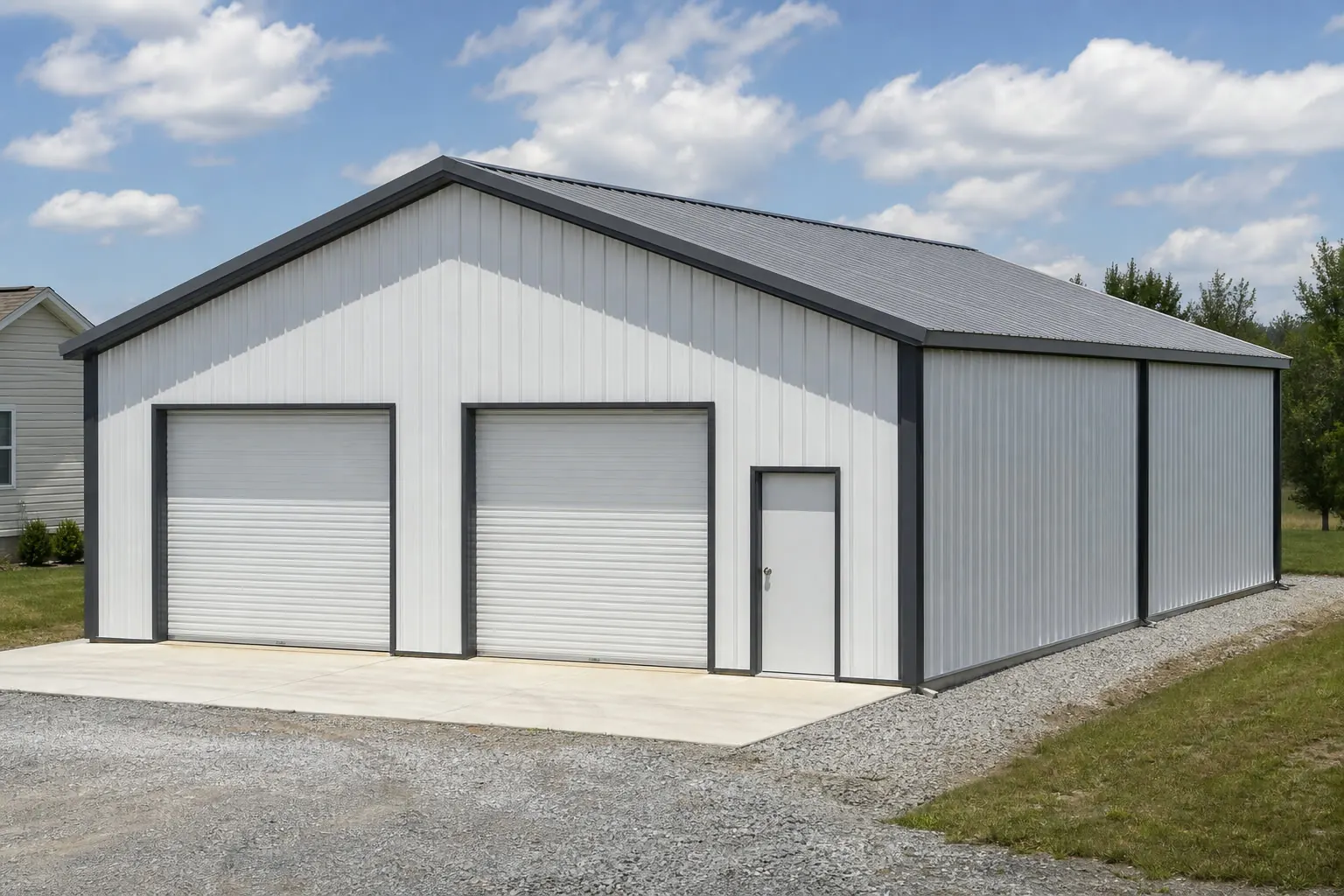
The intersection
What a New Mexico site actually changes about a metal garage
New Mexico's dry, dusty, UV-intense climate and its active residential permitting pipeline both shape how a metal garage gets planned here.
New Mexico authorized 7,572 new privately-owned housing units in 2024, a sign that residential construction activity, including the accessory garages that typically follow a new home or a retrofit, is an ongoing, familiar workload for local building departments rather than a rare request. That matters for anyone assuming a detached metal garage is an unusual ask: departments across the state process comparable projects regularly, even though the specific requirements for your parcel still come from them, not from a statewide rule.
The bigger design shift comes from climate. NOAA's State Climate Summaries describe New Mexico as arid to semi-arid with high year-to-year precipitation variability, and the Albuquerque station's 1991-2020 normal shows just 8.84 inches of annual precipitation. For a metal garage, that low average does not mean the building can ignore water; it means the water arrives rarely and hard, concentrated in monsoon-season bursts, so slab grading and an apron that sheds runoff away from the door threshold matter more than continuous-moisture concerns like they would in a wetter state.
The more constant condition is dust and sun. A garage door and wall panel system in New Mexico spends most of the year dealing with dry heat, UV exposure and windblown grit rather than rain or snow. That reframes what the building is actually protecting against: vehicle finishes, stored equipment and interior materials degrade faster from sun and dust infiltration here than from moisture, which is a different sales and specification conversation than in a humid or snowy region. Wind speeds, snow loads and any permit thresholds are set locally — confirm them with your building department before finalizing a spec.
Site context
How the build site differs across New Mexico
At 121,298.2 square miles, New Mexico's terrain and elevation vary enough that a metal garage sited in one part of the state faces a genuinely different exposure profile than one in another.
Albuquerque-area valley and metro sites
Represented by the 8.84-inch annual precipitation normal and 7.9 inches of snow. Dust and UV are the recurring maintenance topics; monsoon-season drainage around the slab is the occasional-but-intense concern.
Higher-elevation and forested edges
The state hazard mitigation plan names wildfire alongside drought. A garage sited near wooded terrain is worth discussing with the local fire authority for clearance and material guidance.
Open, windy rangeland and mesa sites
Severe wind/dust events are part of the documented state hazard profile. Anchoring and door-seal quality are worth raising with a builder on an exposed site.
Arroyo-adjacent residential lots
Flash flooding from monsoon storms is a named hazard even in dry-looking terrain. Slab elevation relative to a nearby wash is worth confirming with a site engineer.
Exposure
Dust, sun and rare bursts drive New Mexico garage details
A metal garage here is specified around a dry, dusty, UV-heavy baseline punctuated by intense monsoon events, which is a different exposure pattern than most of the country.
Because rainfall in New Mexico is concentrated into short, intense monsoon events rather than spread evenly across the year, a garage's gutter sizing, downspout placement and apron grading need to handle a hard, brief pulse of water even in a year that finishes dry overall. That is the same underlying climate pattern NOAA documents for the state generally, applied to a smaller structure than a barn or shop.
Between storms, the constant condition is dry heat, UV and windblown dust, consistent with the wind/dust events the state hazard plan documents. Door seals that keep grit out of the garage interior, and panel finishes chosen for UV resistance, are practical topics worth raising with a builder — separate from any structural wind design your local building department requires for the parcel.
- Grade the apron for a burst
- Plan drainage around a short, intense monsoon event rather than the low annual average alone.
- Seal doors against dust
- Weatherstripping and threshold seals reduce grit intrusion on a windy New Mexico site.
- Choose UV-stable finishes
- Sun exposure at altitude is intense; ask about panel coatings rated for it.
Get New Mexico metal garage quotes
Tell us your vehicle count, planned use and rough footprint. We route it with the New Mexico and metal garage context already attached.
Configuration
What New Mexico metal garages are usually asked to do
Vehicle and equipment protection from sun and dust is the recurring brief, alongside the occasional monsoon-drainage detail.
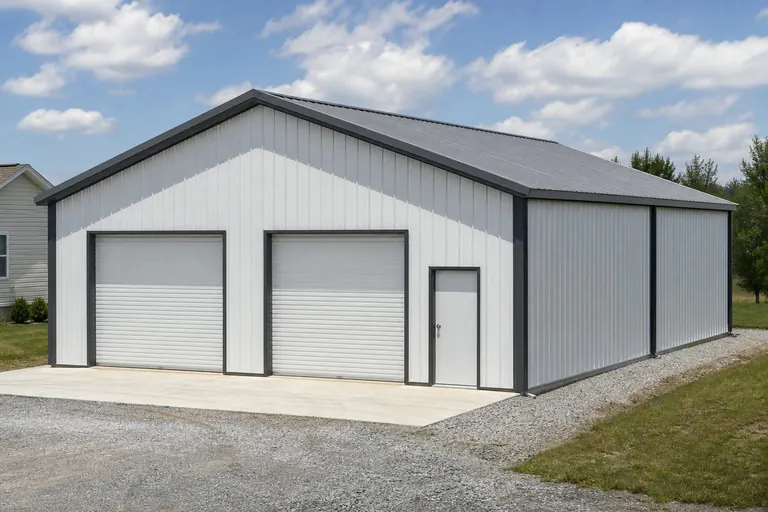 Enclosed vehicle storageFully enclosed bays protect paint and interiors from UV and dust better than an open carport in this climate.Small workshop or hobby bayA side room or lean-to for tools and equipment kept out of dust and direct sun is a common add-on.
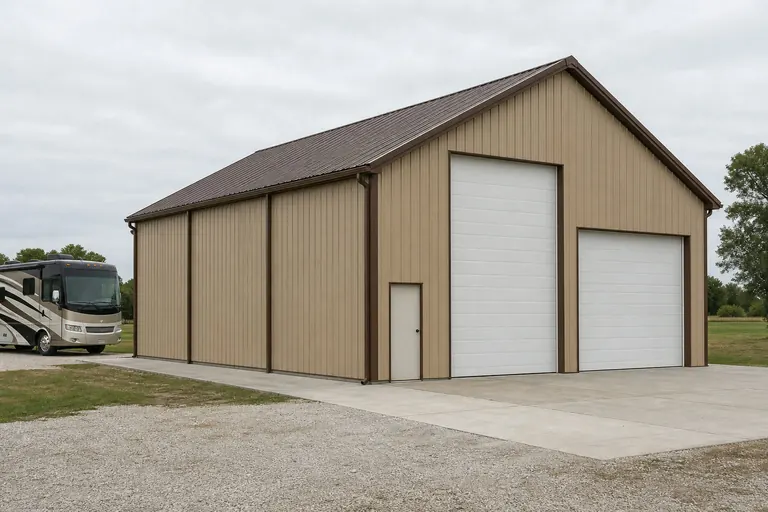 RV or trailer bay with a shop endTaller doors for an RV paired with a smaller enclosed shop suit sites with mixed storage needs.
Example Configuration — for planning purposes only.
Footprint
Sizes that suit New Mexico garage projects
Most New Mexico metal garage enquiries fall into a familiar residential-to-light-commercial range, sized around vehicle count and dust/sun protection rather than climate load.
24′ × 30′
720 sq ft
A common two-vehicle enclosed garage footprint for residential lots.
30′ × 40′
1,200 sq ft
Adds room for a workshop bay or extra vehicle alongside daily-driver storage.
40′ × 60′
2,400 sq ft
Fits a small fleet or a combined vehicle-and-equipment brief.
30′ × 50′
1,500 sq ft
A longer, narrower footprint suited to RV or trailer bays with a shop end.
Example Configuration — for planning purposes only.
Footprint pages carry the layout and door detail for each of these; this page only explains why the New Mexico brief skews toward dust and sun protection.
Preparation
Before you request a New Mexico metal garage quote
Four things resolved in advance make the difference between a comparable quote and a re-quote on a New Mexico lot.
Step 1
Contact your local building department
Ask what your parcel and elevation require before you fix the specification; requirements are set locally, not statewide.
Step 2
Confirm slab and apron grading
Plan drainage for a short, intense monsoon burst rather than the low annual average alone.
Step 3
Ask about door seals and finishes
Dust intrusion and UV exposure are the everyday New Mexico maintenance issue, not moisture.
Step 4
Check arroyo or wash proximity
Flash flood exposure is worth raising even on a lot that looks dry most of the year.
Questions
New Mexico metal garage questions
Questions we can answer honestly at state level, with the ones we cannot routed to whoever actually owns them.
New Mexico authorized 7,572 new privately-owned housing units in 2024, and accessory structures like garages typically follow residential construction and retrofits at a similar pace. Your local building department processes these regularly, but requirements still depend on your specific parcel.
Permit requirements depend on your county or municipality, your parcel and how the building is used. Your local building department is the only reliable source for that answer.
No. NOAA describes the state's climate as arid to semi-arid with high year-to-year precipitation variability driven largely by the monsoon, so rainfall arrives in short, intense bursts. Slab and apron grading still need to handle those events.
Dust intrusion and UV exposure tend to be the recurring, everyday issues given the state's dry, sun-intense climate, more so than moisture or snow load in most parts of the state.
We do not publish state-level prices, because a credible number depends on your specification, site work and current material pricing. Our cost pages cover what drives the number; a quote covers your building.
Sources for the New Mexico facts on this page
This page states no code requirement, wind speed, snow load, permit rule, price or supplier claim. The state-specific facts it does use are listed with their publisher below.
Local building permit offices in New Mexico authorized 7,572 new privately-owned housing units in 2024.
U.S. Census Bureau · 2024 (full calendar year) · Tier 1
https://www.census.gov/construction/bps/stateannual.htmlNOAA's State Climate Summaries key messages for the Southwest region describe New Mexico's climate as arid to semi-arid with high year-to-year precipitation variability driven substantially by the North American monsoon.
NOAA National Centers for Environmental Information (NCEI) · State Climate Summaries 2022 · Tier 1
https://statesummaries.ncics.org/chapter/nm/Albuquerque's 1991-2020 annual normal precipitation is 8.84 inches with 7.9 inches of annual snowfall.
NOAA National Centers for Environmental Information (NCEI) · 1991-2020 · Tier 1
https://www.ncei.noaa.gov/access/services/data/v1?dataset=normals-annualseasonal-1991-2020&dataTypes=ANN-PRCP-NORMAL,ANN-SNOW-NORMAL&stations=USW00023050&format=jsonThe 2023 State of New Mexico Hazard Mitigation Plan, prepared to meet FEMA's 44 CFR Part 201 planning criteria, documents the state's natural hazard profile including drought, wildfire, flooding, and severe wind/dust events across its counties.
New Mexico Department of Homeland Security and Emergency Management · 2023-2028 · Tier 2
https://connect.nm.gov/uploads/1/4/1/9/141989814/2023_state_of_new_mexico_hazard_mitigation_plan_3.pdfNew Mexico's total land area was measured at 121,298.2 square miles as of the 2010 Census, making it the fifth-largest state by land area.
U.S. Census Bureau · 2010 Census · Tier 1
https://www.census.gov/geographies/reference-files/2010/geo/state-local-geo-guides-2010/new-mexico.html