
Indoor Sports Facility · MD
Indoor Sports Facilities in Maryland
An indoor sports facility in Maryland is planned against a state where most of the population, and most of the demand for court and field time, sits in the dense Baltimore-Washington corridor rather than on open land. Maryland builders were authorized to construct 16,823 new privately-owned housing units in 2024, of which 10,885 were single-unit structures, a construction mix that signals steady but not overwhelming demand for large standalone commercial buildings against a backdrop of otherwise tight land competition. Add the roughly 44-46 inch annual precipitation normal recorded for the Baltimore-Washington area, spread fairly evenly across the year rather than concentrated in one season, and the roof drainage and entry plan for a large clear-span building carry real weight from the outset.
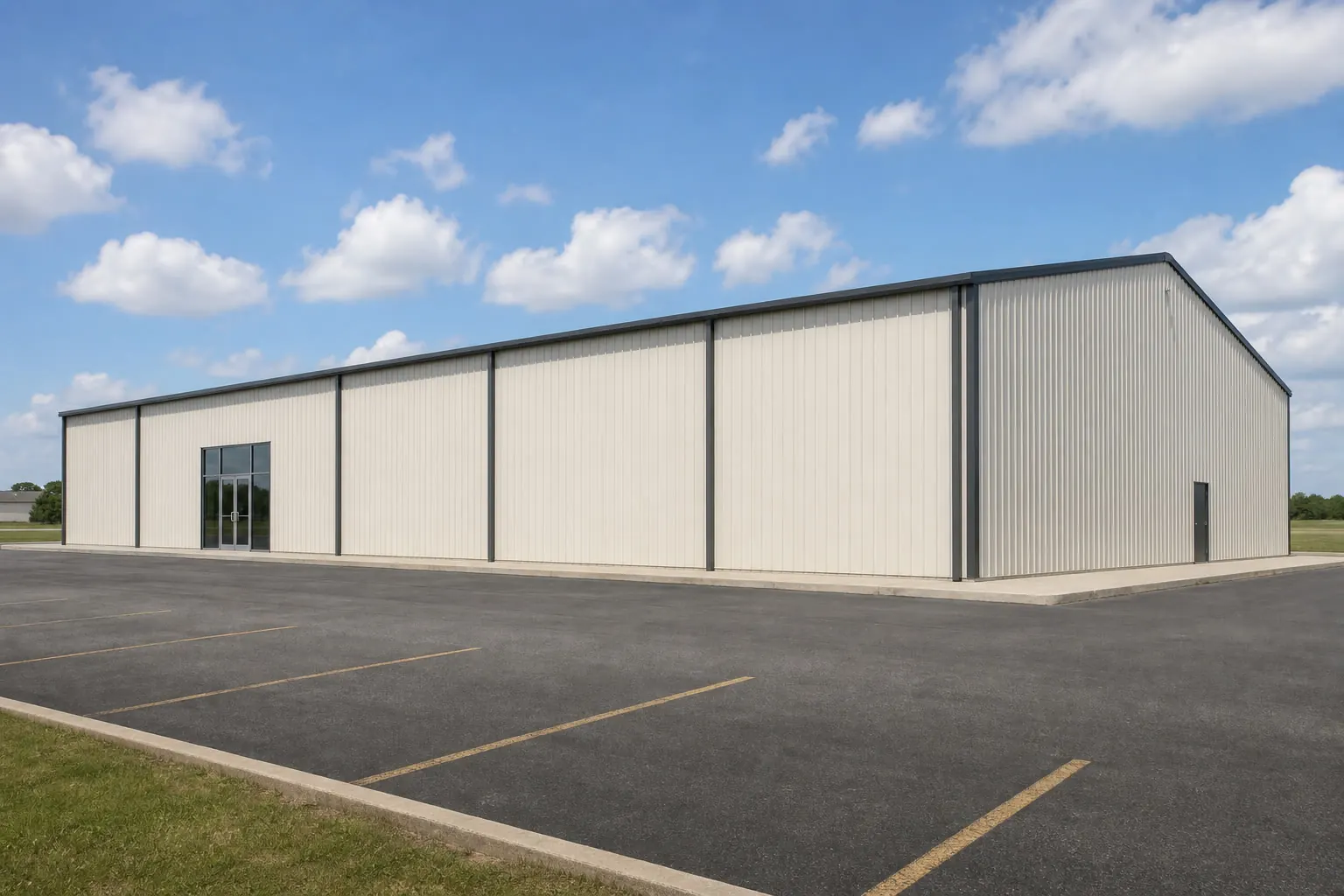
The intersection
What a Maryland site actually changes about an indoor sports facility
The building type does not change. What changes is how scarce a large commercial parcel is near the population corridor, what the project competes against in the current construction mix, and how the roof handles a year-round rainfall pattern.
The U.S. Census Bureau's Building Permits Survey shows Maryland builders were authorized for 16,823 new privately-owned housing units in 2024, with 10,885 of those single-unit structures. That is a housing figure, not a commercial-permitting rule, and this page makes no statewide permitting claim about sports facilities specifically. It does mean a large standalone clear-span building sits somewhat outside the dominant residential construction pattern in the state right now, which is worth raising with your local planning office alongside your specific use and site.
Land itself is the second change. Maryland's population and commercial activity concentrate in the Baltimore-Washington corridor, where large flat parcels compete directly with housing, retail and logistics uses. Operators accustomed to shopping for open land elsewhere will more often find Maryland sites are commercial-zoned infill, former industrial parcels, or land adjacent to an existing school or recreation complex -- exactly the kind of site where a clear-span structure's lack of interior columns lets the building make full use of an irregular footprint.
The third change is climate, and it works in the facility's favor twice over. NOAA's 1991-2020 normals for the Baltimore-Washington area show total annual precipitation of roughly 44-46 inches spread fairly evenly across the year rather than concentrated in a wet season. That steady moisture is exactly why demand for indoor court and field time exists year-round in Maryland rather than just in winter, but it also means the roof drainage, gutter scope and entry vestibule need planning for consistent exposure rather than a single seasonal peak.
Site context
How Maryland terrain changes the build site
The Maryland Geological Survey's three-region split shapes grading, parking layout and stormwater planning even for an identical building footprint.
Coastal Plain (Eastern Shore, Southern Maryland, Baltimore-DC lowlands)
Flat, low-relief ground described by the state geological survey. Easier grading in many cases, but stormwater discharge and, near the coast, flood exposure are worth confirming.
Piedmont (Central Maryland)
Rolling terrain through Baltimore and the Washington suburbs, where most of the state's population and commercial land competition concentrate; grading and drainage design need real engineering attention.
Western Maryland mountains
The Blue Ridge, Valley and Ridge, and Appalachian Plateau provinces bring steeper terrain and less commercial land pressure, but also fewer large flat sites for a big clear-span building.
Exposure
A steady rainfall pattern shapes roof and entry planning
Because Maryland's rainfall is spread fairly evenly across the year rather than seasonally concentrated, the building's drainage system has to perform consistently rather than surge-protect for one wet stretch.
NOAA's climate normal for the Baltimore-Washington area station is roughly 44-46 inches of annual precipitation, distributed fairly evenly month to month. This is a station normal, not a design value, and nothing here converts it into a load or code requirement -- that conversation belongs with your engineer and local building department. As an operational planning prompt, it means clear-span roof drainage, a covered entry that keeps court and floor surfaces dry, and a parking-lot stormwater plan that doesn't rely on long dry spells to keep up are worth resolving before the plan is finalized.
A facility with steady rainfall exposure all year also benefits from thinking about entry sightlines and lot drainage together: where water sheds off the roof relative to walkways and the main entrance is the detail operators most often revisit if it's skipped at the planning stage.
- Covered entry design
- A vestibule or overhang keeps court and floor surfaces dry across year-round rainfall, not just a seasonal peak.
- Consistent roof drainage capacity
- Size gutters and downspouts for steady exposure rather than a single storm-season assumption.
- Parking-lot stormwater plan
- Confirm capacity with your site engineer given the region's fairly even precipitation distribution.
Get Maryland indoor sports facility quotes
Tell us your parcel size, activity mix, and which Maryland region your site is in. We route it with the Maryland and indoor sports context already attached.
Configuration
How Maryland indoor sports programs typically split
On a constrained Baltimore-Washington corridor parcel, the configuration question is about which activities fit under one clear-span roof.
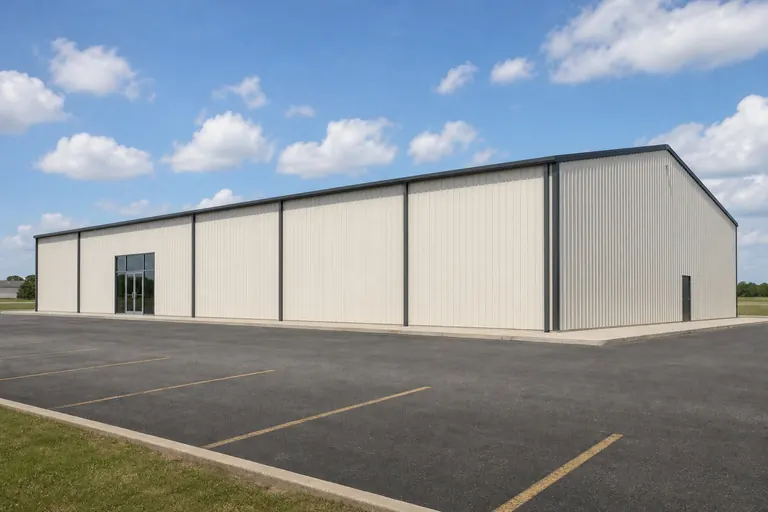 Multi-sport turf field houseA single large clear-span bay for soccer, lacrosse or baseball training, sized to fit a commercial or institutional parcel near a population center.Court-based facilityBasketball or volleyball courts under one roof, often paired with mezzanine seating or training space near suburban Baltimore or Washington communities.Batting cage or golf training centerA narrower, higher-bay configuration suited to a smaller infill parcel where a full field house would not fit.
Example Configuration — for planning purposes only.
Preparation
Before you request a Maryland quote
These items address frequent sources of re-quoting on an indoor sports project here.
- Confirm commercial zoning and occupancy classification with your local building departmentA large standalone assembly-use building sits outside the current dominant residential construction pattern, so flag it early.
- Describe your physiographic region, not just your townCoastal Plain, Piedmont, and western Maryland ground each change grading and stormwater planning.
- Plan roof drainage for year-round rainfallMaryland's precipitation is spread fairly evenly across the year rather than seasonally concentrated, so gutter and drainage capacity need consistent, not peak-season, sizing.
- Check coastal hazard exposure if applicableSites near the Chesapeake Bay or Atlantic coast should reference FEMA's National Risk Index by jurisdiction.
Questions
Maryland indoor sports facility questions
Honest state-level answers, with anything jurisdiction-specific routed to the office that actually owns it.
Zoning and occupancy classification are set locally, parcel by parcel, and Maryland does not have a single statewide answer we can state here. Your local building and planning department is the right first call, especially since a large standalone building sits outside the dominant residential construction pattern in current statewide data.
There's no official minimum-parcel rule, but Maryland's population and commercial land competition concentrate in the Baltimore-Washington Piedmont corridor, so most facilities land on commercial or institutional infill sites there or on flatter Coastal Plain ground rather than open acreage.
We do not state design loads on this page -- that is an engineering and code question for your local building department. What we can say is that the Baltimore-Washington area's climate normal shows roughly 44-46 inches of annual precipitation spread fairly evenly across the year, a useful planning prompt for drainage and entry design, not a specification.
We can point to the climate pattern -- a roughly 44-46 inch annual normal distributed fairly evenly month to month -- as context for why outdoor fields and courts see reduced or inconsistent use across the year. We do not publish market-size or demand figures, since that is outside what this page can responsibly claim.
We do not publish state-level prices, because a credible number depends on span, clear height, site work and current material costs. Our cost pages explain what drives the number; a quote reflects your specific project.
Sources for the Maryland facts on this page
This page states no code requirement, wind speed, snow load, permit rule, price or supplier claim. The state-specific facts it does use are listed with their publisher below.
Builders in Maryland were authorized to construct 16,823 new privately-owned housing units in 2024, of which 10,885 were single-unit structures.
U.S. Census Bureau · 2024 (final annual estimates) · Tier 1
https://www.census.gov/construction/bps/stateannual.htmlThe BWI Airport (Baltimore/Annapolis area) NOAA 1991-2020 climate normals show total annual precipitation of roughly 44-46 inches spread fairly evenly across the year.
NOAA National Centers for Environmental Information (NCEI) · 1991-2020 · Tier 1
https://www.ncei.noaa.gov/access/services/data/v1?dataTypes=MLY-TMAX-NORMAL%2CMLY-TMIN-NORMAL%2CMLY-TAVG-NORMAL%2CMLY-PRCP-NORMAL%2CMLY-SNOW-NORMAL&dataset=normals-monthly-1991-2020&format=pdf&stations=USW00013752The Maryland Geological Survey describes the state as spanning three distinct physiographic regions -- the Coastal Plain, the Piedmont, and the combined Blue Ridge, Valley and Ridge, and Appalachian Plateau provinces -- extending from the Atlantic coast to the western mountains.
Maryland Geological Survey · MGS reference material · Tier 2
https://www.mgs.md.gov/geology/geology_of_maryland.htmlFEMA's National Risk Index is the federal tool for county- and state-level natural hazard exposure data for Maryland's 24 jurisdictions, covering 18 hazard types including coastal flooding, hurricane, and winter weather.
Federal Emergency Management Agency (FEMA) · Current NRI release · Tier 1
https://www.fema.gov/flood-maps/products-tools/national-risk-indexMaryland had 12,550 farms in 2022, up from 12,429 in 2017.
USDA National Agricultural Statistics Service (NASS) · 2022 (with 2017 comparison) · Tier 1
https://www.nass.usda.gov/Publications/AgCensus/2022/Full_Report/Volume_1,_Chapter_1_State_Level/Maryland/st24_1_001_001.pdf