
Indoor Sports Facility · MA
Indoor Sports Facilities in Massachusetts
An indoor sports facility in Massachusetts is planned against a state where open, large-footprint parcels are genuinely scarce and where winter weather already pushes recreational demand indoors for a meaningful part of the year. Massachusetts's average farm parcel is just 66 acres — among the smallest averages in the country — and new construction statewide leans toward multi-unit projects rather than large standalone buildings, so most facility sites here are commercial-zoned, institutional, or repurposed parcels rather than open land. Layer in Boston Logan's roughly 49-inch average annual snowfall, and the roof, drainage and entry plan carry real operational weight from day one.
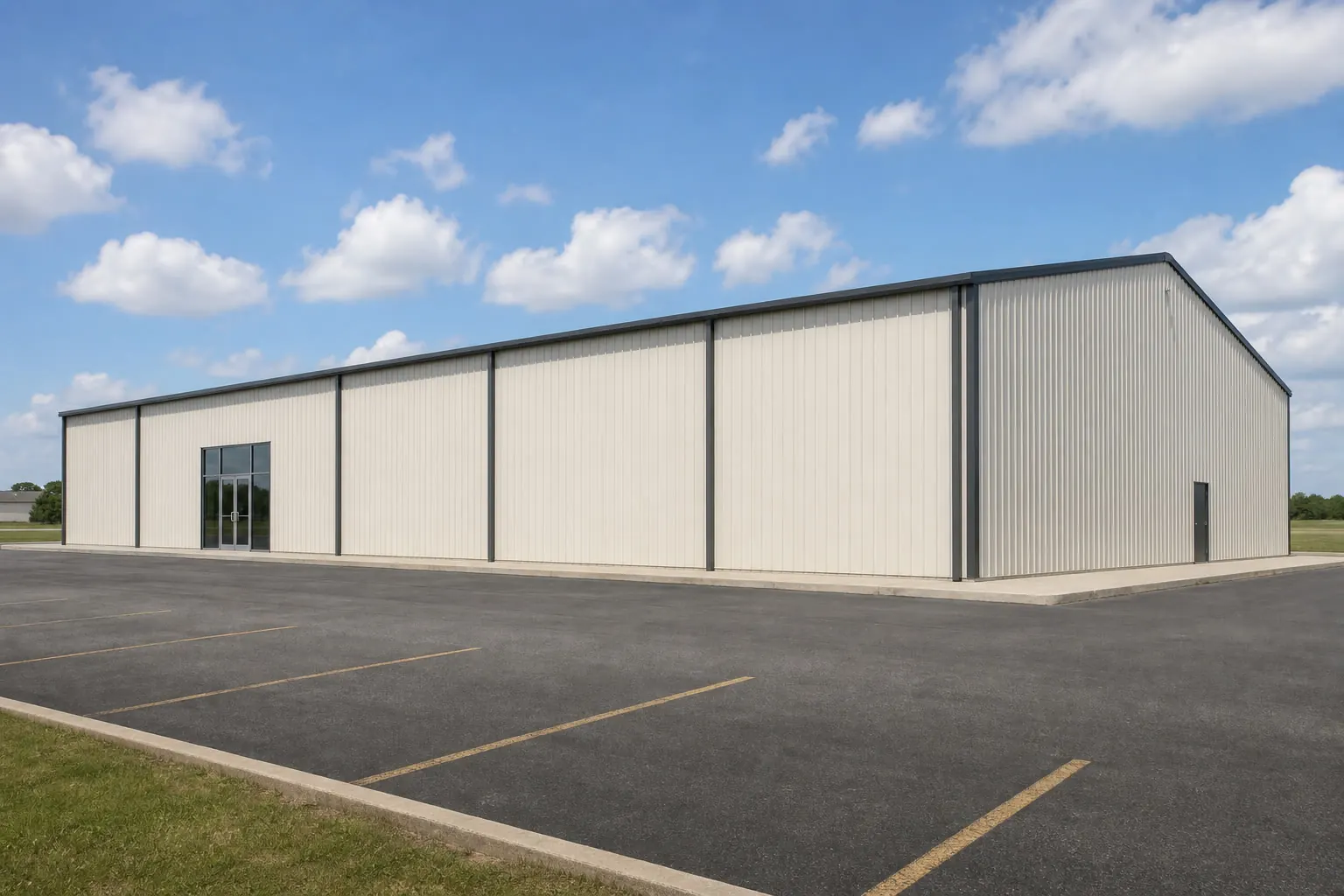
The intersection
What a Massachusetts site actually changes about an indoor sports facility
The building type does not change. What changes is how scarce the site is, what it competes against in the current construction mix, and how much winter weather the roof and entry have to absorb.
USDA's 2022 Census of Agriculture put Massachusetts's average farm at 66 acres, among the smallest averages in the country. That figure describes agricultural land specifically, but it is a reasonable proxy for how limited large, flat, buildable parcels are statewide at any price point. Operators used to shopping for a big-box-scale site on open land elsewhere will find that Massachusetts sites are more often commercial-zoned infill, former industrial parcels, or land adjacent to an existing recreation complex — sites that reward a clear-span structure precisely because interior column-free space lets the building make the most of an irregular or constrained footprint.
The second change is what the project competes against in current construction. The U.S. Census Bureau's Building Permits Survey shows Massachusetts builders were authorized for 14,338 new privately-owned housing units in 2024, with only 5,626 single-unit structures — well under half. This is a housing statistic, not a commercial-permitting rule, and this page makes no statewide permitting claim about sports facilities specifically. It does signal that a large standalone building is somewhat outside the dominant new-construction pattern in the state right now, which is worth raising with your local planning office alongside your specific use and site.
The third change is climate, and here it cuts both ways. Boston Logan's NOAA normals show about 43.6 inches of annual precipitation and roughly 49 inches of average annual snow, with January and February each averaging near 14 inches. That weather pattern is exactly why indoor sports demand exists in the first place — outdoor fields and courts are unusable for stretches of the winter — but it also means the building's own roof drainage, entry vestibule and parking-lot snow storage need real planning rather than an afterthought.
Site context
How Massachusetts terrain changes the build site
The USGS-documented upland/coastal split shapes grading, parking layout and stormwater planning even for an identical building footprint.
Western crystalline uplands (Berkshires and hill country)
Rolling to steep terrain shaped by glacial activity. Parking-lot grading and stormwater retention typically need more design attention than on flatter ground.
Central till plains and river valleys
Mixed terrain between the uplands and the coast, generally with moderate grading needs and good access to existing town infrastructure.
Southeastern Coastal Plain
Flatter, sandier ground described by USGS as Coastal Plain sediment. Easier grading in many cases, but water table depth and stormwater discharge are worth confirming, especially near the coast.
Exposure
Roughly 49 inches of annual snow shapes roof and entry planning
Because winter is exactly when demand for indoor sports peaks, the same weather that drives customers indoors also has to be managed at the building itself.
NOAA's 1991-2020 climate normals for Boston Logan show about 43.6 inches of annual precipitation and roughly 49 inches of average annual snowfall, with January and February each averaging close to 14 inches. This is a station normal, not a design value, and nothing here converts it into a load or a code requirement — that conversation belongs with your engineer and local building department. As an operational planning prompt, it means clear-span roof drainage, a covered or vestibule-style entry that keeps courts dry underfoot, and a plowed-snow storage area that does not eat into parking capacity are worth resolving before the plan is finalized.
A facility that is busiest precisely when the parking lot is hardest to keep clear needs its site plan to reflect that: entry sightlines, lot lighting for early darkness, and where snow gets pushed relative to the main entrance are the details operators tend to revisit if they are skipped at the planning stage.
- Vestibule and entry design
- A covered transition keeps court and floor surfaces dry and reduces slip risk during peak winter traffic.
- Parking-lot snow storage
- Reserve capacity that does not shrink usable parking during your busiest season.
- Roof drainage and gutter scope
- Decide up front rather than retrofitting after paving and striping are finished.
Get Massachusetts indoor sports facility quotes
Tell us your parcel size, activity mix, and whether your site is upland or coastal. We route it with the Massachusetts and indoor sports context already attached.
Configuration
How Massachusetts indoor sports programs typically split
On a scarce, often constrained parcel, the configuration question is about which activities fit under one clear-span roof, not about maximizing acreage.
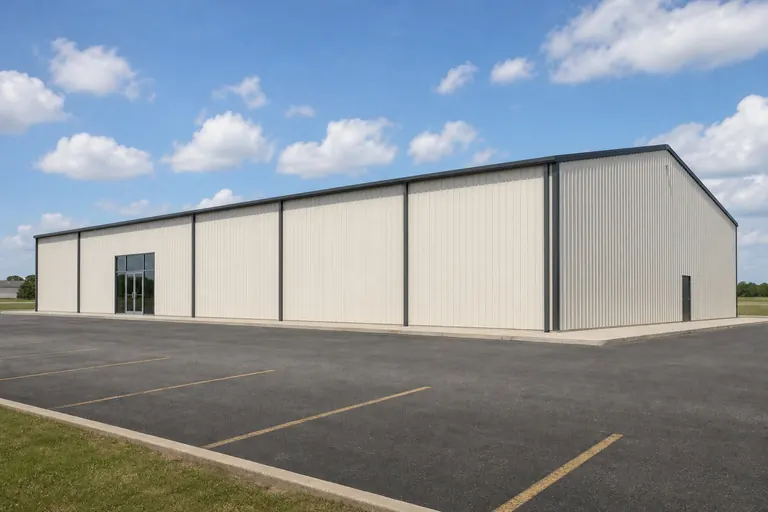 Multi-sport turf field houseA single large clear-span bay hosting soccer, lacrosse or baseball training, sized to fit an irregular commercial or institutional parcel.Court-based facilityBasketball or volleyball courts laid out under one roof, often paired with mezzanine seating or training space.Batting cage or golf training centerA narrower, higher-bay configuration suited to a smaller infill parcel where a full field house would not fit.
Example Configuration — for planning purposes only.
Footprint
Sizes that suit a constrained Massachusetts commercial parcel
Because large open parcels are scarce statewide, Massachusetts indoor sports projects tend to fit tightly onto commercial or institutional infill sites rather than sprawl across open acreage.
80′ × 150′
12,000 sq ft
A single multi-purpose court or turf bay sized for a compact commercial parcel.
100′ × 200′
20,000 sq ft
Room for a full-size turf field or multiple courts under one roof.
120′ × 240′
28,800 sq ft
A larger multi-sport facility where the site genuinely supports it.
150′ × 300′
45,000 sq ft
A regional-scale facility footprint, typically on a former industrial or institutional parcel.
Example Configuration — for planning purposes only.
Footprint pages carry the room-by-room layout detail; this page only explains why the Massachusetts brief tends to land in this range.
Preparation
Before you request a Massachusetts quote
These items address frequent source of re-quoting on an indoor sports project here.
Step 1
Confirm commercial zoning and occupancy classification with your local building department
A large standalone assembly-use building is worth flagging early given the current statewide construction mix.
Step 2
Describe your terrain, not just your town
Whether your parcel sits in the western uplands or on Coastal Plain ground changes grading and stormwater planning more than the address does.
Step 3
Decide activity mix before the quote
Turf field, courts, and batting cages each drive clear height and bay spacing differently.
Step 4
Plan winter entry and parking up front
Vestibule design, snow storage and lot capacity are cheaper to decide now than to retrofit after paving.
Questions
Massachusetts indoor sports facility questions
Honest state-level answers, with anything jurisdiction-specific routed to the office that actually owns it.
Zoning and occupancy classification are set locally, parcel by parcel, and Massachusetts does not have a single statewide answer we can state here. Your local building and planning department is the right first call, especially since a large standalone building sits outside the dominant multi-unit pattern in current statewide construction data.
There is no official minimum, but Massachusetts's 66-acre average farm size — among the smallest in the country — signals that large open parcels are scarce statewide, so most projects fit onto commercial or institutional infill sites rather than open acreage.
We do not state design loads on this page — that is an engineering and code question for your local building department. What we can say is that Boston Logan's climate normals show roughly 49 inches of average annual snowfall, a useful planning prompt for drainage, gutter scope and entry design, not a specification.
We can point to the climate pattern — Boston Logan averages roughly 49 inches of snow a year, with January and February each near 14 inches — as context for why outdoor fields and courts see reduced use for a real part of the year. We do not publish market-size or demand figures, since that is outside what this page can responsibly claim.
We do not publish state-level prices, because a credible number depends on span, clear height, site work and current material costs. Our cost pages explain what drives the number; a quote reflects your specific project.
Sources for the Massachusetts facts on this page
This page states no code requirement, wind speed, snow load, permit rule, price or supplier claim. The state-specific facts it does use are listed with their publisher below.
Massachusetts had 464,451 acres of land in farms in 2022, an average farm size of 66 acres -- among the smallest average farm sizes in the country.
USDA NASS · 2022 · Tier 1
https://www.nass.usda.gov/Publications/AgCensus/2022/Full_Report/Volume_1,_Chapter_1_State_Level/Massachusetts/st25_1_001_001.pdfBuilders in Massachusetts were authorized to construct 14,338 new privately-owned housing units in 2024, of which 5,626 were single-unit structures.
U.S. Census Bureau · 2024 (final annual estimates) · Tier 1
https://www.census.gov/construction/bps/stateannual.htmlBoston Logan Airport's NOAA 1991-2020 climate normals show total annual precipitation of about 43.6 inches and average annual snowfall of about 49 inches.
NOAA National Centers for Environmental Information (NCEI) · 1991-2020 · Tier 1
https://www.ncei.noaa.gov/access/services/data/v1?dataset=normals-monthly-1991-2020&format=pdf&stations=USW00014739The Boston Logan NOAA 1991-2020 normals show winter monthly snowfall means around 14 inches in both January and February.
NOAA National Centers for Environmental Information (NCEI) · 1991-2020 · Tier 1
https://www.ncei.noaa.gov/access/services/data/v1?dataset=normals-monthly-1991-2020&format=pdf&stations=USW00014739USGS Geomorphology of New England (Professional Paper 1208) describes Massachusetts as spanning crystalline upland terrain (including the Berkshires in the west) and Coastal Plain sediments along the southeast, reflecting a mix of glacially shaped hill country and low coastal terrain.
U.S. Geological Survey · 1982 · Tier 1
https://pubs.usgs.gov/pp/1208/report.pdf