Hobby shop · CA
Hobby Shops in California
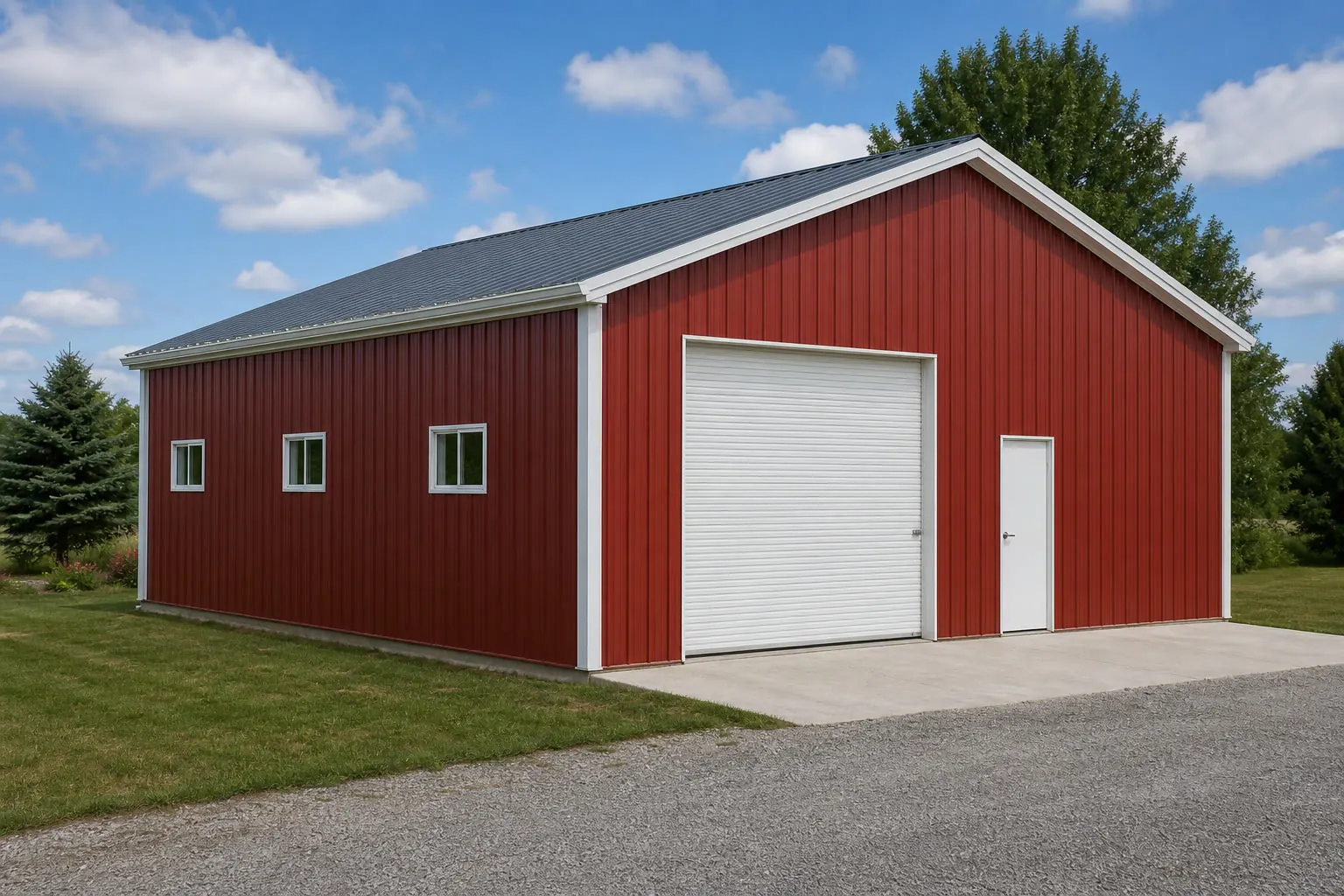
A California hobby shop is usually a heated, insulated, personal-use space — a workbench, a small fabrication bay, a project room tied to a house — and two statewide facts shape how that gets sited and built. First, California's own state climatologist describes the state as having a Mediterranean climate pattern overall, but one so regionally split that north coast areas average over 100 inches of annual precipitation while southeastern deserts see under 5 inches; there is no single statewide design condition to plan around. Second, CAL FIRE is required by state law to classify land into Fire Hazard Severity Zones based on fuel, slope, weather and wind, which means a hobby shop's access, clearance and construction detailing can depend on a zone classification specific to the parcel, not a generic assumption about California weather.
The intersection
What a California site actually changes about a hobby shop
Regional climate variance and statutory fire-zone classification are the two real inputs.
A hobby shop is different from most steel buildings on a California property: it is usually heated or at least insulated, and occupied for hours at a stretch for woodworking, fabrication, restoration or a small side project. That means the building has to hold interior comfort against whichever regional climate the parcel actually sits in. The state's own climatologist describes California as having a Mediterranean pattern overall — wet season roughly October through April, dry May through September — but one so strongly modulated by mountains and the Pacific that north coast areas can see over 100 inches of annual precipitation while southeastern desert parcels see under 5 inches. A hobby shop planned for a Central Valley lot and one planned for a north coast property are not answering to the same weather, even though both are 'in California.'
Layered on top of climate variance is a fire-safety question specific to California: CAL FIRE, under the state Office of the State Fire Marshal, is required by Public Resources Code and Government Code to classify land into Fire Hazard Severity Zones based on fuel loading, slope, fire weather and wind. This page does not assign any specific zone to any location — that requires checking the current CAL FIRE maps for the parcel — but an occupied, heated hobby shop in a wildland-adjacent zone can carry access, clearance and ignition-resistant construction expectations that a shop in a dense suburban tract never encounters.
Site context
How the hobby-shop brief differs across California
Province, climate band and fire-hazard zone all shape the siting and insulation conversation.
Central Valley
Flatter grading and a drier summer climate, per the state climatologist's regional description, but summer heat still shapes ventilation and shading decisions for an occupied shop.
North coast and Sierra Nevada
Regional precipitation running far above the state's dry-region figures, per the state climatologist's narrative, makes roof drainage and moisture detailing a bigger factor than a statewide insulation code alone would suggest.
Wildland-adjacent and desert parcels
Where CAL FIRE's Fire Hazard Severity Zone mapping applies, or where the geomorphic province is a desert basin, confirming zone status and access requirements with the local building department comes before finalizing a hobby shop plan.
Regulatory route
Fire zone status and Title 24 enforcement for an occupied shop
A statutory statewide mapping program plus a statewide code framework, both enforced through local review.
This page does not state which Fire Hazard Severity Zone applies to any given parcel, nor does it assert an adopted code edition or permit threshold — both come from CAL FIRE's current maps and your local building department, and both are the kind of parcel-specific detail no statewide page can responsibly assign. What the statutory program usefully flags is that an occupied hobby shop, unlike a bare storage shed, is worth checking against zone status early, since access width, defensible space and construction detailing can all be affected in a mapped zone.
Title 24 of the California Code of Regulations sets the statewide building standards framework administered by the California Building Standards Commission, with the current triennial edition effective January 1, 2026. Local building departments enforce that framework with their own review process and any local amendments, so a hobby shop's insulation package, electrical layout and occupancy classification should be confirmed with the jurisdiction covering the parcel, not assumed from the statewide framework alone.
- Check CAL FIRE zone status
- Confirm whether the parcel falls in a mapped Fire Hazard Severity Zone before finalizing siting or access.
- Confirm the local Title 24 review process
- Ask the building department how the current triennial edition is enforced and amended locally.
- Match insulation to the regional climate band
- A north coast site and a Central Valley site call for different moisture and heat strategies.
Get California hobby shop quotes
Tell us your region, fire-zone status if known, and rough footprint. We route it with the California and hobby-shop context already attached.
Configuration
What California hobby shops are usually asked to do
Occupied, heated use drives the program more than raw footprint.
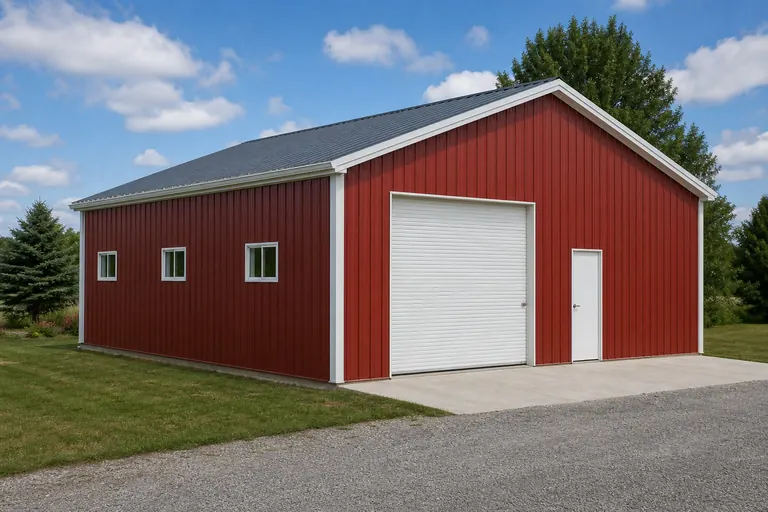 Woodworking and fabricationDust collection, ventilation and stable temperature matter more than sheer square footage.
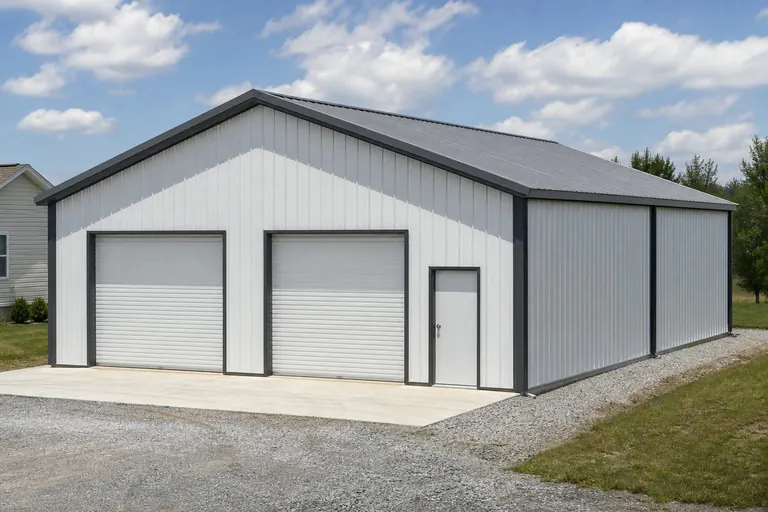 Automotive and restoration projectsInsulated space with a durable floor and reliable ventilation for solvent or exhaust fumes.Home-based studio or side businessA small, insulated, heated footprint used for production or storage tied to work run from the property.
Example Configuration — for planning purposes only.
Footprint
Sizes that suit a California hobby shop
Insulated, occupied space tends to be sized around the activity and lot constraints, not maximized like unheated storage.
20′ × 24′
480 sq ft
A compact single-bay shop for one project vehicle or a modest workbench setup.
24′ × 36′
864 sq ft
The common choice adding dedicated bench, tool and material storage space.
30′ × 40′
1,200 sq ft
Where the shop also needs to support a side business or larger equipment, lot and zone permitting.
Example Configuration — for planning purposes only.
Footprint pages carry layout and door detail; this page explains why California briefs weigh zone and regional climate before maximizing size.
Preparation
Before you request a California hobby-shop quote
Four things resolved in advance make quotes comparable.
Step 1
Check your parcel's CAL FIRE zone status
Fire Hazard Severity Zone classification can affect access, clearance and construction detailing; confirm it before planning.
Step 2
Contact your local building department
Title 24 enforcement, permit thresholds and local amendments are set locally; ask before finalizing the plan.
Step 3
Name your regional climate band
Tell your builder whether the site is north coast, Central Valley, desert or mountain, since insulation and drainage needs differ sharply.
Step 4
List every activity the shop supports
Dust, fumes, or heat sources each change ventilation requirements a generic quote will miss.
Step 5
Review county-level hazard exposure
FEMA's National Risk Index scores 18 natural hazard types at the county level; a quick look at your county's profile is worth doing before you finalize the plan.
Questions
California hobby shop questions
Questions answered honestly at state level; the rest routed to whoever owns them.
Permit requirements depend on your jurisdiction, parcel and use, including whether the building is heated and occupied. Your local building department is the only reliable source, since Title 24 is enforced with local amendments.
That depends on whether CAL FIRE's mapping places your parcel in a designated zone. We do not assign zones here; check current CAL FIRE maps and your local building department for parcel-specific requirements.
We do not state insulation code minimums here; they vary by jurisdiction and climate zone under Title 24. California's regionally split climate, per the state climatologist, does make insulation and ventilation a site-specific decision rather than a statewide default.
Yes in practice: the state climatologist's narrative describes north coast precipitation well above 100 inches a year against desert conditions under 5 inches elsewhere, so drainage and moisture detailing are worth discussing regionally with a local builder.
We do not publish state-level prices, since insulation package, fire-zone requirements and site work all drive the number. Our cost pages explain what drives cost; a quote covers your building.
Sources for the California facts on this page
This page states no code requirement, wind speed, snow load, permit rule, price or supplier claim. The state-specific facts it does use are listed with their publisher below.
The California State Climatologist describes California as having a Mediterranean climate overall, with precipitation concentrated October through April and dry conditions May through September, strongly modulated by mountains and the Pacific Ocean, with north coast areas averaging over 100 inches of annual precipitation and southeastern deserts under 5 inches.
California Department of Water Resources / Office of the State Climatologist (republished via CoCoRaHS) · n/a (narrative climatology) · Tier 2
https://media.cocorahs.org/docs/ClimateSum_CA.pdfCAL FIRE, under the state Office of the State Fire Marshal, is required by law (Public Resources Code 4202 / Government Code 51178) to classify lands into Fire Hazard Severity Zones based on fuel loading, slope, fire weather, and wind, without this evidence assigning any specific zone.
California Department of Forestry and Fire Protection (CAL FIRE) / Office of the State Fire Marshal · current program; 2024 FHSZ maps referenced · Tier 2
https://osfm.fire.ca.gov/what-we-do/community-wildfire-preparedness-and-mitigation/fire-hazard-severity-zonesThe California Building Standards Commission (CBSC) administers the California Building Standards Code, Title 24 of the California Code of Regulations, as the state's building standards framework.
California Department of General Services, Building Standards Commission (CBSC) · 2025 Triennial Edition, effective Jan 1, 2026 · Tier 2
https://www.dgs.ca.gov/bsc/The California Geological Survey (state geological survey) divides the state into 11 recognized geomorphic provinces, including the Coast Ranges, Central Valley, Sierra Nevada, Basin and Range, Mojave Desert, Colorado Desert, Transverse Ranges, Peninsular Ranges, Klamath Mountains, Cascade Range, and Modoc Plateau.
California Department of Conservation, California Geological Survey · 2002 (revised) · Tier 2
https://www.conservation.ca.gov/cgs/documents/publications/cgs-notes/CGS-Note-36.pdfFEMA's National Risk Index scores U.S. communities, including California counties, across 18 defined natural hazard types.
FEMA · current dataset · Tier 1
https://www.fema.gov/about/openfema/data-sets/national-risk-index-dataNOAA's NCEI State Climate Summary reports temperatures in California have risen almost 3°F since the beginning of the 20th century, with the six warmest years on record occurring since 2014.
NOAA National Centers for Environmental Information · 2022 report · Tier 1
https://statesummaries.ncics.org/downloads/California-StateClimateSummary2022.pdf