
Garden shed · WI
Garden Sheds in Wisconsin
A Wisconsin garden shed is usually small, unheated and sited close to a garden bed, patio or back lot line, but it still sits inside a climate the state's own climatologists refuse to describe with a single statewide number. The Wisconsin State Climatology Office divides the state into distinct climate divisions, and statewide averages of roughly 34.9 inches of annual precipitation and 51 inches of snowfall blend real north-south and lake-effect differences across the state's 54,157.8 square miles. For a small structure with a simple footing and no heat source, the honest planning questions are siting, drainage and seasonal access — not structural loads or price.
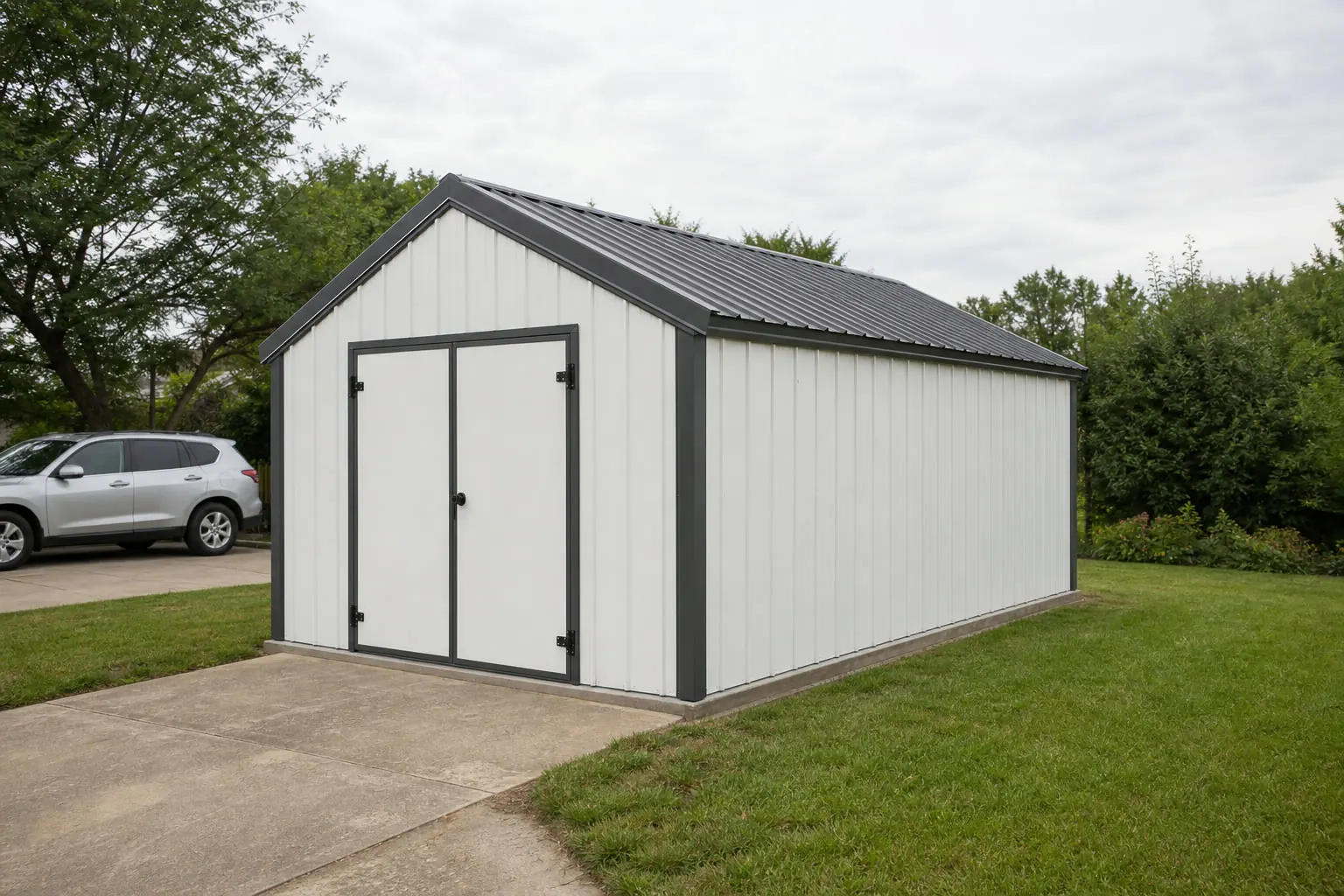
The intersection
What a Wisconsin site actually changes about a garden shed
Regional drainage, snow and seasonal access are the real inputs for a small building.
A garden shed is a small, usually unheated structure, but that does not mean the site is generic. The Wisconsin State Climatology Office publishes distinct regional climate divisions rather than a single statewide figure, reflecting real north-south and lake-effect variation across the state. For siting decisions — which side of the yard drains best, where snow will pile against a wall, whether spring thaw leaves a low corner wet longer than the rest of the lot — knowing which climate division your property sits in is more useful than any statewide average.
NOAA's narrative description of Wisconsin's climate calls out a continental pattern: cold, snowy winters and warm, humid summers, moderated in places by the Great Lakes. That seasonal swing is exactly why a garden shed's footing, door threshold height and roof runoff path deserve a few minutes of planning rather than being an afterthought — the same building has to shed several feet of snow in winter and handle heavy spring rain runoff a few months later.
Site context
How siting advice differs across Wisconsin
Regional climate divisions and lake proximity both affect where and how a shed sits on the lot.
Northern interior
Colder, snowier divisional normals; plan for a taller foundation or threshold and a clear path for snow to shed away from the door.
Southern and central Wisconsin
More moderate divisional normals, but spring thaw drainage around the footing is still worth planning for on clay-heavy soils common in the region.
Lake Michigan corridor
Lake-effect snow and moisture show up in the divisional data; a local contractor's read on your specific exposure beats a statewide assumption near the shoreline.
Siting and drainage
Drainage and snow access for a small outdoor building
Roughly 34.9 inches of statewide annual precipitation and 51 inches of snowfall make grading and access path planning worthwhile even for a small shed.
This page does not state a footing depth or a structural requirement — those come from your local building department and vary by jurisdiction, soil and shed size. What the statewide precipitation and snowfall normals usefully flag is that a garden shed benefits from being sited on slightly higher ground with a clear runoff path, rather than in a low corner of the yard that collects both spring rain and drifted snow.
Access matters as much as drainage. A shed used to store garden tools in early spring, before snow has fully melted, is more useful if the door faces away from prevailing snow drift and if a simple gravel or paver path connects it to the garden bed it serves.
- Site on higher, well-drained ground
- Avoid low corners that collect both rain and drifted snow.
- Face the door away from prevailing drift
- Reduces shoveling and keeps early-spring access easier.
- Plan a simple access path
- Gravel or pavers connecting the shed to the garden bed pay off across a wet spring.
Configuration
What Wisconsin garden sheds are usually asked to do
Seasonal tool and equipment storage drives most Wisconsin garden-shed briefs.
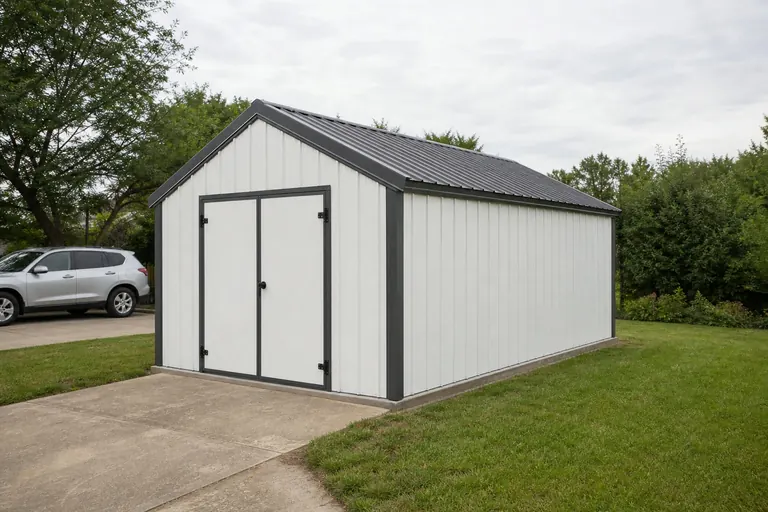 Garden tool and supply storageHand tools, soil amendments and seasonal supplies kept dry and close to the garden bed.Small lawn equipment storageA mower, trimmer and hand tools sheltered from winter weather between seasons.Potting and light workspaceA small bench for potting and seed-starting alongside tool storage.
Example Configuration — for planning purposes only.
Get Wisconsin garden shed quotes
Tell us your rough footprint and where on the lot you're planning to site it. We route it with the Wisconsin and garden-shed context already attached.
Footprint
Sizes that suit a Wisconsin garden shed
Most Wisconsin garden-shed briefs stay compact, sized to tools and seasonal storage rather than year-round occupancy.
8′ × 10′
80 sq ft
A compact shed for hand tools and basic garden supplies.
10′ × 12′
120 sq ft
The common choice adding room for a mower and seasonal equipment.
12′ × 16′
192 sq ft
Where the shed also supports a small potting or workbench area.
Example Configuration — for planning purposes only.
Footprint pages carry layout and door detail; this page explains why Wisconsin briefs stay compact.
Seasonal use
Why a Wisconsin garden shed is a two-season building
NOAA's continental-climate narrative for Wisconsin describes cold, snowy winters bracketing warm summers, which means a shed built for one season needs a plan for the other.
A shed stocked for spring planting sits mostly idle by December, then needs to be reopened while snow may still be on the ground; a door that swings out rather than in, or a threshold set slightly above grade, keeps that reopening from being a shoveling project every year. Because the Wisconsin State Climatology Office's divisional data shows real north-south differences in how long snow cover persists, a northern-division buyer has a longer stretch of the year where door access matters than a southern-division buyer does.
The same seasonal swing argues for a simple ventilation gap or gable vent even in an unheated shed: humid spring air trapped in a sealed box that spent winter cold can condense on tool surfaces the first warm week, a minor but avoidable issue addressed at build time rather than after the fact.
Preparation
Before you request a Wisconsin garden-shed quote
Four things resolved in advance make quotes comparable.
- Contact your local building departmentSetback rules, permit thresholds and footing requirements are set locally; ask before finalizing placement.
- Check your county's hazard profileFEMA's National Risk Index scores 18 natural hazards at the county level for all 72 Wisconsin counties; a quick look is worth doing before you finalize the plan.
- Pick the highest, best-drained spot availableAvoids standing water from spring thaw and heavy rain.
- Decide the door orientationFacing away from prevailing snow drift keeps winter and early-spring access easier.
Questions
Wisconsin garden shed questions
Questions answered honestly at state level; the rest routed to whoever owns them.
Permit thresholds and setback rules depend on your jurisdiction and the shed's size and placement. Your local building department is the only reliable source.
Higher, well-drained ground with the door facing away from prevailing winter snow drift is a good starting point; your local climate division and lot layout should guide the final placement.
We do not state snow load values. Statewide snowfall normals run near 51 inches annually, but any structural requirement comes from your local building department.
Footing and foundation requirements vary by jurisdiction, shed size and local frost conditions; ask your local building department before placement.
We do not publish state-level prices, since size, materials and site prep drive the number. Our cost pages explain what drives cost; a quote covers your building.
Sources for the Wisconsin facts on this page
This page states no code requirement, wind speed, snow load, permit rule, price or supplier claim. The state-specific facts it does use are listed with their publisher below.
The Wisconsin State Climatology Office divides the state into distinct climate divisions and publishes divisional (regional) climate normals for temperature, precipitation and snowfall separately from statewide figures, reflecting the state's north-south and lake-effect climate variation.
Wisconsin State Climatology Office (UW-Madison) · 1991-2020 · Tier 2
https://climatology.nelson.wisc.edu/wisconsin-climate-divisions/climate-normals/Wisconsin's statewide 1991-2020 annual normal precipitation is about 34.9 inches with roughly 51 inches of annual snowfall, per the Wisconsin State Climatology Office's statewide averages.
Wisconsin State Climatology Office (UW-Madison) · 1991-2020 · Tier 2
https://climatology.nelson.wisc.edu/wisconsin-historic-climate-data/statewide-climate-normals/Wisconsin's statewide 1991-2020 annual normal precipitation is about 34.9 inches with roughly 51 inches of annual snowfall, per the Wisconsin State Climatology Office's statewide averages.
Wisconsin State Climatology Office (UW-Madison) · 1991-2020 · Tier 2
https://climatology.nelson.wisc.edu/wisconsin-historic-climate-data/statewide-climate-normals/Wisconsin's total land area was measured at 54,157.8 square miles as of the 2010 Census, ranking 25th among states.
U.S. Census Bureau · 2010 Census · Tier 1
https://www.census.gov/geographies/reference-files/2010/geo/state-local-geo-guides-2010/wisconsin.htmlNOAA NCEI publishes a narrative 'Climate of Wisconsin' describing the state's continental climate with cold, snowy winters influenced by the Great Lakes and Canadian air masses.
NOAA National Centers for Environmental Information (NCEI) · Historical narrative (NCEI climate normals series) · Tier 1
https://www.ncei.noaa.gov/data/climate-normals-deprecated/access/clim60/states/Clim_WI_01.pdfFEMA's National Risk Index dataset defines and scores 18 natural hazard types (avalanche, coastal flooding, cold wave, drought, earthquake, hail, heat wave, hurricane, ice storm, inland flooding, landslide, lightning, strong wind, tornado, tsunami, volcanic activity, wildfire, winter weather) at the county level nationwide, including all 72 Wisconsin counties.
Federal Emergency Management Agency (FEMA) · Current NRI release · Tier 1
https://www.fema.gov/about/openfema/data-sets/national-risk-index-data