
Hobby shop · WI
Hobby Shops in Wisconsin
A Wisconsin hobby shop is usually a heated, insulated, year-round space — a woodworking bay, a project garage, a workshop for a side business — and that use case runs straight into the state's climate reality. The Wisconsin State Climatology Office does not publish one statewide design condition; it divides the state into distinct climate divisions with separate normals, because a shop near the Lake Michigan corridor and one in the northern interior are planning for different winters. Add roughly 51 inches of average annual snowfall and 34.9 inches of precipitation statewide, and the honest planning conversation for a hobby shop here is insulation, heat source and roof geometry for your specific region — not a single number that applies everywhere in the state's 54,157.8 square miles.
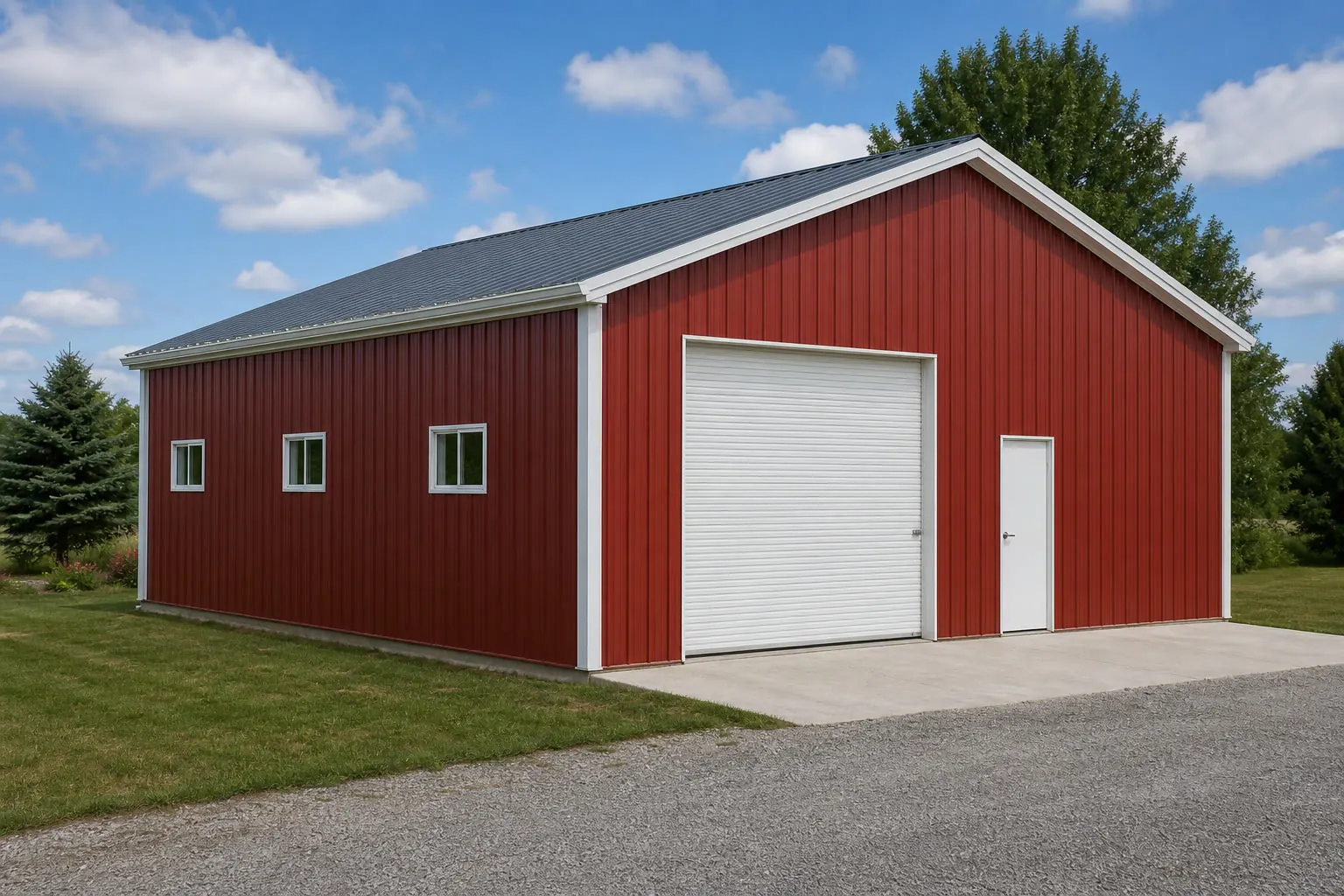
The intersection
What a Wisconsin site actually changes about a hobby shop
Regional climate variance and a heated interior are the two real inputs.
A hobby shop is different from most steel buildings on a Wisconsin property: it is usually heated, insulated and occupied for hours at a stretch, whether the use is woodworking, an automotive project, or a small side business. That means the building has to hold interior comfort against a genuinely variable exterior climate. The Wisconsin State Climatology Office does not treat the state as one climate zone — it publishes separate divisional normals for temperature, precipitation and snowfall, reflecting real north-south and lake-effect differences. A shop planned for a northern interior parcel and one planned near the Lake Michigan shoreline are not facing the same winter, even though both are 'in Wisconsin.'
The practical consequence is that insulation package, heat source sizing and vapor-barrier detailing should be discussed with a local builder who knows which climate division your parcel falls in, rather than assumed from a single statewide figure. NOAA's own narrative description of Wisconsin calls out a continental climate with cold, snowy winters shaped by both Great Lakes proximity and Canadian air masses — useful context for why a hobby shop here is rarely a bare-shell building the way it might be in a milder region.
Site context
How the hobby-shop brief differs across Wisconsin
Climate division and lake proximity both shape the insulation and heating conversation.
Northern interior
Divisional normals run colder and snowier here; a hobby shop's heat source and insulation R-value are worth sizing to local rather than statewide conditions.
Southern and central Wisconsin
More moderate divisional normals, but still a full four-season climate; ice-damming at eaves remains a heated-shop concern worth raising with your builder.
Lake Michigan corridor
Lake-effect moderation and lake-effect snowfall both show up in the divisional data; a local contractor's read on your specific shoreline exposure is worth more than a statewide assumption.
Comfort and exposure
Insulation, heat and roof geometry for a year-round shop
Roughly 51 inches of average annual snowfall statewide makes ice-damming and roof geometry a specific concern for a heated building.
When a heated, insulated hobby shop sits under a snow-loaded roof, interior warmth can melt the underside of accumulated snow even while outside temperatures stay below freezing, refreezing at the cold eave and forming ice dams. That is a different risk profile than an unheated pole barn, and it is a reason ventilation, insulation continuity and eave detailing deserve specific attention in a Wisconsin hobby shop, beyond whatever your local building department requires structurally.
This page does not state a design snow load or an insulation code minimum — both come from your local building department and vary by jurisdiction and use. What the statewide snowfall and precipitation normals usefully flag is that roof geometry, gutter placement and grading are worth resolving with your builder alongside the insulation package, not as an afterthought once the shell is up.
- Continuous insulation and vapor barrier
- Ask your builder how the package is detailed for your specific climate division.
- Ice-dam-aware eave and ventilation design
- A heated interior under a snow-loaded roof needs this addressed, not assumed.
- Heat source sizing
- Confirm sizing against your regional winter severity, not a single statewide figure.
Get Wisconsin hobby shop quotes
Tell us your climate region, planned heat source and rough footprint. We route it with the Wisconsin and hobby-shop context already attached.
Configuration
What Wisconsin hobby shops are usually asked to do
Year-round comfort drives the program more than raw footprint.
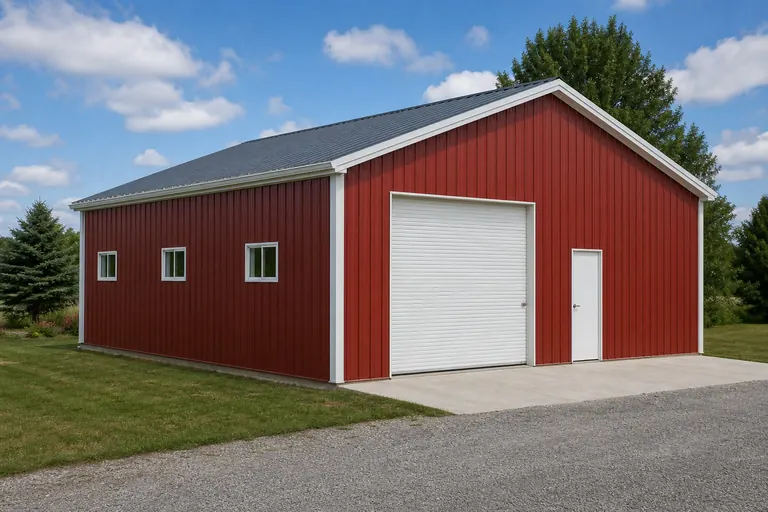 Woodworking and fabricationDust collection, ventilation and stable heat matter more than sheer square footage.
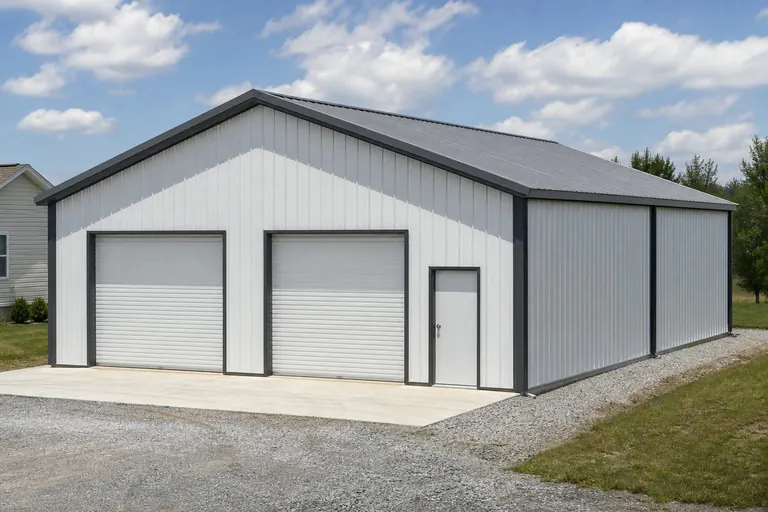 Automotive and small-engine projectsInsulated space with a durable floor and reliable winter heat for project vehicles.Home-based side businessA small, insulated, heated footprint used for production or storage tied to a business run from the property.
Example Configuration — for planning purposes only.
Footprint
Sizes that suit a Wisconsin hobby shop
Insulated, heated space tends to be sized around the activity, not maximized like unheated storage.
20′ × 24′
480 sq ft
A compact single-bay shop for one project vehicle or a modest workbench setup.
24′ × 36′
864 sq ft
The common choice adding dedicated bench, tool and material storage space.
30′ × 40′
1,200 sq ft
Where the shop also needs to support a side business or larger equipment.
Example Configuration — for planning purposes only.
Footprint pages carry layout and door detail; this page explains why Wisconsin briefs prioritize comfort over maximum size.
Preparation
Before you request a Wisconsin hobby-shop quote
Four things resolved in advance make quotes comparable.
Step 1
Contact your local building department
Insulation code minimums, snow load and permit thresholds are set locally; ask before finalizing the plan.
Step 2
Name your climate division
Tell your builder whether the site is northern interior, southern/central, or the Lake Michigan corridor.
Step 3
Decide your heat source early
Electric, wood, or forced-air heat sizing changes insulation and ventilation planning.
Step 4
List every activity the shop supports
Dust, fumes, or vehicle exhaust each change ventilation requirements a generic quote will miss.
Step 5
Check county-level hazard exposure
FEMA's National Risk Index scores 18 natural hazards at the county level for all 72 Wisconsin counties; a quick look at your county's profile is worth doing before you finalize the plan.
Questions
Wisconsin hobby shop questions
Questions answered honestly at state level; the rest routed to whoever owns them.
Permit requirements depend on your jurisdiction, parcel and use, including whether the building is heated and occupied. Your local building department is the only reliable source.
We do not state insulation code minimums here; they vary by jurisdiction. Wisconsin's continental climate, per NOAA, does make a continuous insulation and vapor-barrier package worth confirming with your builder.
It is worth discussing ice-damming risk with your builder: a heated interior under a snow-loaded roof can melt and refreeze snow at the eaves differently than an unheated building. We do not state a design snow load; that comes from your local building department.
The state climatology office publishes separate divisional normals for temperature and snowfall, so heat sizing and insulation are worth discussing regionally with a local builder rather than assuming one statewide answer.
We do not publish state-level prices, since insulation package, heat source and site work all drive the number. Our cost pages explain what drives cost; a quote covers your building.
Sources for the Wisconsin facts on this page
This page states no code requirement, wind speed, snow load, permit rule, price or supplier claim. The state-specific facts it does use are listed with their publisher below.
The Wisconsin State Climatology Office divides the state into distinct climate divisions and publishes divisional (regional) climate normals for temperature, precipitation and snowfall separately from statewide figures, reflecting the state's north-south and lake-effect climate variation.
Wisconsin State Climatology Office (UW-Madison) · 1991-2020 · Tier 2
https://climatology.nelson.wisc.edu/wisconsin-climate-divisions/climate-normals/Wisconsin's statewide 1991-2020 annual normal precipitation is about 34.9 inches with roughly 51 inches of annual snowfall, per the Wisconsin State Climatology Office's statewide averages.
Wisconsin State Climatology Office (UW-Madison) · 1991-2020 · Tier 2
https://climatology.nelson.wisc.edu/wisconsin-historic-climate-data/statewide-climate-normals/Wisconsin's statewide 1991-2020 annual normal precipitation is about 34.9 inches with roughly 51 inches of annual snowfall, per the Wisconsin State Climatology Office's statewide averages.
Wisconsin State Climatology Office (UW-Madison) · 1991-2020 · Tier 2
https://climatology.nelson.wisc.edu/wisconsin-historic-climate-data/statewide-climate-normals/Wisconsin's total land area was measured at 54,157.8 square miles as of the 2010 Census, ranking 25th among states.
U.S. Census Bureau · 2010 Census · Tier 1
https://www.census.gov/geographies/reference-files/2010/geo/state-local-geo-guides-2010/wisconsin.htmlFEMA's National Risk Index dataset defines and scores 18 natural hazard types (avalanche, coastal flooding, cold wave, drought, earthquake, hail, heat wave, hurricane, ice storm, inland flooding, landslide, lightning, strong wind, tornado, tsunami, volcanic activity, wildfire, winter weather) at the county level nationwide, including all 72 Wisconsin counties.
Federal Emergency Management Agency (FEMA) · Current NRI release · Tier 1
https://www.fema.gov/about/openfema/data-sets/national-risk-index-dataNOAA NCEI publishes a narrative 'Climate of Wisconsin' describing the state's continental climate with cold, snowy winters influenced by the Great Lakes and Canadian air masses.
NOAA National Centers for Environmental Information (NCEI) · Historical narrative (NCEI climate normals series) · Tier 1
https://www.ncei.noaa.gov/data/climate-normals-deprecated/access/clim60/states/Clim_WI_01.pdf