
Workshop · MT
Workshops in Montana
A workshop in Montana is often the first building added to a parcel that is, by national standards, unusually large. USDA's 2022 Census of Agriculture works out to an average Montana farm of 2,374 acres, calculated from 57,601,320 acres spread across 24,266 farms, the largest average size covered in this evidence pack, even though that farm count is down 10% since 2017. On land at that scale, and on a state the Continental Divide splits into a mountainous west and a high-plains east, the practical questions a workshop buyer faces are about access distance, grading, and build-season timing, not about lot-line setbacks. A recent construction-market pullback — the U.S. Census Bureau recorded a 33.3% drop in authorized housing units statewide between 2022 and 2023 — adds a scheduling variable most workshop briefs elsewhere don't need to think about.
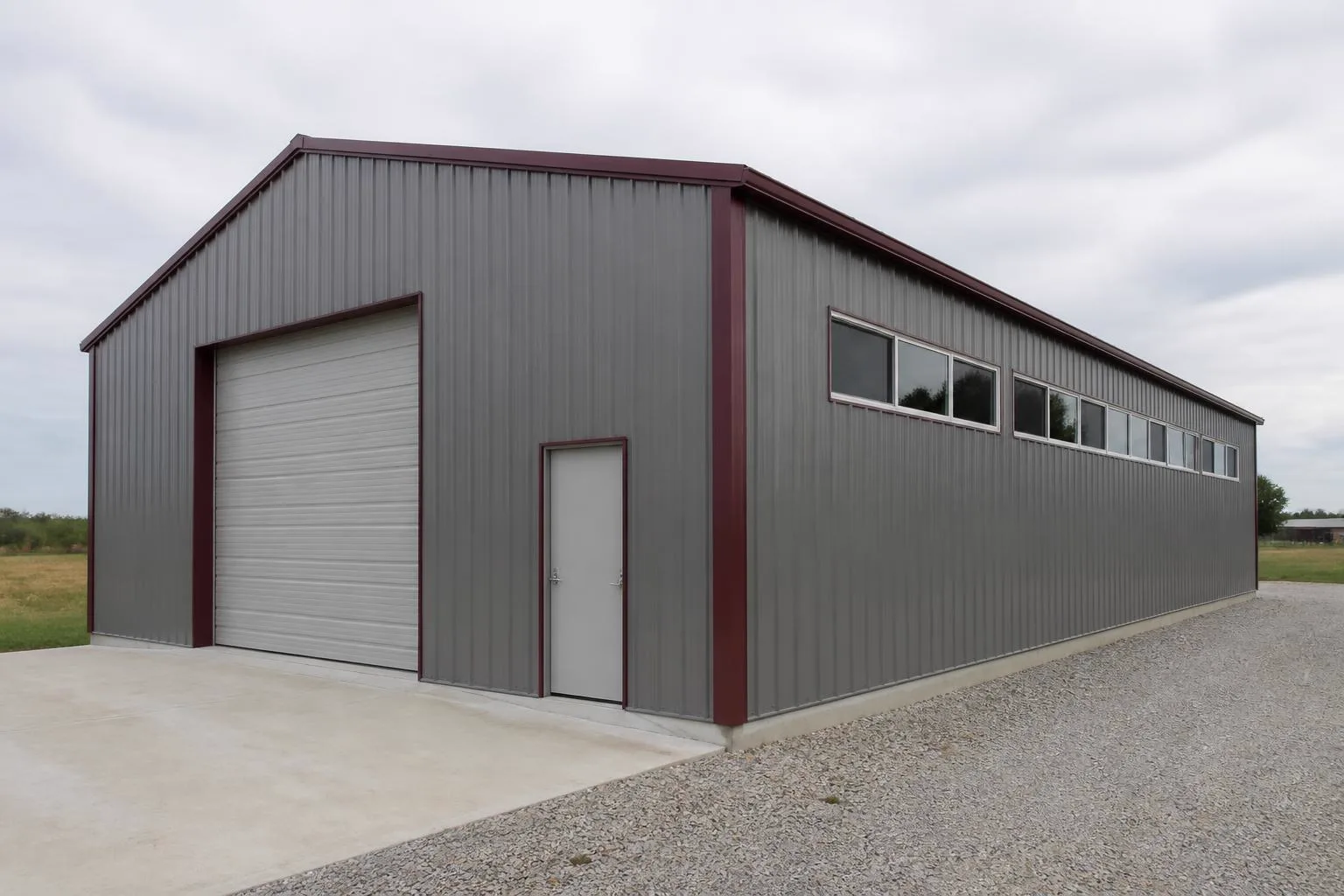
In Montana, Distance Sets the Workshop Brief Before Layout Does
A workshop brief written for a suburban lot assumes a short driveway and utilities already at the property line. That assumption rarely holds in Montana. USDA's 2022 Census of Agriculture puts the state's average farm at 2,374 acres — calculated from 57,601,320 acres across 24,266 farms, the largest average size covered in this evidence pack — even as that farm count fell 10% since 2017. On land at that scale, the access drive and utility run to the workshop are frequently the biggest variable in the project, more so than the building's own footprint.
Site Logic
Access Distance Is the First Cost Question
Before a slab is priced, a Montana workshop buyer needs a realistic number for how far the building sits from the road and from existing power.
On a parcel averaging 2,374 acres statewide, a workshop is often planned well back from the public road, which means the access drive itself — grading, base material, and length — deserves its own line-item estimate rather than being folded into a general site-work allowance. A workshop that can't be reached by a delivery truck or trailer in wet or snowy conditions has a design problem no amount of building-shell quality fixes.
The same logic applies to utility runs. Extending power, and water if the shop needs it, over a longer distance on a large Montana parcel is frequently a bigger cost driver than buyers expect walking in, and pricing that run before the building footprint is finalized avoids a late surprise in the budget. Trenching that run also has a seasonal window: frozen ground on either side of the Divide narrows the practical months for utility trenching well before it affects the building shell itself, so a buyer targeting a specific completion date should schedule the utility work first and treat the workshop erection as the step that follows it.
Montana's farm count fell 10% between 2017 and 2022 while the state's average parcel size stayed the largest in this evidence set, which points toward continued land consolidation. A workshop sited on a recently consolidated holding should be checked against any remaining agricultural use or easement on the property before the pad location is finalized.
Site Context
Two Different Montana Siting Contexts
The Continental Divide splits Montana into two genuinely different workshop-siting environments.
Mountainous West
Steeper terrain and a shorter practical build season at higher elevation; benching a level pad and grading a usable access drive typically drive more of the site cost here than the building itself.
High-Plains East
More open, generally flatter ground with longer sightlines and wind exposure; utility-run distance and access-road maintenance through winter are usually the bigger planning questions on this side.
Get Workshop Quotes for Your Montana Parcel
Share your county, which side of the Divide your site is on, and your access-drive distance, and suppliers can quote a foundation and envelope suited to your parcel rather than a generic shell.
Before You Order
Settle These Before Finalizing a Montana Workshop
Montana's land-use mix and consolidation trend mean many workshop parcels carry an agricultural history, but the building's classification follows the stated use, not the land's past.
Step 1
Write down the actual intended use
Hobby fabrication, personal vehicle work, a licensed trade business, or genuine ranch equipment service are different conversations with a local department; state the real use up front to avoid a reclassification issue later.
Step 2
Confirm which county department has jurisdiction
Montana permitting is administered locally. Identify the specific county or city office for the parcel and ask, in writing, what your stated use requires.
Step 3
Ask for local design values before finalizing the roof or foundation
This page does not publish a statewide snow load, frost depth, or code edition for Montana, because the available climate normal is a single-station figure that does not extend statewide. Get the number from the department that will inspect the building.
Step 4
Price the access drive and utility run before the footprint
On Montana's large average parcel size, these are frequently the largest variable costs in a rural workshop project and should be scoped before the building size is locked in.
Step 5
Confirm your contractor's current backlog
Statewide authorized housing units fell 33.3% between 2022 and 2023, so lead times vary with the local construction cycle; ask directly rather than assuming a fixed schedule.
Footprints
Workshop Footprints Suited to Montana Sites
Montana's mix of oversized rural parcels and a genuine mountain-versus-plains split points buyers toward a few distinct footprint bands.
24′ × 36′
864 sq ft
A compact shop for a working ranch parcel with straightforward, already-graded access.
30′ × 40′
1,200 sq ft
Adds a second working bay and indoor equipment space, useful where delivery trips are less frequent.
40′ × 60′
2,400 sq ft
A larger trade or ranch-support shop with equipment access down the center, sized for a longer access drive and remote parcel.
Example Configuration — for planning purposes only.
Footprint pages carry the dimensional and layout detail. Roof profile and foundation specification depend on the local design values your county building department provides.
Questions
Montana Workshop Questions
Questions specific to planning a workshop in Montana, answered from the evidence this page holds.
No verified statewide figure exists in this evidence pack. The available climate normal is specific to the Billings station and does not extend to western mountain valleys or the Hi-Line. Confirm design values with your county or city building department.
Montana's average farm size works out to 2,374 acres, the largest average in this evidence set. On land at that scale, the access drive and utility run to a workshop are frequently a bigger cost than the building shell.
Not automatically. Montana's farm count fell 10% since 2017 amid consolidation onto larger holdings, but classification follows the actual stated use, not the land's history. Describe the real use to your local department before ordering.
Yes. Montana splits into a mountainous west and high-plains east along the Continental Divide, and grading conditions and the length of the practical build season differ between them.
This page does not carry pricing. Cost depends on the insulated package, foundation and site work, and especially access-drive and utility-run distance, which vary widely across Montana parcels. Use the cost silo and a site-specific quote rather than a generic rule of thumb.
Sources for the Montana facts on this page
This page states no code requirement, wind speed, snow load, permit rule, price or supplier claim. The state-specific facts it does use are listed with their publisher below.
Montana had 57,601,320 acres of land in farms in 2022, the largest average farm size of any of the four states covered here at 2,374 acres.
USDA NASS · 2022 · Tier 1
https://www.nass.usda.gov/Publications/AgCensus/2022/Online_Resources/County_Profiles/Montana/cp99030.pdfMontana had 24,266 farms in 2022, a 10% decrease since 2017.
USDA National Agricultural Statistics Service (NASS) · 2022 · Tier 1
https://www.nass.usda.gov/Publications/AgCensus/2022/Online_Resources/County_Profiles/Montana/cp99030.pdfA NASS Montana Ag Facts sheet reports the state's farm and ranch land in 2022 broken down as 28% cropland, 5% woodland, and the remainder chiefly permanent pasture and rangeland.
USDA National Agricultural Statistics Service (NASS), Montana Field Office · Based on 2022 Census of Agriculture · Tier 1
https://www.nass.usda.gov/Statistics_by_State/Montana/Publications/Special_Interest_Reports/MT-Montana-Ag-Facts-04082025.pdfMontana is split into two broad geographic regions by the Rocky Mountains: mountainous terrain in the west and rolling high-plains grassland in the east, with the Continental Divide separating watersheds draining to the Pacific, the Gulf of Mexico, and Hudson Bay.
University of Montana · Reference material · Tier 2
https://www.umt.edu/this-is-montana/columns/stories/montana_regions_1of3.phpBuilding permit offices in Montana authorized construction of 4,307 new privately-owned housing units in 2023, a 33.3% decrease from 6,460 units in 2022, one of the five largest percentage declines of any state that year.
U.S. Census Bureau · 2023 (final annual) · Tier 1
https://www.census.gov/construction/bps/pdf/2023annualhighlights.pdfBuilding permit offices in Montana authorized construction of 4,307 new privately-owned housing units in 2023, a 33.3% decrease from 6,460 units in 2022, one of the five largest percentage declines of any state that year.
U.S. Census Bureau · 2023 (final annual) · Tier 1
https://www.census.gov/construction/bps/pdf/2023annualhighlights.pdf