
Shouse · CA
Steel Shouses in California
Unlike a standalone shop building, a California shouse puts living space and equipment storage under one roof, so the state's single unified code authority reaches the whole structure rather than just an outbuilding corner of the site plan. The California Building Standards Commission administers Title 24 statewide, which means the residential half of a shouse answers to one consistent regulatory source no matter which county the parcel sits in — a genuinely different starting point than a state that leaves adoption to individual cities and counties. Because a shouse is occupied around the clock, CAL FIRE's parcel-specific Fire Hazard Severity Zone classification becomes a siting and insurability question the day escrow closes, not a someday concern. California's 2022 Census of Agriculture counted 63,134 farms spread across 24.19 million acres, land that increasingly hosts a residence-and-shop hybrid rather than a single-purpose barn, and the California Geological Survey's 11 recognized geomorphic provinces mean the ground under that combined footprint can shift from Central Valley clay to Sierra granite within a single county line.
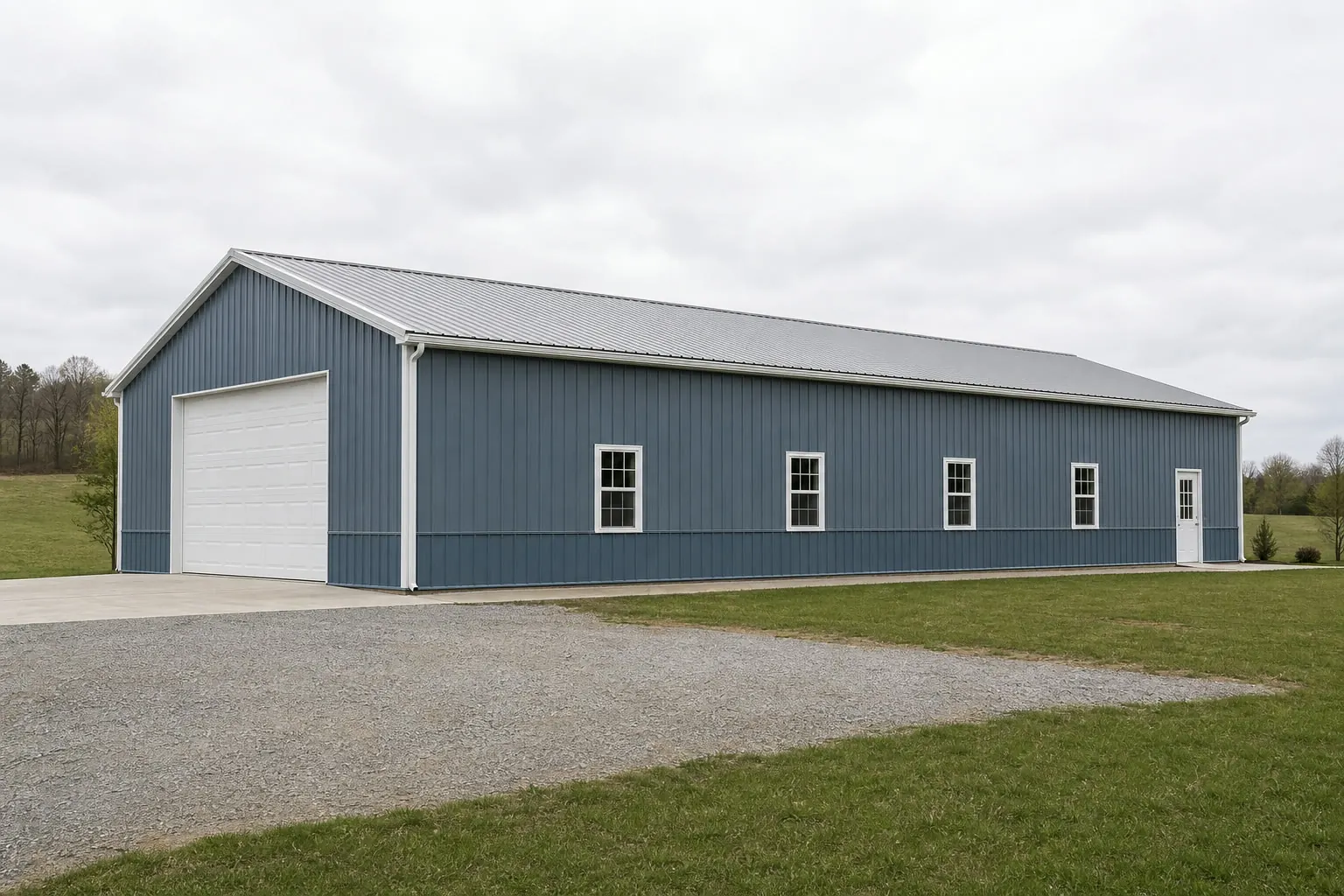
The intersection
What a California site actually changes about a shouse
A shouse's dual identity as a home and a shop means California's statewide code framework and its parcel-level fire hazard classification both reach it with more weight than they would a standalone outbuilding.
Because Title 24 is a single statewide framework administered by the CBSC, a California shouse buyer at least starts from one consistent set of building standards rather than negotiating a patchwork of city-by-city rules. That consistency does not remove the local step: your building department still decides how it treats the residential-to-shop ratio on your specific floor plan, so bring that split to the pre-application conversation rather than after drawings are final.
California's structural equivalent to a coastal wind-zone question is its fire-hazard mapping program. Public Resources Code 4202 and Government Code 51178 direct CAL FIRE to classify land into Fire Hazard Severity Zones using fuel, slope, fire weather and wind, and because a shouse houses people full-time, landing inside a higher-classified zone turns into a defensible-space, vegetation-clearance and insurability conversation, not just a construction-materials one. Pull the parcel's zone from CAL FIRE's maps and loop in an insurer early, since both the site plan and the policy quote hinge on that classification.
Land scale and terrain determine the site-work bill more than the floor plan does. Across the California Geological Survey's 11 geomorphic provinces, a foundation poured on Central Valley alluvium behaves nothing like one on Sierra foothill slopes or Mojave hardpan, and because a shouse's combined footprint typically runs larger than a single-purpose outbuilding, a region-specific foundation plan is worth pricing before, not after, the pad is set.
Site context
How the build site differs across California
The California Geological Survey's geomorphic provinces are a practical lens for anticipating shouse foundation and site work before you request a quote.
North coast and Coast Ranges
The wettest part of the state; drainage planning around a larger occupied footprint matters more here, and coastal fire hazard status should still be checked.
Central Valley
Generally flat ground that simplifies pad preparation, but a stable, well-engineered slab still matters under a shouse's combined living-and-shop load.
Sierra Nevada and foothill provinces
Sloped terrain and elevated fire exposure make grading, defensible space and vegetation clearance a bigger part of siting an occupied structure.
Mojave and Colorado deserts
Arid, wind-exposed ground where access and grading for a level, larger pad are the binding constraints on many sites.
Use case
California shouses are frequently a working-acreage home
With 63,134 farms across 24.19 million acres recorded in the 2022 Census of Agriculture, a shouse is a common way California landowners combine a residence with equipment or shop space on working acreage.
No single buyer's parcel matches the statewide average, but the 383-acre average farm size gives a sense of why so many California shouse briefs pair a modest living wing with a larger shop bay: there is typically enough room on these parcels to keep the residence entrance and yard well clear of shop and loading traffic, a separation worth drawing on paper before the slab goes in.
Utility planning follows the same logic. A shouse sited well off existing service lines needs an early, realistic conversation about well, septic and electrical runs, since the answer constrains where the residential half can practically sit relative to the shop half — and relative to any defensible-space clearance a higher fire hazard zone might require.
Get California shouse quotes
Tell us your region, your parcel's fire hazard zone status if known, and your living-to-shop split. We route it with the California and shouse context already attached.
Configuration
What California shouse briefs are usually asked to do
California shouse enquiries split between working-acreage homes and wildland-adjacent combined-use builds, and the priorities differ accordingly.
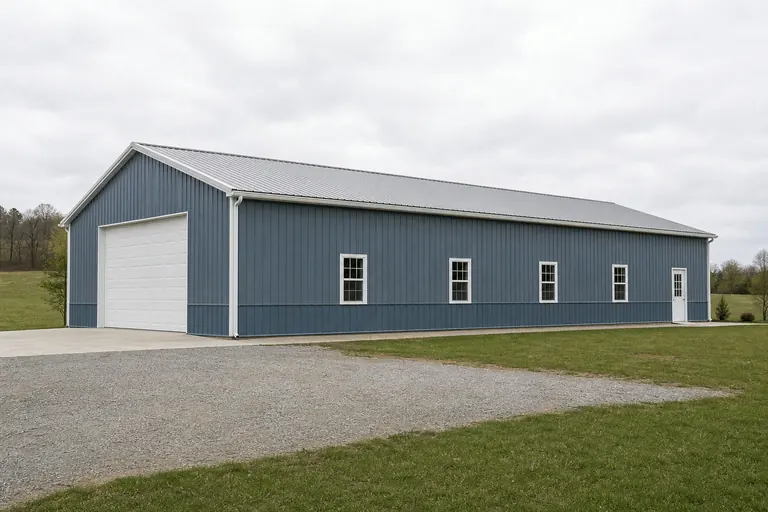 Working-acreage shouseA residence attached to a shop bay for equipment, feed or a home-based trade. Separating living and shop traffic on the site plan is the detail most often underspecified.Home-shop hybridA smaller living footprint with a larger shop for a hobby, small business or vehicle storage. Utility runs between the two halves need early planning.Wildland-adjacent shouseA shouse on a parcel in a higher Fire Hazard Severity Zone, where defensible space and insurability as an occupied structure are worth confirming before ordering.
Example Configuration — for planning purposes only.
Footprint
Sizes that suit common California shouse briefs
California shouse footprints tend to run larger than a single-purpose shed because the living and shop portions both need to fit under one roof.
40′ × 60′
2,400 sq ft
A compact shouse pairing a small residence with a modest shop bay.
50′ × 80′
4,000 sq ft
A common step up when a full shop bay is added alongside a family-sized living area.
60′ × 100′
6,000 sq ft
Room for a larger shop with equipment access plus a full residence.
Example Configuration — for planning purposes only.
Footprint pages carry layout and door detail; this page explains why California briefs land in this range.
Preparation
Before you request a California shouse quote
A few details resolved in advance make the difference between a comparable quote and a re-quote.
Step 1
Contact your local building department about the combined use
Ask how it treats a residential-and-shop structure under Title 24, since the review path depends on the living-to-shop split.
Step 2
Check your parcel's Fire Hazard Severity Zone
As an occupied structure, a shouse's insurability and siting can hinge on CAL FIRE's parcel-specific classification; check before ordering.
Step 3
Describe your region, not just your county
Central Valley flatland, Sierra Nevada slopes and desert ground each call for different foundation work under a shouse's larger footprint.
Step 4
Give the split between living space and shop space
A shouse priced without a clear living-to-shop ratio is a frequent cause of a second round of quoting.
Questions
California shouse questions
Questions we can answer honestly at state level, with the rest routed to whoever actually owns them.
Title 24, administered by the California Building Standards Commission, is the statewide framework, and a combined residential-and-shop structure may face review with more consequence attached to the living-space portion. Your local building department is the reliable source for your parcel.
Yes. CAL FIRE's Fire Hazard Severity Zone classification is parcel-specific, and because a shouse is an occupied structure, its insurability can depend on that classification. Check your address before ordering.
There is no official typical size. Enquiries most often fall between roughly 40x60 for a compact home-and-shop combination and 60x100 for a larger residence paired with heavier equipment storage.
We do not publish state-level prices, because a credible number depends on the living-to-shop split, finish level, site work and current material pricing. Our cost pages cover what drives the number.
Yes, site conditions vary across the state's 11 geomorphic provinces — Central Valley flatland, Sierra Nevada slopes and desert ground behave differently — but the right foundation for your parcel is a site-specific decision for your builder.
Financing terms depend on your lender and how the building is classified for residential use, which this page does not set. Check with your lender or local appraisal district.
Sources for the California facts on this page
This page states no code requirement, wind speed, snow load, permit rule, price or supplier claim. The state-specific facts it does use are listed with their publisher below.
The California Building Standards Commission (CBSC) administers the California Building Standards Code, Title 24 of the California Code of Regulations, as the state's building standards framework.
California Department of General Services, Building Standards Commission (CBSC) · 2025 Triennial Edition, effective Jan 1, 2026 · Tier 2
https://www.dgs.ca.gov/bsc/CAL FIRE, under the state Office of the State Fire Marshal, is required by law (Public Resources Code 4202 / Government Code 51178) to classify lands into Fire Hazard Severity Zones based on fuel loading, slope, fire weather, and wind, without this evidence assigning any specific zone.
California Department of Forestry and Fire Protection (CAL FIRE) / Office of the State Fire Marshal · current program; 2024 FHSZ maps referenced · Tier 2
https://osfm.fire.ca.gov/what-we-do/community-wildfire-preparedness-and-mitigation/fire-hazard-severity-zonesCalifornia had 63,134 farms in 2022 per the USDA Census of Agriculture.
USDA National Agricultural Statistics Service (NASS) · 2022 · Tier 1
https://www.nass.usda.gov/Publications/AgCensus/2022/Full_Report/Volume_1,_Chapter_1_State_Level/California/Land in farms in California totaled 24,190,604 acres in 2022.
USDA NASS · 2022 · Tier 1
https://www.nass.usda.gov/Publications/AgCensus/2022/Full_Report/Volume_1,_Chapter_1_State_Level/California/The average farm size in California was 383 acres in 2022.
USDA NASS · 2022 · Tier 1
https://www.nass.usda.gov/Publications/AgCensus/2022/Full_Report/Volume_1,_Chapter_1_State_Level/California/The California Geological Survey (state geological survey) divides the state into 11 recognized geomorphic provinces, including the Coast Ranges, Central Valley, Sierra Nevada, Basin and Range, Mojave Desert, Colorado Desert, Transverse Ranges, Peninsular Ranges, Klamath Mountains, Cascade Range, and Modoc Plateau.
California Department of Conservation, California Geological Survey · 2002 (revised) · Tier 2
https://www.conservation.ca.gov/cgs/documents/publications/cgs-notes/CGS-Note-36.pdf