
Shed · LA
Sheds in Louisiana
A shed is the smallest structure in this batch, but in Louisiana it still sits inside a subtropical, Gulf-influenced climate that NWS New Orleans/Baton Rouge recently re-measured with new 1991-2020 climate normals, and inside a state NOAA says is hurricane-struck on average once every three years. For a shed, those two facts translate into two practical questions: how the shed keeps humidity away from what's stored inside, and whether it is anchored well enough to stay put through a storm season, not a single freak event.
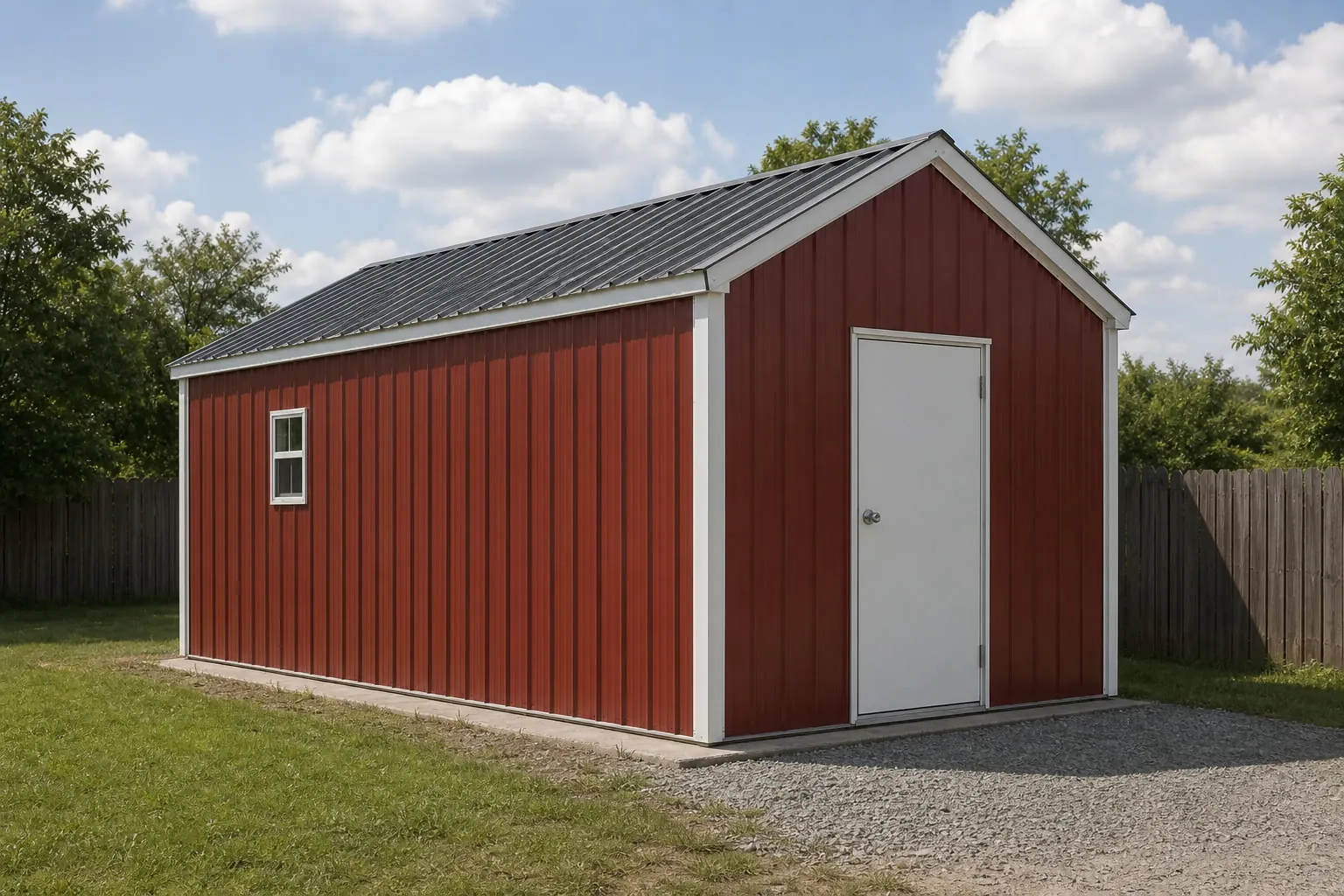
The intersection
What a Louisiana site actually changes about a shed
A small, often lightweight structure like a shed still needs to answer to Louisiana's humidity and periodic storm cycle, even though its stakes are lower than a home or garage.
NWS New Orleans/Baton Rouge recently updated its climate normals to the 1991-2020 period, replacing the older 1981-2010 baseline used for local temperature and precipitation averages. That update matters less for exact numbers on this page than for a simple habit: if you're comparing humidity or rainfall claims about your area, make sure the source is using current normals rather than an outdated baseline.
The bigger practical driver for a Louisiana shed is storm recurrence. NOAA NCEI's state climate summary states hurricanes strike Louisiana on average once every three years. A shed is usually lighter and less anchored than a garage or home, which is exactly why anchoring straps, tie-downs or a proper foundation connection are worth asking your builder about up front, especially for larger sheds that catch more wind.
None of this becomes a specific anchoring requirement or a wind rating on this page — that's a conversation for your builder and, where a permit is required, your local building department. What changes here is simply that a Louisiana shed buyer should treat storm anchoring as a normal spec question, not an upsell.
Storage conditions
Keeping humidity out of a Louisiana shed
Louisiana's subtropical, Gulf-influenced climate means a shed used for tools, lawn equipment or seasonal storage needs a moisture strategy, not just a lock.
Because a shed door is opened far less often than a garage door, humidity and condensation can build up inside if there's no ventilation. That's a bigger practical issue in Louisiana's climate than it would be in a drier state, and it's worth raising with your builder before you decide on ridge vents, a vapor barrier, or a raised floor.
Louisiana's land area of 43,203.9 square miles, per the 2010 Census, spans everything from dense suburban parishes near New Orleans and Baton Rouge to rural low-lying land further south. Where your specific lot sits changes drainage and flood exposure more than it changes the shed itself, so a quick check of your parcel's drainage pattern before you pour a pad is worth the time.
- Ask about ventilation
- Ridge vents or louvers reduce condensation buildup for stored tools and equipment.
- Consider a raised floor
- Keeps stored goods off a slab that can hold ground moisture in humid conditions.
- Check your lot's drainage
- Low-lying parcels benefit from siting the shed away from standing-water areas.
Anchoring
Why a small structure still needs a real anchoring plan in Louisiana
A shed's light weight makes it more, not less, vulnerable to being displaced by wind, which is a specific reason Louisiana's recurring storm cycle deserves attention even for the smallest structure in this batch.
A shed's low mass means wind loading can lift or slide it in a way that would barely affect a heavier, larger building on the same parcel. That is a mechanical fact about small structures generally, but it becomes a routine planning question in Louisiana specifically because NOAA NCEI's data shows the state is hurricane-struck on average once every three years — not a rare event to plan around once, but a recurring condition to design for.
Ground anchors, auger-style tie-downs and a proper connection to a concrete pad or runners are the common approaches builders use, and which one fits depends on your shed's size, your soil, and your parish's own guidance. This page does not specify which anchoring method your shed needs; that is a conversation for your builder and, where applicable, your local building department, informed by your specific site conditions rather than a generic statewide rule. Soil type also plays a role: sandy or frequently saturated soils common in low-lying Louisiana parishes hold an auger anchor differently than firmer inland ground, which is one more reason to confirm the method locally rather than assume a single approach works everywhere in the state.
Get Louisiana shed quotes
Tell us your parish and what the shed needs to store. We route it with the Louisiana and shed context already attached.
Configuration
What Louisiana sheds are usually asked to do
Backyard tool and lawn-equipment storage dominate, with seasonal and hobby storage as recurring secondary uses.
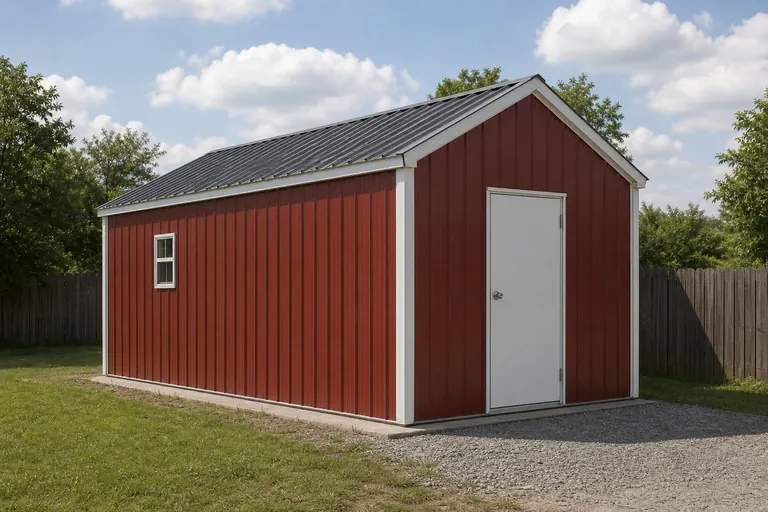 Tool and lawn-equipment storageThe core residential use case: keeping mowers, tools and yard equipment dry and out of the weather.Seasonal storageOff-season items like holiday decorations or patio furniture, benefiting from a raised, ventilated floor.Small workshop or hobby spaceA step up in size from pure storage, sometimes paired with power for light hobby use.
Example Configuration — for planning purposes only.
Footprint
Sizes that suit Louisiana backyard storage
Most Louisiana shed enquiries are sized for tool and lawn-equipment storage on a standard residential lot.
10′ × 12′
120 sq ft
A compact tool-storage footprint suited to smaller residential lots.
12′ × 20′
240 sq ft
Room for lawn equipment plus general storage.
16′ × 24′
384 sq ft
A larger footprint suited to hobby or workshop use alongside storage.
Example Configuration — for planning purposes only.
Footprint pages carry the layout detail for each of these; this page only explains why the Louisiana brief lands in this range.
Preparation
Before you request a Louisiana shed quote
A few things resolved in advance keep the quote comparable and the shed suited to your lot.
Step 1
Contact your local building department
Confirm your parish's setback and permit rules before finalizing placement.
Step 2
Ask about ventilation and floor options
Humidity control matters more for a shed than a frequently-opened garage.
Step 3
Confirm anchoring for your shed size
Larger sheds catch more wind; ask your builder how it's tied down for storm season.
Step 4
Check your lot's drainage before siting
Avoid low points where standing water collects after Gulf-influenced rain events.
Step 5
Ask which anchoring method fits your soil
Ground augers, straps and pad connections perform differently on Louisiana's varied parish soils.
Questions
Louisiana shed questions
Questions we can answer honestly at state level, with the ones we cannot routed to whoever actually owns them.
NOAA's data shows Louisiana experiences a hurricane roughly once every three years, so anchoring is a reasonable question to ask. The specific anchoring method and whether it's required depends on your local building department and shed size; we do not state a requirement here.
Permit thresholds depend on your parish and the shed's size. Your local building department is the only reliable source for that answer.
Ventilation, a raised floor and avoiding ground contact all help in Louisiana's subtropical climate. Ask your builder which options fit your shed size and use.
There is no official typical size, but most Louisiana enquiries fall between a compact tool-storage footprint and a larger hobby/workshop size.
We do not publish state-level prices; a credible number depends on your specification and site work. Our cost pages cover what drives the number.
Yes, in general terms: a raised, ventilated floor keeps stored goods off a slab that can hold ground moisture in a humid climate. Ask your builder which floor option fits your shed size and budget.
Sources for the Louisiana facts on this page
This page states no code requirement, wind speed, snow load, permit rule, price or supplier claim. The state-specific facts it does use are listed with their publisher below.
NWS New Orleans/Baton Rouge released new 30-year (1991-2020) climate normals for the region, replacing the prior 1981-2010 normals used for local temperature and precipitation averages.
National Weather Service (NOAA), New Orleans/Baton Rouge LA office · 1991-2020 · Tier 1
https://www.weather.gov/lix/newnormalsNOAA NCEI's State Climate Summary for Louisiana states hurricanes strike Louisiana on average once every three years, and that Louisiana's temperatures have risen about 0.5°F since the beginning of the 20th century — less than a third of the warming for the contiguous United States as a whole.
NOAA National Centers for Environmental Information (NCEI) · State Climate Summaries series, 2022 · Tier 1
https://statesummaries.ncics.org/downloads/Louisiana-StateClimateSummary2022.pdfLouisiana's total land area was measured at 43,203.9 square miles as of the 2010 Census.
U.S. Census Bureau · 2010 Census · Tier 1
https://www.census.gov/geographies/reference-files/2010/geo/state-local-geo-guides-2010/louisiana.htmlLouisiana had a total of 14,247 new privately-owned housing units authorized by building permits in 2023, rising slightly to 14,310 units in 2024.
U.S. Census Bureau · 2023-2024 · Tier 1
https://www2.census.gov/econ/bps/State/st2024a.txt