
Hobby shop · RI
Hobby Shops in Rhode Island
In the smallest state in the union, a hobby shop project is a lesson in precision. With a total land area of just 1,033.8 square miles and an average farm size of only 56 acres, Rhode Island owners must prioritize footprint efficiency and setback compliance above all else. In a coastal environment where Narragansett Bay moderates temperatures but increases humidity, your hobby shop must be built to withstand a New England climate that has seen temperatures rise nearly 4°F since the early 20th century.
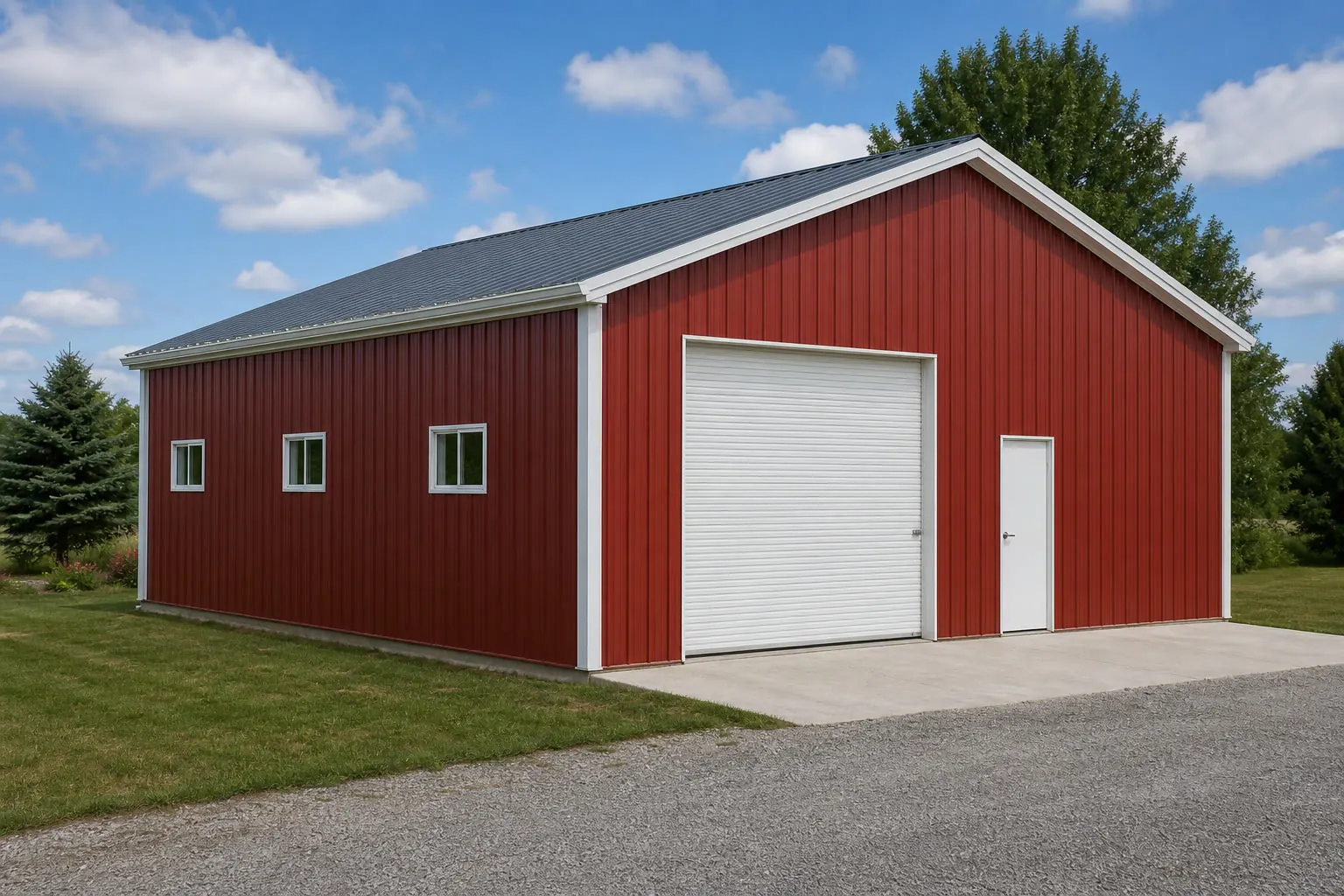
Spatial Precision
Building a Shop in the Smallest U.S. State
With only 1,033.8 square miles of land, every square foot of a Rhode Island build site counts.
Rhode Island's geography is its defining constraint. The state's 1,054 farms average just 56 acres each, a fraction of the size seen in Midwestern or Southern states. For the hobby shop owner, this means the 'unlimited space' mindset of rural building doesn't apply. Instead, a Rhode Island project is often about maximizing utility within a tight footprint. Whether you are building in Providence County or along the Washington County coast, you are likely navigating strict lot coverage limits and narrow setbacks.
The influence of water is omnipresent. Rhode Island has the third-highest ratio of water area to total area in the country, largely due to the sprawling shoreline of Narragansett Bay. For a metal hobby shop, this coastal proximity introduces salt air—a significant corrosive agent for steel. A hobby shop in the Ocean State must be specified with high-grade protective coatings and fasteners that can withstand the moist, saline environment, especially as annual precipitation has been trending upward since 1895.
Furthermore, the state's climate is shifting. With temperatures having risen nearly 4°F since the beginning of the 20th century, the traditional New England shop design must evolve. A hobby shop today requires better insulation to manage the increasingly warm summers while still providing a comfortable work environment during the cold, humid winters typical of coastal New England.
Ocean State Engineering
Managing Humidity and Salt Air
Rhode Island's coastal New England climate requires a higher standard for metal building envelopes.
In a state where water makes up nearly 30% of the total 1,531 square miles, humidity is a constant factor. When planning a hobby shop, the focus should not just be on keeping the rain out, but on managing the internal environment. The moderating influence of Narragansett Bay prevents some of the extreme temperature swings seen further inland, but it keeps the air saturated, which can lead to condensation inside a metal building.
This humidity, combined with the saline air near the coast, makes Galvalume or high-quality Kynar coatings a necessity rather than an option. For a woodworker, auto restorer, or metalworker, protecting tools and materials from this environment is the top priority. This is why many Rhode Island shops include a dedicated conditioned zone or use closed-cell spray foam insulation to create a tight thermal and vapour barrier.
- Salt-Air Protection
- Specify stainless steel fasteners and high-performance paint systems to prevent edge rust in coastal areas.
- Footprint Efficiency
- Use mezzanines or tall wall heights (12-14 feet) to gain storage space without increasing the building's ground footprint.
- Water Management
- With precipitation increasing since 1895, ensure your site drainage accounts for high-volume runoff on small lots.
Rhode Island Scenarios
How Rhode Island Owners Use Their Shops
Maximizing utility on a 56-acre average farm or a residential lot.
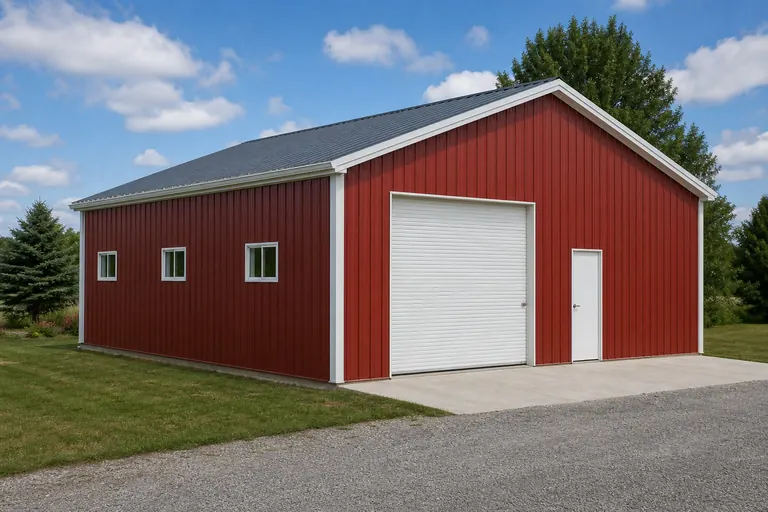 Marine MaintenanceGiven the high water-to-land ratio, many Rhode Island shops are designed for boat storage and maintenance, requiring tall doors and reinforced slabs.Artisan StudiosSmall-footprint buildings (20x24 or 24x30) that serve as woodworking or pottery studios, often requiring high-spec insulation.
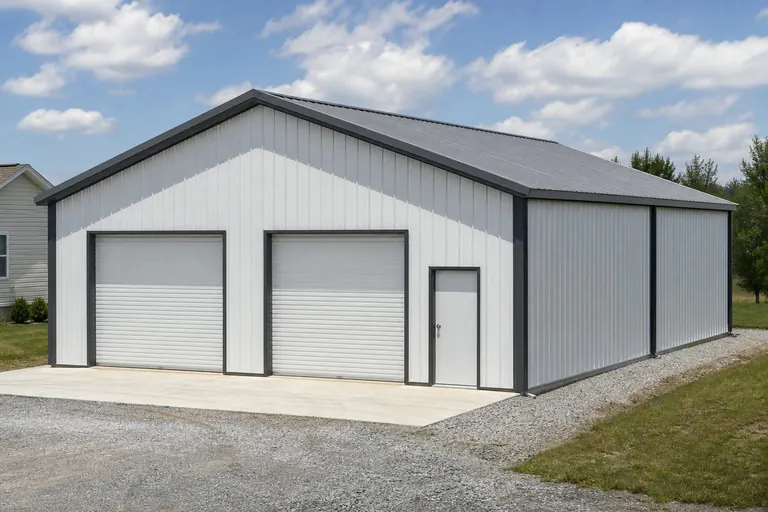 Classic Car RestorationConditioned spaces designed to protect automotive finishes from the 4°F temperature rise and humid coastal air.
Example Configuration — for planning purposes only.
Sizing
Popular Rhode Island Shop Footprints
Sizes that balance utility with small-state lot constraints.
20′ × 24′
480 sq ft
A compact shop ideal for tight residential lots in Kent or Providence counties.
24′ × 36′
864 sq ft
A two-car workshop footprint sized to stay within typical lot-coverage limits on parcels near the state's 56-acre average farm size.
30′ × 40′
1,200 sq ft
A larger footprint that often requires careful zoning review for lot coverage compliance.
Example Configuration — for planning purposes only.
Always verify your town's lot coverage percentage—exceeding it can lead to costly variance hearings.
Start Your Rhode Island Shop Quote
Ready to build in the Ocean State? Connect with specialists who understand Rhode Island's coastal climate and small-lot constraints.
Preparation
Rhode Island Hobby Shop Checklist
Key steps for planning a shop in the Ocean State.
- Confirm Lot CoverageIn the smallest state, land use is tightly regulated. Ensure your shop doesn't exceed your lot's allowed impervious surface area.
- Check CRMC JurisdictionIf your site is near the coast or a waterway, you may need approval from the Coastal Resources Management Council.
- Plan for HumidityWith annual precipitation increasing, select an insulation and ventilation strategy that prevents interior condensation.
- Secure Salt-Resistant SpecsAsk your supplier for 'coastal' or 'marine-grade' coatings if your site is within 5 miles of Narragansett Bay.
Data Points
The Rhode Island Context by the Numbers
These figures define the small-state constraints that shape every hobby shop project in the Ocean State.
| Metric | Value | Source |
|---|---|---|
| Land Area | 1,033.8 sq mi (smallest state) | U.S. Census Bureau (2010) |
| Average Farm Size | 56 Acres (1,054 farms) | USDA NASS (2022) |
| Water-to-Land Ratio | 3rd-highest of any U.S. state | RI Dept. of Environmental Management |
| Temperature Trend | +~4°F since 1900 | NOAA NCEI (2022 State Climate Summary) |
| Total State Area | 1,531 sq mi (1,074 land / 457 water) | RI Dept. of Environmental Management |
Land Area
- Value
- 1,033.8 sq mi (smallest state)
- Source
- U.S. Census Bureau (2010)
Average Farm Size
- Value
- 56 Acres (1,054 farms)
- Source
- USDA NASS (2022)
Water-to-Land Ratio
- Value
- 3rd-highest of any U.S. state
- Source
- RI Dept. of Environmental Management
Temperature Trend
- Value
- +~4°F since 1900
- Source
- NOAA NCEI (2022 State Climate Summary)
Total State Area
- Value
- 1,531 sq mi (1,074 land / 457 water)
- Source
- RI Dept. of Environmental Management
Evidence Position
What This Page Will Not Tell You About Rhode Island
We publish the sourced figures we hold for Rhode Island and route the rest to the authority that owns it.
The Rhode Island figures used above come from named sources: the U.S. Census Bureau's 2010 land-area measurement, USDA NASS's 2022 Census of Agriculture, NOAA NCEI's 2022 State Climate Summary, and the Rhode Island Department of Environmental Management's climatology reference page. We do not extend any of those figures further than the source itself supports.
We do not hold a confirmed statewide 1991-2020 NOAA precipitation or snowfall normal for Rhode Island as a whole, only a single Providence T.F. Green Airport station record, and we do not hold a specific recent-year Census Bureau housing-permit total for the state. Both are declared gaps rather than filled in with an approximate or borrowed number.
FEMA's National Risk Index maintains hurricane, coastal flooding, and winter weather hazard data down to the county and tract level, but a Rhode-Island-specific narrative summary could not be directly retrieved from FEMA's own site in this review. If your parcel sits near the coast, that hazard review belongs with your town's floodplain administrator and the FEMA NRI tool, not with a page written at the state level.
Questions
Rhode Island Hobby Shop FAQ
Honest answers for small-state builders.
Yes. All Rhode Island municipalities require a building permit for a shop. Given the state's density, you should also check with your local zoning board for setback and footprint rules.
The ~4°F rise means that cooling is becoming as important as heating. We recommend including reflective roof coatings and higher R-value insulation than was standard 20 years ago.
Yes, but you must ensure the slab is properly engineered for the local water table and soil conditions, especially in areas with high water ratios.
Lead times depend on the manufacturer, but shipping to Rhode Island is generally efficient given its proximity to major Northeast logistics corridors.
No. FEMA's National Risk Index tracks hurricane, coastal flooding, and winter weather hazards at the county and tract level, so two parcels a few miles apart on the Rhode Island coast can carry different ratings. Check your specific tract with your town's floodplain administrator before finalizing site plans.
Sources for the Rhode Island facts on this page
This page states no code requirement, wind speed, snow load, permit rule, price or supplier claim. The state-specific facts it does use are listed with their publisher below.
The U.S. Census Bureau's 2010 Census geography reference lists Rhode Island's land area as 1,033.8 square miles, the smallest of any U.S. state.
U.S. Census Bureau · 2010 Census · Tier 1
https://www.census.gov/geographies/reference-files/2010/geo/state-local-geo-guides-2010/rhode-island.htmlRhode Island had 1,054 farms in 2022 with 59,076 acres of land in farms and an average farm size of 56 acres.
USDA National Agricultural Statistics Service (NASS) · 2022 · Tier 1
https://www.nass.usda.gov/Publications/AgCensus/2022/Online_Resources/Typology/typology_ri.pdfRhode Island had 1,054 farms in 2022 with 59,076 acres of land in farms and an average farm size of 56 acres.
USDA National Agricultural Statistics Service (NASS) · 2022 · Tier 1
https://www.nass.usda.gov/Publications/AgCensus/2022/Online_Resources/Typology/typology_ri.pdfThe Rhode Island Department of Environmental Management describes Rhode Island as the smallest U.S. state, occupying a total of 1,531 square miles (1,074 square miles of land and 457 square miles of water), with the third-highest ratio of water area to total area of any state due to the shoreline of Narragansett Bay.
Rhode Island Department of Environmental Management (DEM) · Current DEM reference page · Tier 2
https://dem.ri.gov/environmental-protection-bureau/air-resources/climatology/climate-rhode-islandNOAA's 2022 State Climate Summary reports that annual precipitation in Rhode Island has increased since 1895 and that temperatures have risen almost 4°F since the beginning of the 20th century.
NOAA National Centers for Environmental Information (NCEI) · 2022 summary, trend since 1895/1900 · Tier 1
https://statesummaries.ncics.org/downloads/RhodeIsland-StateClimateSummary2022.pdfNOAA's 2022 State Climate Summary reports that annual precipitation in Rhode Island has increased since 1895 and that temperatures have risen almost 4°F since the beginning of the 20th century.
NOAA National Centers for Environmental Information (NCEI) · 2022 summary, trend since 1895/1900 · Tier 1
https://statesummaries.ncics.org/downloads/RhodeIsland-StateClimateSummary2022.pdfThe Rhode Island Department of Environmental Management describes Rhode Island as the smallest U.S. state, occupying a total of 1,531 square miles (1,074 square miles of land and 457 square miles of water), with the third-highest ratio of water area to total area of any state due to the shoreline of Narragansett Bay.
Rhode Island Department of Environmental Management (DEM) · Current DEM reference page · Tier 2
https://dem.ri.gov/environmental-protection-bureau/air-resources/climatology/climate-rhode-island