Hobby shop · KS
Hobby Shops in Kansas
In Kansas, the 'hobby shop' is a misnomer; it is more often a specialized maintenance and fabrication anchor for a farm base that averages 804 acres per operation. In a state that spans 81,758.7 square miles, planning a workshop requires looking beyond the floor plan to the environmental realities of the High Plains. From the rocky Permian limestone of the Flint Hills to the semi-arid expanses of the west, a Kansas hobby shop must handle extreme thermal swings and high-velocity wind. The honest story here is about creating a resilient, climate-tuned space that serves as a functional extension of the state's massive agricultural and aviation legacy.
Market Context
A Professional-Grade Hobby Space
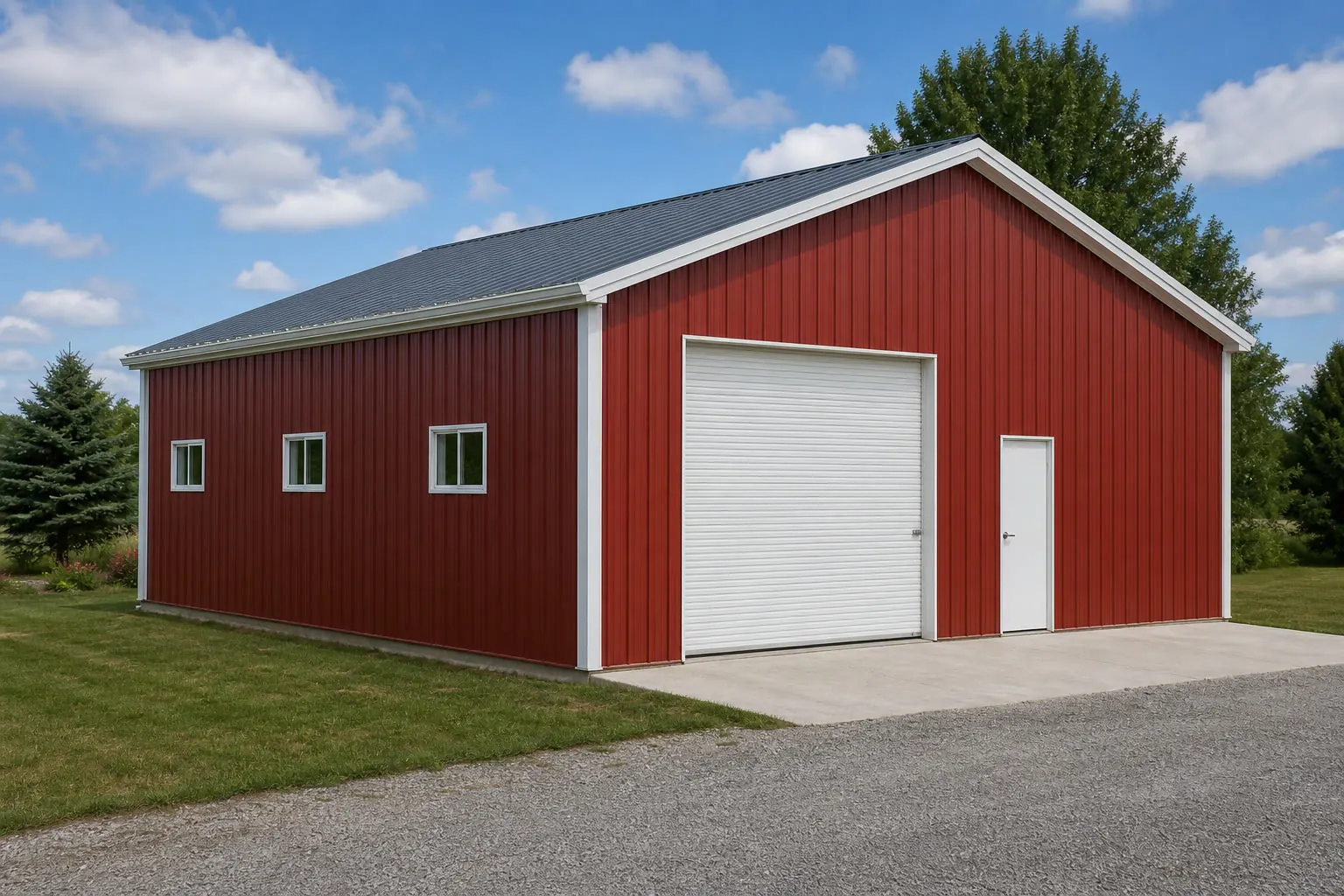
We are open about the low search volume for 'hobby shop' in Kansas, but we keep this page because the utility of these buildings is a core part of the state's agricultural infrastructure.
In a state where the average farm size is 804 acres, a 'hobby' is often indistinguishable from professional maintenance. A space dedicated to restoring a vintage tractor or building custom farm implements isn't just a shed; it's a vital secondary node on a large-scale operation. Because these buildings are typically smaller than primary equipment barns, they are often overlooked during the planning phase, leading to issues with climate control and wind resilience.
The honest Kansas story is that a hobby shop must perform as well as a commercial shop. FEMA's National Risk Index identifies severe wind and hail as significant hazards in Kansas, meaning a 'light-duty' kit will likely fail during a routine plains storm. We recommend building to a higher standard—tuning the insulation for the humid-to-semi-arid transition and ensuring the foundation is anchored into the substrate, whether that's the rocky limestone of the Flint Hills or the deep silts of the west.
Insulation and Seal
Building for the Humidity Divide
The most important decision for a Kansas hobby shop happens before the first beam is raised: how you will handle the state's climatic transition.
According to NOAA NCEI, Kansas is a transition zone between the humid east and the semi-arid west. For a workshop, this is critical. In the humid eastern third of the state, condensation is the primary enemy. Warm, moist air hitting a cool metal skin leads to 'sweating' and tool rust. A robust vapor barrier and closed-cell spray foam are recommended to seal the environment.
In the semi-arid west, the challenge shifts to dust and thermal mass. The air is dry, but the wind carries fine agricultural silt that can ruin paint jobs and sensitive equipment. Tight door seals and a filtered ventilation system are non-negotiable. Additionally, the western plains experience extreme day-to-night temperature swings, sometimes 30 degrees or more. High-R-value insulation is necessary not just for comfort, but to protect your equipment from the stress of rapid expansion and contraction. Electrical service is a related and often underestimated detail on a large Kansas parcel: a hobby shop sited a few hundred feet from the main service panel can require a dedicated sub-panel and a longer trenched run than the same building would need on a suburban lot, and that run is worth pricing before the slab is poured rather than after the shop is already wired for a smaller load.
- Flint Hills Rock
- Permian limestone substrate in the east-central region requires rock-specific foundation planning for even small shop pads.
- Severe Wind Resilience
- Use 26-gauge steel and professional anchoring to protect high-value tools from FEMA-rated wind hazards.
- Zoning Reality
- On 800+ acre parcels, hobby shops often fall under agricultural exemptions, but always verify with your county commission.
Application
Kansas Hobby Shop Configurations
Workshop styles adapted for the Sunflower State's unique scale.
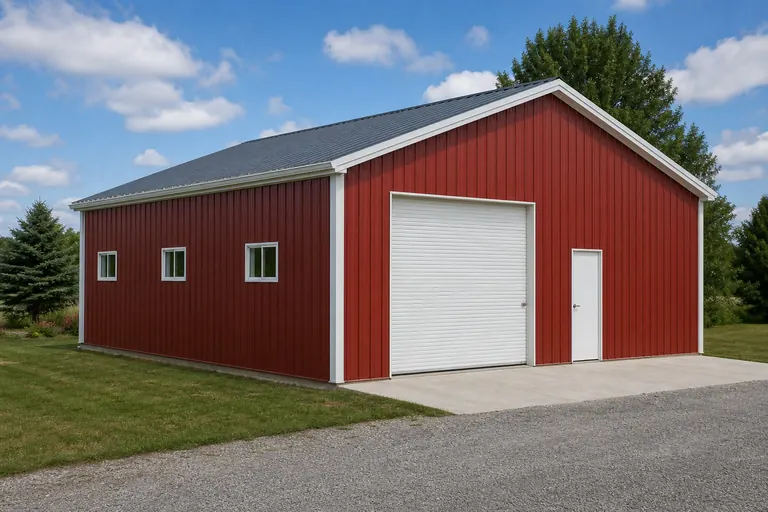 The Ag-Fabrication ShopA high-clearance space for building and repairing specialized farm implements on 800-acre tracts.The Restoration GarageClimate-controlled space for vintage vehicles, tuned for the humid-to-semi-arid transition.The Woodworking StudioFiltered ventilation and dust-tight seals for precision work in the semi-arid west.
Example Configuration — for planning purposes only.
Build Your Kansas Workshop
Ready for a shop that can handle the plains climate and the Flint Hills rock? Get a quote for a Kansas-tuned hobby shop today.
Footprint
Sizing the Kansas Workshop
Reflecting the dual-purpose nature of hobby spaces on large parcels.
24′ × 30′
720 sq ft
A compact single-use shop for woodworking or light maintenance.
30′ × 40′
1,200 sq ft
The 'Kansas Standard' for a multi-use hobby space with room for a vehicle.
40′ × 60′
2,400 sq ft
Professional-grade workshop for restoration and heavy fabrication.
Example Configuration — for planning purposes only.
Footprint choice should account for workbench depth and equipment clearance; consult our size pages for layout details.
Preparation
Before you site a Kansas hobby shop
A hobby shop is small enough to be an afterthought in the site plan, which is exactly why these four questions get skipped and later regretted.
- Price the power run, not just the panelDistance from the main service on an 800-acre parcel drives trenching cost more than the shop's own electrical load; get a rough distance-based estimate from an electrician before finalizing the site.
- Decide how far is too far from the houseA shop used for daily restoration or fabrication work benefits from proximity; one used seasonally can sit farther out near other outbuildings without much cost to convenience.
- Check the ground before pouring a Flint Hills padEven a compact shop foundation can hit shallow Permian limestone; a quick soil check avoids a mid-pour surprise.
- Separate dust-generating work from precision workIf the shop will handle both woodworking and fine mechanical or electronics work, plan a partition or filtered zone rather than sharing one open room.
Questions
Kansas Hobby Shop FAQ
Honest answers for Sunflower State makers.
In the humid eastern transition zone, yes. It is the most effective way to prevent condensation and tool rust. In the semi-arid west, it is still highly recommended to manage the extreme temperature swings and block blowing dust. Either way, budget the insulation into the initial build rather than a retrofit; opening a finished wall to add foam later costs more than specifying it up front.
The rock. The Permian limestone substrate can be just inches below the surface. Even for a 'small' hobby shop, you may need to pay for rock-drilling or a more complex slab design to ensure the building is level and stable.
Don't assume a small building is safe. In a state with severe wind hazards (FEMA NRI), your shop needs the same qualitative anchoring as a massive barn. Heavy-gauge steel and secure anchoring are vital.
It depends on your parcel. On a 804-acre working farm, a shop is often considered an agricultural accessory building. In a metro area like Wichita, it is a residential outbuilding. This distinction changes your permit process and tax status.
There is no fixed rule, but the honest tradeoff is convenience versus cost. A shop close to the house is cheaper to wire and easier to visit daily; one sited farther out, near existing barns, benefits from shared windbreak protection but costs more to run power and water to.
Sources for the Kansas facts on this page
This page states no code requirement, wind speed, snow load, permit rule, price or supplier claim. The state-specific facts it does use are listed with their publisher below.
Kansas had 44,794,702 acres of land in farms in 2022, an average farm size of 804 acres — the largest average farm size figure among the four-state group reviewed here (IL, IA, KS, LA).
USDA NASS · 2022 · Tier 1
https://www.nass.usda.gov/Publications/AgCensus/2022/Full_Report/Volume_1,_Chapter_1_State_Level/Kansas/st20_1_001_001.pdfKansas's total land area was measured at 81,758.7 square miles as of the 2010 Census.
U.S. Census Bureau · 2010 Census · Tier 1
https://www.census.gov/geographies/reference-files/2010/geo/state-local-geo-guides-2010/kansas.htmlNOAA NCEI's State Climate Summary for Kansas states the state is a region of transition between the humid conditions to the east and semi-arid conditions to the west, and that temperatures have risen about 1.5°F since the beginning of the 20th century, with greater warming in winter and spring than summer and fall.
NOAA National Centers for Environmental Information (NCEI) · State Climate Summaries series, 2022 · Tier 1
https://statesummaries.ncics.org/downloads/Kansas-StateClimateSummary2022.pdfFEMA's National Risk Index dataset assesses 18 natural hazards (including tornado, hail, drought, and severe wind, all historically significant to Kansas) at the county and Census tract level via its interactive online tool.
Federal Emergency Management Agency (FEMA) · Current NRI release · Tier 1
https://www.fema.gov/about/openfema/data-sets/national-risk-index-dataThe Flint Hills region, running north-south through east-central Kansas, is one of the few large remaining areas of unplowed tallgrass prairie in North America because the region's thin, rocky (chert-bearing) soils formed from eroded Permian-age limestones and shales were historically too hard to plow, so the land has mainly been used for cattle grazing rather than row crops.
Kansas Geological Survey, University of Kansas · KGS reference material · Tier 2
https://www.kgs.ku.edu/Physio/flinthil.htmlThe Flint Hills region, running north-south through east-central Kansas, is one of the few large remaining areas of unplowed tallgrass prairie in North America because the region's thin, rocky (chert-bearing) soils formed from eroded Permian-age limestones and shales were historically too hard to plow, so the land has mainly been used for cattle grazing rather than row crops.
Kansas Geological Survey, University of Kansas · KGS reference material · Tier 2
https://www.kgs.ku.edu/Physio/flinthil.htmlKansas had a total of 9,504 new privately-owned housing units authorized by building permits in 2023, decreasing to 9,063 units in 2024.
U.S. Census Bureau · 2023-2024 · Tier 1
https://www2.census.gov/econ/bps/State/st2024a.txt