
Hobby shop · DE
Hobby Shops in Delaware
A hobby shop is enclosed and usually occupied for hours at a time, which shifts the planning conversation from siting alone to how the building manages Delaware's moisture and how it fits a lot. The Delaware Geological Survey places nearly the entire state, outside the hills of northern New Castle County, in the low-relief Atlantic Coastal Plain, so most Delaware hobby shop lots are flat and buildable without grading work; the recurring question instead is how to keep a humid coastal climate from turning a comfortable workspace into a damp one.
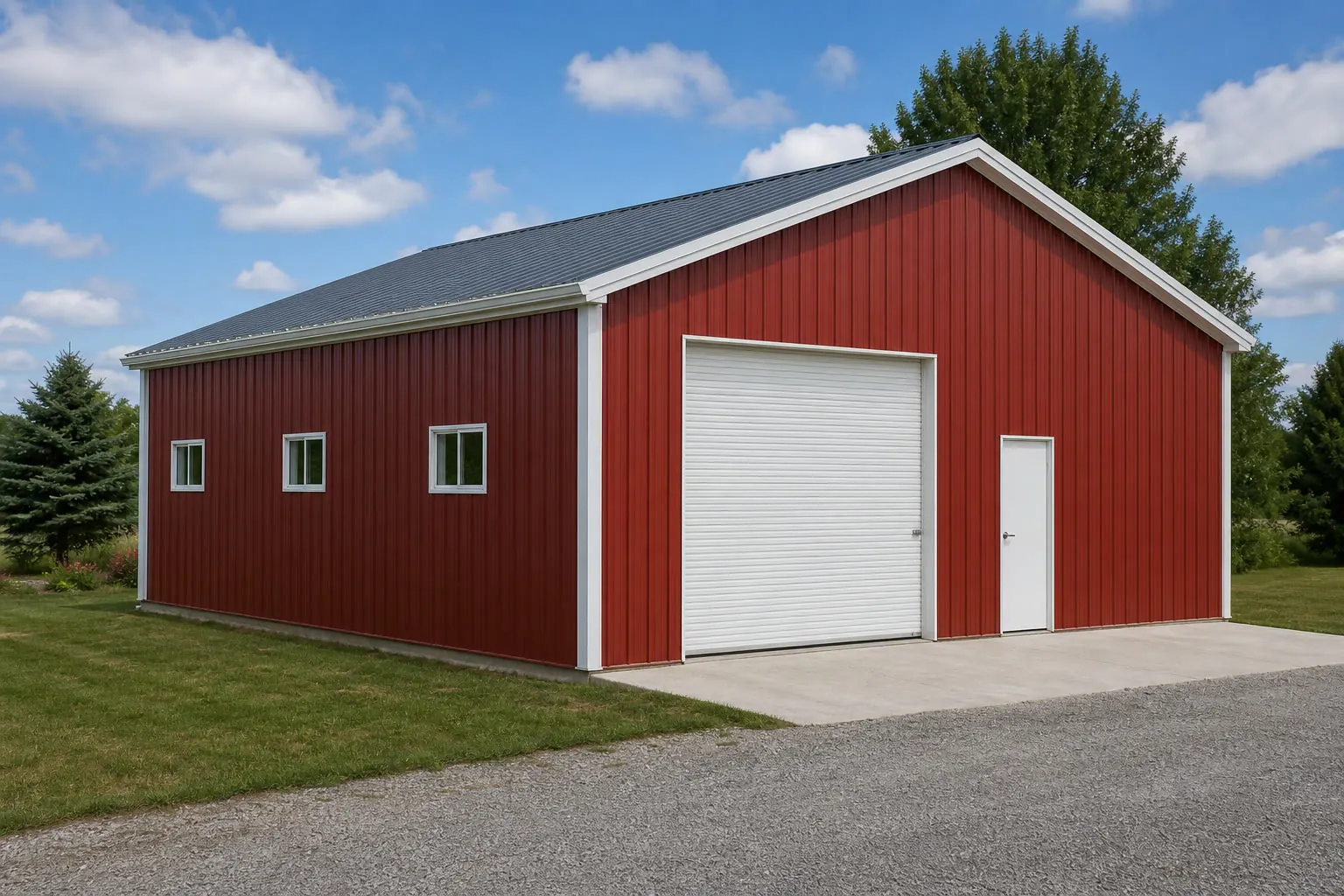
The intersection
Why an occupied building changes what Delaware's climate means
A hobby shop is used, heated and often insulated, which turns Delaware's humid coastal climate from a backdrop detail into a comfort and durability question.
For a storage building, humidity is mostly about rust and moisture on stored items. For a hobby shop, where someone spends hours working, humidity also affects comfort, condensation on cool surfaces, and how well insulation performs over a full year. Delaware's climate, represented by Wilmington's 1991-2020 normal of about 45.3 inches of annual precipitation, is consistently wet enough that a hobby shop planned without attention to vapor control can end up feeling damp even with heating or cooling running.
The Delaware Geological Survey's terrain map matters here too, though for a different reason than climate: because only the hills of northern New Castle County sit in the Appalachian Piedmont, and the rest of the state is low-relief Atlantic Coastal Plain, most Delaware hobby shop lots are flat and require no special grading before a slab goes down. That keeps the site-prep conversation short, which frees planning attention for the building's insulation and ventilation instead.
Delaware's small overall footprint reinforces that consistency: at 1,948.5 square miles, it is the second-smallest state by land area, so a Coastal Plain hobby shop site in Sussex County faces broadly the same flat-lot conditions as one in central Kent County. The main documented exception, FEMA's National Risk Index reminds buyers, is hazard exposure rather than terrain: Delaware's low elevation makes coastal flooding and hurricane categories worth checking at the county or tract level for any shop sited near tidal water, even though terrain itself stays flat statewide.
Comfort
Moisture control and insulation for a Delaware hobby shop
A climate record stretching back to 1894 at Wilmington shows Delaware's wet pattern is not a recent anomaly, which argues for building moisture control in from the start rather than adding it later.
That record, kept by NOAA through the NWS Mount Holly, NJ office that serves Wilmington, spans from 1894 to the present 1991-2020 normal period. It does not set a design requirement for any single hobby shop, but it does support a planning habit: a vapor barrier under the slab and a ventilation plan for the finished space cost little relative to the building and help avoid two frequent hobby shop complaints in a humid climate: a musty smell and condensation on tools or equipment.
Insulation choice follows from how the space will be used. A shop used year-round for fine work benefits from full wall and ceiling insulation matched to whatever heating or cooling is planned; a shop used mainly in fair-weather months can often get by with a lighter package. Either way, the decision is best made before the shell is ordered, since retrofitting insulation into a finished steel building costs more than specifying it up front.
Sussex County, the state's largest farm county with 1,053 operations across 262,079 acres in 2022, reports roughly 32% of its farmland-in-use acreage under irrigation. A hobby shop built on an active Sussex operation is often sited near that existing pump and field power infrastructure, which is worth factoring into where the shop's own electrical feed originates rather than treating the building as a standalone project disconnected from the rest of the parcel.
- Vapor barrier under the slab
- A low-cost addition at pour time that prevents moisture from wicking up through the floor in Delaware's humid climate.
- Ventilation for occupied use
- Plan for a vent fan or operable window if the shop will be occupied for extended periods, especially during humid summer months.
- Insulation matched to use pattern
- Year-round occupied shops warrant fuller insulation packages than fair-weather-only spaces.
Configuration
What Delaware hobby shops are usually used for
Delaware's mix of suburban and farm-county lots produces a few recurring hobby shop uses.
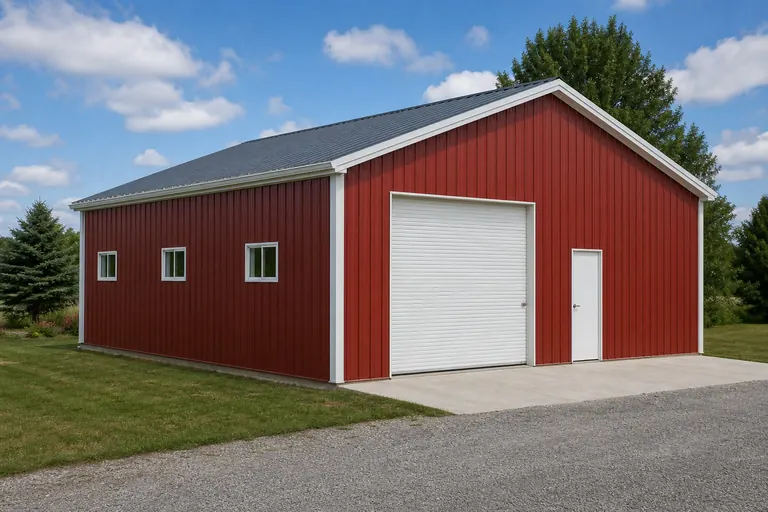 Woodworking or craft workspaceA finished, insulated space for detail work, common on New Castle County suburban lots.Vehicle or equipment restorationOn Kent and Sussex county acreage, a hobby shop doubling as a place to work on vehicles, small engines or farm equipment.
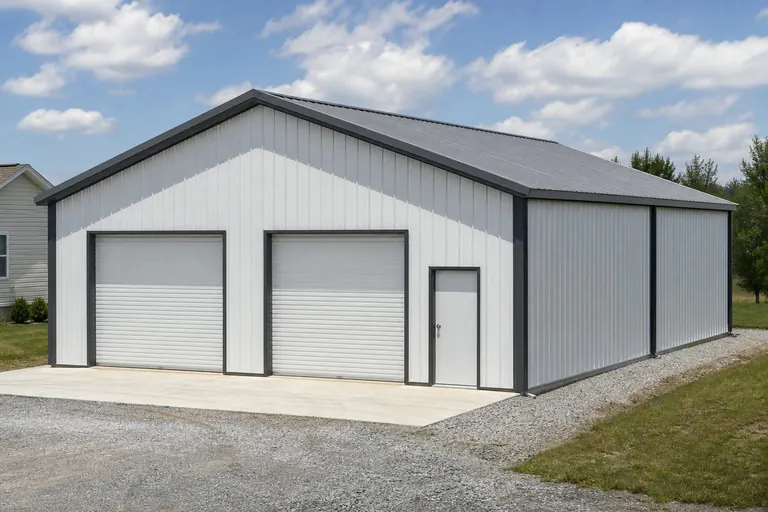 Combined workshop and storageA larger footprint splitting finished workspace from unheated storage for tools and materials.
Example Configuration — for planning purposes only.
Get Delaware hobby shop quotes
Tell us your intended use, insulation needs and rough size. We route it with the Delaware and hobby shop context already attached.
Footprint
Sizes that suit a Delaware hobby shop
Flat Coastal Plain lots rarely limit footprint, so Delaware hobby shop sizing is usually set by intended use and the equipment involved.
20′ × 24′
480 sq ft
A compact insulated workspace for detail hobbies on a standard suburban lot.
24′ × 36′
864 sq ft
Common where the shop also handles vehicle or small equipment work.
30′ × 40′
1,200 sq ft
A larger option for Kent or Sussex county acreage combining workspace and equipment storage.
Example Configuration — for planning purposes only.
Footprint pages carry the bay and door layout for each of these; this page explains why Delaware buyers land in this range.
Preparation
Before you place a Delaware hobby shop order
A few decisions made in advance keep a heated, occupied space performing well through Delaware's humid seasons.
- Confirm local zoning and electrical permit stepsRequirements vary by jurisdiction and by whether the shop will carry a full electrical service; confirm with your local building department.
- Decide the vapor barrier and slab planSpecify a vapor barrier under the slab before pour, especially given Delaware's consistently humid climate normal.
- Match insulation to occupancy patternYear-round use warrants a fuller insulation package than seasonal or fair-weather-only use.
- Plan ventilation for the finished spaceA vent fan or operable window keeps a heated shop comfortable during humid summer months.
- Check hazard exposure near tidal waterFEMA's National Risk Index provides county- and tract-level scores; consult it if the shop sits near a low-lying or coastal-adjacent parcel.
Questions
Delaware hobby shop questions
Questions we can answer honestly at state level, with anything jurisdiction-specific routed to the right office.
Permit requirements, especially for electrical service and any plumbing, are set locally. Your local building or zoning department is the only reliable source for your specific project.
Wilmington's 1991-2020 climate normal shows about 45.3 inches of annual precipitation, part of a wet pattern documented back to 1894. That consistent humidity is a good reason to plan a vapor barrier and ventilation into an occupied hobby shop from the start.
Most Delaware lots sit on flat Coastal Plain ground, so grading is rarely a major factor. Lots in the Piedmont hill zone of northern New Castle County are the main exception and may need site leveling.
There is no official typical size. A 20x24 footprint suits detail hobby work, while 24x36 and 30x40 sizes are common where the shop also handles vehicle or farm equipment work, particularly on Kent and Sussex county acreage.
We do not publish state-level prices, since cost depends on size, insulation package, electrical scope and site work. Our cost pages cover what drives the number; a quote covers your specific project.
Sources for the Delaware facts on this page
This page states no code requirement, wind speed, snow load, permit rule, price or supplier claim. The state-specific facts it does use are listed with their publisher below.
The Delaware Geological Survey states the entire state lies within two physiographic provinces, the Appalachian Piedmont and the Atlantic Coastal Plain, separated by the Fall Line; only the hills of northern New Castle County lie within the Piedmont, with the rest of the state in the low-relief Coastal Plain.
Delaware Geological Survey, University of Delaware · DGS reference material · Tier 2
https://www.dgs.udel.edu/delaware-geology/summary-geologic-history-delawareWilmington's 1991-2020 annual climate normal precipitation is about 45.3 inches with roughly 20.2 inches of annual snowfall.
NOAA National Centers for Environmental Information (NCEI) · 1991-2020 · Tier 1
https://www.ncei.noaa.gov/access/services/data/v1?dataset=normals-monthly-1991-2020&dataTypes=MLY-PRCP-NORMAL,MLY-SNOW-NORMAL&format=csv&stations=USW00013781NWS Mount Holly, NJ (which serves Wilmington, DE) issues an annual climate summary for Wilmington citing the 1991-2020 climate normal period against a climate record period dating to 1894.
National Weather Service (NOAA), Mount Holly NJ office · 1991-2020 normal / 1894-present record · Tier 1
https://forecast.weather.gov/product.php?issuedby=ILG&product=CLA&site=NWSKent County, Delaware had 770 farms on 187,248 acres in 2022, with land in farms up 3% since 2017 even as farm count fell 6%.
USDA NASS · 2022 · Tier 1
https://www.nass.usda.gov/Publications/AgCensus/2022/Online_Resources/County_Profiles/Delaware/cp10001.pdfDelaware had 2,158 farms in 2022, covering 522,834 acres of land in farms, an average farm size of 242 acres.
USDA National Agricultural Statistics Service (NASS) · 2022 · Tier 1
https://www.nass.usda.gov/Publications/AgCensus/2022/Online_Resources/Congressional_District_Profiles/cd1001.pdfSussex County, Delaware's largest county by farmland, had 1,053 farms on 262,079 acres in 2022, with 32% of farmland-in-use acres reported irrigated.
USDA NASS · 2022 · Tier 1
https://www.nass.usda.gov/Publications/AgCensus/2022/Online_Resources/County_Profiles/Delaware/cp10005.pdfDelaware's total land area was measured at 1,948.5 square miles as of the 2010 Census, the second-smallest of any U.S. state.
U.S. Census Bureau · 2010 Census · Tier 1
https://www.census.gov/geographies/reference-files/2010/geo/state-local-geo-guides-2010/delaware.htmlFEMA's National Risk Index platform (hazards.fema.gov) is the authoritative county/tract-level source for Delaware natural hazard exposure scores across 18 hazard types, including coastal flooding and hurricane categories relevant to a low-lying, low-elevation coastal state.
Federal Emergency Management Agency (FEMA) · Current NRI dataset · Tier 1
https://www.fema.gov/flood-maps/products-tools/national-risk-index