
Guest house · VA
Guest Houses in Virginia
A Virginia guest house project should start with a question that's easy to overlook: which of the state's five physiographic provinces is the host parcel actually in? Virginia Energy and the Department of Conservation and Recreation both describe the state as crossing the Coastal Plain, Piedmont, Blue Ridge, Valley and Ridge, and Appalachian Plateau, and those five settings don't share a foundation strategy, an access grade or even a drainage habit. Add a statewide farm count that fell from 43,225 in 2017 to 38,995 in 2022, and a second pattern shows up: some of the acreage that once supported working agriculture is now being repurposed for a guest house rather than a new barn, which changes what 'siting logic' means on that specific lot.
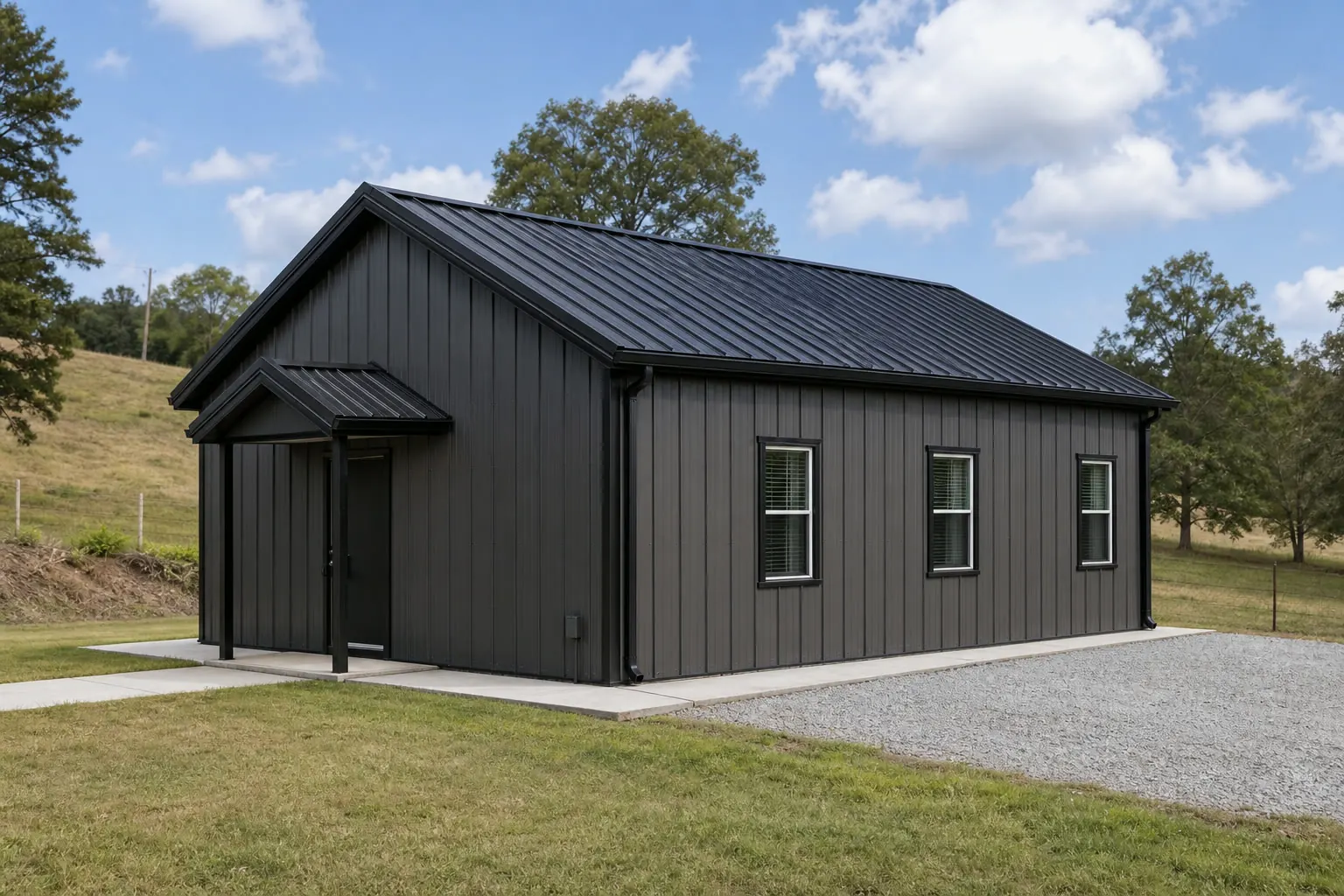
Site context
The first Virginia question is which province you're building in
Before layout or size, a Virginia guest house project needs to answer which of five named physiographic provinces the host parcel falls into, because the answer changes the foundation and grading conversation.
Virginia Energy, the state's geological survey agency, identifies five distinct physiographic provinces crossing the state: the Coastal Plain, Piedmont, Blue Ridge, Valley and Ridge, and Appalachian Plateau. The Virginia Department of Conservation and Recreation publishes a parallel statewide description tying physiography to vegetation differences across those same five regions. Neither source treats Virginia as one uniform building environment, and a guest house project shouldn't either.
A guest house sited on flat Coastal Plain ground near Tidewater faces a different first question than one sited on a Blue Ridge slope in the Shenandoah Valley foothills: the Coastal Plain buyer is usually managing drainage and a higher water table, while the Blue Ridge or Appalachian Plateau buyer is usually managing grading, cut-and-fill, and access grade for delivery equipment. Piedmont sites, rolling but not steep, often split the difference.
None of this changes what a guest house is. It changes which site-prep conversation happens first with the builder, and which questions get asked of the local building department before a foundation type gets chosen.
Terrain
What each Virginia province asks of a guest house site
Each of Virginia's five provinces changes the guest house siting conversation in a specific, practical way.
Coastal Plain
Flat, low-relief ground where a higher water table and drainage are the recurring concerns for a guest house foundation and crawlspace planning.
Piedmont
Rolling terrain across central Virginia where a level pad often needs modest grading rather than the drainage-first approach of the coast.
Blue Ridge
Mountainous terrain where slope, cut-and-fill grading, and confirmed delivery access before finalizing a footprint matter more than anywhere else in the state.
Valley and Ridge
Alternating ridgelines and valley floors; valley-floor parcels are usually the easier build site, though they can sit closer to streams draining the surrounding ridges.
Appalachian Plateau
Southwestern Virginia's steepest, most dissected terrain, where access grade and site prep typically account for a larger share of total project planning than the guest house shell itself.
Land use
A shrinking farm count and what it means for guest house demand
USDA's Census of Agriculture shows Virginia losing farms between 2017 and 2022, a trend that plausibly connects to more rural acreage shifting toward guest house and accessory-dwelling use.
The USDA National Agricultural Statistics Service's Virginia Field Office reported 38,995 farms in the state in 2022, down from 43,225 in 2017 — a loss of more than 4,200 farms in five years. USDA's full county-level 2022 Census of Agriculture table carries the exact statewide acreage and land-value figures for anyone who wants the underlying detail.
That declining farm count doesn't tell us why any individual parcel changed use, and this page won't guess at a cause. What it does support is a reasonable planning observation: a landowner sitting on acreage that once supported active farming, and now doesn't, is a plausible candidate for a guest house project rather than a new agricultural building — and that buyer's siting priorities (privacy from the main house, utility hookup distance, view orientation) look different from a working farm's equipment-storage priorities.
If your parcel was recently reclassified from agricultural use, or if you're subdividing use on a larger property, confirming zoning and any remaining agricultural-exemption status with your county is worth doing before finalizing the guest house's footprint and placement.
- Confirm zoning status
- Check whether your parcel carries any agricultural exemption or zoning classification that could affect where a guest house can sit.
- Plan for utility distance
- A guest house separated from a working farm layout may need a longer utility run than a building sited near existing farm infrastructure.
Get Virginia guest house quotes
Tell us your county or city, physiographic province, and intended use. We route it with Virginia siting context already attached.
Process
A statewide construction pace worth factoring into scheduling
Census Bureau permit data shows Virginia authorizing a substantial volume of new housing units in 2024, a signal worth raising with your local building department when scoping a guest house timeline.
The U.S. Census Bureau's Building Permits Survey recorded 34,059 total new privately-owned housing units authorized statewide in Virginia in 2024, split across 22,796 single-family units, 448 in 2-unit buildings, 80 in 3-4 unit buildings, and 10,735 in buildings of 5 or more units. A guest house itself may or may not require the same permitting path as new single-family construction, depending on your locality's accessory-dwelling rules, but a busy statewide construction environment is still a fair signal that local review staff, contractors and material suppliers are handling more volume than a stale estimate would suggest.
Ask your county or city building department directly for a current review timeline rather than assuming a number from a prior year still holds, and ask your builder whether their crew and material lead times reflect the same statewide pace.
- Ask for a current timeline
- Request an up-to-date review estimate from your specific county or independent city building department.
- Confirm accessory-dwelling rules locally
- Whether a guest house counts as an accessory dwelling, and what that triggers, is set by your locality, not statewide.
Layout
How Virginia siting context shapes guest house layout choices
The province a guest house sits in tends to push the layout conversation in a consistent direction.
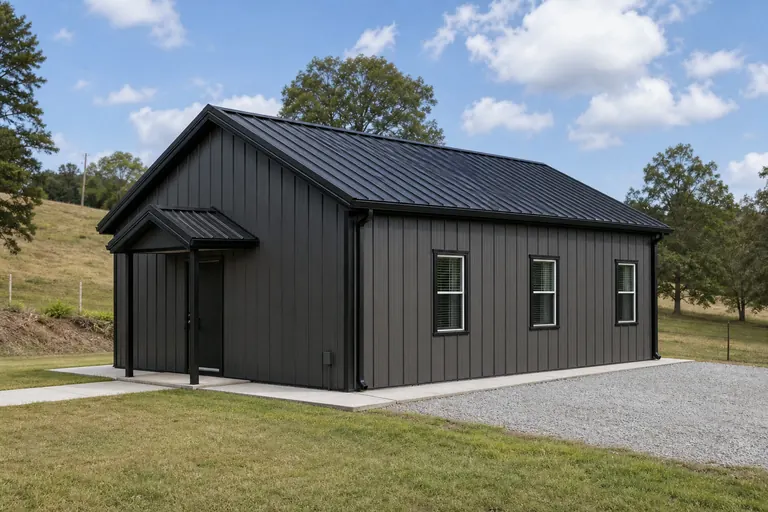 Compact one-room suiteA frequent choice on tighter Piedmont or Coastal Plain suburban-adjacent lots where footprint is the binding constraint.Living-first layout with separate sleeping zoneCommon on larger Valley and Ridge or Blue Ridge acreage where the guest house doubles as a longer-stay unit for family.Kitchenette-equipped rental unitA layout suited to landowners converting former agricultural acreage into an income-generating guest house, subject to local zoning.
Example Configuration — for planning purposes only.
Preparation
Before finalizing a Virginia guest house site
These steps address the province split, land-use shift, and county-level hazard variation that are specific to Virginia.
Step 1
Identify your physiographic province
Confirm whether your parcel sits on the Coastal Plain, Piedmont, Blue Ridge, Valley and Ridge, or Appalachian Plateau before choosing a foundation approach.
Step 2
Check your county or city's FEMA NRI score
FEMA scores all 133 Virginia counties and independent cities individually across 18 hazard types; look up yours rather than assuming a statewide condition.
Step 3
Confirm accessory-dwelling and zoning rules locally
Occupancy and permit thresholds for a guest house are set by your county or city, not by the state.
Step 4
Verify delivery access on sloped terrain
On Blue Ridge, Valley and Ridge, or Appalachian Plateau sites, confirm a delivery vehicle can reach the pad before ordering materials.
Questions
Virginia guest house questions
Answered honestly at state level; county- and city-specific rules are routed to the local authority.
Permit requirements and any accessory-dwelling rules are set locally by your county or independent city, so your local building department is the reliable source for your specific parcel.
Yes. Virginia Energy identifies five distinct physiographic provinces — Coastal Plain, Piedmont, Blue Ridge, Valley and Ridge, and Appalachian Plateau — and each changes the foundation, grading and access conversation for a detached building.
It can be contextually relevant. USDA recorded a drop from 43,225 farms in 2017 to 38,995 in 2022, a trend consistent with more rural acreage shifting toward non-agricultural uses like a guest house, though this doesn't predict any individual parcel's history.
FEMA's National Risk Index provides individual scores for all 133 of Virginia's counties and independent cities across 18 hazard types. Check your specific locality rather than assuming a single statewide risk level.
We don't publish state-level prices here, since cost depends on size, finish level, foundation type and site work. Our cost pages cover what drives the number; a quote covers your specific project.
That depends entirely on your locality's zoning and short-term or long-term rental rules for accessory dwellings. Confirm with your county or city planning office before assuming a rental use is permitted.
Sources for the Virginia facts on this page
This page states no code requirement, wind speed, snow load, permit rule, price or supplier claim. The state-specific facts it does use are listed with their publisher below.
Virginia Energy (the state geological survey) identifies five distinct physiographic provinces crossing the state: the Coastal Plain, Piedmont, Blue Ridge, Valley and Ridge, and Appalachian Plateau.
Virginia Energy (Virginia Department of Energy, Division of Geology and Mineral Resources) · Reference material, current · Tier 2
https://energy.virginia.gov/geology/FossilProvinces.shtmlThe Virginia Department of Conservation and Recreation publishes a statewide overview describing the physiography and vegetation differences across Virginia's Coastal Plain, Piedmont, Blue Ridge, Ridge and Valley, and Appalachian Plateau provinces.
Virginia Department of Conservation and Recreation (DCR), Division of Natural Heritage · Version 2.0, March 2021 · Tier 2
https://www.dcr.virginia.gov/natural-heritage/natural-communities/document/ncoverviewphys-veg.pdfVirginia had 38,995 farms in 2022, down from 43,225 farms in 2017.
USDA National Agricultural Statistics Service (NASS), Virginia Field Office · 2022 (with 2017 comparison) · Tier 2
https://articles.vafb.com/new-census-reveals-a-decrease-in-farms-and-farmland/Virginia builders and developers were authorized (by building permit) to build 34,059 total new privately-owned housing units in 2024 (22,796 in single-family buildings, 448 in 2-unit buildings, 80 in 3-4 unit buildings, and 10,735 in buildings of 5+ units).
U.S. Census Bureau · 2024 (final annual) · Tier 1
https://www2.census.gov/econ/bps/State/st2024a.txtFEMA's National Risk Index tool provides county- and tract-level composite and hazard-specific risk scores for all 133 of Virginia's counties and independent cities across 18 natural hazard types.
Federal Emergency Management Agency (FEMA) · Current NRI release · Tier 1
https://www.fema.gov/flood-maps/products-tools/national-risk-index