
Garden shed · VA
Garden Sheds in Virginia
Virginia is not one terrain to plan a shed around — it's five. Virginia Energy, the state's geological survey, names five distinct physiographic provinces crossing the commonwealth: the Coastal Plain, Piedmont, Blue Ridge, Valley and Ridge, and Appalachian Plateau. A garden shed pad that works on flat Tidewater sand behaves nothing like one set on a Blue Ridge slope, so the useful Virginia question isn't a single statewide answer, it's which province your property sits in. Layered on top is a farm base that's shrinking in count — 38,995 farms in 2022, down from 43,225 in 2017 — but still active enough that small working properties remain one of the state's steadiest shed buyers.
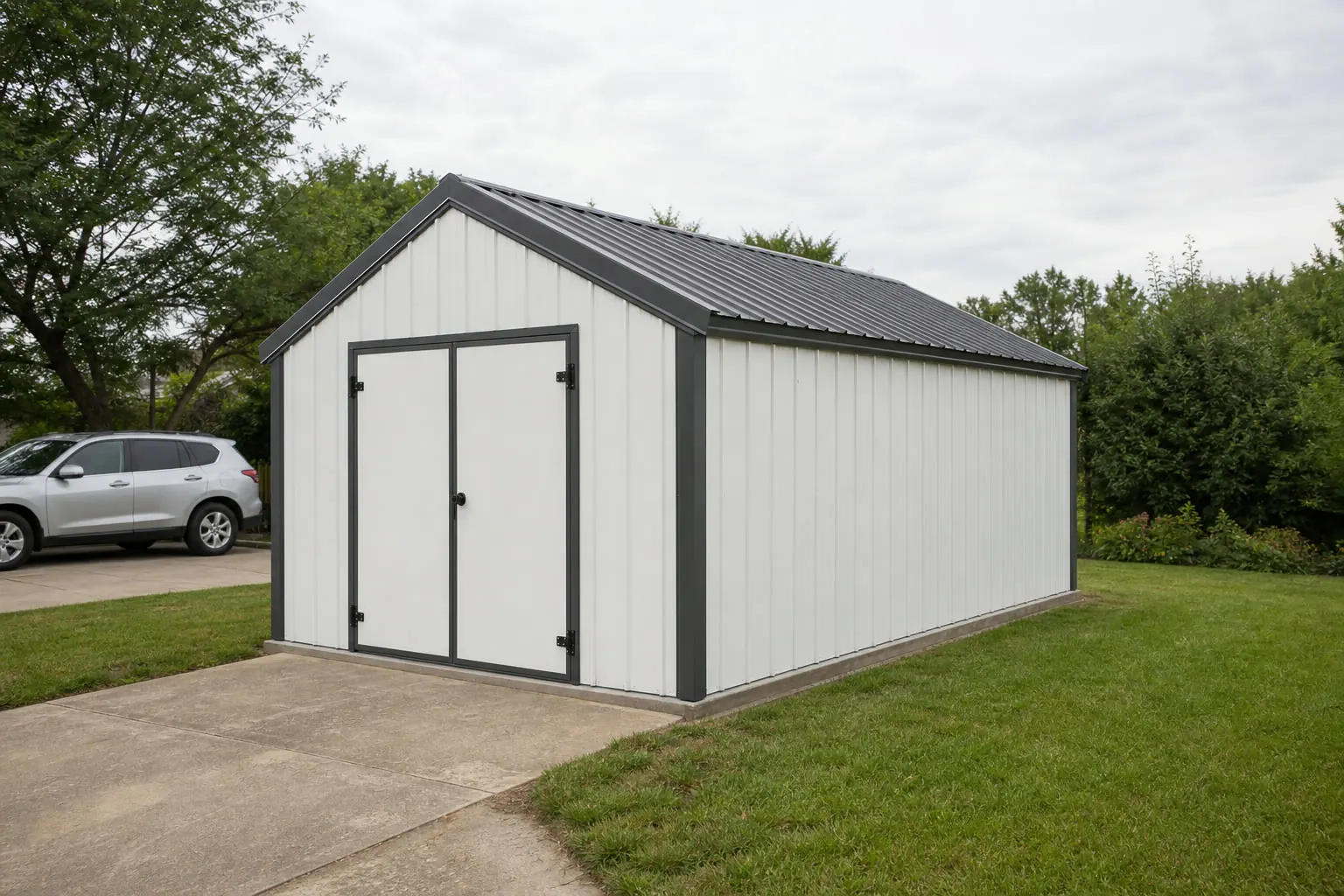
The intersection
Virginia's five provinces decide the shed's foundation, not a single statewide answer
A garden shed foundation plan needs to know which of Virginia's five physiographic provinces the property sits in before it can be trusted.
Virginia Energy, the commonwealth's geological survey, names five distinct physiographic provinces running roughly east to west: the Coastal Plain, Piedmont, Blue Ridge, Valley and Ridge, and Appalachian Plateau. That is not academic trivia for a shed buyer — the Virginia Department of Conservation and Recreation separately documents real physiography and vegetation differences across those same provinces, which translates directly into different soil drainage, grading needs and slope conditions on the ground.
A Coastal Plain property near Tidewater typically means flat, sandy, well-drained ground where a simple gravel or paver pad performs well but standing water after heavy rain is worth checking for. A Piedmont site usually means rolling terrain with clay-heavier soil that drains more slowly. A Blue Ridge or Valley and Ridge property can mean genuine slope, where a shed pad needs cut-and-fill grading or a leveled platform before it goes anywhere near a corner post. None of these are a Virginia-wide default; they are property-specific, and knowing your province is the first useful step.
That regional variation matters more for a shed than the state's overall climate normals do. Richmond's 1991-2020 station normal shows 45.50 inches of annual precipitation, a helpful central-Virginia reference, but it describes one station in one province — not a number to extend automatically to a mountain property or a coastal one.
The practical takeaway is sequencing: identify the province first, confirm the specific parcel's grading and drainage condition second, and only then choose a pad type and size. Skipping straight to a footprint choice without that first step is how a shed ends up needing rework after delivery.
Site context
How each Virginia province changes shed site prep
Matching your prep plan to your province avoids a foundation surprise after delivery.
Coastal Plain
Flat, often sandy ground with generally easy grading, but check for slow drainage and a high water table before finalizing a pad location.
Piedmont
Rolling terrain with heavier clay soils; expect more attention to drainage direction than to slope correction.
Blue Ridge and Valley and Ridge
Genuine elevation change is common; a shed pad frequently needs cut-and-fill grading or a built-up leveled platform.
Appalachian Plateau
The state's most rugged far-southwest terrain, where a level building site itself can be the limiting factor before shed size is even discussed.
Demand context
A shrinking farm count, a steady new-housing pipeline
Virginia's shed demand comes from two directions that are moving in opposite trend lines but both remain active.
Virginia counted 38,995 farms in 2022, down from 43,225 in 2017 — a real decline, but tens of thousands of working farms remain, and many of the smaller ones rely on a garden shed for tool, seed and supply storage rather than a full outbuilding. That segment of demand is shrinking slowly, not disappearing.
At the same time, Virginia authorized 34,059 total new privately-owned housing units statewide in 2024, with 22,796 of those in single-family buildings. New single-family construction routinely creates fresh backyards without existing storage, which is where a large share of Virginia's non-farm garden shed demand originates every year.
Both buyer profiles are drawn from the same statewide trend lines rather than a single combined figure; neither number predicts an individual buyer's motivation on its own, but together they explain why Virginia's garden shed demand holds up even as the farm count declines.
- Working-farm buyers
- Sized around tool, seed and supply storage on a smaller, often long-held property.
- New single-family lot buyers
- Sized around lawn equipment and household overflow on a recently built property with no existing outbuilding.
Get Virginia garden shed quotes
Tell us your locality, province and intended use. We route it with the Virginia and garden shed context already attached.
Configuration
What Virginia garden sheds are usually asked to do
Given the province split and the two buyer profiles above, most Virginia sheds serve one of these needs.
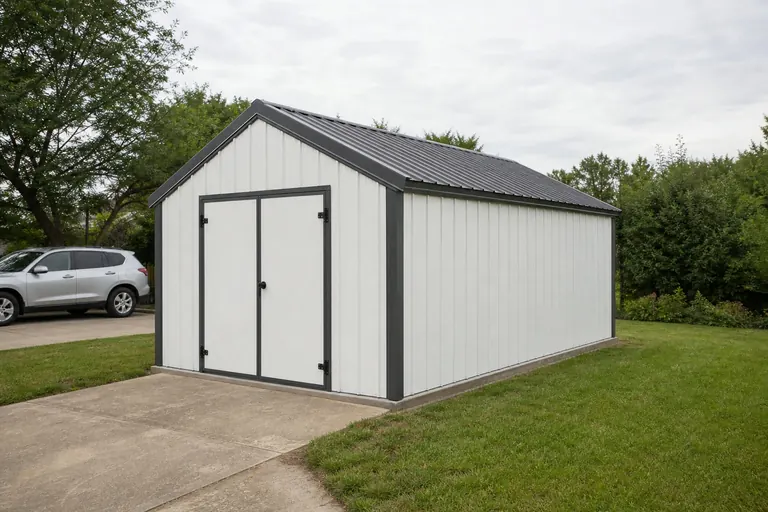 Small-farm tool and supply storageCompact storage for hand tools, seed and supplies on a working Virginia farm.New-build backyard storageGeneral lawn and household overflow storage on a recently built single-family lot.Slope-site accessory storageA right-sized shed built onto a leveled platform on a Blue Ridge or Valley and Ridge property.
Example Configuration — for planning purposes only.
Footprint
Sizes that suit a Virginia lot or parcel
Most Virginia sheds are sized to the specific site, since terrain rather than lot size is often the deciding factor.
8′ × 10′
80 sq ft
A compact footprint that works on a tight suburban lot or a leveled corner of a sloped parcel.
10′ × 12′
120 sq ft
Common for combined lawn equipment and household storage on a new single-family lot.
12′ × 16′
192 sq ft
A larger option for small-farm tool and supply storage where flat ground allows it.
Example Configuration — for planning purposes only.
This page explains why Virginia buyers land in this range; your locality's zoning and your property's grading decide what actually fits.
Questions
Virginia garden shed questions
State-level answers where we have sourced facts, and a route to the right office where we do not.
Permit thresholds and setback rules are set locally by your county or independent city's building department, not by a single statewide figure. Confirm before finalizing size or placement.
Yes. Virginia Energy documents five distinct physiographic provinces — Coastal Plain, Piedmont, Blue Ridge, Valley and Ridge, and Appalachian Plateau — and the Department of Conservation and Recreation confirms real physiography and vegetation differences between them, which changes grading and drainage needs by property.
Often, yes. Virginia still counted 38,995 farms in 2022, and a compact shed is a low-cost way to store tools and supplies without the expense of a larger outbuilding, even as the statewide farm count has declined since 2017.
We don't state a statewide design figure. Richmond's 1991-2020 normal is 45.50 inches of annual precipitation, useful as central-Virginia planning context, but your specific province and site drainage matter more than any single number.
FEMA's National Risk Index scores all 133 Virginia counties and independent cities individually across 18 hazard types. We don't generalize a single statewide ranking here; check your specific locality on FEMA's tool.
Sources for the Virginia facts on this page
This page states no code requirement, wind speed, snow load, permit rule, price or supplier claim. The state-specific facts it does use are listed with their publisher below.
Virginia Energy (the state geological survey) identifies five distinct physiographic provinces crossing the state: the Coastal Plain, Piedmont, Blue Ridge, Valley and Ridge, and Appalachian Plateau.
Virginia Energy (Virginia Department of Energy, Division of Geology and Mineral Resources) · Reference material, current · Tier 2
https://energy.virginia.gov/geology/FossilProvinces.shtmlThe Virginia Department of Conservation and Recreation publishes a statewide overview describing the physiography and vegetation differences across Virginia's Coastal Plain, Piedmont, Blue Ridge, Ridge and Valley, and Appalachian Plateau provinces.
Virginia Department of Conservation and Recreation (DCR), Division of Natural Heritage · Version 2.0, March 2021 · Tier 2
https://www.dcr.virginia.gov/natural-heritage/natural-communities/document/ncoverviewphys-veg.pdfVirginia had 38,995 farms in 2022, down from 43,225 farms in 2017.
USDA National Agricultural Statistics Service (NASS), Virginia Field Office · 2022 (with 2017 comparison) · Tier 2
https://articles.vafb.com/new-census-reveals-a-decrease-in-farms-and-farmland/Virginia builders and developers were authorized (by building permit) to build 34,059 total new privately-owned housing units in 2024 (22,796 in single-family buildings, 448 in 2-unit buildings, 80 in 3-4 unit buildings, and 10,735 in buildings of 5+ units).
U.S. Census Bureau · 2024 (final annual) · Tier 1
https://www2.census.gov/econ/bps/State/st2024a.txtRichmond, VA's 1991-2020 annual climate normal precipitation is 45.50 inches with an annual normal snowfall of 8.8 inches.
NOAA National Centers for Environmental Information (NCEI) · 1991-2020 · Tier 1
https://www.ncei.noaa.gov/access/services/data/v1?dataset=normals-annualseasonal-1991-2020&dataTypes=ANN-PRCP-NORMAL,ANN-SNOW-NORMAL&stations=USW00013740&format=jsonFEMA's National Risk Index tool provides county- and tract-level composite and hazard-specific risk scores for all 133 of Virginia's counties and independent cities across 18 natural hazard types.
Federal Emergency Management Agency (FEMA) · Current NRI release · Tier 1
https://www.fema.gov/flood-maps/products-tools/national-risk-index