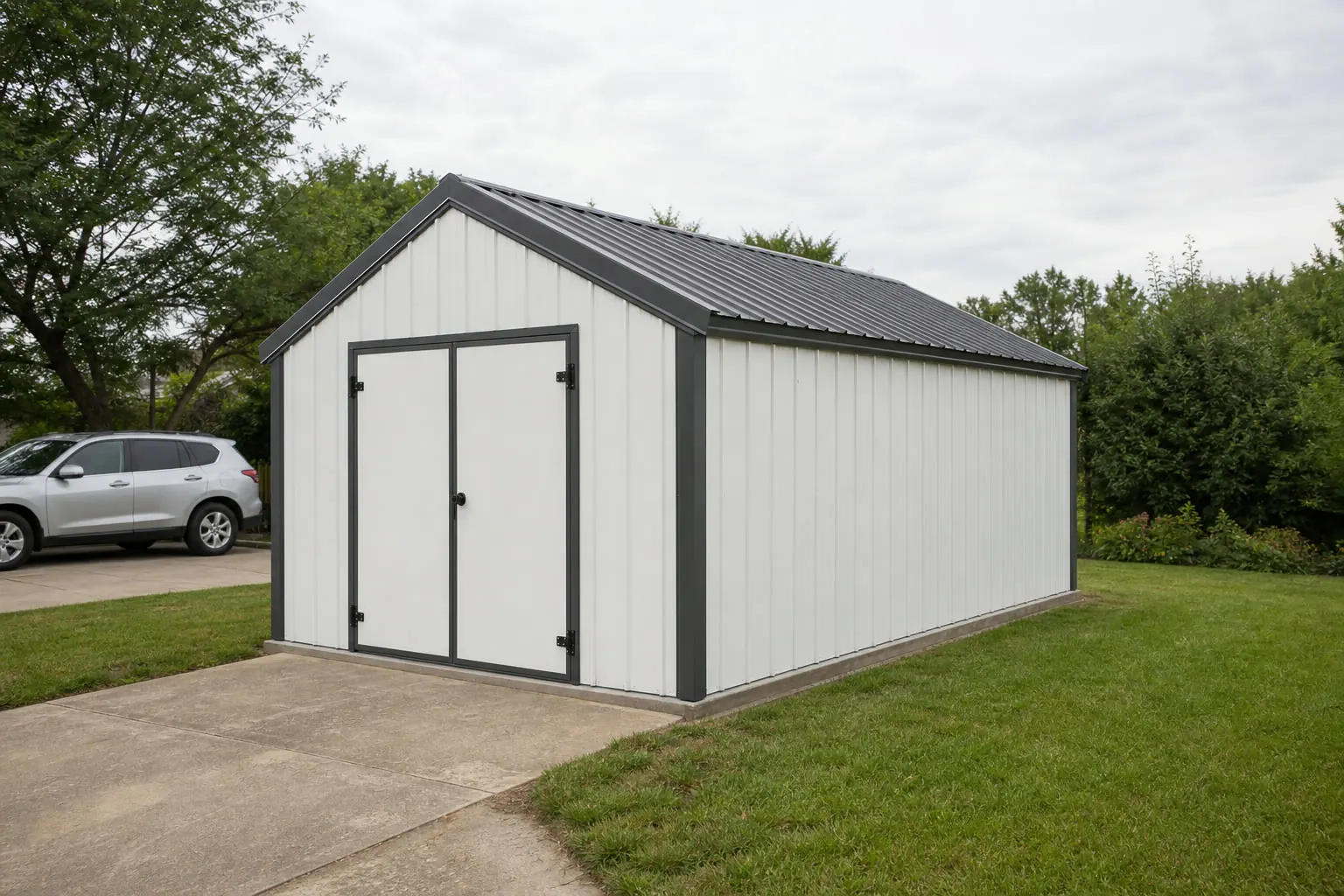
Garden shed · PA
Garden Sheds in Pennsylvania
A garden shed is small enough that engineering rarely enters the conversation, which is exactly why the Pennsylvania-specific work sits somewhere less obvious: the Commonwealth's Uniform Construction Code is a single state-adopted code, but under Act 45 of 1999 each of Pennsylvania's 2,562 municipalities separately elects whether it enforces that code itself, hands enforcement to a third-party agency, or opts out of local enforcement entirely — so the first real question for a shed buyer is not what the state code says, but which enforcement path their own municipality has chosen. Layer that on top of six named physiographic provinces running from the Appalachian Plateaus to the Atlantic Coastal Plain, and a shed's pad, drainage, and access decisions vary by county in ways a single statewide description would flatten out.
Permitting
Why a Pennsylvania shed's permit question is municipal, not statewide
Pennsylvania's Uniform Construction Code is a single state-adopted code, but who actually enforces it against a small backyard structure is decided municipality by municipality.
The Pennsylvania Department of Labor & Industry administers the Uniform Construction Code (UCC) as the Commonwealth's statewide building code. What is not statewide is enforcement: under Act 45 of 1999, each of Pennsylvania's 2,562 municipalities independently elects whether it will enforce the UCC itself, contract enforcement out to a third-party agency, or opt out of local enforcement, with opt-out municipalities then falling under the state's default enforcement arrangement.
For most building types that election matters because of inspection sequencing and fee schedules. For a garden shed, it matters more simply: approval expectations for accessory structures are set by each municipality's own enforcement election rather than by the statewide UCC text, so this page cannot describe a single shed threshold that holds everywhere in Pennsylvania. The only reliable way to answer it for a specific lot is to contact that municipality's code office directly and ask how it handles accessory structures under its UCC election.
That structure also means two neighboring Pennsylvania municipalities can legitimately handle the same size shed differently — one enforcing directly, the next using a contracted third-party agency — so a buyer moving a shed plan between counties should not assume the prior municipality's answer carries over.
Terrain
What each Pennsylvania physiographic province asks of a shed pad
The Pennsylvania DCNR names six physiographic provinces running northwest to southeast, and a shed's pad logic shifts with each.
Appalachian Plateaus (much of the north and west)
Rolling to hilly terrain where a level pad is often built rather than found, and where equipment access to a shed door matters more on working land.
Ridge and Valley (central Pennsylvania)
Alternating ridgelines and valley floors mean lot slope varies sharply within a short distance, so grading needs are lot-specific rather than county-wide.
Piedmont and Atlantic Coastal Plain (southeast, toward Philadelphia)
Flatter ground where drainage, not grading, is the recurring first question for a shed pad, similar in kind to other Coastal Plain siting logic but distinct to this corner of the Commonwealth.
Land use
Small-farm storage roles and why one climate number won't do
Pennsylvania's roughly 49,000 farms shape what a shed is used for on working land, while the state's regional climate reporting means pad-drainage decisions stay local rather than statewide.
The Center for Rural Pennsylvania's analysis of the 2022 Census of Agriculture counted about 49,000 farms in the Commonwealth, roughly 3 percent of the nation's roughly 2 million farm operations. On a Pennsylvania farm at that scale, a garden shed is frequently the smaller, separate building — holding hand tools, chemicals, or seed kept apart from a main barn or equipment shed — rather than the property's only storage structure. On a suburban lot outside Pittsburgh or Philadelphia, the same shed instead holds mowers and seasonal gear kept out of a garage; the working-farm use case and the suburban use case coexist across the same Commonwealth without either one being the default.
On climate, the Pennsylvania State Climatologist Office at Penn State reports precipitation and temperature across 10 distinct climate regions rather than publishing one statewide figure, and NOAA's current 1991-2020 Climate Normals — referenced by the National Weather Service's State College forecast office — are the basis for the local, station-level normals that actually apply to a given Pennsylvania address. That regional structure means a pad-drainage decision for a shed in the Erie lakeshore region should reference that region's own reporting, not a Philadelphia-area or statewide figure, and this page declares rather than invents a single Pennsylvania-wide precipitation number because none was found in the sourced record.
- Working-farm role
- On Pennsylvania's roughly 49,000 farms, a shed often supplements rather than replaces a main barn for tool and chemical storage.
- Regional, not statewide, climate reference
- Check the Pennsylvania State Climatologist's regional data or your local NWS normal, not a single Commonwealth-wide figure.
- Suburban use case
- Near Philadelphia or Pittsburgh, sheds more often hold lawn equipment kept out of an attached garage.
Get Pennsylvania garden shed quotes
Tell us your municipality, physiographic province, intended use, and rough size. We route it with the Pennsylvania and garden shed context already attached.
Configuration
What Pennsylvania garden sheds are usually used for
Across the Commonwealth's mix of working farms, small acreages, and suburban lots, garden sheds tend to fall into a few recurring roles.
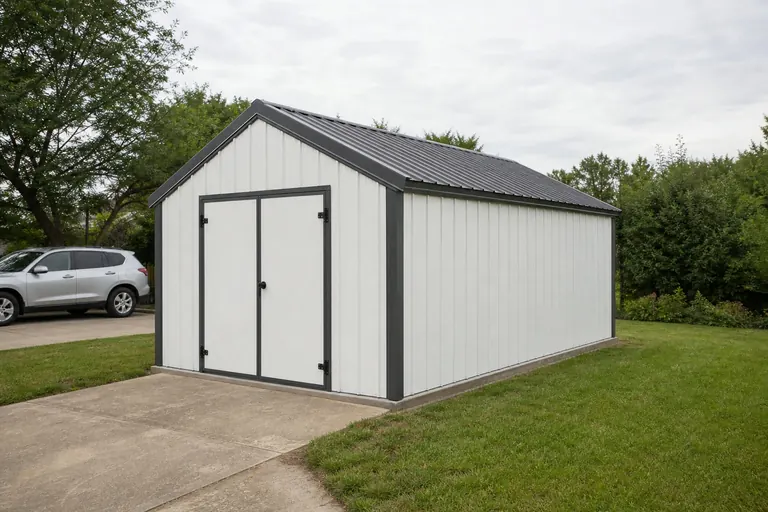 Lawn and garden equipmentThe common suburban role near Philadelphia and Pittsburgh: mowers, trimmers, and seasonal gear kept out of an attached garage.
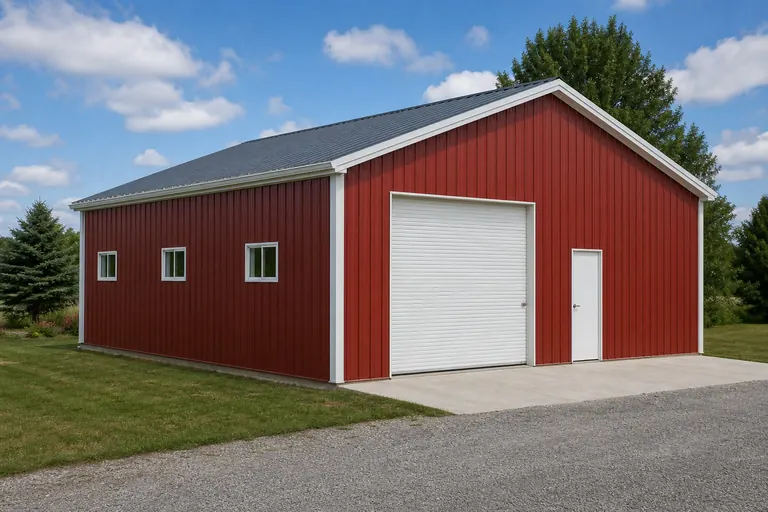 Small workshop or hobby spaceA slightly larger shed used for light hobby work, often sited on Appalachian Plateaus or Ridge and Valley acreage.Small-farm overflow storageTool, chemical, or seed storage kept apart from a main barn on Pennsylvania's roughly 49,000 farm operations.
Example Configuration — for planning purposes only.
Footprint
Sizes that suit a Pennsylvania backyard
Because a shed's pad logic already varies by physiographic province, sizing across Pennsylvania is generally driven by intended use rather than any single statewide site constraint.
8′ × 10′
80 sq ft
A compact footprint for basic lawn and garden equipment on a standard suburban lot.
10′ × 16′
160 sq ft
Common where the shed also serves as light hobby or workshop space.
12′ × 20′
240 sq ft
A larger option for working-farm properties needing separate tool or chemical storage.
Example Configuration — for planning purposes only.
Footprint pages carry the layout and door detail for each of these; this page only explains why Pennsylvania buyers land in this range.
Preparation
Before you place a Pennsylvania garden shed order
A few things resolved in advance keep a small, low-stakes project simple.
Step 1
Confirm your municipality's UCC enforcement election
Ask whether your municipality enforces the Uniform Construction Code directly, contracts it to a third party, or has opted out, before assuming a permit threshold.
Step 2
Identify your physiographic province
Appalachian Plateaus, Ridge and Valley, and Piedmont/Coastal Plain ground each ask a different first question — grading versus drainage.
Step 3
Reference your regional climate data
Use the Pennsylvania State Climatologist's regional reporting or your nearest NWS station normal rather than a single statewide figure.
Step 4
Decide the shed's working role up front
Farm-overflow storage and suburban lawn-equipment storage call for different door placement and access even at the same footprint.
Questions
Pennsylvania garden shed questions
Questions answered honestly at Commonwealth level, with the ones that are municipal or site-specific routed to whoever actually owns them.
No. The Department of Labor & Industry sets the statewide Uniform Construction Code, but under Act 45 of 1999 each municipality separately elects how it enforces that code, so permit requirements for a small shed depend on your specific municipality's election.
The Pennsylvania DCNR names six physiographic provinces from the Appalachian Plateaus to the Atlantic Coastal Plain, and whether a shed pad's first question is grading or drainage depends on which province the backyard sits in.
Not a single statewide one. The Pennsylvania State Climatologist Office reports precipitation and temperature across 10 climate regions rather than one figure, so check your nearest region's or station's data instead.
Pennsylvania counted roughly 49,000 farms in the 2022 Census of Agriculture; on many of them, a garden shed serves as separate tool, chemical, or seed storage kept apart from the main barn rather than as the property's only building.
FEMA's National Risk Index scores 18 named hazards for Pennsylvania counties, but the 'relatively low' statewide characterization found in research came from a third-party aggregator of that data, not FEMA's own summary text — check FEMA's National Risk Index portal directly for your county rather than relying on a secondary source.
We do not publish state-level prices, since cost depends on size, materials, and site work. Our cost pages cover what drives the number; a quote covers your project.
Sources for the Pennsylvania facts on this page
This page states no code requirement, wind speed, snow load, permit rule, price or supplier claim. The state-specific facts it does use are listed with their publisher below.
Pennsylvania's statewide building code, the Uniform Construction Code (UCC), is administered by the Department of Labor & Industry, and under Act 45 of 1999 each municipality elects whether to administer and enforce the UCC itself, opt out of enforcement, or use a third-party agency; opt-out municipalities' UCC enforcement is then handled per the state's default arrangement.
Pennsylvania Department of Labor & Industry · Current program page; Act 45 of 1999 framework · Tier 2
https://www.pa.gov/agencies/dli/programs-services/labor-management-relations/bureau-of-occupational-and-industrial-safety/uniform-construction-code-homePennsylvania's Department of Conservation and Natural Resources states the Commonwealth contains six physiographic provinces, listed northwest to southeast as: Central Lowlands, Appalachian Plateaus, Ridge and Valley, Blue Ridge, Piedmont, and Atlantic Coastal Plain.
Pennsylvania Department of Conservation and Natural Resources (DCNR) · Current DCNR page · Tier 2
https://www.pa.gov/agencies/dcnr/conservation/geology/geology-of-pa/landformsPennsylvania total land area per US Census Bureau state area measurements.
U.S. Census Bureau · 2010 measurement basis · Tier 1
https://www.census.gov/geographies/reference-files/2010/geo/state-area.htmlNumber of farms in Pennsylvania in 2022 and share of national total, per a Pennsylvania state-agency analysis of the Census of Agriculture.
Center for Rural Pennsylvania (state legislative agency), using USDA NASS data · 2022 Census of Agriculture, published May 2024 · Tier 1
https://www.rural.pa.gov/download.cfm?file=Resources%2FPDFs%2FAnalysis+of+2022+Ag+Census+Fact+Sheet+Web.pdfNOAA NCEI's 1991-2020 U.S. Climate Normals are the current basis for local NWS-published normals covering Pennsylvania stations.
National Weather Service (NOAA) · 1991-2020 normals · Tier 1
https://www.weather.gov/ctp/NewNormals