
Carport · NM
Carports in New Mexico
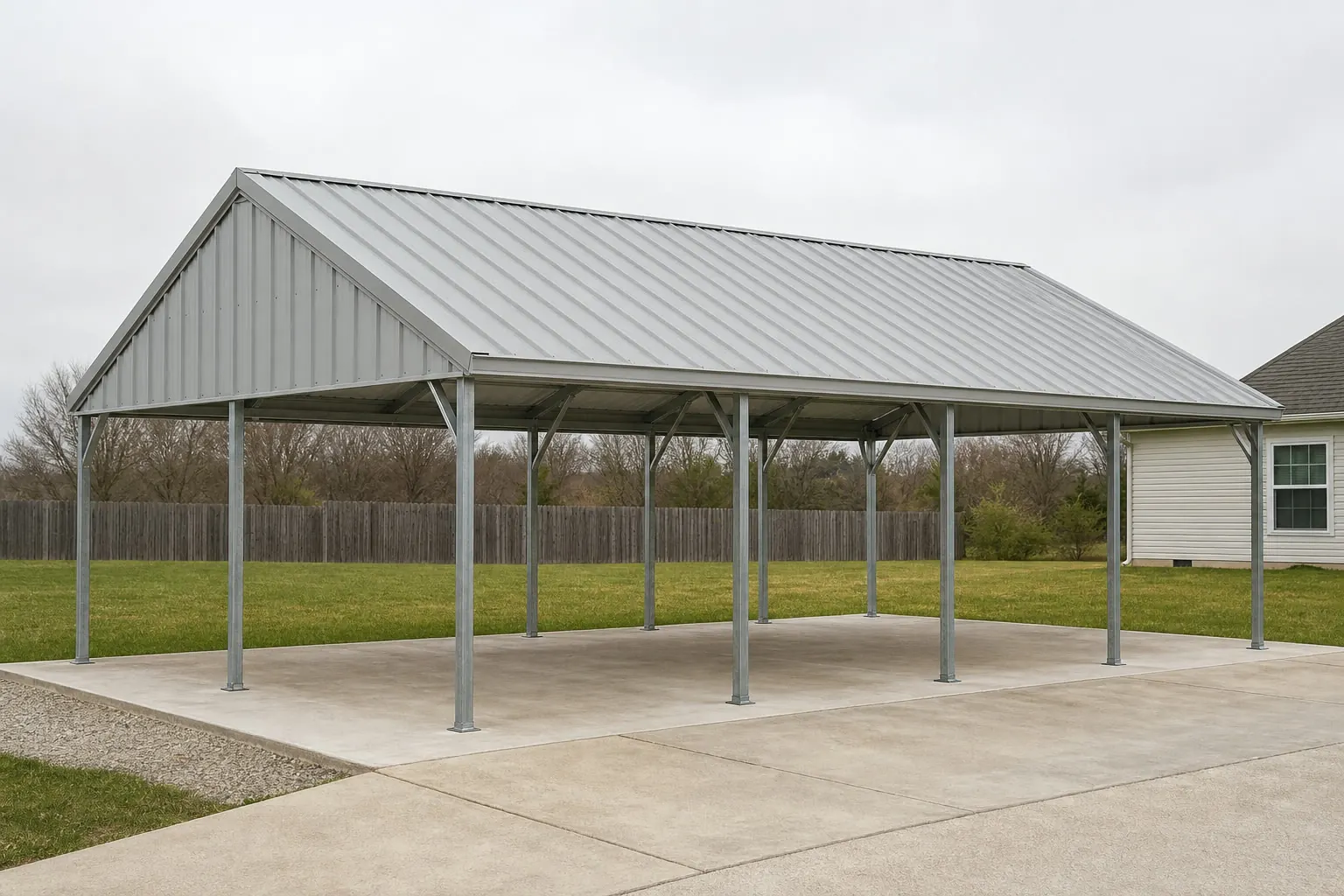
An open-sided carport in New Mexico earns its keep mostly by cutting sun and dust exposure on everyday vehicles, not by shedding snow. NOAA's State Climate Summaries describe the state as arid to semi-arid with high year-to-year precipitation variability, and the state's hazard mitigation plan names severe wind/dust events among its documented hazards. That combination puts anchoring and open-side wind exposure, rather than roof load, at the center of a New Mexico carport decision.
The intersection
What a New Mexico site actually changes about a carport
New Mexico's dry, sun-intense climate and documented wind/dust hazard shift a carport's value proposition toward shade and anchoring rather than snow-shedding.
An open-sided carport works differently in New Mexico than it does in a wetter or snowier state, because the climate it is protecting against is different. NOAA's State Climate Summaries describe New Mexico as arid to semi-arid with high year-to-year precipitation variability, and the Albuquerque station's 1991-2020 normal shows only 8.84 inches of annual precipitation. A roof that would be sized primarily to shed snow load elsewhere is, in New Mexico, mostly a UV and heat shield: cutting the daily sun exposure that fades paint and heats a vehicle's interior is the dominant everyday benefit here.
The state's 2023 Hazard Mitigation Plan documents severe wind/dust events among New Mexico's natural hazards, and that matters more for a carport than for an enclosed building because a carport has no walls to resist lateral wind loads the way a garage does. Post spacing, anchoring and roof attachment are the details that carry the most weight on an open structure here, and they are worth discussing directly with a builder even though the specific engineering requirement for a given parcel comes from the local building department.
The same high year-to-year precipitation variability that shapes the state's climate summary means an open carport still needs a plan for runoff during a rare, intense monsoon storm, even without gutters or a fully enclosed roofline. Grading the slab or pad so water sheds away from parked vehicles, rather than pooling under the structure, is a practical detail worth confirming before installation. None of this substitutes for asking your local building department about wind design, permit thresholds or setback requirements that apply specifically to your lot.
Site context
How carport siting differs across New Mexico
New Mexico's 121,298.2 square miles include low desert valleys, open mesa and higher forested terrain, and an open-sided carport is exposed differently in each.
Low-elevation desert and metro valley sites
Represented by the 8.84-inch annual precipitation normal. UV shading is the daily benefit; monsoon-season runoff planning is the occasional concern.
Open mesa and rangeland sites
Severe wind/dust events named in the state hazard plan hit an open-sided structure hardest here. Anchoring and post bracing deserve extra attention.
Higher-elevation forested edges
Wildfire is a named hazard alongside drought; discuss clearance and siting with the local fire authority if the carport sits near wooded terrain.
Arroyo-adjacent lots
Flash flooding from monsoon storms is documented statewide. Slab elevation relative to a nearby dry wash is worth confirming even in a dry season.
Exposure
Anchoring matters more than roof load for a New Mexico carport
Because a carport has no walls, the state's documented wind/dust hazard puts anchoring and post design ahead of snow-load considerations that dominate carport planning elsewhere.
A carport's open sides mean wind loads transfer directly through the posts and footings rather than being partially absorbed by wall sheathing the way an enclosed garage handles them. New Mexico's hazard mitigation plan names severe wind/dust events as a documented statewide hazard, which is a practical reason to ask a builder about post gauge, footing depth and anchor type before choosing a carport over an enclosed alternative.
Dust is the other everyday exposure. Even without walls to seal, a carport's usefulness in New Mexico includes reducing the amount of windblown grit that settles on a parked vehicle compared with leaving it fully exposed — a modest but real benefit that differs from the full dust exclusion an enclosed metal garage offers.
- Confirm anchoring detail with your builder
- Post spacing and footing depth matter more for an open structure than roof pitch does.
- Grade the pad for runoff
- Plan for a short, intense monsoon burst even without gutters to manage it.
- Set expectations on dust protection
- A carport reduces but does not eliminate windblown dust exposure the way an enclosed garage does.
Get New Mexico carport quotes
Tell us your vehicle count, planned use and rough footprint. We route it with the New Mexico and carport context already attached.
Configuration
What New Mexico carports are usually asked to do
Everyday vehicle sun protection and light equipment cover are the recurring briefs, distinct from RV-scale clearance needs.
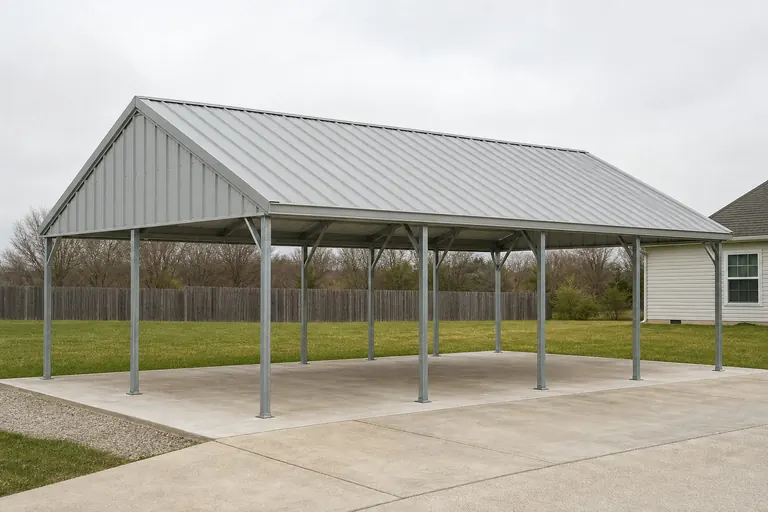 Daily-driver sun shadingA single or double bay over a driveway is a frequent New Mexico carport request, aimed at cutting UV exposure.Light equipment or trailer coverOpen-sided cover for a small trailer or utility equipment kept out of direct sun without needing full enclosure.
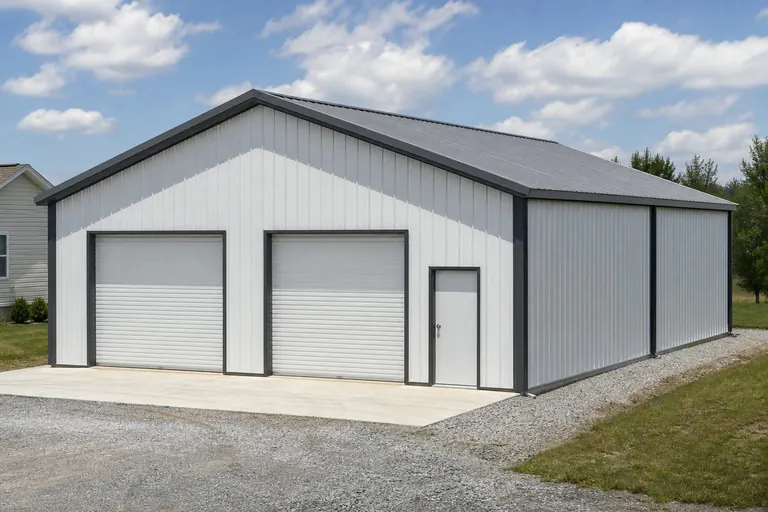 Enclosed upgrade pathWhere dust exclusion or security matters more than budget, a metal garage is the enclosed alternative worth comparing.
Example Configuration — for planning purposes only.
Footprint
Sizes that suit New Mexico carport projects
Most New Mexico carport enquiries are sized around one or two everyday vehicles rather than RV or oversized-equipment clearance.
12′ × 21′
252 sq ft
A common single-vehicle carport footprint for a driveway installation.
18′ × 21′
378 sq ft
A double-bay footprint for two daily-driver vehicles side by side.
20′ × 30′
600 sq ft
Adds depth for a vehicle plus light equipment or trailer storage.
24′ × 30′
720 sq ft
A wider footprint for households needing extra open-sided coverage.
Example Configuration — for planning purposes only.
Footprint pages carry the layout and post detail for each of these; this page only explains why the New Mexico brief centers on sun and dust exposure.
Preparation
Before you request a New Mexico carport quote
Four things resolved in advance make the difference between a comparable quote and a re-quote on a New Mexico lot.
Step 1
Contact your local building department
Ask what your parcel and elevation require before you fix the specification; requirements are set locally, not statewide.
Step 2
Ask about anchoring and post spacing
Open-sided structures carry wind loads differently than enclosed buildings; discuss this with your builder.
Step 3
Grade the pad for runoff
Plan for a short, intense monsoon burst even without gutters to manage it.
Step 4
Decide between open and enclosed
If dust exclusion or security matters more than budget, compare against an enclosed metal garage before committing.
Questions
New Mexico carport questions
Questions we can answer honestly at state level, with the ones we cannot routed to whoever actually owns them.
Yes for sun protection: New Mexico's climate is arid to semi-arid with intense UV exposure, and a carport's main daily benefit here is shading vehicles from that sun rather than shedding snow.
Permit requirements depend on your county or municipality, your parcel and how the structure is used. Your local building department is the only reliable source for that answer.
It can, but grading the pad so runoff sheds away from parked vehicles matters more than it would in a steady-rainfall state, since New Mexico's precipitation is concentrated into short, intense monsoon bursts.
A carport is open-sided and shields vehicles from sun and light weather, while a metal garage fully encloses the space and better excludes windblown dust. Which one fits depends on how much protection and security you need versus budget.
We do not publish state-level prices, because a credible number depends on your specification, site work and current material pricing. Our cost pages cover what drives the number; a quote covers your building.
Sources for the New Mexico facts on this page
This page states no code requirement, wind speed, snow load, permit rule, price or supplier claim. The state-specific facts it does use are listed with their publisher below.
NOAA's State Climate Summaries key messages for the Southwest region describe New Mexico's climate as arid to semi-arid with high year-to-year precipitation variability driven substantially by the North American monsoon.
NOAA National Centers for Environmental Information (NCEI) · State Climate Summaries 2022 · Tier 1
https://statesummaries.ncics.org/chapter/nm/Albuquerque's 1991-2020 annual normal precipitation is 8.84 inches with 7.9 inches of annual snowfall.
NOAA National Centers for Environmental Information (NCEI) · 1991-2020 · Tier 1
https://www.ncei.noaa.gov/access/services/data/v1?dataset=normals-annualseasonal-1991-2020&dataTypes=ANN-PRCP-NORMAL,ANN-SNOW-NORMAL&stations=USW00023050&format=jsonThe 2023 State of New Mexico Hazard Mitigation Plan, prepared to meet FEMA's 44 CFR Part 201 planning criteria, documents the state's natural hazard profile including drought, wildfire, flooding, and severe wind/dust events across its counties.
New Mexico Department of Homeland Security and Emergency Management · 2023-2028 · Tier 2
https://connect.nm.gov/uploads/1/4/1/9/141989814/2023_state_of_new_mexico_hazard_mitigation_plan_3.pdfLocal building permit offices in New Mexico authorized 7,572 new privately-owned housing units in 2024.
U.S. Census Bureau · 2024 (full calendar year) · Tier 1
https://www.census.gov/construction/bps/stateannual.htmlNew Mexico's total land area was measured at 121,298.2 square miles as of the 2010 Census, making it the fifth-largest state by land area.
U.S. Census Bureau · 2010 Census · Tier 1
https://www.census.gov/geographies/reference-files/2010/geo/state-local-geo-guides-2010/new-mexico.html