
Garden shed · IA
Garden Sheds in Iowa
In Iowa, a garden shed is the first line of defense for your seasonal equipment, but it must be built to withstand the state's significant environmental pressures. From the frost-prone soils that can reach -30°F in winter to the high-humidity 110°F summer highs, a garden shed in Iowa faces constant expansion and contraction. Whether you are siting a shed in the steep bluffs of the Loess Hills or on a flat suburban lot, success depends on a solid foundation and a clear understanding of your local city’s zoning rules.
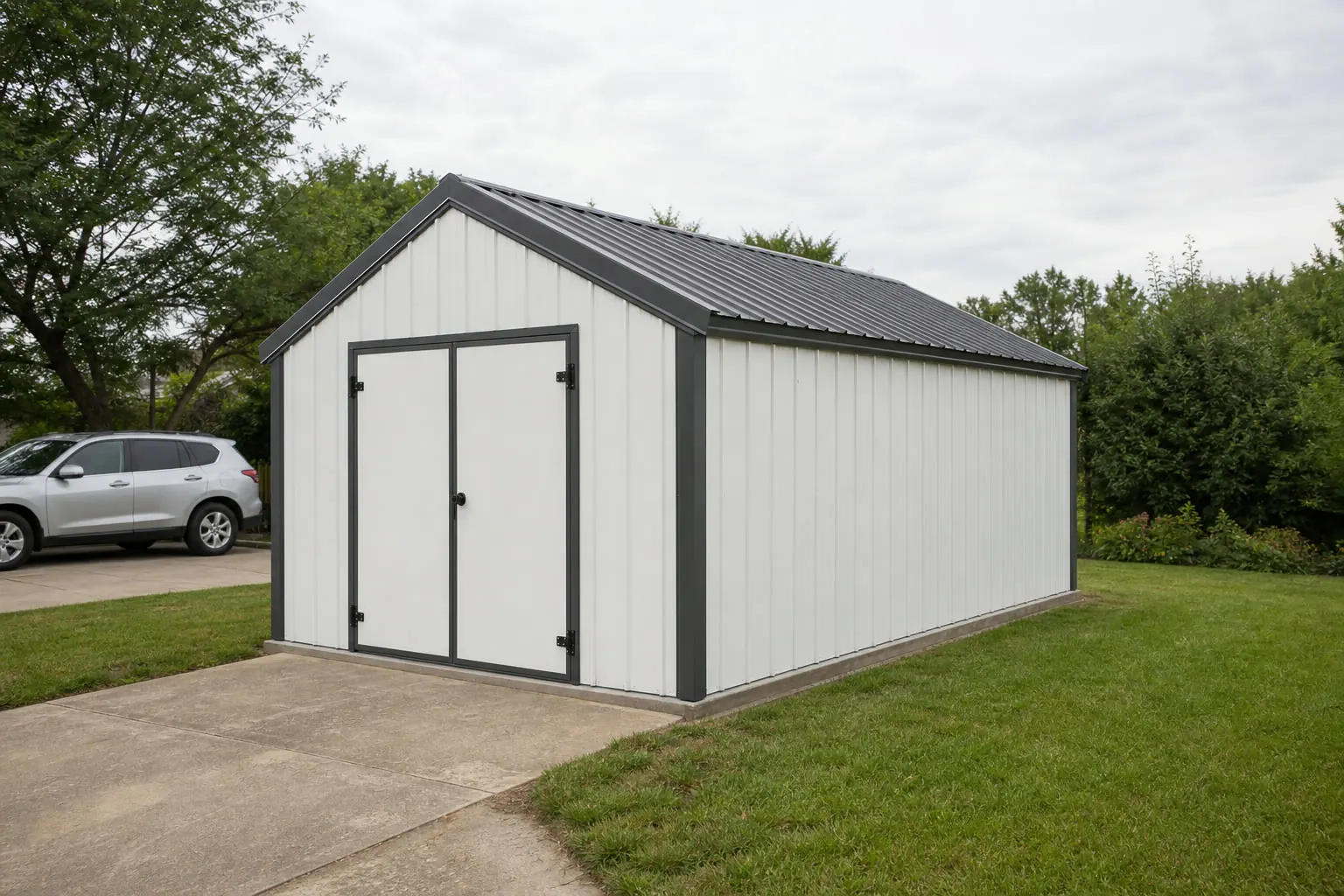
Foundation
Managing Iowa's soil for small sheds
The biggest threat to a garden shed in Iowa isn't the building itself, but the ground beneath it.
Iowa’s soils are famously productive for corn, but they can be problematic for small structures. In many parts of central Iowa, the soil has high clay content, which holds water and expands significantly when it freezes. With winter record lows at -30°F, this expansion—known as frost heave—can easily lift one corner of a shed, causing doors to bind and the frame to warp. For an Iowa garden shed, a simple dirt floor is a mistake. At a minimum, you should clear the vegetation and lay a 4-to-6-inch base of leveled, compacted gravel. This allows for drainage and provides a stable surface that is less affected by the freeze-thaw cycle.
In western Iowa, particularly in the Loess Hills, the challenge is silt erosion. The 200-foot relief of these hills means that water moves quickly and can easily wash away the soil from under a small building. If your yard has a slope, you must plan for grading or a retaining wall to ensure your garden shed stays level. Silt soil is very stable when dry but can behave like liquid when saturated, so managing the 'run-on' water from your house roof or uphill neighbors is critical.
Don't forget the wind. While a garden shed is small, it still needs to be anchored. In the event of a derecho or a severe summer storm, an unanchored shed can be tipped over or moved. We recommend using auger-style ground anchors at each corner, especially if the shed is placed in an open area without a windbreak from a house or fence.
Climate
Protecting tools from Iowa extremes
The 140-degree temperature swing in Iowa (-30°F to 110°F) creates a harsh environment for stored tools and equipment.
If you store gasoline-powered equipment like lawnmowers or tillers, the Iowa summer can be brutal. Temperatures inside a closed metal shed can far exceed the 110°F record high, leading to fuel degradation and pressure buildup in tanks. Adequate ventilation—such as gable vents or a ridge vent—is essential to keep the interior temperature closer to the outside air. It also helps exhaust fumes that can be dangerous if the shed is tightly sealed.
In the winter, the humidity trapped inside a shed will condense on the cold steel surfaces. This 'sweat' then drips onto your tools, leading to rust. This is why many Iowa owners choose to line their garden sheds with a simple vapor barrier or thin insulation. Even a basic radiant barrier can significantly reduce the amount of condensation that forms, extending the life of your shovels, shears, and expensive mowers.
For those with large gardens, consider the workflow. In Iowa, the transition from winter to spring is often wet. Siting your shed on high ground and ensuring you have a solid, dry path from the house means you can access your equipment without tracking mud through the yard. It's a small detail that makes a big difference during the busy planting season.
Before You Place It
A yard-siting checklist for an Iowa garden shed
A garden shed is small enough that buyers skip planning steps a garage or barn would never skip — in Iowa's soil and weather swings, that shortcut is what causes the sticking doors and rusted tools owners complain about.
- Check the site after rain, not just on a dry dayA spot that looks flat and dry in July can hold standing water every spring. Watch where snowmelt and rain actually pool before you commit to a location.
- Compact the base, don't just level itIowa's clay-heavy soils swell when wet and shrink when dry; an uncompacted gravel pad will settle unevenly over a few seasons of that cycle, even on flat central-Iowa ground far from the Loess Hills.
- Keep the shed off bare soilA gravel bed, treated skids or paver base separates the steel floor framing from direct ground contact, which matters through both winter freeze and the humid condensation season.
- Site for airflow, not just convenienceA shed tucked tight against a fence or hedge traps humid air against the walls. Leaving working clearance on at least two sides helps the interior dry out after Iowa's muggy summer stretches.
- Confirm the local size threshold before you orderIowa cities commonly exempt small sheds from a full building permit up to a stated square footage, but that threshold is set locally and varies; a shed just over the line in one city can be well under it in the next town.
Find Iowa Garden Sheds
Ready to organize your yard? Connect with local shed builders who understand Iowa's climate.
Footprints
Garden shed sizes that fit Iowa yards
Iowa garden shed buyers generally choose between compact tool storage and a larger size that doubles as a potting space, and local setback rules often decide how much yard is usable.
6′ × 8′
48 sq ft
A compact footprint for hand tools and a mower, small enough to clear tight side-yard setbacks on older Iowa city lots.
8′ × 10′
80 sq ft
A dependable all-purpose size, with enough floor space for a mower, tiller and shelving without crowding the aisle.
10′ × 12′
120 sq ft
A larger option for buyers combining storage with a potting bench or seasonal workspace, more common on rural or larger suburban lots.
Example Configuration — for planning purposes only.
Confirm your city's exempt-size threshold before ordering; a shed that clears the limit in one Iowa town can require a permit in the next.
Site Context
How Iowa's regions change shed siting
Where in Iowa you're building changes the site-prep priority for a garden shed more than the shed itself does.
Loess Hills (Western Iowa)
The steep, silt-based bluffs mean even a small shed needs terrace-grading and attention to runoff; silt that's stable when dry can wash out quickly in heavy rain.
Des Moines Lobe (Central Iowa)
This flatter, glaciated region tends toward poorly drained, clay-heavy soil, so the priority shifts from grading to compaction and staying above standing water.
Southern Iowa Drift Plain
Rolling terrain here means access matters as much as the pad; a shed sited low on a slope can collect runoff from the whole yard above it.
Questions
Iowa Garden Shed FAQ
Common questions about small storage in Iowa.
In most Iowa cities, sheds under a certain size (often 120 or 200 sq. ft.) do not require a building permit, but you must still follow zoning setback rules.
It's not recommended. Iowa's frost-prone and often wet soil will cause the shed to settle unevenly and lead to premature rotting or rusting of the base.
Ensure the shed has proper ventilation and consider adding a vapor barrier or thin insulation to the interior to manage condensation during temperature shifts.
Indirectly, yes. FEMA has specifically cited drought as important to Iowa's water-dependent farm economy, and the same soils that dry and shrink in a drought also swell when wet again; a compacted base handles that swing far better than bare, ungraded ground.
Properties near this 11,484-acre Iowa DNR forest in Harrison and Monona counties sit in soils the state itself manages for erosion control, so terrace-grading and compaction matter more there than on flatter ground elsewhere in Iowa.
Sources for the Iowa facts on this page
This page states no code requirement, wind speed, snow load, permit rule, price or supplier claim. The state-specific facts it does use are listed with their publisher below.
NWS Des Moines climatological records (1878-present) list a record daily high of 110°F (July 25, 1936 and August 4, 1918) and a record low daily minimum of -30°F (January 5, 1884) at the Des Moines station.
National Weather Service (NOAA), Des Moines IA office · 1878-2025 period of record · Tier 1
https://www.weather.gov/media/dmx/Climate/DesMoinesOverallExtremesClimateData.pdfNWS Des Moines climatological records (1878-present) list a record daily high of 110°F (July 25, 1936 and August 4, 1918) and a record low daily minimum of -30°F (January 5, 1884) at the Des Moines station.
National Weather Service (NOAA), Des Moines IA office · 1878-2025 period of record · Tier 1
https://www.weather.gov/media/dmx/Climate/DesMoinesOverallExtremesClimateData.pdfThe Loess Hills of western Iowa rise roughly 200 feet above the flat Missouri River floodplain and form a narrow band running north-south for about 200 miles along the Missouri River, with steep angles and sharp bluffs on their western side.
U.S. Geological Survey (USGS) · USGS reference publication · Tier 1
https://www.usgs.gov/publications/geology-loess-hills-iowaFEMA's National Risk Index dataset covers 18 natural hazards (including drought, tornado, hail, cold wave, and severe winter weather relevant to Iowa) at the county and Census tract level; FEMA has cited Iowa specifically in a published case study describing drought's importance to the state's water-dependent farm economy.
Federal Emergency Management Agency (FEMA) · Current FEMA case study/NRI release · Tier 1
https://www.fema.gov/case-study/drought-hazard-use-caseIowa's Loess Hills State Forest, near the state's western border in Harrison and Monona counties, comprises 11,484 acres across four management units.
Iowa Department of Natural Resources · Current DNR property description · Tier 2
https://www.iowadnr.gov/places-go/state-forests/loess-hills-state-forest