
Carport · CO
Carports in Colorado
Colorado is not one climate zone for a carport — it is two, joined by a very tall gradient in between. NETSTATE's geography reference describes Colorado as having the highest mean elevation of any U.S. state, with 54 peaks above 14,000 feet, while the eastern two-fifths of the state sits as flat plains. Mount Elbert alone tops out at 14,440 feet (NAVD 88). That range matters for a carport because a foothill or mountain-adjacent lot and an eastern-plains lot present different snow-shedding and wind-exposure planning conversations under the same state name. Layered on top of that, the Colorado Office of the State Architect confirms there is no single statewide building-code agency for general construction — its own code-setting authority reaches only state-owned or state-lease-purchased buildings — so the actual permit and inspection path for a carport comes from whichever city or county covers the lot, not from a document filed in Denver.
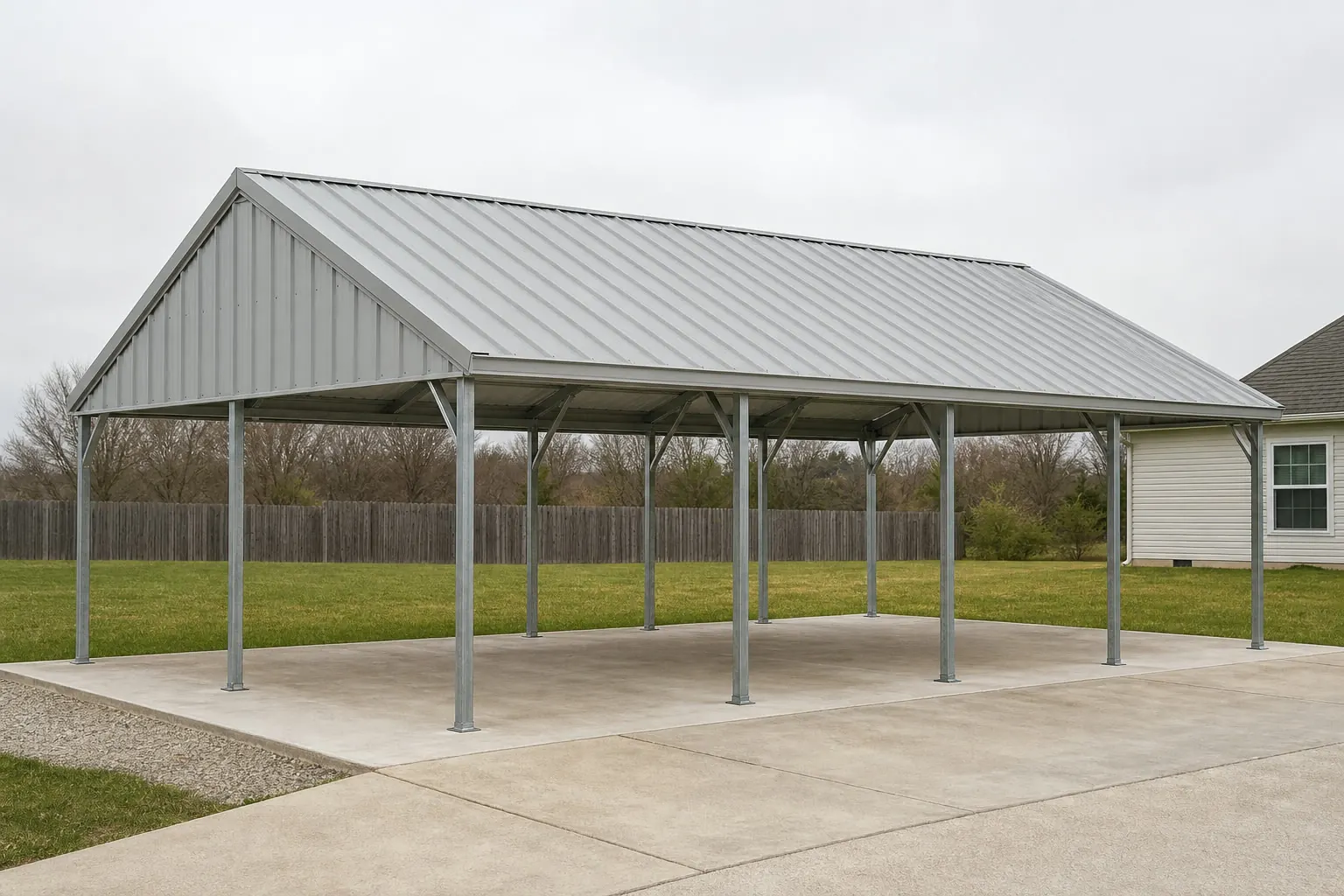
Two Colorados
A Colorado carport plan depends on which Colorado you're in
The distance between Mount Elbert's 14,440-foot summit and the flat eastern plains is large enough that a single statewide carport recommendation would be dishonest.
Mount Elbert, Colorado's highest point, reaches 14,440 feet elevation on the NAVD 88 datum, and NETSTATE's geography reference separately notes the state holds the highest mean elevation of any U.S. state, with 54 peaks above 14,000 feet. Those are mountain-region facts. The same reference notes the eastern two-fifths of Colorado is flat plains — a genuinely different siting environment with different terrain, access and exposure logic.
For a carport, that split matters practically. A lot near the foothills or higher terrain sits in a different snow-accumulation and wind-funneling environment than a lot on the eastern plains, even though both addresses carry the same state name. This page does not assign a snow load or wind speed to either environment — those figures come from your local building department and your engineer of record — but it is fair to say the two environments deserve separate conversations with your builder rather than one generic answer.
The Colorado Geological Survey's physiographic map backs this up structurally: it divides the state into the Southern Rocky Mountains, the Great Plains (with High Plains, Colorado Piedmont and Raton Basin subprovinces), the Wyoming Basin, and the Colorado Plateau. Knowing which of those regions your lot sits in is a better starting point than 'Colorado' alone.
Jurisdiction
Colorado sends carport permitting to the local level by design
There is no single statewide building-code agency for general construction; the Office of the State Architect's own authority stops at state-owned buildings.
The Colorado Office of the State Architect confirms it sets minimum codes only for state-owned or state-lease-purchased buildings — not for private residential or commercial accessory structures like a carport. General construction is left to local adoption, coordinated loosely through the Department of Local Affairs' Division of Housing and its Planning for Hazards program.
The Division of Housing's own codified rule, 8 CCR 1302-8, makes the structure explicit: its state housing board resolutions apply only where a local standard does not already exist. That is a default-to-local design, not an oversight, and it means a carport buyer in one Colorado county should never assume the requirements they learned in a neighboring county will carry over.
- Call your city or county first
- Ask what documentation an open-sided carport needs on your specific parcel before finalizing a spec.
- Don't assume a state rulebook exists
- The Office of the State Architect's authority covers state-owned buildings only, not private carports.
- Check whether a local standard already exists
- Division of Housing resolutions apply only in the absence of one, per 8 CCR 1302-8.
Terrain
How Colorado's physiographic regions touch carport siting
The Colorado Geological Survey's four-region split gives a more useful starting point than a single statewide description.
Southern Rocky Mountains
Higher elevation, steeper access and terrain that likely calls for a more careful roof-shape and anchoring conversation with a local builder.
Great Plains (High Plains, Piedmont, Raton Basin)
Flatter ground across the state's eastern two-fifths, generally simpler site access for a standard carport footprint.
Wyoming Basin
A distinct northern physiographic province with its own terrain character worth confirming locally rather than assuming plains-style siting.
Colorado Plateau
Western Colorado's plateau country, again distinct from both the mountain corridor and the eastern plains for access and grading planning.
Get Colorado carport quotes
Tell us your elevation band, planned use and rough footprint. We route it with the Colorado and carport context already attached.
Configuration
What Colorado carport briefs are usually asked to do
Daily-vehicle shading and equipment cover are the common briefs, with elevation shaping the roof-shape and anchoring conversation rather than the basic footprint.
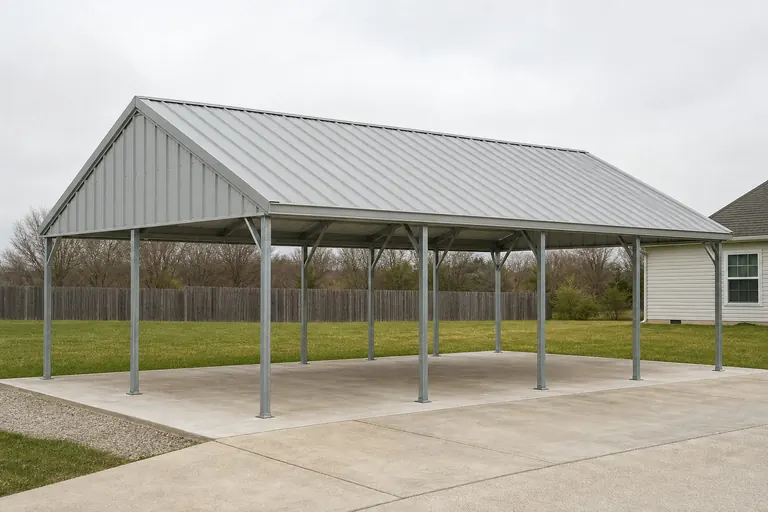 Foothill or mountain-adjacent shadingA single or double bay where elevation and terrain make a builder's roof-shape recommendation worth asking for specifically.Eastern-plains daily coverA straightforward footprint on flatter ground with more standard local siting logic.
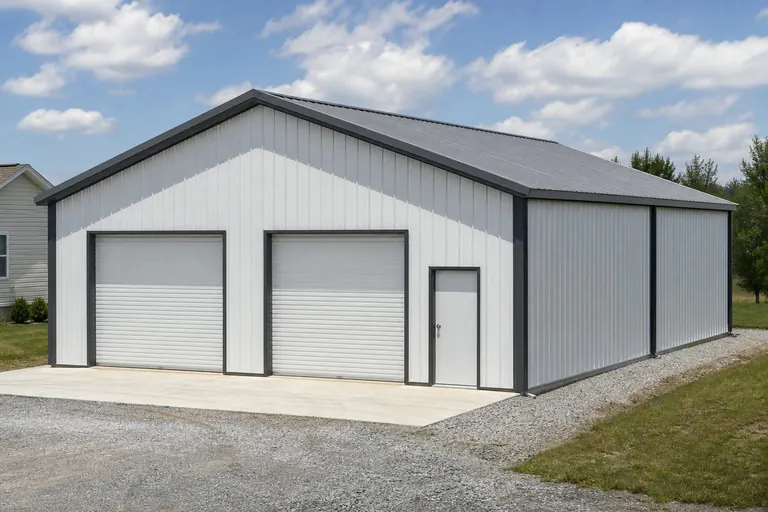 Enclosed upgrade pathWhere full weather exclusion matters more than budget, a metal garage is the enclosed alternative worth comparing.
Example Configuration — for planning purposes only.
Footprint
Sizes that suit Colorado carport projects
Colorado enquiries typically size around one or two everyday vehicles rather than RV-scale clearance.
12′ × 21′
252 sq ft
A common single-vehicle footprint for a driveway installation.
18′ × 21′
378 sq ft
A double-bay footprint for two daily-driver vehicles side by side.
20′ × 30′
600 sq ft
Adds depth for a vehicle plus equipment or trailer storage.
24′ × 30′
720 sq ft
A wider footprint for households needing extra open-sided coverage.
Example Configuration — for planning purposes only.
The 20x30 footprint page carries layout and post detail; this page only explains why the Colorado brief centers on elevation and local permitting.
Preparation
Before you request a Colorado carport quote
Four things resolved in advance make the difference between a comparable quote and a re-quote on a Colorado lot.
Step 1
Contact your city or county building department
Colorado has no single statewide building-code agency for a private structure like a carport; confirm what your local department requires.
Step 2
Describe your elevation band, not just your city
A foothill lot and an eastern-plains lot at the same nominal address quality face different siting conversations.
Step 3
Identify your physiographic region
Southern Rocky Mountains, Great Plains, Wyoming Basin or Colorado Plateau — knowing which helps your builder ask the right access questions.
Step 4
Ask whether a local standard already governs your parcel
Division of Housing resolutions under 8 CCR 1302-8 apply only where none exists, so confirm which rule actually applies.
Questions
Colorado carport questions
Questions we can answer honestly at state level, with the rest routed to whoever actually owns them.
No. The Colorado Office of the State Architect confirms its code-setting authority is limited to state-owned or state-lease-purchased buildings; a private carport's code path is set locally by the covering city or county.
We do not assign a snow load or wind speed here — that comes from your local building department and engineer of record. What we can say is that a foothill or mountain-adjacent lot and an eastern-plains lot sit in verifiably different terrain, per the Colorado Geological Survey's physiographic map, and deserve separate conversations with your builder.
Mount Elbert reaches 14,440 feet (NAVD 88), and NETSTATE's geography reference notes Colorado has 54 peaks above 14,000 feet and the highest mean elevation of any U.S. state — useful context for why 'Colorado' alone doesn't describe one climate.
Almost certainly, but the specific requirement is set by your city or county rather than a single state rule. Your local building department is the reliable source.
Yes — NETSTATE's reference describes the eastern two-fifths of Colorado as flat plains, distinct from the mountain corridor further west, which is one reason siting logic differs across the state.
We do not publish state-level prices, because a credible number depends on your specification, site work and current material pricing. Our cost pages cover what drives the number; a quote covers your building.
Sources for the Colorado facts on this page
This page states no code requirement, wind speed, snow load, permit rule, price or supplier claim. The state-specific facts it does use are listed with their publisher below.
Colorado's highest point, Mount Elbert, reaches 14,440 feet elevation (NAVD 88), reflecting the extreme high-mountain-to-plains elevation range relevant to mountain snow load versus valley/plains conditions.
Wikipedia (cross-referencing USGS elevation data) · current · Tier 1
https://en.wikipedia.org/wiki/Mount_ElbertColorado is described as having the highest mean elevation of any U.S. state and contains 54 peaks above 14,000 feet, with the eastern two-fifths of the state being flat plains, underscoring the mountain-vs-plains contrast for snow and wind exposure.
NETSTATE.com (general geography reference) · current reference page · Tier 2
https://www.netstate.com/states/geography/co_geography.htmThe Colorado Geological Survey's physiographic map divides the state into the Southern Rocky Mountains, the Great Plains (with High Plains, Colorado Piedmont, and Raton Basin subprovinces), the Wyoming Basin, and the Colorado Plateau.
Colorado Geological Survey · current reference map · Tier 2
https://coloradogeologicalsurvey.org/wp-content/uploads/ON-010-09-04.pdfColorado has no single statewide building code agency for general construction; the state's Office of the State Architect only sets minimum codes for state-owned/state-lease-purchased buildings, while other construction is subject to local adoption per the Division of Housing and Colorado's Planning for Hazards program.
Colorado Office of the State Architect; Colorado Department of Local Affairs, Division of Housing · current, accessed 2024/2025 · Tier 2
https://osa.colorado.gov/building-codesColorado has no single statewide building code agency for general construction; the state's Office of the State Architect only sets minimum codes for state-owned/state-lease-purchased buildings, while other construction is subject to local adoption per the Division of Housing and Colorado's Planning for Hazards program.
Colorado Office of the State Architect; Colorado Department of Local Affairs, Division of Housing · current, accessed 2024/2025 · Tier 2
https://osa.colorado.gov/building-codes