
Aircraft hangar · UT
Aircraft Hangars in Utah
Before a Utah hangar buyer thinks about door width, they usually have to answer a harder question first: whose ground is this? A Congressional Research Service dataset puts Utah's federal acreage at roughly 33.3 million of the state's approximately 33.6 million total acres, which is the highest federal share of any state in this evidence pack. Layer onto that Utah's position at the meeting point of three physiographic provinces — the Rocky Mountain province holding the Wasatch and Uinta ranges, the Colorado Plateau across the east and southeast, and the Basin and Range desert country to the west — and it becomes clear that a private airstrip and hangar parcel in Utah is unusually likely to sit on land with a federal or state-trust ownership question attached to it, on top of a genuinely varied terrain story.
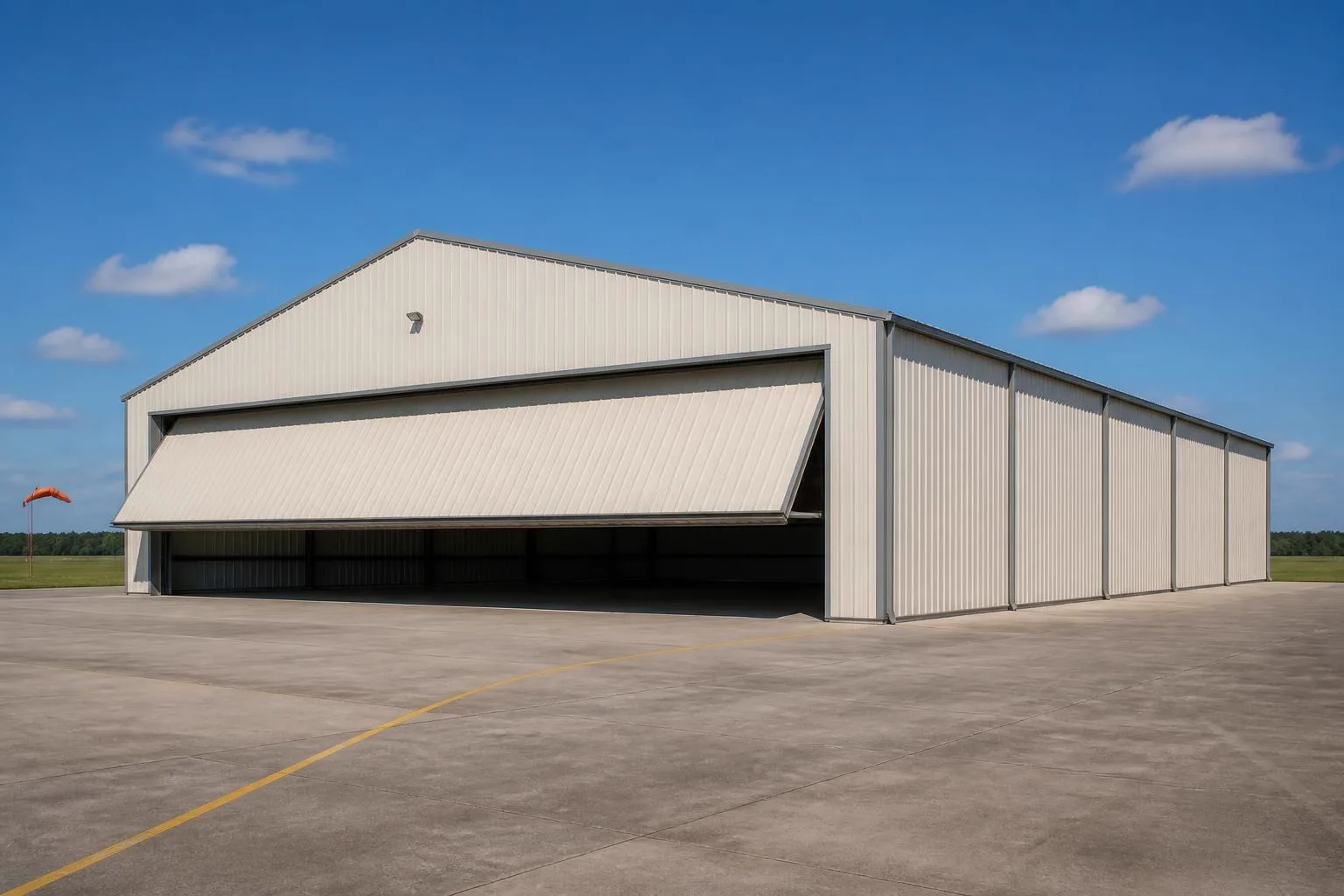
Land Question First
In Utah, Ownership Comes Before Grading
A Utah hangar site plan has to answer a land-tenure question that most states never raise: is this parcel actually private ground?
The Congressional Research Service's federal land ownership dataset lists Utah's federal acreage at roughly 33.3 million acres against a total state acreage of about 33.6 million — figures drawn from 2013 data in a report dated 2017, so treat the exact numbers as a snapshot rather than a current survey. Even allowing for that age, the scale of the gap is the point: private ground for a rural airstrip and hangar is a comparatively thin slice of Utah's total land area, and a buyer scouting open-looking desert or bench land should not assume it is available for private development.
A second ownership layer sits underneath the federal one. Utah's School and Institutional Trust Lands Administration manages state trust land that Congress originally granted to fund schools and other institutions. SITLA sections are interspersed with federal and private land in a checkerboard pattern in many parts of the state, so two visually identical parcels a section apart can carry entirely different ownership and lease rules. Before a hangar concept goes further than a napkin sketch, a title search or a call to the county recorder and SITLA is worth the time.
None of this means a private hangar is impractical in Utah — plenty of private agricultural and residential land exists, particularly along the Wasatch Front valleys and in scattered rural counties — but the ownership check belongs at the very start of site selection, not after a design has already been drawn around a parcel that turns out to be under a grazing lease or a federal allotment.
Terrain
Three Provinces, Three Different Hangar Sites
Utah's convergence of three physiographic provinces means the grading, access and orientation questions for a hangar shift meaningfully depending on which part of the state a parcel sits in.
Basin and Range (West)
Broad desert valley floors separated by isolated mountain ranges; generally flatter runway ground, but wind exposure across open basin terrain is worth checking with a local pilot or the airport authority before committing to orientation.
Rocky Mountain Province — Wasatch and Uinta Country (Northeast/North-Central)
Mountain-adjacent bench and valley sites where grade, avalanche-path awareness in canyon terrain, and a shorter usable building season at higher elevation change the access and construction-window planning.
Colorado Plateau (East/Southeast)
Canyon and mesa country where a hangar site may need a longer or more circuitous access road around drainages, and where remote strip logistics differ from Wasatch Front convenience.
Climate & Code Process
One Elevation Number Doesn't Describe the Whole State
Utah's elevation range is extreme enough that no single climate figure should drive a hangar's roof or door design, and the code-review process still runs through a local office even where the state pushes for uniformity.
Utah Agriculture in the Classroom's reference sheet notes the state's highest point, Kings Peak, at 13,528 feet, against a lowest point at Beaver Dam Wash of 2,350 feet — an elevation spread of more than 11,000 feet inside one state. The same source splits Utah into desert (33%), steppe (43%), and highland/mountain (24%) climate zones. A hangar planned for a Basin and Range desert floor faces a very different snow-accumulation and wind story than one planned in Uinta highland country, and no single statewide weather figure can substitute for a local reading at the actual parcel elevation.
On the process side, Utah's Division of Professional Licensing, within the Department of Commerce, administers the Uniform Building Standards Act and works with the Uniform Building Code Commission specifically to push toward statewide uniformity in how codes are enforced. That effort at consistency is real, but it does not remove the local building department from the loop — plan review and permit issuance for a hangar still happen at the county or city level, and that is the office to confirm design values and permit thresholds with.
- Don't Import a Valley Reading to a Mountain Site
- Utah's highland/mountain zone covers about a quarter of the state and behaves differently from the desert or steppe zones.
- Confirm With the Local Office, Not Just the State Program
- DOPL's uniformity push runs through, not around, county and city plan review.
- Check the Section, Not Just the Township
- SITLA and federal parcels can sit checkerboard-adjacent to private ground in the same rural area.
Plan Your Utah Hangar
Tell us your parcel's province and roughly where it sits, and we'll route the right land-tenure and access questions with your Utah context attached.
Application
Hangar Configurations for Utah Aviation
Configurations suited to Utah's split between Wasatch Front convenience and remote basin or plateau strips.
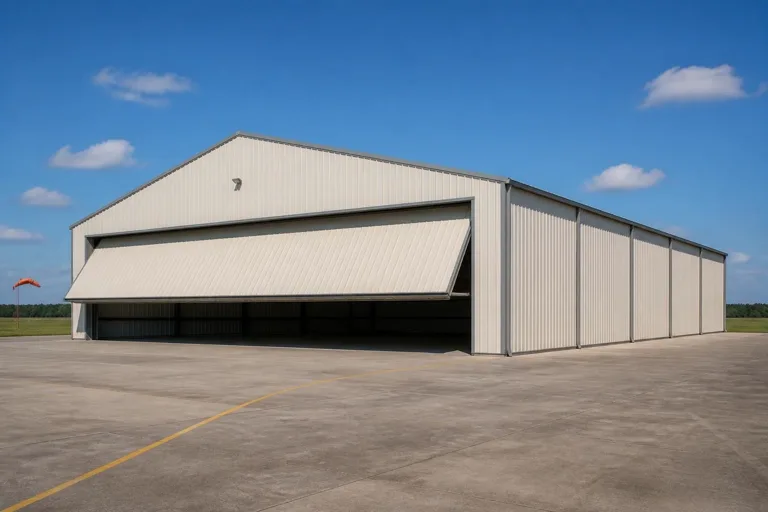 Basin Desert-Floor HangarA single-aircraft hangar sited on flat desert valley ground, with wind exposure checked before final orientation.Mountain Bench HangarA hangar sited on Wasatch or Uinta-adjacent bench land, planned around a shorter high-elevation build season.Plateau Remote-Strip HangarA hangar for a Colorado Plateau canyon-country strip, sized to reduce return trips for supplies given longer access routes.
Example Configuration — for planning purposes only.
Scale
Footprints for Utah Aviation
A starting range that reflects the mix of private and working aircraft use across Utah's terrain zones.
40′ × 40′
1,600 sq ft
A compact box hangar for a single light aircraft on a desert or plateau strip.
50′ × 50′
2,500 sq ft
Room for one aircraft plus a small workshop or tool storage.
60′ × 100′
6,000 sq ft
A larger hangar for twin-engine aircraft or multiple light planes on a Wasatch Front-area strip.
Example Configuration — for planning purposes only.
Ensure your door opening clears your aircraft's wingspan by at least 5-10 feet; confirm foundation specifics with a local contractor familiar with your parcel's province and elevation.
Questions
Utah Aircraft Hangar Questions
Honest answers, with land-tenure, regulatory and technical questions routed to the party that owns them.
Check before assuming so. CRS data puts Utah's federal land share at roughly 33.3 million of about 33.6 million total acres, and SITLA manages additional state trust sections in a checkerboard pattern with private and federal ground. A title search or a call to the county recorder and SITLA settles this before design work starts.
No. Utah splits into desert (33%), steppe (43%), and highland/mountain (24%) climate zones, and elevation ranges from 2,350 feet at Beaver Dam Wash to 13,528 feet at Kings Peak. A hangar's roof and door design should be confirmed against a local reading for the actual parcel, not a statewide average.
Yes. Utah sits at the convergence of the Rocky Mountain, Colorado Plateau, and Basin and Range provinces, and each carries a different grading, access and orientation story — from flat Basin desert floors to mountain benches to plateau canyon country.
The local county or city building department, even though Utah's Division of Professional Licensing works with the Uniform Building Code Commission to promote statewide code consistency. Confirm permit thresholds and design values with your local office directly.
There's no official typical size, but a 40x40 to 60x100 range covers most single- and twin-engine private hangars on Utah strips across its different terrain zones. Confirm your door opening against your aircraft's wingspan before finalizing.
Sources for the Utah facts on this page
This page states no code requirement, wind speed, snow load, permit rule, price or supplier claim. The state-specific facts it does use are listed with their publisher below.
CRS's federal land ownership dataset lists Utah federal acreage at roughly 33.3 million acres (2013 data) against total state acreage of approximately 33.6 million acres.
Congressional Research Service · data as of FY2013, report dated March 3, 2017 · Tier 1
https://www.everycrsreport.com/files/20170303_R42346_95ce191e74ed8e08054bb5476971544bc55823f2.htmlUtah's School and Institutional Trust Lands Administration (SITLA/Trust Lands Administration) manages state trust land granted by Congress to benefit Utah schools and institutions.
Utah Trust Lands Administration (SITLA) · current, accessed 2024 · Tier 2
https://trustlands.utah.gov/Utah lies at the convergence of three physiographic provinces: the Rocky Mountain Province (Uinta and Wasatch mountains) in the northeast, the Colorado Plateau in the east/southeast, and the Basin and Range in the west.
Utah Division of State History (History to Go) · current reference page · Tier 2
https://historytogo.utah.gov/unique-setting/Utah has three distinct climate zones: desert (33% of the state), steppe (43%), and highland/mountain (24%), reflecting the valley-to-mountain precipitation and snowfall contrast.
Utah Agriculture in the Classroom · current reference sheet · Tier 3
https://cdn.agclassroom.org/ut/lessons/cc/ut_elevation_precip_maps.pdfUtah's Division of Professional Licensing (DOPL), within the Department of Commerce, administers the Uniform Building Standards Act and works with the Uniform Building Code Commission to promote statewide uniformity in code enforcement.
Utah Department of Commerce, Division of Professional Licensing · current, accessed 2024/2025 · Tier 2
https://commerce.utah.gov/dopl/uniform-building-codes/