
Hobby shop · NC
Hobby Shops in North Carolina
North Carolina isn't a single planning environment for a hobby shop — it's three of them stacked side by side. USGS research names distinct Coastal Plain, Piedmont, and Blue Ridge physiographic provinces running from the Atlantic to the Appalachians, and each one hands a hobby-shop builder a different starting problem: a high water table near the coast, rolling clay terrain through the Piedmont midlands, or steep grade and thin soil in the western mountains. Add NOAA's documented note that landfalling hurricanes affect the state on a highly variable year-to-year basis, and the honest brief for a North Carolina hobby shop is less about square footage and more about reading which of the three provinces your lot sits in before a single stake goes in the ground.
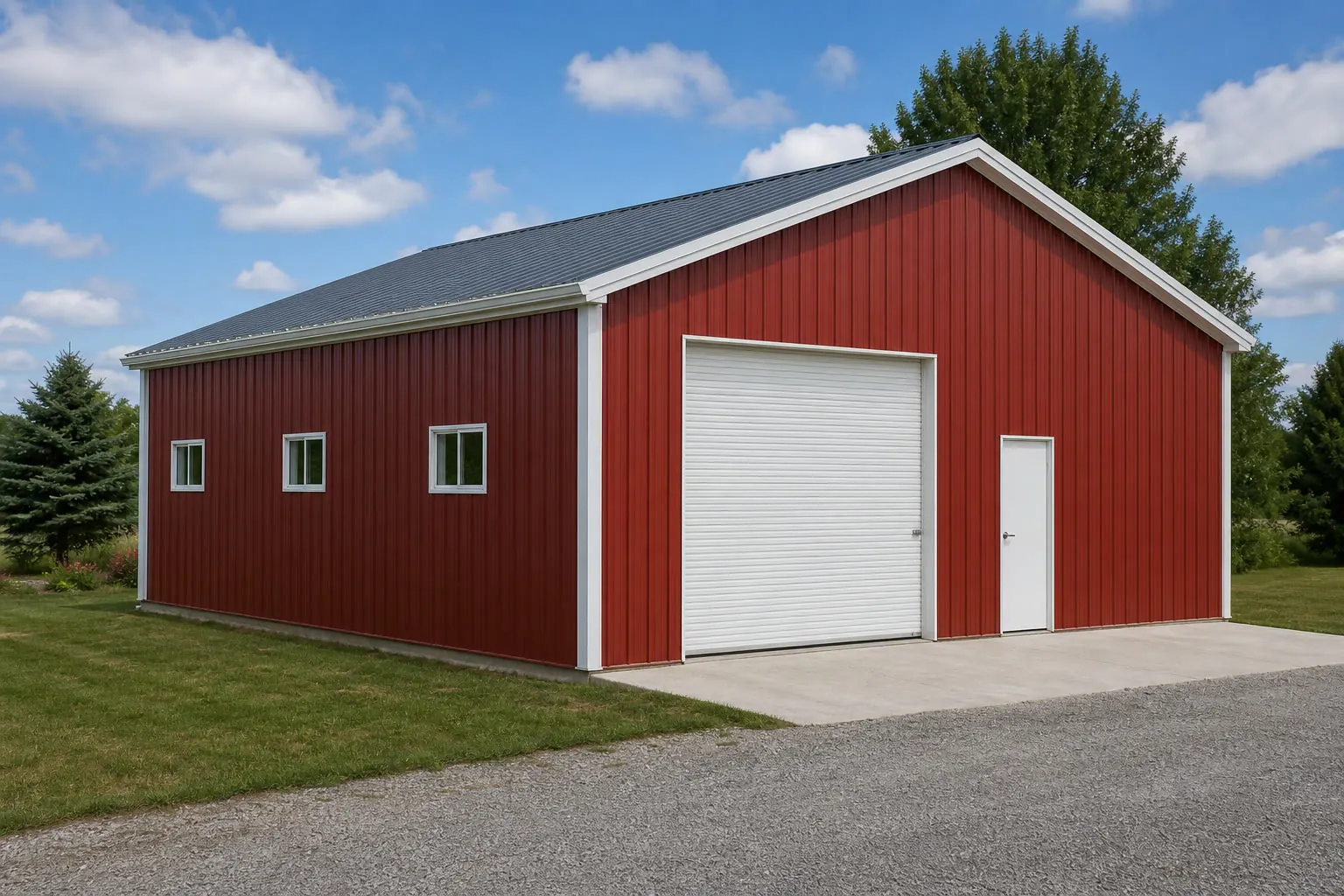
Geography First
One State, Three Different Building Sites
Before floor plans or door widths, a North Carolina hobby shop plan should start with a map question: which of the state's three physiographic provinces is the lot in?
USGS research on North Carolina's regional geology (Scientific Investigations Report 2009-5149) names three distinct physiographic provinces running roughly east to west: the Atlantic Coastal Plain, the Piedmont, and the Blue Ridge. Each has a different geologic setting, and that difference is not academic for a builder — it shows up as flat, low-elevation ground near the coast, rolling clay-heavy terrain through the midlands, and steep, thin-soiled slopes in the mountains.
A hobby shop is small enough that this distinction often gets skipped in favor of just picking a flat-looking spot in the yard. That's a mistake worth avoiding: the same 24x30 footprint that pours easily on Piedmont clay may need drainage work on the Coastal Plain or grading and retaining details in the Blue Ridge. None of this is a statewide code number — it's a reason to have a local soils conversation before committing to a pad design.
Storm Exposure
Coastal and Near-Coastal Wind Planning
For hobby shops sited toward the Atlantic side of the state, storm exposure changes the hardware list more than it changes the floor plan.
NOAA's State Climate Summary for North Carolina notes that the number of landfalling hurricanes affecting the state varies considerably from year to year, and that storm intensity and rainfall rates are projected to increase over time. That variability is exactly why a coastal hobby shop shouldn't be built to a 'normal year' assumption. Roll-up doors, overhead door tracks, and roof panel fastening are the components most exposed to wind uplift, and they deserve the same attention on a small workshop as they would on a larger outbuilding.
Inland toward the Piedmont and Blue Ridge, hurricane-remnant rainfall is often a bigger practical concern than direct wind, since tropical systems can dump heavy rain well past the coast. A hobby shop used to store tools, a vehicle, or restoration projects benefits from a slightly elevated slab and positive site drainage regardless of province, but the specific wind rating and fastening spec for any given county is a conversation for the local building department, not a statewide rule.
- Coastal Plain
- Flat terrain and higher flood/drainage sensitivity; confirm elevation and drainage requirements locally.
- Piedmont
- Rolling clay-heavy terrain; groundwater dependence is documented by NC State Extension for this province.
- Blue Ridge
- Steeper grade and thinner soils; budget for site prep and retaining work rather than assuming a flat pad.
Application
North Carolina Hobby Shop Configurations
Workshop uses shaped by the state's three-province geography and smaller average parcel size.
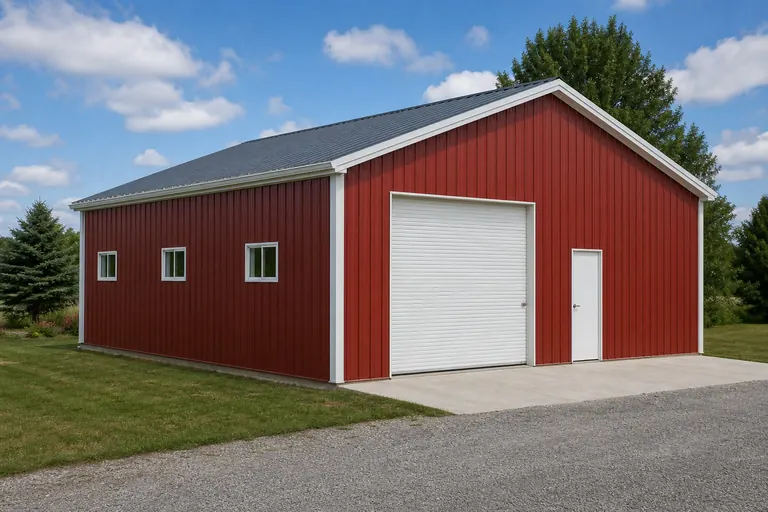 The Near-House WorkshopSited close to the residence, reflecting North Carolina's 190-acre average farm size — much closer-in than large Midwest tracts.The Coastal Storage & Repair ShopBuilt with wind-rated door hardware and elevated drainage detailing for near-coastal sites.The Mountain Fabrication ShopGraded and retained for Blue Ridge slope, used for equipment repair and woodworking.
Example Configuration — for planning purposes only.
Build Your North Carolina Workshop
Ready for a shop that matches your province — Coastal Plain, Piedmont, or Blue Ridge? Get a quote for a North Carolina-tuned hobby shop today.
Footprint
Sizing a North Carolina Workshop
Footprint choices reflecting the state's smaller average parcel and province-driven site constraints.
20′ × 30′
600 sq ft
A compact shop for tool storage and light repair on a near-house lot.
30′ × 40′
1,200 sq ft
A mid-size multi-use hobby space with room for a vehicle bay.
40′ × 50′
2,000 sq ft
A larger fabrication or restoration shop where grading or drainage work is already budgeted.
Example Configuration — for planning purposes only.
Footprint choice should account for province-specific site prep; consult our size pages for layout details.
Preparation
Before you site a North Carolina hobby shop
Four questions that matter more in North Carolina's three-province geography than they would in a single-terrain state.
- Confirm which province your lot is inCoastal Plain, Piedmont, and Blue Ridge sites carry different drainage and grading starting points; a quick site visit or soils check clarifies which one applies.
- Ask about the water table before pouring near the coastLow-lying Coastal Plain ground can have a shallow water table; confirm slab elevation and drainage needs with a local surveyor or the building department.
- Check well and septic setbacks in the Piedmont and Blue RidgeNC State Extension notes heavy groundwater dependence in these provinces; verify setback distances with the county before finalizing where the shop sits relative to the house.
- Spec wind-rated hardware for coastal and near-coastal sitesGiven NOAA's documented year-to-year hurricane variability, price roll-up door and roof fastening upgrades now rather than after a storm season.
Questions
North Carolina Hobby Shop FAQ
Straight answers for Tar Heel State workshop planning.
No. NOAA's own narrative on North Carolina's climate describes a progression from the Atlantic Coastal Plain through the Piedmont to the Appalachian mountains, and USGS documents three distinct physiographic provinces within that progression. A hobby shop plan should reflect which province the lot sits in rather than a single statewide assumption.
It depends on your specific location and exposure, which your local building department is best positioned to assess. NOAA notes that landfalling hurricane frequency in North Carolina varies significantly year to year, so even near-coastal and some inland sites may warrant wind-rated hardware; that determination is made locally, not by a single statewide rule.
USDA NASS reports an average farm size of 190 acres across the state's 8,128,136 acres of farmland in 2022 — noticeably smaller than the multi-hundred-acre averages seen in some Midwest plains states, which is one reason North Carolina hobby shops are more often sited close to the house than far across a large tract.
It can be. NC State Extension documents that a majority of the state's population, particularly in the Piedmont and Blue Ridge provinces, depends on groundwater. Before placing a shop near a well or septic field, check required setbacks with your county's environmental health office.
Blue Ridge sites are characteristically steeper and thinner-soiled than the Piedmont or Coastal Plain, which commonly means more grading or retaining work to get a level pad. The exact foundation design is a conversation for a local contractor or engineer familiar with the specific slope, not a statewide spec.
Census Bureau data shows statewide privately-owned housing permits rose 5.0%, from 94,118 units in 2022 to 98,853 in 2023. That reflects overall residential permitting activity across the state; it isn't a hobby-shop-specific figure, and local permit timelines still vary by county.
Sources for the North Carolina facts on this page
This page states no code requirement, wind speed, snow load, permit rule, price or supplier claim. The state-specific facts it does use are listed with their publisher below.
NOAA NCEI publishes a narrative 'Climate of North Carolina' describing the state's climate progression from the Atlantic coastal plain through the Piedmont to the Appalachian mountains in the west.
NOAA National Centers for Environmental Information (NCEI) · Historical narrative (NCEI climate normals series) · Tier 1
https://www.ncei.noaa.gov/data/climate-normals-deprecated/access/clim60/states/Clim_NC_01.pdfNOAA's State Climate Summaries note that the number of landfalling hurricanes in North Carolina is highly variable year to year, and hurricane-associated storm intensity and rainfall rates are projected to increase.
NOAA National Centers for Environmental Information (NCEI) · 2022 summary · Tier 1
https://statesummaries.ncics.org/downloads/NorthCarolina-StateClimateSummary2022.pdfNorth Carolina had 42,817 farms in 2022, down 8% since 2017.
USDA National Agricultural Statistics Service (NASS) · 2022 · Tier 1
https://www.nass.usda.gov/Publications/AgCensus/2022/Online_Resources/County_Profiles/North_Carolina/cp99037.pdfNorth Carolina had 8,128,136 acres of land in farms in 2022, an average farm size of 190 acres.
USDA NASS · 2022 · Tier 1
https://www.nass.usda.gov/Publications/AgCensus/2022/Online_Resources/County_Profiles/North_Carolina/cp99037.pdfNorth Carolina's statewide total of privately-owned housing units authorized by building permits rose from 94,118 in 2022 to 98,853 in 2023, a 5.0% increase.
U.S. Census Bureau · 2023 (with 2022 comparison) · Tier 1
https://www.census.gov/construction/bps/pdf/2023annualhighlights.pdfFEMA's National Risk Index is the authoritative source for county- and state-level natural hazard exposure ratings across 18 hazard types, viewable via FEMA's own interactive report tool.
Federal Emergency Management Agency (FEMA) · Current NRI release · Tier 1
https://www.fema.gov/flood-maps/products-tools/national-risk-indexUSGS-affiliated research (e.g., Scientific Investigations Report 2009-5149) characterizes North Carolina's Piedmont and Blue Ridge physiographic provinces, distinct from the state's Atlantic Coastal Plain province, based on differing regional geologic settings.
U.S. Geological Survey (USGS) · 2009 USGS report · Tier 1
https://pubs.usgs.gov/sir/2009/5149/NC State Extension publishes reference material describing groundwater conditions across the state's Piedmont and Blue Ridge provinces, noting over half of North Carolina's population depends on groundwater for drinking water.
NC State University Extension · NC State Extension reference publication · Tier 2
https://content.ces.ncsu.edu/ground-water-in-the-piedmont-and-blue-ridge-provinces-of-north-carolina